
Warm up the loneliest stretch of Highway 50.
With only 771 residents spread across nearly 4,200 square miles of high desert, Eureka County runs on self-sufficiency. Electric fireplaces and inserts offer clean, no-fuss zone heat for ranch homes, town lots, and updated mining-era buildings alike. Find the right unit and connect with a trusted local dealer.
Every Project Starts From One of These Five Situations
Heat that just works, even out here.
Eureka sits at roughly 6,500 feet on US 50—the town still bills itself as 'The Friendliest Town on the Loneliest Road in America,' and the county's population barely tops 700. In climate zone 5B, winters bring hard freezes and biting wind across Diamond Valley and the open range toward Crescent Valley and Beowawe. Pinyon, juniper, and sagebrush wood have heated homes here for generations, but plenty of Eureka County households now add an electric fireplace or insert for supplemental warmth in a bedroom, den, or bunkhouse—no chimney, no wood hauling, no smoke to manage during the wildfire-smoke-heavy stretches of late summer and fall.
Power in Eureka County runs through Mount Wheeler Power, the rural electric cooperative serving this stretch of central Nevada, and most homes here—from historic downtown Eureka to outlying ranch properties—are wired for standard 120V or 240V circuits that handle a modern electric fireplace without issue. Because there's no venting or gas line to run, installs are simpler and faster than wood or gas projects, which matters when the nearest full-service hearth shop is a drive down the highway. A properly matched unit still needs the right electrical circuit and correct sizing for the room, and that's where a local dealer earns their keep.
Three steps. No salesperson until you're ready.
Tell us about your project
Your zip code, your situation, and the fuel you're leaning toward—or let the answers point you to one.
See what's actually available
The brands dealers within 100 miles genuinely carry—real options, never a catalog mirage.
Get your dealer & Project Guide
A trusted local dealer, plus the free Project Guide & Parts List that names every component of the job.
Frequently Asked Questions
How much does an electric fireplace or insert installation cost in Eureka County?
Plug-in electric fireplaces and freestanding units typically run $400 to $1,200 installed, since most just need a standard outlet and a bit of trim work. Built-in electric inserts or wall-mounted units that require a dedicated 240V circuit run higher—often $1,200 to $2,500 once an electrician runs new wiring, which is common in older downtown Eureka buildings and older ranch homes on the county's original wiring. Ask your local dealer whether your existing panel and circuits can handle the unit before you buy, since panel upgrades add cost on some of the county's older properties.
Will an electric fireplace work if the power goes out?
No—and this matters more in Eureka County than in a city grid. Electric fireplaces and inserts require power to run the heating element and any fan, so they go dark the moment the line drops, whether from a winter storm along US 50 or a line issue out in Diamond Valley. If backup heat during outages is a priority for your household, pair an electric unit for everyday convenience with a wood stove burning local pinyon or juniper as your outage backup—a common setup for ranch homes in this county where storm-related outages aren't rare.
What size electric fireplace or insert do I need for my home?
Electric units are rated by BTU output and room square footage rather than whole-home heating capacity—most are designed for zone heating a single room, not replacing central heat. A 1,000 to 1,500 sq ft space in a typical Eureka home or ranch bunkhouse is usually well served by a mid-size insert or wall-mount unit in the 4,000 to 5,000 BTU range. For larger open rooms in older, less-insulated buildings around town, sizing up or adding supplemental heat elsewhere may make more sense than trying to make one unit do too much. A local dealer can size the unit to your actual room and insulation level.
Electric fireplace vs. electric insert vs. wall-mount heater—what's the difference?
A freestanding electric fireplace sits on the floor and can go almost anywhere with an outlet nearby—a straightforward, low-cost option for a den or bedroom. An electric insert is built to slot into an existing wood or gas fireplace opening, giving an old, unused masonry fireplace in one of Eureka's historic buildings new life without touching the chimney. A wall-mount unit hangs flush on the wall like a flat-screen TV, which works well in smaller, modern layouts where floor space is tight. All three plug in or hardwire, and none require venting—the right choice comes down to the space you're filling and whether you already have an existing fireplace opening.
Do I need a permit to install an electric fireplace in Eureka County?
Plug-in units generally don't require a permit since no new wiring or structural work is involved. If your installation requires a new dedicated circuit, a panel upgrade, or is built into a wall as part of a remodel, an electrical permit through the Eureka County Building Department is typically required, and the work should be done by a licensed electrician. Most local dealers coordinate this as part of a built-in installation so you're not left tracking down permits yourself.
What's the best electric fireplace for Eureka County's climate?
Look for units with a strong heating element rating (most quality inserts push 4,000-5,000 BTU) rather than focusing only on the flame effect, since the goal in a genuinely cold winter is real supplemental heat, not just ambiance. Brands like Dimplex, Amantii, and Napoleon make inserts and wall-mounts built for real heating performance in cold climates, and most offer a thermostat mode that will cycle the heater to hold a set room temperature rather than running full blast constantly. For drafty older homes near downtown Eureka, a higher-output insert paired with good weatherstripping will outperform an underpowered unit every time.
How much maintenance does an electric fireplace need?
Very little compared to wood or gas. There's no chimney to sweep, no gas line to inspect, and no combustion byproducts to manage. Maintenance is mostly dusting the interior, occasionally cleaning the glass front, and checking that the fan and heating element are running quietly and efficiently. Most units last well over a decade with essentially no service calls, which is a real advantage in a county where the nearest hearth technician may be a longer drive than in a bigger town.
Where can I buy an electric fireplace near Eureka County?
Given the county's small population, there isn't a hearth showroom in Eureka itself—most residents work with dealers based in Elko or the greater Ely area who serve this stretch of central Nevada and deliver or install locally. A trusted dealer will still size the unit to your specific home, confirm your electrical setup can handle it, and handle any electrical permitting if a dedicated circuit is needed, even if their showroom is a drive away.
Electric vs. wood—which is right for my Eureka County home?
Wood, burned from locally cut pinyon, juniper, or sagebrush, delivers real heat output, works without power during outages, and has been the backbone of heating in this county for generations. Electric offers instant on-off convenience, zero smoke or ash, and simple installation with no chimney or venting—a strong fit for a bedroom, den, or a secondary living space where you want easy heat without the upkeep. Many households here run both: wood as the primary or backup heat source, and an electric insert or wall-mount for quick, no-mess warmth in a room that doesn't need a full wood setup.
Can I put a TV above my fireplace?
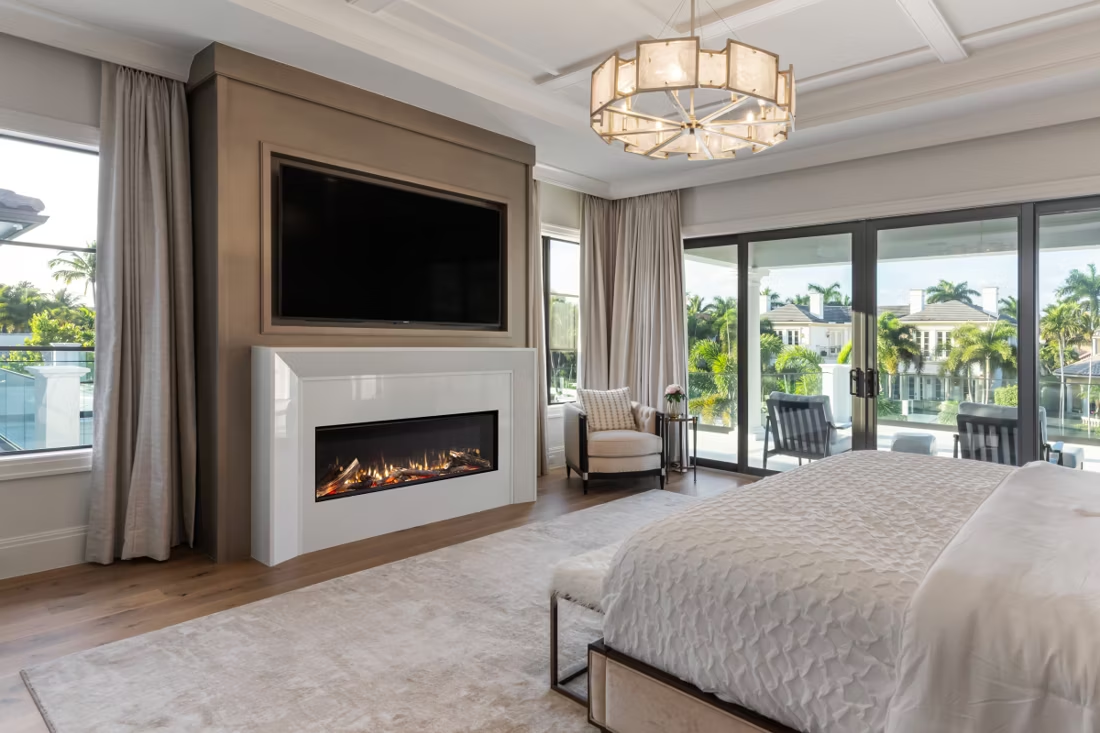
Yes—with an asterisk. Fireplaces are hot and TVs don't like heat. Either put a mantel between them to deflect rising warmth, or choose a fireplace with heat-management technology that creates a cool zone on the wall above—the wall stays around 125 degrees, barely warm, while the room still gets full heat. If you like clean lines and don't want a mantel, heat management is the answer.
Does an electric fireplace need a vent or chimney?
No—that's its superpower. An electric fireplace needs a wall and an outlet, period. No vent pipe, no gas line, no clearances to design around, which is why it works in bedrooms, offices, apartments, and walls where venting a gas or wood unit would be impractical or impossible. Installation is typically the simplest and least expensive of any fireplace type.
Can I install a fireplace myself?
If you're putting a fire in your house on purpose, it's best to work with an expert. Unless you're genuinely experienced in framing, gas line, vent pipe, and the national code on clearances to combustibles, have a professional do it—and ideally the same company that sells you the fireplace, so warranty, service, and liability all live under one roof.
Does a fireplace add value to my home?
On average, a fireplace adds back to the home about the same amount you spent installing it. Add the monthly savings from heating the rooms you actually use instead of the whole house—often hundreds of dollars a year—and the value case is strong before you even count what a fire does for how your family uses the room.
Find your electric fireplace in Eureka County.
Tell us a bit about your home and we'll match you with the right electric fireplace, insert, or wall-mount unit—and hand you a free Project Guide & Parts List with your recommended local dealer.
Find Your Fireplace →