
Real warmth and ambiance, without the chimney, in Thurston County.
From Pender to Walthill, Winnebago, and Macy, electric fireplaces give Thurston County homes supplemental heat and a real fire look with no venting, no wood, and no gas line. Find the right unit and get matched with a trusted local dealer.
Every Project Starts From One of These Five Situations
The simplest fireplace upgrade for a Plains home.
Thurston County sits along the Missouri River bluffs in northeast Nebraska, home to the Winnebago Tribe of Nebraska and the Omaha Tribe of Nebraska, with a population spread thin across Pender, Walthill, Winnebago, Macy, and Rosalie. At just over 4,100 residents, the county doesn't support a large hearth-retail footprint, but that hasn't slowed demand for electric fireplaces—they're one of the few heating upgrades that work in nearly every type of housing stock here, from older farmhouses in Pender to the manufactured and modular homes common throughout the county and on tribal land.
Zone 5A winters in this part of Nebraska bring long stretches of subzero nights and biting wind off the Plains, and an electric fireplace won't replace a furnace on those nights—but it will let you turn off a heat zone in the rest of the house and warm the room you're actually using. There's no chimney to maintain, no cutting or hauling oak, hickory, or cottonwood off the river bottoms, and no gas line to run. A plug-in unit needs nothing more than a standard outlet; a hardwired built-in typically needs a licensed electrician and a permit through the Thurston County building office in Pender, but either way the install is fast and the cost is a fraction of a wood or gas project.
Three steps. No salesperson until you're ready.
Tell us about your project
Your zip code, your situation, and the fuel you're leaning toward—or let the answers point you to one.
See what's actually available
The brands dealers within 100 miles genuinely carry—real options, never a catalog mirage.
Get your dealer & Project Guide
A trusted local dealer, plus the free Project Guide & Parts List that names every component of the job.
Frequently Asked Questions
How much does an electric fireplace installation cost in Thurston County?
A plug-in electric fireplace or freestanding electric stove typically runs $300 to $900 installed, since it only needs a standard 120V outlet and no venting. A built-in electric insert or wall-mounted linear unit that requires a dedicated circuit and an electrician runs closer to $800 to $2,500, and custom surrounds or mantels with cabinetry work can push a full project to $3,000 or more. For most Thurston County homes—whether it's a site-built house in Pender or a manufactured home in Winnebago or Macy—the plug-in and mid-range built-in categories cover the vast majority of projects.
Do I need a permit or an electrician to install an electric fireplace?
If you're installing a plug-in unit into an existing standard outlet, no permit is required—it's treated like any other appliance. If you're installing a hardwired built-in or a unit that needs a new dedicated 120V or 240V circuit, that electrical work should go through a licensed electrician, and a permit is typically pulled through the Thurston County building office in Pender. This matters especially in older farmhouses and older manufactured homes around the county, where panel capacity can be tight—a local electrician will check your service before recommending a hardwired unit.
Will an electric fireplace work during a power outage?
No—this is the honest tradeoff with electric heat. If the grid goes down during a Plains ice storm or a winter windstorm, an electric fireplace goes down with it, unlike a wood stove burning local oak or hickory. For Thurston County homes where outages can stretch for hours in rural stretches between Pender, Rosalie, and Macy, many households pair an electric fireplace for everyday convenience and ambiance with a wood stove or a generator-backed system for genuine outage resilience. If backup heat during outages is your top priority, electric shouldn't be your only heat source.
What's the difference between a plug-in electric fireplace, a built-in insert, and an electric stove?
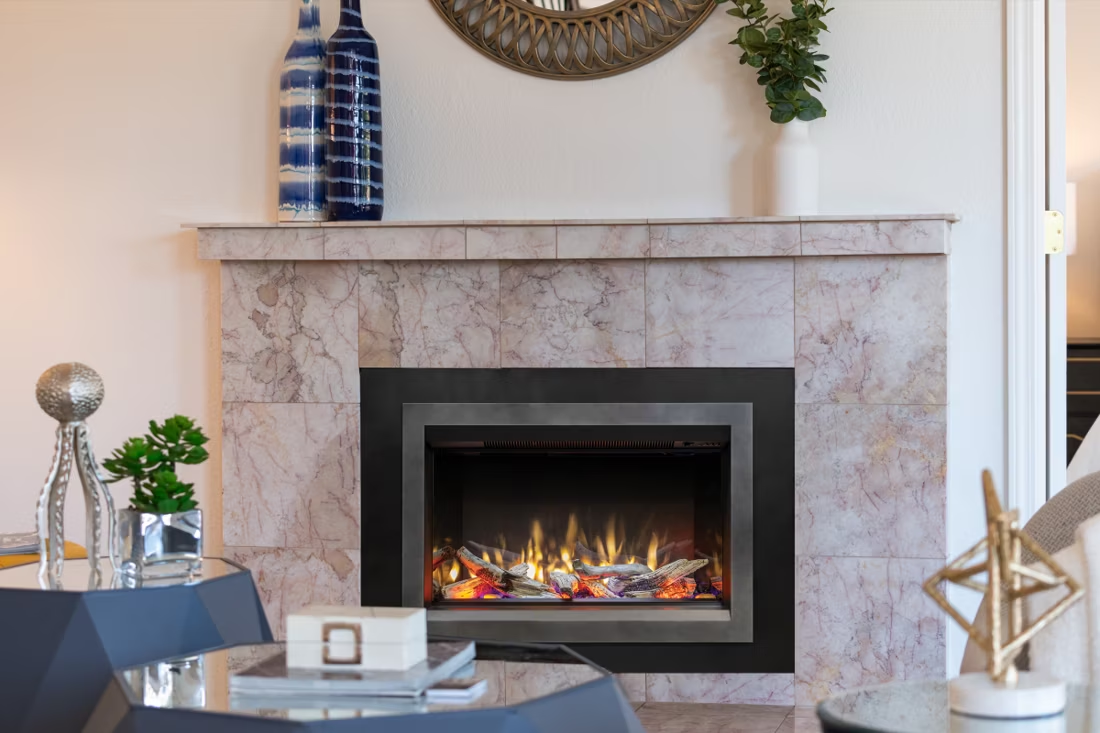
A plug-in electric fireplace is a wall-mount or freestanding unit you plug into an existing outlet—the easiest option for renters and manufactured homes throughout the county. A built-in electric insert is designed to fit into an existing masonry or wood-burning fireplace opening, giving an old fireplace a new look and real heat output without any venting changes. An electric stove is a freestanding cabinet-style unit that mimics a wood stove's look and can sit anywhere near an outlet or dedicated circuit. For a Thurston County home with an existing but unused wood fireplace, an insert is often the fastest, lowest-cost way to bring that opening back to life.
Can an electric fireplace actually heat a room, or is it just for looks?
Most electric fireplaces produce genuine heat from a built-in resistance or infrared heater, typically rated between 4,000 and 5,200 BTU—enough to noticeably warm a single room of 400 to 1,000 square feet, depending on insulation and ceiling height. That's supplemental heat, not whole-home heat: it's most effective as zone heating for a living room, bedroom, or den, letting you turn down the furnace elsewhere in the house. Given Thurston County's Zone 5A winters, don't expect an electric unit to carry a whole farmhouse on a subzero night, but it will meaningfully cut furnace runtime in the room you use most.
What size electric fireplace do I need for my home in Thurston County?
Sizing an electric fireplace is mostly about the room, not the whole house, since these units are built for zone heating rather than central heat. A 30-to-40-inch wall-mount unit suits a bedroom or den in the range of 200 to 400 square feet; a 50-to-60-inch linear unit fits a larger living room, which is common in many of the ranch-style and manufactured homes found throughout Pender, Walthill, and Winnebago. If you're installing into an existing fireplace opening, the insert size is usually dictated by that opening's dimensions rather than the room's square footage—a local dealer can measure and match this for you.
Electric vs. wood—which is right for my home?
Wood heat, drawing on the oak, hickory, and cottonwood found along the Missouri River bottoms in Thurston County, keeps working when the power doesn't, produces genuine radiant heat that can carry a room through a subzero night, and appeals to households with a self-sufficient streak common in this part of Nebraska. Electric wins on convenience and cost: no cutting, hauling, or ash cleanup, no chimney to inspect, and a fraction of the install cost—often under $1,000 versus several thousand for a wood stove with proper venting. For households near Pender or Walthill without a wood-burning tradition, or renters and manufactured-home owners where a chimney install isn't practical, electric is usually the simpler answer. For rural households further from town who value backup heat during Plains ice storms, wood still has a strong case.
Electric vs. pellet—which is right for me?
Pellet stoves, using bagged fuel from regional suppliers like Lignetics or Indeck Energy Services, burn cleaner than cordwood and produce more heat than an electric unit—often enough to serve as a home's primary heat source in a Zone 5A winter. But pellet stoves need electricity to run the auger and blower, so like electric fireplaces, they go down in an outage, and they require venting through an exterior wall along with periodic hopper loading and ash removal. Electric fireplaces need none of that upkeep and cost far less to install, but produce meaningfully less heat. For a Thurston County homeowner wanting genuine supplemental heat with real maintenance, pellet is worth a look; for low-maintenance ambiance and zone heat, electric is the easier fit.
How long do electric fireplaces last, and what maintenance do they need?
Most electric fireplaces last 10 to 15 years with the LED flame effect and heater elements being the main wear components—many manufacturers sell replacement bulbs or LED boards if the flame effect dims before the heater itself fails. Maintenance is minimal: dust the vents and blower periodically, wipe down the glass, and check that the outlet or dedicated circuit isn't overloaded, especially in older Thurston County homes where panel capacity can be limited. There's no annual chimney sweep or gas line inspection required, which is part of why electric units are popular in rental and manufactured housing throughout the county.
Can I put a TV above my fireplace?
Yes—with an asterisk. Fireplaces are hot and TVs don't like heat. Either put a mantel between them to deflect rising warmth, or choose a fireplace with heat-management technology that creates a cool zone on the wall above—the wall stays around 125 degrees, barely warm, while the room still gets full heat. If you like clean lines and don't want a mantel, heat management is the answer.
What fireplace styles should I know before shopping?
Four cover most of the market: screen-front traditional (mesh front, open feel, fits craftsman homes), traditional door set (the classic look you grew up with), modern linear (wide, low, the statement piece for entertaining), and clean face contemporary (no trim—your tile or stone runs right to the fire's edge). Walk in knowing those four terms and you're ahead of most buyers.
What is an in-home preview and do I need one?
It's a visit where a hearth professional measures your space, confirms the model you picked actually works in your home, and walks the specs—framing, gas line, venting, finish work—before anything is ordered. Some details you just can't know until you see the house. Never make a down payment without one; it's the single most-skipped step that burns buyers.
Can a fireplace actually lower my heating bill?
Yes—by creating a comfort zone. A furnace heats every square foot of the house just to warm the one room you're in; a gas fireplace on low burns roughly a sixth of the gas a typical furnace does. Set the furnace around 55–60 degrees as a baseline, then heat the rooms your family actually uses. Families who heat this way commonly save $20–$60 a month.
Find your electric fireplace in Thurston County.
Tell us a bit about your home and we'll put together a free Project Guide & Parts List—the right electric fireplace or insert for your space, plus a match with a trusted local dealer who can install it.dfd
Find Your Fireplace →