
Electric Heat That Works As Hard As Shelton Winters.
No chimney, no venting, no propane delivery—just reliable zone heat for a Buffalo County home. Find the right unit and get matched with a trusted local dealer.
Every Project Starts From One of These Five Situations
Low rates, zero venting, real zone heat.
Shelton sits in Buffalo County's open farm country, where winter lows average 14°F and the town racks up a long, cold heating season—heating demand in the same range as Fargo, North Dakota. Most homes here run on propane or a rural electric hookup rather than piped natural gas, and that reality shapes what actually works for supplemental heat: a unit that doesn't need a flue, a fuel tank, or a wood supply.
Electric fireplaces fit that gap well. Residents here are served by Dawson Power District or Nebraska Public Power District depending on exactly where in the county they sit, and both post residential rates well under the national average—11.41¢ and 10.63¢ per kWh respectively. That makes running an electric insert or built-in in the living room, bedroom, or converted porch a genuinely low-cost way to zone-heat the rooms people actually use, without touching the furnace thermostat for the rest of the house.
Three steps. No salesperson until you're ready.
Tell us about your project
Your zip code, your situation, and the fuel you're leaning toward—or let the answers point you to one.
See what's actually available
The brands dealers within 100 miles genuinely carry—real options, never a catalog mirage.
Get your dealer & Project Guide
A trusted local dealer, plus the free Project Guide & Parts List that names every component of the job.
Frequently Asked Questions
How much does an electric fireplace installation cost in Shelton?
Plug-in wall-mount and freestanding electric fireplaces are the cheapest option—often $200 to $800 including the unit, with no electrician needed since they run on a standard 120V outlet. Built-in electric fireplaces and inserts that require a dedicated 240V circuit or in-wall wiring typically run $1,500 to $4,000 installed, including any framing, trim kit, and electrical work. Since there's no chimney, venting, or gas line to run, electric installs in Shelton are almost always faster and less invasive than a wood or propane project—most are done in a day.
Will an electric fireplace actually heat a room in a Nebraska winter?
Most electric fireplaces are rated for around 5,000 BTU and can comfortably heat a single room of 400 to 1,000 square feet—plenty for a bedroom, den, or the converted mudroom that stays cold no matter what the furnace does. They're not designed to replace whole-home heat during a 14°F Buffalo County cold snap, but as zone heat for the rooms people actually spend time in, they cut down on how hard the central system has to work. Think supplemental warmth for the living room while you turn the rest of the house down a few degrees, not a substitute for your furnace or propane boiler.
Do I need an electrician or permit to install an electric fireplace?
Plug-in models need neither—they run on any standard outlet like a space heater. Built-in units or inserts that require a dedicated 240V circuit need a licensed electrician to run the wiring, and larger jobs typically go through an electrical permit with the Buffalo County Building Department. Most local dealers coordinate this as part of the install, so you're not left tracking down a separate contractor. It's a much simpler permitting path than wood or gas, since there's no combustion appliance or venting to inspect.
What's the difference between an electric insert, built-in, and wall-mount unit?
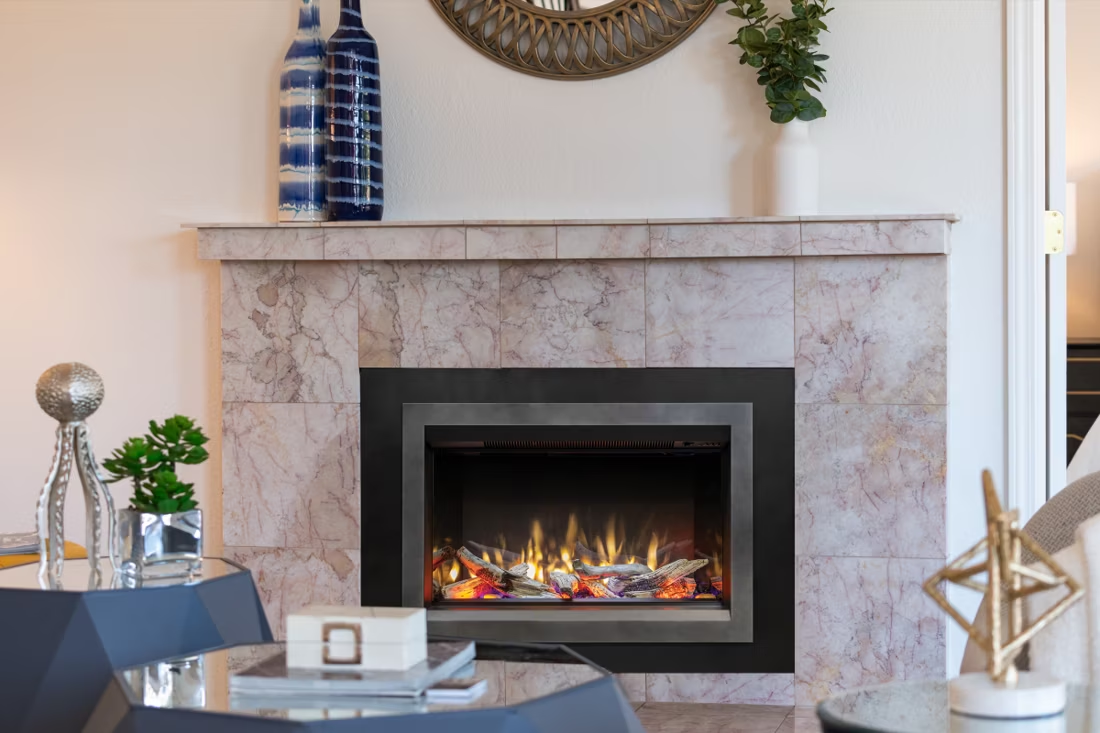
An electric insert is sized to slide into an existing masonry or wood-burning firebox, giving an old fireplace real heat output again without touching the chimney. A built-in electric fireplace is designed to be framed into a wall during a remodel or new construction, similar to how a gas fireplace would be installed. A wall-mount is the simplest option—it hangs on the wall like a large TV and plugs into a standard outlet. For a Shelton home with an existing but unused fireplace, an insert is usually the straightforward upgrade; for a room without one, a wall-mount is the fastest and cheapest path to zone heat.
Does it matter which electric utility serves my home—Dawson Power District or NPPD?
It affects your operating cost more than your equipment choice. Dawson Power District customers pay around 11.41¢ per kWh, while Nebraska Public Power District customers run closer to 10.63¢—both well below the roughly 16¢ national average, which is part of why electric heat pencils out reasonably well here even with Buffalo County's cold winters. Running a 1,500-watt electric fireplace for several hours a day typically adds somewhere in the range of $10 to $20 a month to the bill, depending on which utility serves your address and how often you run it.
Are electric fireplaces safe to run unattended or overnight?
Yes—this is one of the clearer advantages over wood or gas. There's no open flame, no combustion byproducts, and no carbon monoxide risk, since the heat comes from an electric coil or infrared element behind glass that stays cool to the touch on most modern units. Many models include auto shut-off timers and overheat sensors as standard safety features. For a rural Buffalo County home where you might not want to babysit a fire, that makes an electric unit a lower-maintenance choice for a bedroom or a room that runs unattended for stretches of the day.
What maintenance does an electric fireplace need?
Very little compared to wood or gas. There's no chimney to sweep, no gas line to inspect, and no ash to clean out. Maintenance is mostly dusting the vents, occasionally replacing an LED light or heating element on older units, and keeping the area around it clear so the fan can pull air properly. Most electric fireplaces run for a decade or more with essentially no service calls, which is worth factoring in against the annual inspection costs that come with a propane or wood-burning setup.
Will my electric fireplace work if the power goes out?
No—unlike a wood stove, an electric fireplace is entirely dependent on grid power, so it will shut off during an outage just like the rest of your home's electrical system. In Buffalo County, where ice storms and high winds can knock out rural power lines for hours or occasionally longer, an electric fireplace should be viewed as everyday supplemental heat rather than emergency backup. Homes that want heat during outages typically keep a propane heater, generator, or wood-burning appliance in reserve alongside the electric unit.
Electric vs. propane heat—which makes more sense for a Shelton home?
Most homes in and around Shelton run on propane for whole-house heat since piped natural gas isn't widely available out here, and that's unlikely to change. Electric fireplaces aren't meant to replace that system—they're a way to add low-cost, no-installation-hassle zone heat to a specific room without running new gas line or scheduling propane deliveries for a small addition. Given the relatively low kWh rates from Dawson Power District and NPPD, an electric insert or built-in is often the more economical choice for heating one or two rooms, while propane stays the backbone for the rest of the house and for reliability during outages.
Does an electric fireplace need a vent or chimney?
No—that's its superpower. An electric fireplace needs a wall and an outlet, period. No vent pipe, no gas line, no clearances to design around, which is why it works in bedrooms, offices, apartments, and walls where venting a gas or wood unit would be impractical or impossible. Installation is typically the simplest and least expensive of any fireplace type.
Do electric fireplaces actually produce heat?
Yes—most put out around 4,800–5,000 BTUs from a standard outlet, which comfortably warms a bedroom, office, or den as a comfort-zone heater. What they won't do is carry a whole house the way wood, gas, or pellet can. Think of electric as ambiance-first with honest supplemental heat: flames on with no heat in July, flames plus warmth in January.
Can I install a fireplace myself?
If you're putting a fire in your house on purpose, it's best to work with an expert. Unless you're genuinely experienced in framing, gas line, vent pipe, and the national code on clearances to combustibles, have a professional do it—and ideally the same company that sells you the fireplace, so warranty, service, and liability all live under one roof.
Does a fireplace add value to my home?
On average, a fireplace adds back to the home about the same amount you spent installing it. Add the monthly savings from heating the rooms you actually use instead of the whole house—often hundreds of dollars a year—and the value case is strong before you even count what a fire does for how your family uses the room.
Nearby Dealers
Hearth shops serving Shelton and the surrounding area. Every listing shows whether it is a WhyFire partner, a dealer we have verified as authorized for the brands we recommend, or a local business carrying hearth products. No manufacturer pays for placement. How we verify dealers →
Builders Warehouse Inc
Fireplace Stone And Patio - Kearney
Alan Witte Sales
Electric Service in Shelton
An electric fireplace's heater draws about 1,500 watts—pennies per hour at local rates.
Dawson Power District
Nebraska Public Power District
Find your electric fireplace in Shelton.
Tell us a bit about your home and we'll put together a free Project Guide & Parts List—the right electric fireplace or insert for your space, plus a trusted local dealer to install it.
Find Your Fireplace →