
Add real heat and ambiance to any room in Saunders County.
Zone heat and real ambiance for homes across Saunders County—from Wahoo to Ashland, Yutan, Cedar Bluffs, and every town along the Platte River valley. No chimney, no gas line, no venting—just a fireplace that plugs in and works. Find the right unit and connect with a trusted local dealer.
Every Project Starts From One of These Five Situations
The easiest hearth upgrade for a cold Nebraska winter.
Saunders County sits in the Platte River valley between Omaha and Lincoln, a flat stretch of farmland dotted with towns like Wahoo (the county seat), Ashland, Yutan, Cedar Bluffs, Valparaiso, Ceresco, Mead, and Prague. The climate here is Zone 5A—average winter lows around 12°F, with a heating season long enough that it lands in the same range as Madison, Wisconsin. That's a real winter, but not one where electric heat needs to carry the whole house. Most Saunders County homeowners use electric fireplaces the way they're best suited to be used: zone heat for a finished basement, a supplemental boost in a home office or bedroom, or straightforward ambiance in a living room where the furnace is already doing the heavy lifting.
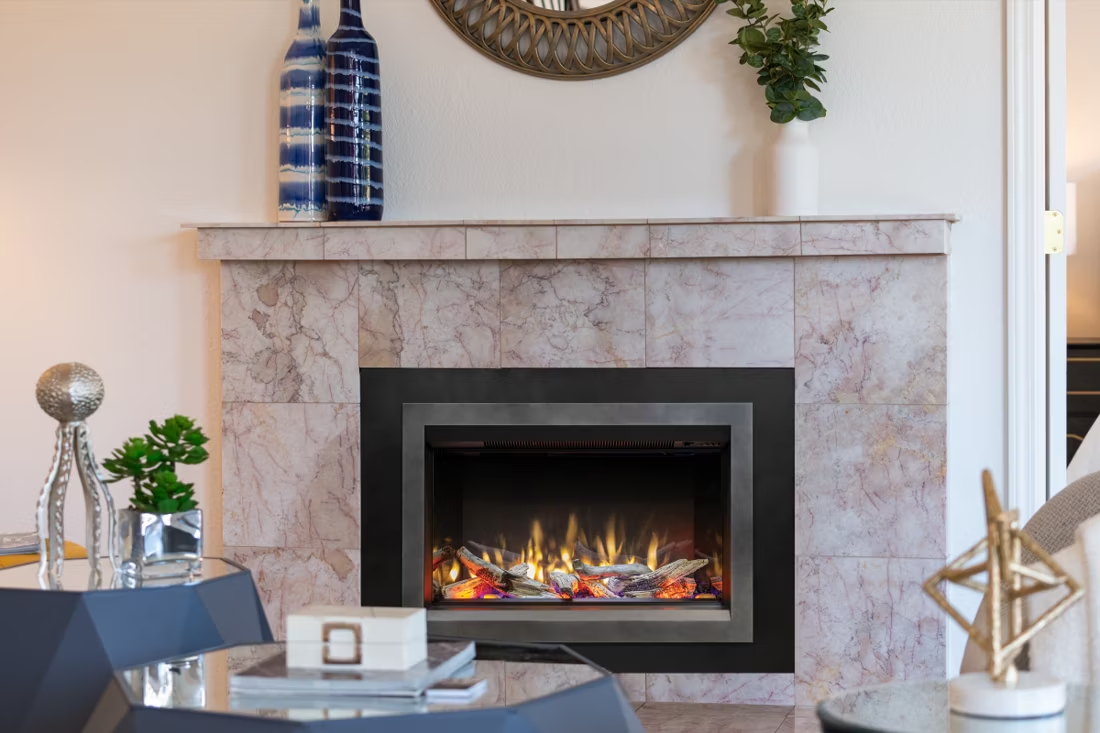
That's actually electric's advantage here. There's no chimney to build, no gas line to run, and no venting to size—a wall-mounted unit or a zero-clearance insert plugs into a standard outlet or a dedicated 120- or 240-volt circuit, which makes it the fastest and least invasive hearth project available to a Saunders County homeowner. That matters in a county where a lot of the housing stock is older farmhouses with balloon framing, plus a fair number of manufactured and modular homes in the smaller towns—both can be difficult or expensive to retrofit with a masonry chimney or gas line. Electric sidesteps all of that. Power here comes through a mix of OPPD near the Omaha-adjacent communities like Ashland and Yutan, and rural public power districts such as Norris Public Power District elsewhere in the county—either way, adding a fireplace circuit is a standard job for a licensed electrician, not a specialty install.
Three steps. No salesperson until you're ready.
Tell us about your project
Your zip code, your situation, and the fuel you're leaning toward—or let the answers point you to one.
See what's actually available
The brands dealers within 100 miles genuinely carry—real options, never a catalog mirage.
Get your dealer & Project Guide
A trusted local dealer, plus the free Project Guide & Parts List that names every component of the job.
Frequently Asked Questions
How much does an electric fireplace installation cost in Saunders County?
Cost depends almost entirely on the type of unit. A plug-in electric insert or a freestanding electric stove that just needs a standard 120-volt outlet can run $300 to $1,200 installed—often a same-day job with no electrician required. A built-in wall unit or a larger insert that needs a dedicated 240-volt circuit run through a wall or basement joists typically lands between $1,500 and $4,000 once you include the electrician's time and any surround or mantel finish work. Because there's no chimney, no gas line, and no venting to size, electric is consistently the least expensive hearth project available to Saunders County homeowners—a fraction of what a wood or gas installation with real venting work would cost.
Is an electric fireplace enough heat for a Saunders County winter?
Not as a whole-house primary heat source—with average winter lows around 12°F and a winter season about as long and cold as Madison, Wisconsin's, Saunders County winters are too long and too cold for resistance electric heat to replace a furnace. Where electric fireplaces earn their keep is zone heating: a 1,500-watt unit will comfortably carry a finished basement rec room, a home office, or a bedroom while the furnace handles the rest of the house at a lower setpoint. Plenty of homeowners in Wahoo, Ashland, and the smaller towns around the county run one in a room that doesn't get consistent airflow from the main HVAC system—old farmhouse additions and converted basements are common candidates.
Do I need a permit to install an electric fireplace in Saunders County?
A plug-in unit that uses an existing outlet typically doesn't require a permit—it's no different than plugging in a space heater. If your installer needs to run a new dedicated circuit, add a 240-volt line, or do any wiring inside a wall, that electrical work generally does require a permit through your local building department, and it should be pulled and inspected by a licensed electrician regardless of whether you're in Wahoo, Ashland, or one of the county's smaller towns. Most hearth dealers who handle electric installs will tell you upfront whether your specific unit and location call for a permit.
What's the difference between an electric fireplace and a space heater?
A space heater is a standalone appliance you set on the floor and move as needed—functional, but it looks like a space heater. An electric fireplace uses the same resistance heating element or infrared technology, but it's built into a mantel, wall unit, or insert designed to look like a real fire, with a flame effect (usually LED) that runs independently of the heat—so you can run the ambiance without the heat on a mild fall evening, or run both on a January night in Saunders County. For the same wattage, the heat output is comparable; what you're really paying for with a fireplace is the fit-and-finish and the ability to leave it running as a piece of furniture rather than an appliance you tuck away in summer.
What type of electric fireplace is best for older Saunders County farmhouses?
For older farmhouses with balloon framing and a fireplace that hasn't burned wood in years, a zero-clearance electric insert that drops into the existing masonry firebox is usually the simplest fix—it reuses the opening you already have, needs no chimney work, and can run on a standard circuit if the wattage is modest. For additions or rooms without an existing fireplace, a wall-mounted linear unit is popular in newer construction and remodels around the county, while a freestanding electric stove works well in a basement or mudroom where you want portable-feeling heat without the commitment of built-in construction. A local dealer can tell you quickly which option fits your specific opening and wiring.
Will my electric fireplace still work if the power goes out?
No—and this is the one real trade-off against wood heat in a county where oak, hickory, and cottonwood are the common local firewood species. Ice storms and high wind events do knock out power in rural Saunders County from time to time, and an electric fireplace, like the rest of your electric heat, goes dark along with it. If backup heat during an outage is a priority, some homeowners pair an electric fireplace for everyday zone heat and ambiance with a wood stove or a generator-fed furnace circuit for outage coverage. If outages aren't a major concern for your household, electric's simplicity is hard to beat.
Can an electric fireplace go in a manufactured or modular home?
Yes, and it's a common fit for the manufactured and modular housing stock found in the smaller towns around Saunders County. Electric units don't require the roof penetration or structural chimney support that wood or gas installs need, which sidesteps a lot of the complications that come with adding solid-fuel or gas appliances to manufactured housing. The main thing to check is your electrical panel's available capacity if you're adding a dedicated circuit for a larger built-in unit—a licensed electrician can confirm that in a quick panel inspection.
How long does an electric fireplace installation take?
A plug-in insert or freestanding stove is typically a same-day job—unbox it, position it, plug it in. A built-in wall unit or an insert that needs a new dedicated circuit usually takes one to two days: one day for the electrical work if a new circuit is needed, and a second for the unit installation and any surround or trim work. Compare that to a wood stove install with chimney work, which can take several days to a week—electric is by far the fastest hearth project available to Saunders County homeowners.
Electric vs. gas—which is right for my Saunders County home?
Gas delivers more heat output and a closer approximation of a real flame, but it requires either a natural gas line or a propane tank, plus venting in most cases—real construction. Electric skips all of that: no fuel line, no venting, no gas permit, and a much lower installed cost, but with less raw heat output and a flame effect that's convincing but electric rather than combustion-based. For a Saunders County homeowner who wants supplemental heat and ambiance in a specific room without touching gas lines or chimneys—a finished basement, a bedroom, an office—electric is usually the simpler and less expensive answer. For a primary living space where you want gas-level heat output and don't mind the added construction, gas is worth the extra cost and complexity.
Does an electric fireplace need a vent or chimney?
No—that's its superpower. An electric fireplace needs a wall and an outlet, period. No vent pipe, no gas line, no clearances to design around, which is why it works in bedrooms, offices, apartments, and walls where venting a gas or wood unit would be impractical or impossible. Installation is typically the simplest and least expensive of any fireplace type.
Do electric fireplaces actually produce heat?
Yes—most put out around 4,800–5,000 BTUs from a standard outlet, which comfortably warms a bedroom, office, or den as a comfort-zone heater. What they won't do is carry a whole house the way wood, gas, or pellet can. Think of electric as ambiance-first with honest supplemental heat: flames on with no heat in July, flames plus warmth in January.
What is an in-home preview and do I need one?
It's a visit where a hearth professional measures your space, confirms the model you picked actually works in your home, and walks the specs—framing, gas line, venting, finish work—before anything is ordered. Some details you just can't know until you see the house. Never make a down payment without one; it's the single most-skipped step that burns buyers.
Does a fireplace add value to my home?
On average, a fireplace adds back to the home about the same amount you spent installing it. Add the monthly savings from heating the rooms you actually use instead of the whole house—often hundreds of dollars a year—and the value case is strong before you even count what a fire does for how your family uses the room.
Find your electric fireplace in Saunders County.
Tell us about your room and your home, and we'll match you with a trusted local dealer serving Saunders County and hand you a free Project Guide & Parts List—the exact parts, including the right circuit and mounting hardware, for your electric fireplace project.
Find Your Fireplace →