
Warm up any room in Saline County—without the mess of wood or gas lines.
With winter lows averaging 14°F and over 6,000 heating degree days a year, Saline County homes need real supplemental heat—not just ambiance. Electric fireplaces deliver both, with no chimney and no new gas line. Find the right unit and connect with a trusted local dealer.
Every Project Starts From One of These Five Situations
Simple, flexible heat for Nebraska's plains winters.
Saline County sits on the open plains of southeast Nebraska—flat, wind-exposed farmland stretching between Wilber, the self-declared Czech Capital of the USA, and Crete, the county's largest city and home to Doane University. Winters here run cold and long: an average low of 14°F and roughly 6,061 heating degree days mean furnaces run hard from October through April, and the open terrain adds real windchill on top of the thermometer reading. Generations of local homes relied on oak, hickory, and cottonwood cut from the Big Blue River bottoms for wood heat, but a growing number of Saline County homeowners are adding electric fireplaces as zone heat in additions, finished basements, sunrooms, and bedrooms where running a chimney or gas line isn't practical.
The appeal is straightforward: a 120V plug-in insert or a hardwired 240V built-in installs without masonry work, without venting, and without the annual sweep a wood-burning appliance requires. That matters in Saline County's older farmhouses around Wilber, Friend, and DeWitt, where adding new gas infrastructure or a second chimney flue can be a bigger project than the homeowner wants. Most of the county is served by rural public power—Nebraska is the only state entirely served by public power districts and cooperatives, and rates here tend to run below the national average, which keeps the cost of running electric heat manageable. With no air quality restrictions in the county to worry about, electric heat is simply a matter of matching the right unit and circuit to the room.
Three steps. No salesperson until you're ready.
Tell us about your project
Your zip code, your situation, and the fuel you're leaning toward—or let the answers point you to one.
See what's actually available
The brands dealers within 100 miles genuinely carry—real options, never a catalog mirage.
Get your dealer & Project Guide
A trusted local dealer, plus the free Project Guide & Parts List that names every component of the job.
Frequently Asked Questions
How much does an electric fireplace installation cost in Saline County?
Most electric fireplace projects in Saline County fall between $350 and $2,000. A plug-in insert or freestanding stove that runs off a standard 120V outlet is on the low end and often doesn't require any electrical work at all—just place it and plug it in. A built-in linear electric fireplace or a larger unit that needs a dedicated 240V circuit runs higher once you add a licensed electrician to run new wiring, especially in older farmhouses around Wilber, Friend, or Dorchester where the electrical panel may need upgrading to add the circuit. A local dealer can tell you within a few minutes of walking the room which category your project falls into.
What size electric fireplace do I need for my room?
Electric fireplaces are almost always supplemental heat rather than a whole-home solution, so sizing is about the room, not the house. A 1,500-watt unit—the standard output for most residential models—comfortably heats a single room in the 300 to 400 square foot range, which covers most bedrooms, sunrooms, and finished basement spaces common in Saline County homes. For a larger open living area, plan on either a bigger unit or accept that it's supplementing your furnace rather than replacing it, especially once outdoor temperatures drop into the single digits, which happens most winters in the county. A local dealer will walk the room with you and match wattage and BTU output to the actual space.
Do I need a licensed electrician to install an electric fireplace?
For a plug-in unit on a standard 120V outlet, no—it's a DIY-friendly install. For a hardwired 240V built-in, yes: you'll want a licensed electrician to run the dedicated circuit and make the connection, both for safety and because most manufacturer warranties require professional installation for hardwired units. Unlike a wood stove or gas insert, there's no chimney, venting, or gas-fitter involved, which is one reason electric projects in Saline County tend to move faster and cost less than a comparable wood or gas installation.
What's the difference between an electric insert, a wall-mount, and a freestanding electric stove?
An electric insert is built to slide into an existing fireplace opening, masonry or zero-clearance, and is a common choice for homeowners updating an old wood-burning fireplace in a Wilber or Crete home without ripping anything out. A wall-mount or built-in linear unit is designed into new construction or a remodel, often recessed into drywall for a flush, modern look. A freestanding electric stove sits on the floor like a traditional wood stove and can go almost anywhere there's an outlet—a popular option for a rural Saline County addition or a room that never had a fireplace to begin with.
Do I need a permit to install an electric fireplace in Saline County?
In most cases, no—a plug-in electric fireplace or insert that uses an existing outlet doesn't trigger a permit requirement anywhere in the county. If your project involves adding a new dedicated circuit or upgrading your electrical panel for a hardwired 240V unit, that electrical work typically does need a permit, whether you're inside Wilber or Crete city limits or out in unincorporated Saline County. Your electrician will usually pull that permit as part of the job, so it's rarely something the homeowner has to manage directly.
What's the best electric fireplace for Saline County's climate?
For a county averaging 14°F lows and running heating season roughly seven months a year, look for a unit with a real 1,500-watt heater built in—not just a decorative flame with a token heat option. Brands like Dimplex and Napoleon make linear and insert models with strong, adjustable heat output that can meaningfully take the edge off a cold bedroom or basement between furnace cycles. If the room in question is drafty or poorly insulated, which is common in Saline County's older farmhouses, talk to a local dealer about whether a larger-wattage unit or a secondary space heater strategy makes more sense than relying on the fireplace alone.
How much maintenance does an electric fireplace need?
Very little, which is one of the main draws compared to wood heat. There's no chimney to sweep and no creosote to manage. Periodically dust the vents and check that the fan isn't clogged, and on units with a heating element, follow the manufacturer's guidance on filter cleaning if one is present. Most electric fireplaces run for years with no service call at all—a real contrast to the annual inspection wood-burning appliances in Saline County require.
How much does it cost to run an electric fireplace in Saline County?
A standard 1,500-watt heater running on high costs a few cents an hour to operate at typical Nebraska electric rates—Nebraska's public power system, including cooperatives like Norris Public Power District that serve much of southeast Nebraska, tends to keep rates below the national average. Running the unit for a few hours a night during the coldest stretch of winter adds a modest amount to a monthly bill, far less than heating an equivalent square footage with the furnace alone. Most homeowners use the fireplace to take the load off the furnace in one room rather than running it continuously all winter.
Electric vs. wood or gas—which makes sense for my Saline County home?
Wood heat has deep roots in Saline County, with oak, hickory, and cottonwood cut locally along the Big Blue River, and it keeps working during a power outage—a real consideration on the open plains where winter storms can knock out electric service. Gas offers instant, consistent heat but requires either an existing natural gas line or a propane tank, which isn't universal in the county's smaller towns. Electric skips both the fuel handling and the venting, installs in a fraction of the time, and is well suited to zone heating a specific room—but it depends entirely on grid power, so it's not a backup option during an outage. Many Saline County homeowners end up using electric for daily convenience in a bedroom or basement while keeping wood or a furnace as their primary or backup heat.
Can I put a TV above my fireplace?
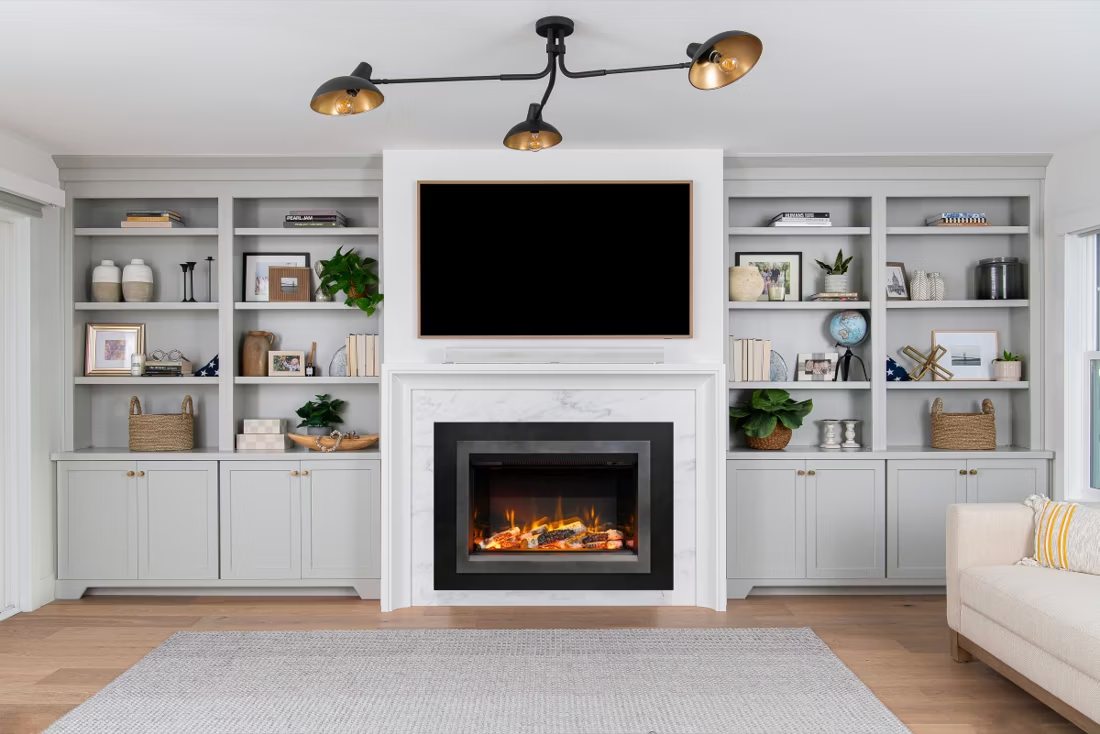
Yes—with an asterisk. Fireplaces are hot and TVs don't like heat. Either put a mantel between them to deflect rising warmth, or choose a fireplace with heat-management technology that creates a cool zone on the wall above—the wall stays around 125 degrees, barely warm, while the room still gets full heat. If you like clean lines and don't want a mantel, heat management is the answer.
Do electric fireplaces actually produce heat?
Yes—most put out around 4,800–5,000 BTUs from a standard outlet, which comfortably warms a bedroom, office, or den as a comfort-zone heater. What they won't do is carry a whole house the way wood, gas, or pellet can. Think of electric as ambiance-first with honest supplemental heat: flames on with no heat in July, flames plus warmth in January.
Can a fireplace actually lower my heating bill?
Yes—by creating a comfort zone. A furnace heats every square foot of the house just to warm the one room you're in; a gas fireplace on low burns roughly a sixth of the gas a typical furnace does. Set the furnace around 55–60 degrees as a baseline, then heat the rooms your family actually uses. Families who heat this way commonly save $20–$60 a month.
Can I install a fireplace myself?
If you're putting a fire in your house on purpose, it's best to work with an expert. Unless you're genuinely experienced in framing, gas line, vent pipe, and the national code on clearances to combustibles, have a professional do it—and ideally the same company that sells you the fireplace, so warranty, service, and liability all live under one roof.
Find your electric fireplace in Saline County.
Tell us a bit about your home and we'll put together a free Project Guide & Parts List for your electric fireplace project—the right unit, the exact parts, and a trusted local dealer in Saline County to install it.## copy_cta_eyebrow
Find Your Fireplace →