
Electric heat that plugs in and works, anywhere in Otoe County.
From the river bluffs of Nebraska City to the farmhouses around Syracuse and Unadilla, electric fireplaces add real zone heat and ambiance without a chimney, a gas line, or a permit headache. Find the right unit and connect with a trusted local dealer.
Every Project Starts From One of These Five Situations
The easiest fireplace to add to an older Otoe County home.
Otoe County sits along the Missouri River in southeast Nebraska, with Nebraska City as the county seat and a population of just over 11,500 spread across small towns like Syracuse, Dunbar, Unadilla, Douglas, and Burr. Climate zone 5A here brings an average winter low around 14°F and a heating season that runs shorter and a bit milder than places like Madison, Wisconsin, but still cold enough that a good chunk of the year needs supplemental warmth in living rooms, bedrooms, and finished basements.
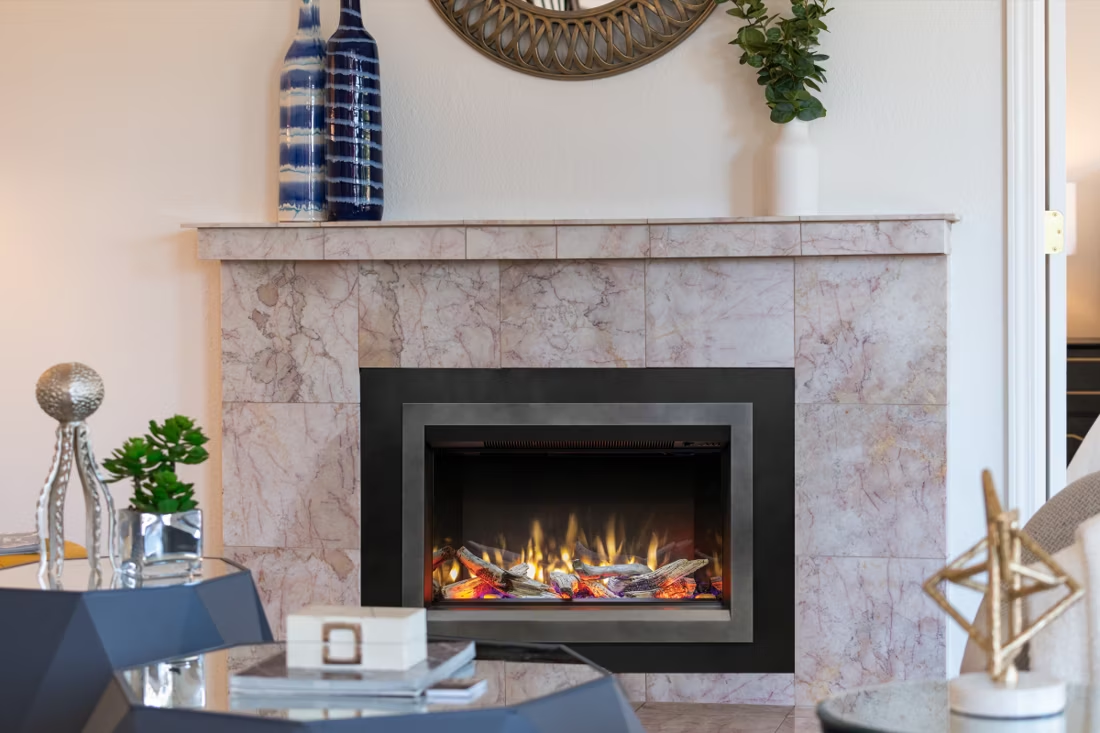
Nebraska City's core neighborhoods include a lot of homes built well before central air conditioning was standard, many with old masonry fireplaces that were never lined for a modern wood or gas insert. An electric insert drops into that same opening with no chimney liner, no venting, and no gas line—just a standard outlet or a 240V circuit for larger units. In the county's rural stretches, where propane furnaces do the heavy lifting through an Otoe County winter, an electric fireplace or stove gives you instant, controllable heat in the one or two rooms you actually live in, without running the whole furnace harder than it needs to.
Three steps. No salesperson until you're ready.
Tell us about your project
Your zip code, your situation, and the fuel you're leaning toward—or let the answers point you to one.
See what's actually available
The brands dealers within 100 miles genuinely carry—real options, never a catalog mirage.
Get your dealer & Project Guide
A trusted local dealer, plus the free Project Guide & Parts List that names every component of the job.
Frequently Asked Questions
How much does an electric fireplace installation cost in Otoe County?
Plug-in electric fireplaces and freestanding stoves are the least expensive hearth option available—most units run $300 to $2,500 installed, since there's no venting, gas line, or masonry work involved. A built-in electric insert that requires a dedicated 240V circuit, or a wall-mounted linear unit that needs framing and an electrician, typically runs $1,500 to $4,500. For older Nebraska City homes with an existing fireplace opening, converting to an electric insert is usually on the lower end of that range since the surround and hearth are already in place.
Does an electric fireplace actually put out real heat, or is it just for looks?
Most electric fireplaces sold today include a built-in fan-forced heater rated around 4,600–5,000 BTU (roughly 1,500 watts), enough to comfortably heat a single room of 400 to 1,000 square feet depending on insulation and ceiling height. That's plenty for zone heating a living room or bedroom in an Otoe County home during a stretch of 14-degree nights, but it won't replace a furnace for whole-house heat. Many owners run the flame effect year-round for ambiance and switch the heater on only when they want extra warmth in that specific room—a big part of why electric units are popular as a second heat source alongside a propane furnace or wood stove.
Can I put an electric insert into my old fireplace in a Nebraska City home?
Yes, and it's one of the more common projects for the older homes around Nebraska City and Syracuse—many of which have masonry fireplaces that were never fitted with a proper liner or haven't been used for wood burning in decades. An electric insert slides into the existing opening, gets plugged into a nearby outlet or wired to a dedicated circuit, and requires no chimney work at all. It's a straightforward way to bring a non-functional or capped fireplace back into daily use without the cost of relining a chimney for wood or gas.
Do I need a permit to install an electric fireplace in Otoe County?
Plug-in units that use a standard outlet generally don't require a permit. If your electric fireplace or insert needs a new dedicated circuit—common for larger built-in units—that electrical work should be pulled through the appropriate jurisdiction, either the city of Nebraska City or the Otoe County building office for homes outside city limits. A licensed electrician handling the circuit installation will typically pull that permit as part of the job, so it's worth confirming with your installer or dealer before work starts.
Electric vs. propane—which should heat my Otoe County home?
Most rural homes in Otoe County run on propane furnaces for whole-house heat, and that's not likely to change—propane delivers more total heat output and doesn't strain during the coldest stretches of a long, cold winter. Where electric shines is zone heating: rather than running the furnace harder to warm up one cold room, an electric fireplace or stove heats that space directly at a lower operating cost per hour. Many Otoe County households end up running propane as the primary system and an electric unit in the rooms they use most, cutting overall fuel consumption without touching the furnace thermostat.
What's the best electric fireplace for Otoe County's climate?
For a heating season with average lows around 14°F, look for a unit with a genuine 1,500-watt heater rating rather than a decorative-only model—that ensures you get real supplemental warmth on the coldest days, not just the flame effect. Linear wall-mounted units work well in newer additions and remodels, while a traditional insert is the better fit for restoring an existing masonry fireplace opening in one of Nebraska City's older homes. A local dealer can walk through your specific room dimensions and circuit setup to recommend the right wattage and style.
How much does it cost to run an electric fireplace in Otoe County?
A typical 1,500-watt electric fireplace heater costs roughly 15 to 25 cents an hour to run at current Nebraska electric rates, whether your home is served by Nebraska City Utilities in town or Norris Public Power District in the surrounding rural areas. Running one for a few hours each evening through a cold Otoe County winter adds a modest amount to a monthly bill—far less than most homeowners expect, and typically a fraction of what it costs to raise the whole-house furnace setpoint by a few degrees.
What's the difference between an electric fireplace, an electric insert, and an electric stove?
An electric fireplace is usually a built-in or wall-mounted unit designed to look like a framed hearth, often installed in new construction or during a remodel. An electric insert is sized specifically to slide into an existing masonry fireplace opening, which makes it the natural choice for older Otoe County homes with a fireplace that's currently unused. An electric stove is a freestanding cabinet-style unit that mimics a wood stove's footprint and can go almost anywhere near an outlet—a good option for a room with no fireplace at all, like a finished basement or an addition.
Electric vs. wood—which makes more sense for my home?
Wood heat still has a real following in Otoe County, where oak, hickory, and cottonwood are common and plenty of households burn a stove through the winter for cost savings and backup heat during outages. Electric can't run without power, so it's not a substitute for wood if losing electricity during an ice storm is a real concern for your property. But electric wins on simplicity: no chimney, no ash, no wood to split and stack, and instant on-off operation from a wall switch or remote. Many homeowners here use wood as their primary or backup heat source and add an electric fireplace or insert in a secondary room where running a chimney isn't practical.
Can I put a TV above my fireplace?
Yes—with an asterisk. Fireplaces are hot and TVs don't like heat. Either put a mantel between them to deflect rising warmth, or choose a fireplace with heat-management technology that creates a cool zone on the wall above—the wall stays around 125 degrees, barely warm, while the room still gets full heat. If you like clean lines and don't want a mantel, heat management is the answer.
Do electric fireplaces actually produce heat?
Yes—most put out around 4,800–5,000 BTUs from a standard outlet, which comfortably warms a bedroom, office, or den as a comfort-zone heater. What they won't do is carry a whole house the way wood, gas, or pellet can. Think of electric as ambiance-first with honest supplemental heat: flames on with no heat in July, flames plus warmth in January.
Can a fireplace actually lower my heating bill?
Yes—by creating a comfort zone. A furnace heats every square foot of the house just to warm the one room you're in; a gas fireplace on low burns roughly a sixth of the gas a typical furnace does. Set the furnace around 55–60 degrees as a baseline, then heat the rooms your family actually uses. Families who heat this way commonly save $20–$60 a month.
Does a fireplace add value to my home?
On average, a fireplace adds back to the home about the same amount you spent installing it. Add the monthly savings from heating the rooms you actually use instead of the whole house—often hundreds of dollars a year—and the value case is strong before you even count what a fire does for how your family uses the room.
Find your electric fireplace in Otoe County.
Tell us a bit about your home and we'll match you with the right electric fireplace, insert, or stove, plus a free Project Guide & Parts List and a trusted local dealer to install it.
Find Your Fireplace →