
Electric heat that fits military housing rules.
No chimney, no gas line, no lease violations—just real supplemental warmth for Sarpy County winters. Find the right unit and connect with a trusted local dealer.
Every Project Starts From One of These Five Situations
The easiest heat to add to base housing.
Offutt AFB sits at just over 1,000 feet along the Missouri River in Sarpy County, in a climate zone (5A) with a long, cold winter season and regular winter lows around 13°F. Much of the population here lives in privatized military family housing or nearby off-base rentals in Bellevue and Papillion, and that housing stock comes with real constraints: privatized housing leases and base fire-safety rules generally rule out solid-fuel wood stoves and pellet appliances, since they require chimneys, hearth pads, and structural alterations that landlords and the 55th Civil Engineer Squadron won't sign off on for tenant-occupied units.
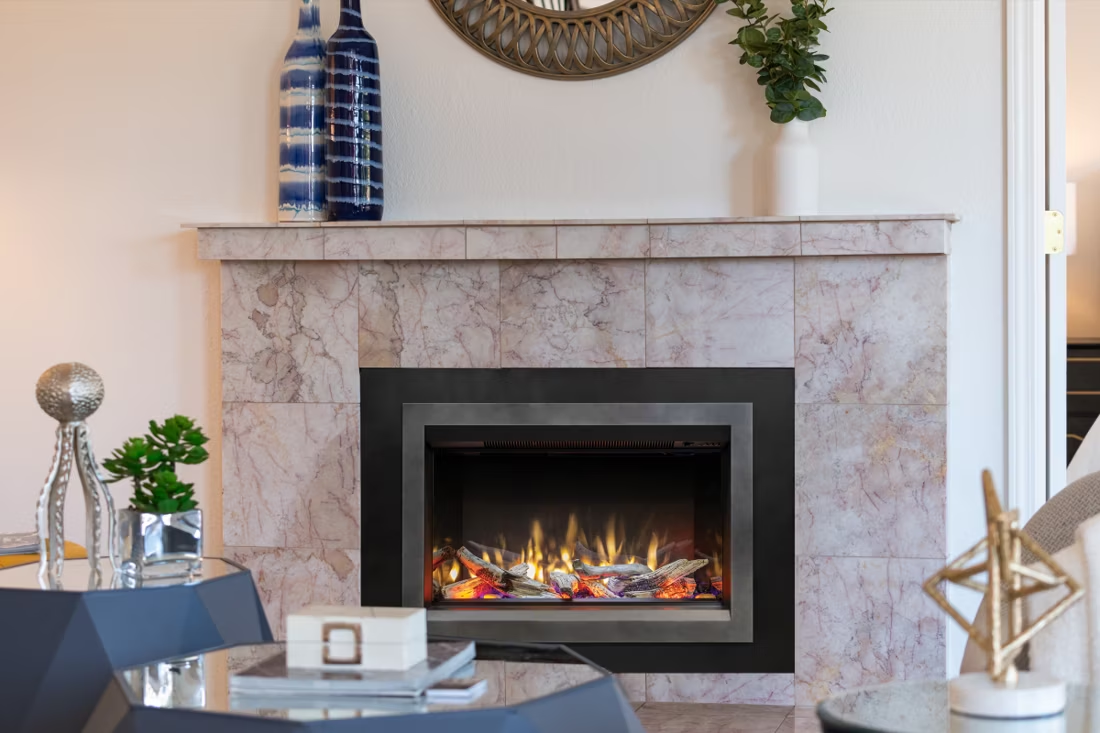
Electric fireplaces solve that problem cleanly. There's no venting, no gas line, and no combustion to worry about at fire-marshal inspection—which is exactly why electric units show up so often in base housing and nearby rentals. Power comes from Omaha Public Power District at roughly 12.4 cents per kWh, and a plug-in or wall-mount unit can supplement a room's heat for pennies a night. For homeowners off-base with more flexibility, a built-in electric insert into an existing fireplace opening is a popular upgrade that still needs only an electrician, not a full mechanical permit process.
Three steps. No salesperson until you're ready.
Tell us about your project
Your zip code, your situation, and the fuel you're leaning toward—or let the answers point you to one.
See what's actually available
The brands dealers within 100 miles genuinely carry—real options, never a catalog mirage.
Get your dealer & Project Guide
A trusted local dealer, plus the free Project Guide & Parts List that names every component of the job.
Frequently Asked Questions
How much does an electric fireplace cost to install near Offutt AFB?
Plug-in electric fireplaces and freestanding stoves need no installation at all—you set them on the floor or mount them and plug into a standard outlet, typically $200 to $900 for the unit itself. Built-in electric inserts or wall units that replace an existing fireplace opening usually run $800 to $2,500 installed, with most of that cost being the unit and a licensed electrician's time to add a dedicated circuit if the panel needs it. Because there's no venting or gas line, electric is consistently the least expensive fireplace option to add to a Sarpy County home.
Can I install an electric fireplace if I live in base housing at Offutt?
In most cases, yes, but check with your housing management office before anything gets mounted to a wall. Privatized housing leases at Offutt typically allow freestanding or plug-in electric fireplaces since they don't alter the structure, and many families use a wall-mount unit that hangs on drywall anchors rather than being recessed into a wall cavity. Recessed, in-wall electric fireplaces that require cutting into drywall or running new electrical are usually a homeowner-only project—renters should stick to freestanding, tabletop, or surface-mount styles that come out cleanly at move-out.
Why doesn't wood or pellet heat make sense here the way it might elsewhere in Nebraska?
Wood and pellet appliances are effectively off the table for most of Offutt AFB's housing stock. On-base family housing prohibits solid-fuel appliances for fire-code reasons, and even off-base rentals in Bellevue and Papillion rarely allow tenants to add a chimney or pellet vent. Homeowners with detached housing off-base technically could pursue wood or pellet, but given how much of this zip code's population lives in leased military or off-base rental housing, electric and gas remain the practical choices—electric especially, since it requires no structural modification at all.
How much does it cost to run an electric fireplace given OPPD's rates?
Omaha Public Power District bills residential customers around 12.4 cents per kWh. A typical 1,500-watt electric fireplace running on high for 5 hours a day costs roughly 90 cents a day, or about $27 a month, if used as supplemental heat during the coldest stretch of winter. Most owners run the heater function only during cold snaps and use the flame effect without heat the rest of the year, which keeps the electric bill impact minimal—a fraction of what running a whole-home furnace an extra few hours would cost.
What size electric fireplace do I need for a Sarpy County winter?
With winter lows averaging 13°F and a long, cold heating season typical of this area, most electric fireplaces here are chosen as zone heaters for a specific room rather than whole-home heat. A 1,500-watt unit (the standard max output for nearly all residential electric fireplaces, by federal safety code) will comfortably heat a 400-to-1,000-square-foot space depending on insulation and ceiling height. If you're trying to take pressure off a central furnace in a larger open living area, a local dealer can help you decide between one larger unit and two smaller ones placed strategically.
Do I need a permit for an electric fireplace off-base in Bellevue or Papillion?
Plug-in units need no permit at all. If you're having a built-in electric insert installed and it requires a new dedicated circuit, most licensed electricians will pull an electrical permit through the applicable city building department (Bellevue or Papillion) or Sarpy County if you're in an unincorporated area—this is a routine, inexpensive permit compared to what a gas line or chimney installation would require. On base, any electrical work in privatized housing is coordinated through your housing management office rather than county permitting.
What's the difference between an electric insert, a wall-mount, and a freestanding electric stove?
An electric insert is built to slide into an existing fireplace opening, giving an old wood-burning fireplace a clean, code-free glass-front look with real heat output. A wall-mount unit hangs flat against a wall like a TV and works well in living rooms or bedrooms without an existing hearth. A freestanding electric stove looks like a traditional wood stove but plugs into an outlet, which makes it a favorite in base housing since it can be unplugged and taken along at PCS time. All three run on standard household current—the choice mostly comes down to your room layout and whether you're a renter or homeowner.
Will my electric fireplace still work during a power outage?
No—because electric fireplaces run entirely on household current, they shut off along with everything else during an outage. This is the one real tradeoff compared to a battery-backed gas unit or a wood stove. For Offutt AFB homes where winter storms occasionally knock out power for a stretch, an electric fireplace should be considered ambiance and zone heat rather than emergency backup heat. If outage resilience matters to you, a local dealer can talk through gas options as a complement rather than a replacement.
How much maintenance does an electric fireplace need?
Very little. There's no chimney to sweep, no gas line to inspect, and no combustion byproducts to worry about. Routine care is limited to occasionally dusting the heating element and vents, wiping the glass front, and replacing the LED light strip every several years once it dims—a component most manufacturers sell as a simple owner-replaceable part. This low-maintenance profile is another reason electric fits well in rental and base housing situations where tenants aren't set up to do annual chimney inspections.
Can I put a TV above my fireplace?
Yes—with an asterisk. Fireplaces are hot and TVs don't like heat. Either put a mantel between them to deflect rising warmth, or choose a fireplace with heat-management technology that creates a cool zone on the wall above—the wall stays around 125 degrees, barely warm, while the room still gets full heat. If you like clean lines and don't want a mantel, heat management is the answer.
Does an electric fireplace need a vent or chimney?
No—that's its superpower. An electric fireplace needs a wall and an outlet, period. No vent pipe, no gas line, no clearances to design around, which is why it works in bedrooms, offices, apartments, and walls where venting a gas or wood unit would be impractical or impossible. Installation is typically the simplest and least expensive of any fireplace type.
Can I install a fireplace myself?
If you're putting a fire in your house on purpose, it's best to work with an expert. Unless you're genuinely experienced in framing, gas line, vent pipe, and the national code on clearances to combustibles, have a professional do it—and ideally the same company that sells you the fireplace, so warranty, service, and liability all live under one roof.
How much should I budget for a fireplace?
For an average home—covering the fireplace, the vent pipe, and basic installation—a budget between $3,900 and $5,500 gives you a lot of options across wood, gas, and pellet. By the time you add finish work, gas line, and electrical, the average complete installation lands between $5,000 and $12,000 all-in. In a remodel or new build, a good rule is to put about 2.5% of the total project cost toward the fireplace.
Nearby Dealers
Hearth shops serving Offutt AFB and the surrounding area. Every listing shows whether it is a WhyFire partner, a dealer we have verified as authorized for the brands we recommend, or a local business carrying hearth products. No manufacturer pays for placement. How we verify dealers →
Builders Supply Co. Inc
Fireplace Stone & Patio
Edward's Stone Inc
Electric Service in Offutt AFB
An electric fireplace's heater draws about 1,500 watts—pennies per hour at local rates.
Omaha Public Power District
Find your electric fireplace near Offutt AFB.
Tell us a bit about your home—on-base or off—and we'll match you with the right electric fireplace, insert, or stove, plus a free Project Guide & Parts List and a trusted local dealer to install it.
Find Your Fireplace →