
Warm up any room in Nemaha County—no chimney required.
Zone heat for farmhouses, additions, and finished basements from Auburn to Brownville to Peru, with average winter lows near 14°F and no venting, gas line, or masonry work involved. Find the right unit and get matched with a local dealer who installs it correctly.
Every Project Starts From One of These Five Situations
No venting, no fuel delivery, and it plugs into a room you already have.
Nemaha County sits along the Missouri River in the southeast corner of Nebraska—Auburn as the county seat, with Peru, Brownville, Julian, and the town of Nemaha rounding out a county of under 5,000 people spread mostly across farmland. Climate zone 5A and winters as cold and long as Madison, Wisconsin or Minneapolis put this area in that same range—cold enough that a single heat source rarely covers the whole house, especially in older farmhouses with additions, sunrooms, or finished basements that the propane furnace or wood stove doesn't quite reach.
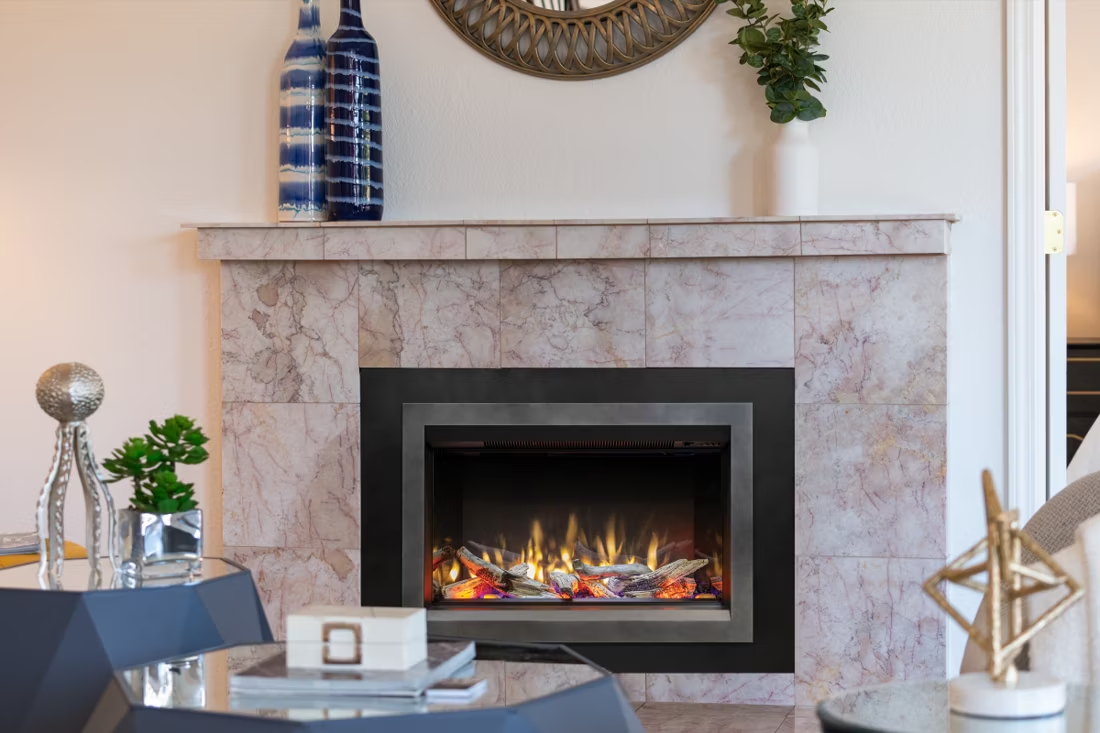
That's where electric fireplaces do real work in Nemaha County. There's no chimney to build, no gas line to run out to a rural property, and no fuel to store or have delivered—which matters here, since a lot of the county sits outside any natural gas footprint and relies on propane tanks or wood for primary heat. A plug-in electric unit needs nothing more than a standard outlet; a built-in insert needs a dedicated circuit, which a licensed electrician handles in an afternoon. Either way, it's a fast way to add real, usable heat to one room without touching the rest of the house's heating system.
Three steps. No salesperson until you're ready.
Tell us about your project
Your zip code, your situation, and the fuel you're leaning toward—or let the answers point you to one.
See what's actually available
The brands dealers within 100 miles genuinely carry—real options, never a catalog mirage.
Get your dealer & Project Guide
A trusted local dealer, plus the free Project Guide & Parts List that names every component of the job.
Frequently Asked Questions
How much does an electric fireplace installation cost in Nemaha County?
A plug-in electric fireplace or insert that uses an existing outlet typically runs $300 to $900 installed, since there's no venting or gas work involved—most of that cost is the unit itself plus a straightforward mount or cabinet fit. A built-in electric fireplace that needs a dedicated 20-amp circuit run by a licensed electrician usually lands between $800 and $1,800 depending on how far the wiring has to travel, which matters more in older farmhouses around Auburn and Peru where panel upgrades sometimes come into play. Either way, costs are lower than wood or gas installs because there's no chimney, liner, or gas line to account for.
Will an electric fireplace actually heat a room in a Nebraska winter?
Yes, for the room it's in—most electric units put out around 4,000-5,000 BTUs, enough to comfortably heat a 300-400 square foot space even with Nemaha County's average winter lows around 14°F. What it won't do is replace a whole-house furnace during a stretch of single-digit nights. The best fit here is zone heating: a converted sunroom, a finished basement, a home office addition, or a bedroom that runs cold relative to the rest of the house. Homeowners pairing it with a wood stove or propane furnace for main heat get the best of both—instant supplemental warmth in the room that needs it, without running the whole system harder.
Do I need a permit for an electric fireplace in Nemaha County?
A plug-in unit that uses an existing outlet typically doesn't require a permit—it's treated like any other appliance. A built-in electric fireplace or insert that requires a new dedicated circuit is electrical work, and that generally does need to go through the county's building and zoning office in Auburn, especially for homes outside city limits. A licensed electrician pulling the permit as part of the job is the normal path, and it's worth confirming with them rather than assuming—rules can differ slightly between incorporated towns like Auburn or Peru and the unincorporated parts of the county.
Electric vs. wood—which makes more sense for my Nemaha County home?
Wood has deep roots here—oak, hickory, and cottonwood are all common locally, and a wood stove keeps working during an ice storm when the power lines come down, which happens in this part of Nebraska most winters. Electric fireplaces need power to run, full stop, so they're not a storm-outage backup. What electric wins on is convenience and placement: no ash, no chimney maintenance, no wood to split and stack, and you can put one in a room a wood stove could never reach—a basement rec room, a bedroom, an enclosed porch. Plenty of Nemaha County homes run wood or propane as their real heat source and use an electric unit for the rooms that don't have a flue nearby.
Electric vs. propane—which is the better call for supplemental heat?
Most of rural Nemaha County runs on propane rather than natural gas, since gas mains don't reach far outside Auburn. Propane heats a room faster and harder and keeps running in a power outage as long as the furnace has battery backup, but it means tank rental, fuel deliveries, and price swings depending on the season. Electric has no fuel cost beyond the utility bill, no tank to maintain, and no delivery truck to schedule—but it's only as reliable as the power grid. For a spare bedroom or basement that just needs to not be cold, electric is usually the simpler, lower-maintenance choice; for heating a whole addition through a hard winter, propane still has the edge.
What size electric fireplace do I need for my room?
For a typical bedroom or home office in the 150-250 square foot range, a standard 1,500-watt electric insert or wall-mount unit is usually plenty, even with Nemaha County's cold winter nights. Larger open spaces—a converted sunporch, a great room addition—may need a wider unit or a higher-output model to feel like real heat rather than ambiance. Older farmhouses with drafty single-pane windows or uninsulated additions typically need to size up compared to a newer, well-insulated build of the same square footage. A local dealer can walk through your specific room during a consultation rather than guessing off a general chart.
Can I install an electric fireplace in a manufactured or mobile home?
Yes, and it's one of the more common electric fireplace installs in rural counties like Nemaha, where manufactured and mobile homes make up a meaningful share of the rural housing stock. Because there's no venting or gas line involved, electric units avoid the clearance and structural concerns that come with wood or gas installs in a manufactured home. The main thing to check is your electrical panel's capacity if you're installing a built-in unit that needs its own circuit—older mobile home panels sometimes need an assessment before adding a new dedicated line. A licensed electrician can confirm this in one visit.
Where can I find electric fireplace dealers or installers near Auburn?
Electric fireplace work in Nemaha County is usually handled by hearth retailers based in Auburn or nearby southeast Nebraska towns, along with local licensed electricians for the wiring side of built-in units. Because plug-in models don't require specialized trade licensing the way gas or wood installs do, homeowners have more flexibility here—but a dealer who regularly installs hearth products will still get the unit properly mounted, sized, and wired without guesswork, whether you're in Auburn, Peru, Brownville, or out on a rural route.
Will my electric fireplace work during a power outage?
No—electric fireplaces need grid power to run the heating element, fan, and controls, so they go dark along with everything else when the power drops. That's an important distinction for Nemaha County, where ice storms and high winds knock out rural electric service most winters. If backup heat during an outage matters to you, a wood stove that burns local oak or hickory, or a propane appliance with battery-backup ignition, is the better primary choice—with an electric fireplace layered in for everyday convenience the rest of the winter.
Can I put a TV above my fireplace?
Yes—with an asterisk. Fireplaces are hot and TVs don't like heat. Either put a mantel between them to deflect rising warmth, or choose a fireplace with heat-management technology that creates a cool zone on the wall above—the wall stays around 125 degrees, barely warm, while the room still gets full heat. If you like clean lines and don't want a mantel, heat management is the answer.
Do electric fireplaces actually produce heat?
Yes—most put out around 4,800–5,000 BTUs from a standard outlet, which comfortably warms a bedroom, office, or den as a comfort-zone heater. What they won't do is carry a whole house the way wood, gas, or pellet can. Think of electric as ambiance-first with honest supplemental heat: flames on with no heat in July, flames plus warmth in January.
Can I install a fireplace myself?
If you're putting a fire in your house on purpose, it's best to work with an expert. Unless you're genuinely experienced in framing, gas line, vent pipe, and the national code on clearances to combustibles, have a professional do it—and ideally the same company that sells you the fireplace, so warranty, service, and liability all live under one roof.
How much should I budget for a fireplace?
For an average home—covering the fireplace, the vent pipe, and basic installation—a budget between $3,900 and $5,500 gives you a lot of options across wood, gas, and pellet. By the time you add finish work, gas line, and electrical, the average complete installation lands between $5,000 and $12,000 all-in. In a remodel or new build, a good rule is to put about 2.5% of the total project cost toward the fireplace.
Find your electric fireplace in Nemaha County.
Tell us about your room and how you plan to use it, and we'll match you with a local dealer and send over a free Project Guide & Parts List—the exact unit, mounting, and wiring plan for your Nemaha County home.
Find Your Fireplace →