
Instant heat for Madison's long, cold winters.
With a long, hard winter and lows averaging 10°F, Madison homes need dependable heat. A gas fireplace delivers it at the flip of a switch—find the right unit and a trusted local dealer.
Every Project Starts From One of These Five Situations
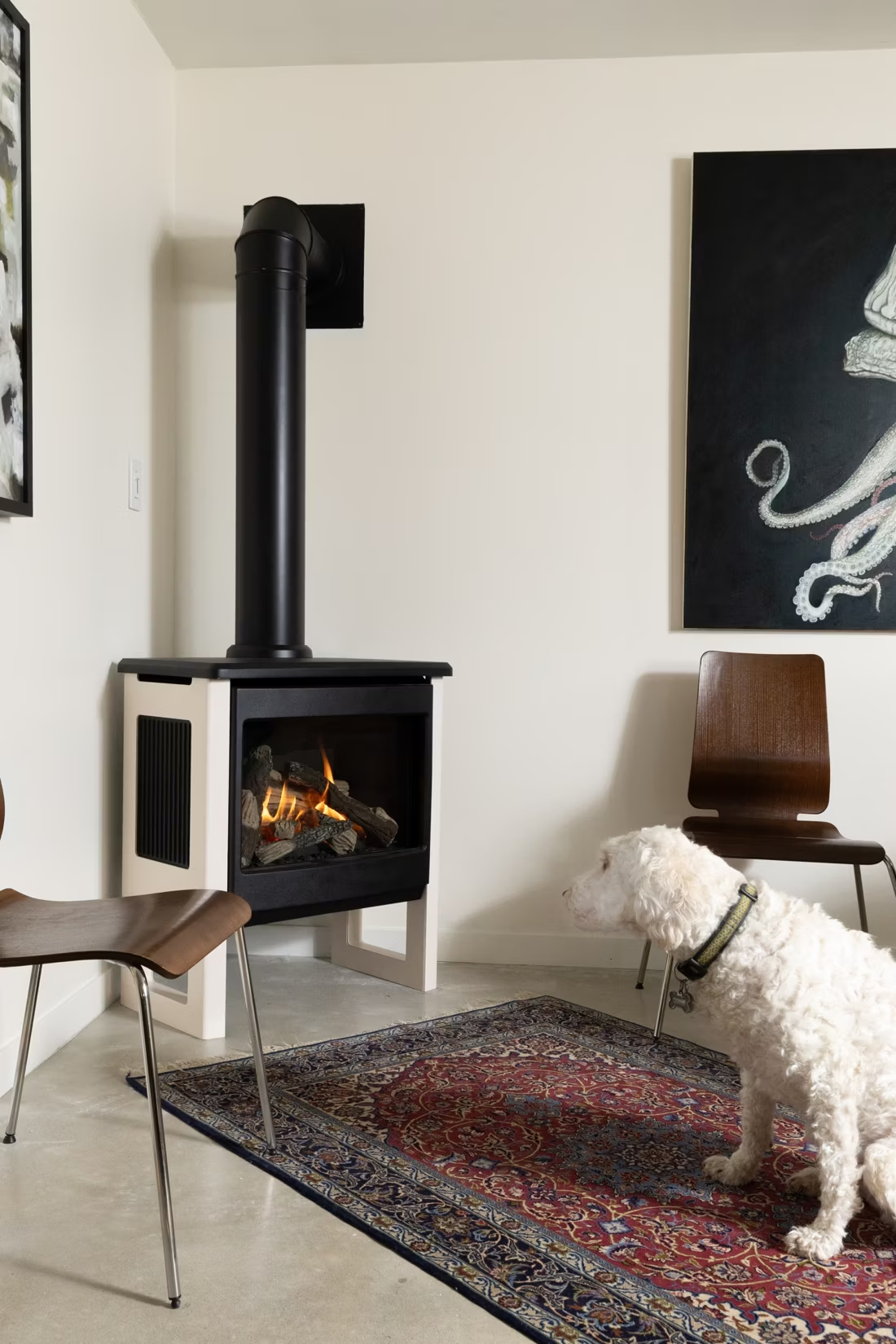
Dependable warmth without hauling wood.
Madison sits in northeast Nebraska's climate zone 5A at 1,582 feet elevation, with winters that rival places like Fargo or Bismarck for sheer duration—a long, hard heating season and average lows around 10°F. Oak, hickory, and cottonwood grow throughout Madison County, but wood heat never became the local default the way it has in forested mountain regions; most homes here are built and heated around gas or electric systems, with wood stoves showing up only occasionally for ambiance or backup.
Madison itself is a small town of about 2,100 people, and there's no piped natural gas utility serving the area in the data we track—which means most gas fireplace installations here run on propane, delivered and tanked by local suppliers rather than fed through a city gas main. Electric service comes through Loup River Public Power District, Elkhorn Rural Public Power District, or the City of Madison's own municipal utility, with residential rates running roughly 9.4 to 10.6 cents per kWh—cheap enough that electric fireplaces are a real option too. For most homeowners chasing real heat output during a Nebraska cold front, though, a propane-fired direct-vent fireplace or insert is still the workhorse choice.
Three steps. No salesperson until you're ready.
Tell us about your project
Your zip code, your situation, and the fuel you're leaning toward—or let the answers point you to one.
See what's actually available
The brands dealers within 100 miles genuinely carry—real options, never a catalog mirage.
Get your dealer & Project Guide
A trusted local dealer, plus the free Project Guide & Parts List that names every component of the job.
Frequently Asked Questions
How much does a gas fireplace installation cost in Madison?
For a town this size, expect to work with a dealer based in or around Norfolk, since Madison itself doesn't have a large retail hearth market. A propane direct-vent fireplace or insert installation typically runs $3,500 to $9,000 depending on the unit, whether a propane tank is already in place, and how much venting work is needed. Homes with an existing propane tank and appliances (a furnace or water heater already running on propane) tend to land on the lower end since the fuel supply is already solved. New propane tank installs or long line runs push costs higher. A local installer will give you a firm number after seeing your space.
Is natural gas available in Madison, or do I need propane?
Madison doesn't have a municipal natural gas utility on record, which is typical for a lot of small Nebraska farm towns—most homes here run on propane for gas appliances, delivered and stored in a tank on the property. If you're adding a gas fireplace, plan on propane unless you already know your home has a natural gas hookup. Most fireplace and insert models are built to run on either fuel with the right orifice kit, so the appliance choice isn't limited—it's really about which supplier delivers to your address and how big a tank your household needs for a Nebraska winter.
Can I convert an old masonry fireplace to gas in Madison?
Yes, and it's a common project even in areas like Madison where wood heat was never the default. A propane insert can be set into an existing masonry firebox, using the existing chimney as a liner-vented path, which preserves the look of the fireplace while eliminating ash, smoke, and the need to source oak or hickory firewood. Costs typically run $4,000 to $8,500 depending on the insert and whether a propane tank needs to be added or upsized. It's a good option for older Madison County farmhouses with a fireplace that mostly sits unused.
Will my gas fireplace work during a power outage?
Most direct-vent propane fireplaces with intermittent pilot ignition (IPI) run on a small battery backup that kicks in automatically when the power drops—useful during Nebraska ice storms, which are the more common outage cause here than summer heat. Valor fireplaces work a bit differently: their pilot generates its own electricity through the thermocouple, so there's no battery to remember at all. Given how far apart rural properties in Madison County can be from a repair crew during an ice event, ask your dealer specifically about the ignition system before you buy.
What's the difference between a gas fireplace, gas insert, and gas stove?
A gas fireplace is a fully built-in unit, framed into a wall—the right call for new construction or a remodel. A gas insert drops into an existing masonry firebox and uses the chimney as its vent path, which is the more common upgrade for older Madison homes with a fireplace already in place. A gas stove is a freestanding cabinet-style unit that sits on the floor, similar to a wood stove footprint, and works well in a room without any existing fireplace or chimney. Most Madison homeowners with an existing hearth go with an insert; those building new or adding heat to a room without one usually go built-in or freestanding.
Do I need a permit to install a gas fireplace in Madison?
Yes—expect to pull both a building permit and confirm gas line or propane connection work with a licensed installer through the City of Madison or Madison County building department, depending on where the property sits. Most hearth dealers coordinate this permitting as part of the install, which matters in a rural service area like this one where you may otherwise be juggling a propane supplier, an electrician, and a contractor separately.
What's the difference between vented and vent-free gas fireplaces, and which is allowed in Nebraska?
Vented (direct-vent) gas fireplaces draw combustion air from outside and exhaust it back outside through sealed venting—they're the standard, code-compliant choice everywhere, including Nebraska. Vent-free units burn fuel directly into the room without external venting; they're legal in Nebraska but come with strict room-sizing and ventilation requirements, and some states like California and Colorado restrict them outright. With Madison's air quality rated clean and no winter inversion issues in this part of the state, either option is workable from a regulatory standpoint—but most local installers still steer homeowners toward direct-vent units for the cleaner indoor air and stronger real-world heat output.
How often should my propane fireplace be serviced?
Plan on an annual inspection, ideally before the coldest stretch of a Nebraska winter sets in. A technician checks the burner, pilot assembly, gas connections, and venting, and cleans the glass and interior—usually $150 to $250 for a direct-vent unit. Because most Madison-area installs run on propane rather than piped gas, it's also worth having the same visit include a look at your tank regulator and line connections, especially if the tank sees temperature swings between summer heat and single-digit winter lows.
Gas vs. electric fireplace—which makes more sense in Madison?
With Madison's residential electric rates running about 9.4 to 10.6 cents per kWh through Loup River Public Power District, Elkhorn Rural Public Power District, or the city's own utility, electric fireplaces are cheap to install ($400–$1,200 typically) and simple to run, but they produce far less real heat—more ambiance and supplemental warmth than a match for a 10°F January night. Propane gas units cost more upfront and require fuel deliveries, but they can genuinely heat a room or zone through a long Nebraska cold front, and most models keep working in a power outage. For serious winter heat, gas usually wins here; for a low-commitment accent fireplace, electric is the easier call.
What's the difference between an insert and a zero-clearance fireplace?
An insert is a fireplace that slides into a pre-existing wood-burning fireplace—if you don't have one, there's nothing to insert it into. A zero-clearance fireplace is built into a framed wall, which makes it the answer for remodels and new construction. Simple test: existing masonry fireplace means insert; blank or framed wall means zero-clearance.
Can I put a TV above my fireplace?
Yes—with an asterisk. Fireplaces are hot and TVs don't like heat. Either put a mantel between them to deflect rising warmth, or choose a fireplace with heat-management technology that creates a cool zone on the wall above—the wall stays around 125 degrees, barely warm, while the room still gets full heat. If you like clean lines and don't want a mantel, heat management is the answer.
How much should I budget for a fireplace?
For an average home—covering the fireplace, the vent pipe, and basic installation—a budget between $3,900 and $5,500 gives you a lot of options across wood, gas, and pellet. By the time you add finish work, gas line, and electrical, the average complete installation lands between $5,000 and $12,000 all-in. In a remodel or new build, a good rule is to put about 2.5% of the total project cost toward the fireplace.
Does a fireplace add value to my home?
On average, a fireplace adds back to the home about the same amount you spent installing it. Add the monthly savings from heating the rooms you actually use instead of the whole house—often hundreds of dollars a year—and the value case is strong before you even count what a fire does for how your family uses the room.
Nearby Dealers
Hearth shops serving Madison and the surrounding area. Every listing shows whether it is a WhyFire partner, a dealer we have verified as authorized for the brands we recommend, or a local business carrying hearth products. No manufacturer pays for placement. How we verify dealers →
J & R Heating
Pinnacle Heating & Cooling
Hearth & Home Decor
Kaiser Heating & Cooling
Larry's Heating & Cooling
Edward's Stone Inc
Fireplace Stone & Patio
Robidoux Inc
Capital Patio/flame Shop
Table Rock Stone & Fireplace
Builders Supply Co. Inc
Fireplace Stone & Patio - Lincoln
Edward's Stone Inc
Find your gas fireplace in Madison.
Tell us about your home and heating goals, and we'll match you with a trusted local dealer plus a free Project Guide & Parts List—the exact parts, venting, and recommendations for your Madison gas fireplace project.
Find Your Fireplace →