
Add real warmth to your Lincoln County home—no chimney required.
From North Platte to Hershey and Sutherland, electric fireplaces plug into any Nebraska Public Power District-served home and add zone heat and ambiance without venting, gas lines, or firewood. Find the right unit and connect with a trusted local dealer.
Every Project Starts From One of These Five Situations
Supplemental warmth that plugs in and works everywhere.
Lincoln County stretches across the North Platte River valley, with North Platte as the county seat and smaller communities—Hershey, Sutherland, Maxwell, Wallace, Brady—spread across the surrounding farm and ranch country. Winters here are genuinely cold: Climate Zone 5A, an average winter low of 16°F, and a long, demanding winter heating season, putting Lincoln County in the same range as Bismarck, North Dakota for sustained winter heating demand. Oak, hickory, and cottonwood keep plenty of local wood stoves burning, but electric fireplaces fill a different, equally real need here.
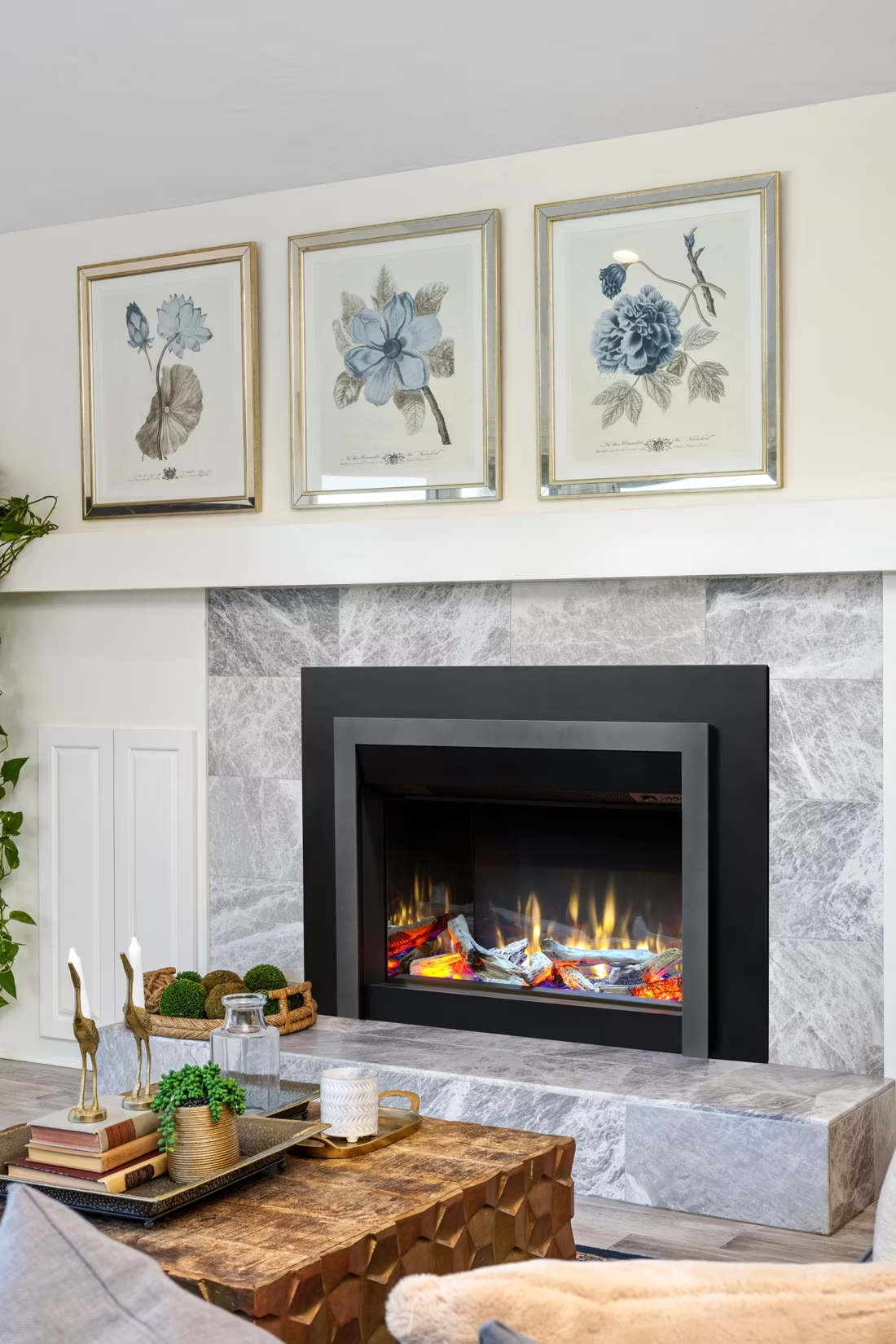
An electric fireplace isn't going to replace the furnace on a January night when temperatures sit in the single digits—with such a long, demanding winter heating season, Lincoln County homes need a real primary heat source, and electric units are built for supplemental zone heat and ambiance, not whole-house heating. Where they shine is in finished basements, bedrooms, home offices, and the rental and multi-family housing common around North Platte's rail-driven economy, where running gas lines or a wood chimney isn't practical. Powered through Nebraska Public Power District's grid, a plug-in or built-in electric unit gives you instant flame effect and real heat output in a single room, with none of the venting, permitting, or fuel storage that wood, gas, or pellet installs require.
Three steps. No salesperson until you're ready.
Tell us about your project
Your zip code, your situation, and the fuel you're leaning toward—or let the answers point you to one.
See what's actually available
The brands dealers within 100 miles genuinely carry—real options, never a catalog mirage.
Get your dealer & Project Guide
A trusted local dealer, plus the free Project Guide & Parts List that names every component of the job.
Frequently Asked Questions
How much does an electric fireplace installation cost in Lincoln County?
A freestanding, plug-in electric fireplace or insert that runs on a standard household outlet typically costs $200 to $1,200 for the unit itself, with no professional installation needed beyond mounting. A built-in wall unit or a fireplace insert that requires a licensed electrician to run a dedicated 120V or 240V circuit generally runs $1,200 to $3,500 installed in a North Platte-area home, more if you're adding custom mantel or surround carpentry. Because there's no venting, chimney, or gas line involved, electric installs are consistently the least expensive hearth option in Lincoln County—a real advantage for rental properties and older homes near town that weren't built with a masonry chimney.
Can an electric fireplace be my main source of heat in Lincoln County?
Not realistically. With such a long, demanding winter heating season and winter lows that average 16°F, Lincoln County needs a furnace or other whole-home heat source sized for sustained cold snaps, and even a large electric unit tops out around 5,200 BTU on a standard 120V circuit—enough to noticeably warm one room, not a house. Most Lincoln County homeowners use electric fireplaces to supplement the furnace in a specific room (a finished basement, a bedroom, a home office) or to take the edge off during shoulder-season mornings and evenings when running the full furnace feels like overkill.
Do I need a permit to install an electric fireplace in Lincoln County?
A simple plug-in unit that uses an existing outlet doesn't require a permit. If you're installing a built-in wall unit or an insert that needs a new dedicated circuit, the electrical work itself typically requires a permit through the Lincoln County Building Department (or the City of North Platte if you're inside city limits), and it should be pulled by a licensed electrician regardless of jurisdiction. This is a much lighter permitting process than wood or gas installs—there's no venting inspection or chimney clearance to satisfy, just standard electrical code.
Where do electric fireplaces make the most sense in Lincoln County homes?
Finished basements are the most common install we see across North Platte and the surrounding county, since electric units add heat and light to a space that's often the coldest room in the house without any venting work. They're also popular in bedrooms, home offices, and the apartments and rental duplexes common near North Platte's rail and highway corridor, where a landlord can't run a gas line or install a wood-burning chimney but still wants a fireplace as an amenity. For older farmhouses out toward Hershey, Sutherland, or Maxwell without existing gas service, an electric insert into an unused masonry fireplace opening is a low-cost way to bring that space back into use.
Electric vs. wood or gas—which fits my Lincoln County home?
Wood, using local oak, hickory, or cottonwood, delivers the highest heat output and works during a power outage—a real consideration on the plains where winter storms can knock out electric service for hours. Gas (natural gas where available, or propane in the more rural parts of the county) offers instant, substantial heat without wood handling. Electric can't compete with either on raw heat output or storm resilience, since it needs grid power to run, but it wins on upfront cost, zero maintenance, and the ability to install in spaces—apartments, condos, rooms without a flue—where wood and gas simply aren't options. Many Lincoln County homeowners run wood or gas as their real heat source and add electric units in secondary rooms purely for convenience and ambiance.
How much does it cost to run an electric fireplace with NPPD service?
Most electric fireplaces draw around 1,500 watts on the heat setting, which on a typical Nebraska Public Power District residential rate works out to roughly a dime to fifteen cents per hour of heater use—flame-only mode with the heater off draws only a few watts and costs next to nothing. Running one for a few hours a day in a basement or bedroom during the coldest stretch of a Lincoln County winter adds a modest amount to your NPPD bill, generally far less than heating that same space with baseboard electric resistance heat or extending your furnace's ductwork.
What electric fireplace brands are available through Lincoln County dealers?
Local hearth dealers serving North Platte and the surrounding county typically carry mainstream electric brands like Dimplex, Napoleon, and Amantii, ranging from simple plug-in log-set inserts to full linear wall-mount units with adjustable flame color and heat output. Because electric units don't require the same certification and venting compliance as wood or gas appliances, dealers can usually special-order a wider range of styles and sizes than what's on the showroom floor—worth asking about if you have a specific fireplace opening or wall space to fill.
How much maintenance does an electric fireplace need?
Very little compared to wood or gas—there's no chimney to sweep, no gas lines to inspect, and no ash or creosote to manage. Periodically dusting the unit and wiping down the glass front keeps it looking good, and units with a built-in fan or blower benefit from an occasional check to make sure the filter or vents aren't clogged with dust. LED-based flame effects and heating elements are largely maintenance-free and typically carry manufacturer warranties of several years, which matters in a county where a service call from a specialist can mean a drive from North Platte to more rural parts of the county.
Electric fireplace vs. pellet stove—which makes more sense here?
Pellet stoves, using bagged fuel from suppliers like Lignetics or Indeck Energy Services, put out serious heat—enough to serve as a primary or near-primary heat source for a Lincoln County home during a long, demanding winter—but they need a hopper filled regularly, periodic ash cleanout, and electricity to run the auger and blower, so they still go dark in a power outage. Electric fireplaces produce far less total heat, but need no fuel storage, no venting, and almost no upkeep, making them a better fit for a single room, a rental unit, or a finished basement rather than for carrying the heating load of an entire house. Most local homeowners choosing between the two are really choosing between real supplemental heat with more maintenance (pellet) and lower heat with near-zero maintenance (electric).
Do electric fireplaces actually produce heat?
Yes—most put out around 4,800–5,000 BTUs from a standard outlet, which comfortably warms a bedroom, office, or den as a comfort-zone heater. What they won't do is carry a whole house the way wood, gas, or pellet can. Think of electric as ambiance-first with honest supplemental heat: flames on with no heat in July, flames plus warmth in January.
Can I put a TV above my fireplace?
Yes—with an asterisk. Fireplaces are hot and TVs don't like heat. Either put a mantel between them to deflect rising warmth, or choose a fireplace with heat-management technology that creates a cool zone on the wall above—the wall stays around 125 degrees, barely warm, while the room still gets full heat. If you like clean lines and don't want a mantel, heat management is the answer.
What is an in-home preview and do I need one?
It's a visit where a hearth professional measures your space, confirms the model you picked actually works in your home, and walks the specs—framing, gas line, venting, finish work—before anything is ordered. Some details you just can't know until you see the house. Never make a down payment without one; it's the single most-skipped step that burns buyers.
Can a fireplace actually lower my heating bill?
Yes—by creating a comfort zone. A furnace heats every square foot of the house just to warm the one room you're in; a gas fireplace on low burns roughly a sixth of the gas a typical furnace does. Set the furnace around 55–60 degrees as a baseline, then heat the rooms your family actually uses. Families who heat this way commonly save $20–$60 a month.
Stove and Fireplace Dealers in Lincoln County
Listings include WhyFire partner dealers, dealers we have verified as authorized for the brands we recommend, and established local businesses that carry hearth products. Every listing shows which one it is. The ones marked Preferred run on WhyFire's software, so they can show you real pricing and book your appointment right here. No manufacturer pays for placement. How we verify dealers →
Lusk Heating & Ac
Hearth & Tile Creations - Platte Construction, Inc
Find your electric fireplace match in Lincoln County.
Tell us a bit about your Lincoln County home and we'll match you with a trusted local dealer and send over a free Project Guide & Parts List—sized for your room, wired correctly, and ready to install.
Find Your Fireplace →