
Instant Warmth for Kearney Winters—No Venting Required.
With a heating season nearly as demanding as Fargo, North Dakota and winter lows averaging 14°F, Kearney homes need real supplemental heat. Find the right electric fireplace or insert and connect with a trusted local dealer.
Every Project Starts From One of These Five Situations
Reliable heat that plugs into the grid, not the chimney.
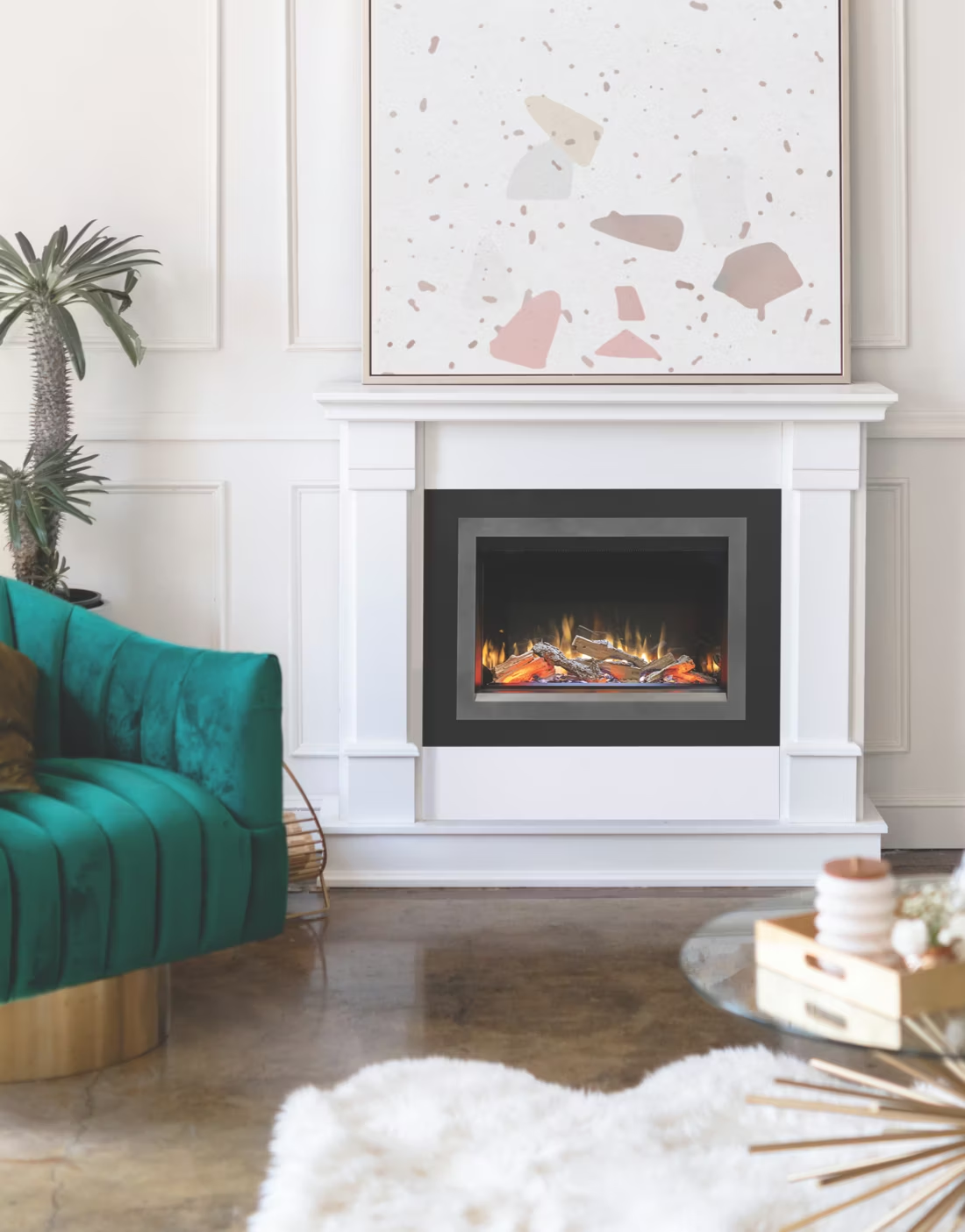
Kearney sits along the Platte River in south-central Nebraska, where winters run long and cold—average lows near 14°F and a heating season about as demanding as Fargo, North Dakota puts Kearney in a similar heating category. Unlike much of the Great Plains, wood and pellet heat see little use here; most Buffalo County homes lean on central gas furnaces for whole-house heat, which leaves a real gap for zone heating in bonus rooms, finished basements, and additions.
That's where electric fireplaces earn their place. Depending on which side of town or county you're on, your power comes from either Nebraska Public Power District or Dawson Power District, both of which post residential rates under 11.5 cents per kWh—well below the national average, which keeps supplemental electric heat genuinely affordable to run during a Kearney cold snap. Electric units also need no chimney, no gas line, and no combustion byproducts to vent, which matters in a city with no listed air quality concerns and a growing stock of rental housing near the University of Nebraska Kearney campus, where landlords and tenants alike favor plug-in or simple 120V installs over anything requiring a permit.
Three steps. No salesperson until you're ready.
Tell us about your project
Your zip code, your situation, and the fuel you're leaning toward—or let the answers point you to one.
See what's actually available
The brands dealers within 100 miles genuinely carry—real options, never a catalog mirage.
Get your dealer & Project Guide
A trusted local dealer, plus the free Project Guide & Parts List that names every component of the job.
Frequently Asked Questions
How much does an electric fireplace cost to install in Kearney?
Plug-in electric fireplaces and stoves—the kind that just need a standard 120V outlet—typically run $200 to $800 installed, with most of that being the unit itself since no electrician is required. Built-in wall units, linear inserts, or mantel-style electric fireplaces that need a dedicated 120V or 240V circuit usually run $1,500 to $4,500 once you factor in the unit, any framing or wall opening, and a licensed electrician to run a new circuit—common for finished basements and additions around Kearney. Local dealers will size the right unit and circuit for your space during a consultation.
Can an electric fireplace actually heat a room in a Kearney winter?
Most residential electric fireplaces top out around 5,000 BTU (roughly 1,500 watts), which is enough to comfortably heat a single room—a den, bonus room, or finished basement space—but not enough to serve as primary heat for a whole house during a stretch of single-digit nights, which Kearney sees several times most winters. Think of electric as zone heat that lets you turn down the central furnace and warm just the room you're using, which is exactly how most Buffalo County homeowners deploy them alongside a gas furnace.
Does my electric utility affect what I pay to run a fireplace?
Yes, and it depends on where you are in the Kearney area. Nebraska Public Power District serves much of the city at roughly 10.63 cents per kWh, while Dawson Power District, which covers parts of the surrounding county, runs closer to 11.41 cents per kWh. A 1,500-watt electric fireplace run 4 hours a day costs roughly $1.30 to $1.40 a month on NPPD service and slightly more on Dawson—either way, well below what most electric heat costs in higher-rate states, since both utilities sit under the national residential average.
Do I need a permit to install an electric fireplace in Kearney?
A simple plug-in electric fireplace or stove needs no permit at all—it's treated like any other appliance. If your installation requires a new dedicated circuit, a wall opening for a recessed unit, or any structural framing, you'll need an electrical permit through the City of Kearney Building Department (or the Buffalo County Building Department if you're outside city limits). Licensed electricians who do this work regularly typically pull the permit as part of the job, so you generally don't have to coordinate it yourself.
What's the difference between an electric insert, an electric stove, and a wall-mount unit?
An electric insert is built to slide into an existing masonry or wood fireplace opening, giving you a realistic flame effect and heat output without touching your chimney. An electric stove is a freestanding unit styled like a wood or pellet stove—a popular choice in Kearney homes that never had a fireplace to begin with, since it needs no chimney or venting. A wall-mount or linear electric fireplace mounts flush or recessed into a wall, popular in newer builds and remodels around town for a sleek, modern look above a media console. All three run on standard household current and none require any venting.
Are electric fireplaces a good option for allergy-sensitive households?
Yes. Electric fireplaces produce no combustion byproducts—no smoke, no particulate matter, no carbon monoxide, and nothing to vent outside. Kearney doesn't carry any listed air quality concerns or wood-burning restrictions, so this isn't a regulatory issue locally, but for households managing asthma, allergies, or simply preferring not to deal with ash and creosote, electric is the cleanest heating and ambiance option available, indoors or out.
Can renters near UNK install an electric fireplace?
Absolutely—this is one of the most common uses for electric fireplaces in Kearney. A plug-in freestanding stove or tabletop unit requires no wiring, no wall modification, and no landlord sign-off in most cases, since it's functionally no different than a space heater. Renters near the University of Nebraska Kearney campus and in the city's growing apartment stock frequently use these for supplemental warmth and ambiance without any lease complications. Anything requiring a new circuit or recessed wall mount would need landlord approval and an electrician.
Electric vs. gas fireplace—which makes more sense for a Kearney home?
Gas fireplaces are common in Kearney and deliver higher heat output—a real option for supplementing a furnace during a hard freeze—but they require a gas line, venting, and a higher upfront installation cost. Electric fireplaces cost less to install, need no gas line or venting, and are far more flexible to place or relocate, but they produce lower heat output and work best as zone heat rather than a serious secondary heat source. For a finished basement, bedroom, or den where ambiance and modest supplemental warmth matter most, electric is usually the simpler and cheaper call. For a great room you're trying to genuinely heat on a cold Buffalo County night, gas is worth the extra investment.
What electric fireplace features matter most in a cold climate like Kearney's?
Look for a unit with a real heater rating (most top out at 1,500 watts, roughly 5,000 BTU) rather than a decorative-only flame unit, since you'll actually want the heat during Kearney's colder months. Thermostatic control matters too—it lets the unit cycle on and off to hold a set temperature rather than running full blast constantly. Brands like Dimplex, Napoleon, and Amantii are widely available through hearth dealers and offer LED flame technology realistic enough to run year-round for ambiance even when the heater's switched off, which matters given how many months out of the year a Kearney living room could use either warmth or just atmosphere.
Can I put a TV above my fireplace?
Yes—with an asterisk. Fireplaces are hot and TVs don't like heat. Either put a mantel between them to deflect rising warmth, or choose a fireplace with heat-management technology that creates a cool zone on the wall above—the wall stays around 125 degrees, barely warm, while the room still gets full heat. If you like clean lines and don't want a mantel, heat management is the answer.
Do electric fireplaces actually produce heat?
Yes—most put out around 4,800–5,000 BTUs from a standard outlet, which comfortably warms a bedroom, office, or den as a comfort-zone heater. What they won't do is carry a whole house the way wood, gas, or pellet can. Think of electric as ambiance-first with honest supplemental heat: flames on with no heat in July, flames plus warmth in January.
Can I install a fireplace myself?
If you're putting a fire in your house on purpose, it's best to work with an expert. Unless you're genuinely experienced in framing, gas line, vent pipe, and the national code on clearances to combustibles, have a professional do it—and ideally the same company that sells you the fireplace, so warranty, service, and liability all live under one roof.
How much should I budget for a fireplace?
For an average home—covering the fireplace, the vent pipe, and basic installation—a budget between $3,900 and $5,500 gives you a lot of options across wood, gas, and pellet. By the time you add finish work, gas line, and electrical, the average complete installation lands between $5,000 and $12,000 all-in. In a remodel or new build, a good rule is to put about 2.5% of the total project cost toward the fireplace.
Nearby Dealers
Hearth shops serving Kearney and the surrounding area. Every listing shows whether it is a WhyFire partner, a dealer we have verified as authorized for the brands we recommend, or a local business carrying hearth products. No manufacturer pays for placement. How we verify dealers →
Builders Warehouse Inc
Fireplace Stone And Patio - Kearney
Electric Service in Kearney
An electric fireplace's heater draws about 1,500 watts—pennies per hour at local rates.
Dawson Power District
Nebraska Public Power District
Find your electric fireplace in Kearney.
Tell us a bit about your home and we'll match you with the right electric fireplace, insert, or stove—plus a free Project Guide & Parts List and a trusted local Kearney dealer to install it.
Find Your Fireplace →