
Steady heat for Nebraska's coldest plains nights.
With 6,241 heating degree days and winter lows averaging 14°F across Minden, Axtell, Heartwell, and the rest of Kearney County, gas delivers dependable warmth without relying on wood you'd have to haul in from the river bottoms. Find the right unit and get matched with a trusted local dealer.
Every Project Starts From One of These Five Situations
Clean heat that keeps up with the wind chill.
Kearney County is farm country—flat, wind-exposed cropland in south-central Nebraska with Minden as the county seat and around 4,361 residents spread across small towns like Axtell, Heartwell, Norman, and Wilcox. At Climate Zone 5A with 6,241 heating degree days a year, winters here are long and the wind off open fields makes the cold feel worse than the thermometer suggests. Oak, hickory, and cottonwood grow along the Blue River bottomlands, but this isn't wood-heat country the way forested regions are—most Kearney County homeowners have never split a cord of firewood, and wood-burning appliances are genuinely uncommon here, used mostly for occasional ambiance rather than as a primary or backup heat source.
That makes gas the practical backbone of supplemental heat in the county. Natural gas service reaches Minden and some of the larger towns, while propane—delivered and stored in tanks common on farmsteads already using propane for grain drying and shop heat—is the standard fuel for rural acreages and outlying homes. Either way, a direct-vent gas fireplace or insert gives you instant, thermostat-controlled heat that doesn't depend on splitting wood or feeding a hopper, and it holds up well against the kind of prairie wind that can drop the felt temperature well below the 14°F average winter low.
Three steps. No salesperson until you're ready.
Tell us about your project
Your zip code, your situation, and the fuel you're leaning toward—or let the answers point you to one.
See what's actually available
The brands dealers within 100 miles genuinely carry—real options, never a catalog mirage.
Get your dealer & Project Guide
A trusted local dealer, plus the free Project Guide & Parts List that names every component of the job.
Frequently Asked Questions
How much does a gas fireplace installation cost in Kearney County?
Most gas fireplace and insert installations in Kearney County run roughly $4,000 to $10,000 depending on the unit, whether you're converting an existing masonry fireplace or building new, and whether a propane tank or new gas line is part of the job. Homes in Minden with natural gas service already run to the house tend to land on the lower end. Rural properties outside town—the majority of the county—often need a propane tank set or line extension from an existing farm tank, which adds cost but is a routine job for propane suppliers already serving Kearney County's grain-drying and shop-heat customers.
Can I convert an old farmhouse fireplace to gas?
Yes, and it's a common project on the older farmhouses scattered around Minden, Axtell, and the rest of the county. A gas insert drops into the existing masonry opening and vents through a stainless liner run up the original chimney, so you keep the look of the fireplace while gaining instant, even heat instead of an open hearth that pulls warm air out of the house. Since wood-burning fireplaces are relatively rare features to begin with in this part of Nebraska, most of these conversions are happening in farmhouses built decades ago with a fireplace that's sat mostly unused—a local dealer can confirm your chimney is sound before sizing the insert and gas line.
Natural gas or propane—which do I need in Kearney County?
It depends on where in the county you're located. Natural gas service is available in and around Minden and some of the larger towns, so if your home already has a gas water heater or furnace, adding a fireplace on that line is straightforward. Outside town limits—which describes most of Kearney County's farms and acreages—propane is the standard fuel, typically drawn from a tank you may already have in place for grain drying or shop heat. Most gas fireplace models can be set up for either fuel; your installer just configures the correct orifice and regulator for whichever you have.
Will my gas fireplace still work if the power goes out?
Most direct-vent gas fireplaces with intermittent pilot ignition (IPI) include a battery backup that keeps the unit firing when the power drops—which matters in Kearney County, where ice storms and high winds across open farmland can knock out rural power for hours at a time. Valor fireplaces take it a step further: their pilot assembly generates its own electricity through the thermocouple, so there's no battery to remember or replace. Ask your local dealer which ignition system is in the unit you're considering if outage backup matters to you.
What's the difference between a gas fireplace, insert, and stove?
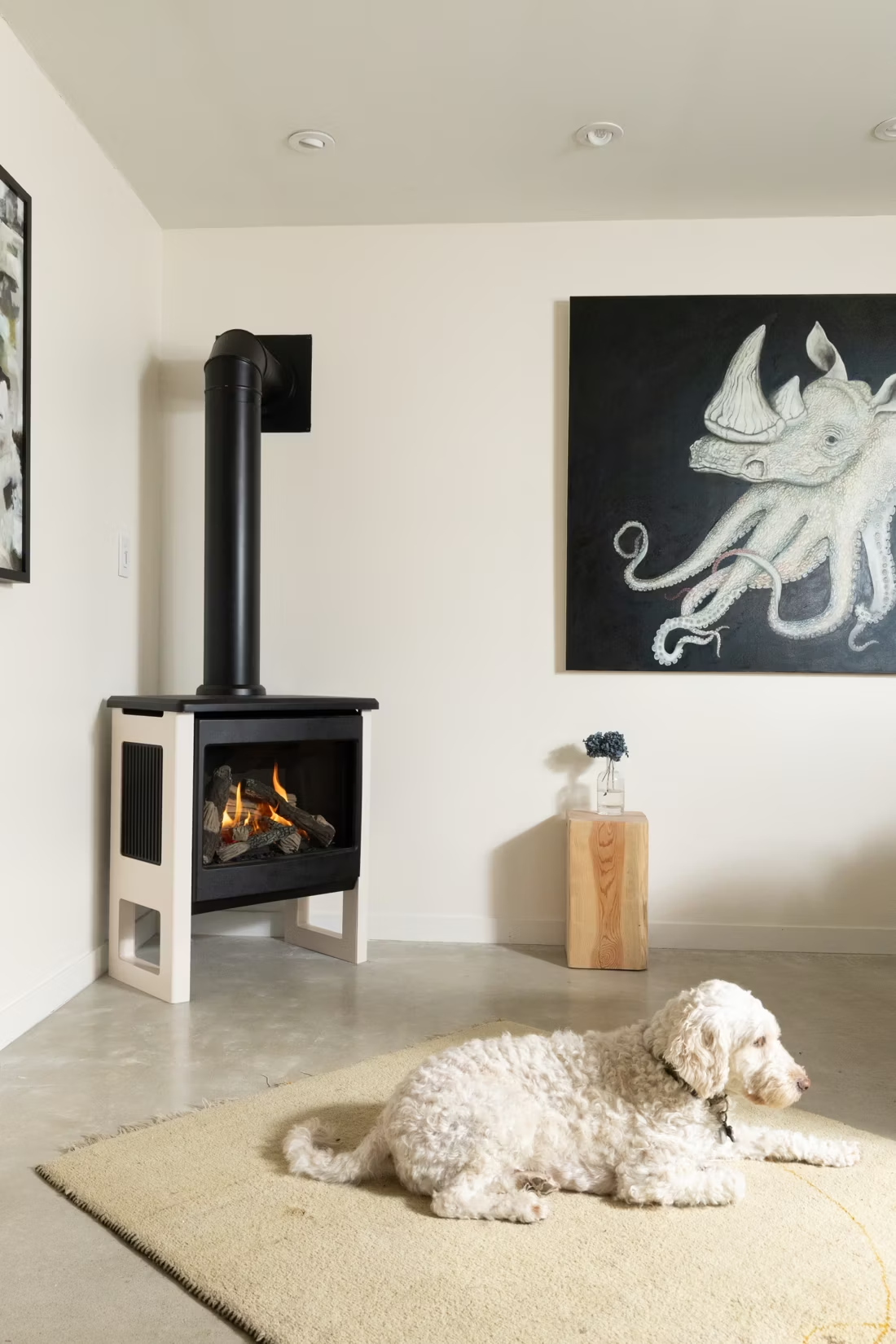
A gas fireplace is a built-in unit framed into a wall, typically chosen for new construction or a remodel. A gas insert fits into an existing masonry fireplace opening and uses the chimney as its vent path—the common choice for older Minden-area farmhouses looking to upgrade an existing hearth. A gas stove is a freestanding cabinet unit that sits on the floor, useful when there's no existing fireplace and you want a self-contained heat source in a shop, addition, or mobile home. Most Kearney County homeowners with an existing fireplace opt for an insert; new builds usually go with a built-in fireplace.
Do I need a permit to install a gas fireplace in Kearney County?
Yes—new gas fireplace installations typically require a building permit and gas line permit, handled through the Kearney County Courthouse in Minden for unincorporated areas, or through the local town office if you're inside city limits. Gas line work has to be done by a licensed gas-fitter, which is one of the reasons it's worth using a certified hearth dealer rather than a general handyman: they coordinate the gas line, venting, and inspection sign-off as one job instead of leaving you to manage separate trades.
Vented vs. vent-free gas fireplaces—what should I choose?
Vented (direct-vent) gas fireplaces draw combustion air from outside and exhaust exhaust gases back outside through sealed venting—they're the cleanest, safest option and the standard recommendation for full-time heating use. Vent-free units burn gas directly into the room without external venting; they're legal in Nebraska but require careful attention to room size and ventilation, since they release some combustion byproducts indoors. For Kearney County homes looking for genuine supplemental heat through a long, cold winter rather than occasional ambiance, a vented direct-vent unit is almost always the better fit—ask your local dealer to walk through both options for your specific room.
How often does a gas fireplace need to be serviced?
Plan on an annual inspection, ideally before the heating season ramps up in the fall. A technician checks the burner, pilot assembly, venting, and gas connections, and cleans the glass and firebox—a quick job that typically runs $150 to $250. This matters more than it might seem in a farm county like Kearney, where a fireplace that's relied on as real supplemental heat during a cold snap needs to be working reliably, not just decorative.
Why gas instead of wood or pellet in Kearney County?
Kearney County's flat cropland leaves little in the way of accessible wood lots outside the oak, hickory, and cottonwood stands along the Blue River, and there's no local cutting-permit infrastructure or wood-heat culture the way you'd find in a forested region—wood stoves are genuinely rare here, mostly limited to the occasional cabin or shop. Pellet stoves are similarly uncommon; regional brands like Lignetics and Indeck Energy Services supply pellets to the area, but few local dealers stock or install pellet appliances. Gas—whether piped in Minden or delivered as propane on a rural tank—is simply the fuel with real local installer support, parts availability, and service coverage, which is why it's the practical default for most Kearney County homes.
Why is my open fireplace making my house colder?
Open fireplaces suck—literally. As the fire burns, it consumes air your furnace already paid to heat and pulls it out through the chimney, so the house is actually colder after the fire goes out than before you lit it. An insert fixes this: it seals the chimney, puts fixed glass across the front, and turns that hole in your house into a real heat source.
Is my gas fireplace wasting gas?
If it was installed more than 15 years ago, probably. Older gas fireplaces keep a standing pilot light burning all the time, and that little flame can cost a couple hundred dollars a year. Newer models use pilot-on-demand ignition—the pilot lights only when you use the fireplace and goes out when you turn it off.
How much should I budget for a fireplace?
For an average home—covering the fireplace, the vent pipe, and basic installation—a budget between $3,900 and $5,500 gives you a lot of options across wood, gas, and pellet. By the time you add finish work, gas line, and electrical, the average complete installation lands between $5,000 and $12,000 all-in. In a remodel or new build, a good rule is to put about 2.5% of the total project cost toward the fireplace.
What is an in-home preview and do I need one?
It's a visit where a hearth professional measures your space, confirms the model you picked actually works in your home, and walks the specs—framing, gas line, venting, finish work—before anything is ordered. Some details you just can't know until you see the house. Never make a down payment without one; it's the single most-skipped step that burns buyers.
Match with a gas fireplace dealer serving Kearney County.
Tell us about your home—natural gas or propane, existing fireplace or new build—and we'll put together a free Project Guide & Parts List with the exact parts, including the vent kit, and match you with a trusted local dealer who installs in Minden, Axtell, Heartwell, Norman, and the rest of the county.
Find Your Fireplace →