
Steady, instant heat for Harlan County's long winters.
From farmhouses outside Alma to cabins along Harlan County Reservoir, gas heat means no wood to split and no ash to haul. Find the right fireplace, insert, or stove and get matched with a trusted local dealer.
Every Project Starts From One of These Five Situations
Clean, on-demand heat with less upkeep than wood.
Harlan County sits along the Republican River in south-central Nebraska, home to about 1,923 people spread across farmland, the county seat of Alma, and smaller communities like Orleans and Republican City. The county's other draw—Harlan County Reservoir—brings a steady mix of seasonal cabins and lake homes into the picture alongside the working farms. Winters here fall in climate zone 5A: hard freezes, biting prairie wind with little to block it, and stretches of single-digit nights that make a reliable, low-effort heat source worth having in every structure, not just the main house.
Natural gas mains mostly run through Alma itself, where Black Hills Energy provides service; outside the city limits—across the farmland and around the lake—propane is the default, typically delivered by regional co-ops like Cooperative Producers Inc. (CPI). Either fuel gets you the same result: flip-a-switch heat with no cordwood to stack, which matters for a lake cabin that sits empty most of the week or a farmhouse where nobody has time to tend a fire before chores. Local dealers work with both natural gas and propane setups and will tell you straight which one makes sense for your address.
Three steps. No salesperson until you're ready.
Tell us about your project
Your zip code, your situation, and the fuel you're leaning toward—or let the answers point you to one.
See what's actually available
The brands dealers within 100 miles genuinely carry—real options, never a catalog mirage.
Get your dealer & Project Guide
A trusted local dealer, plus the free Project Guide & Parts List that names every component of the job.
Frequently Asked Questions
How much does a gas fireplace installation cost in Harlan County?
Most gas fireplace or insert installations in Harlan County run $4,000 to $10,000, depending on the unit, whether you're on natural gas in Alma or need a propane setup, and how much venting or gas line work is involved. A direct-vent insert going into an existing masonry fireplace with gas already run to the house sits at the lower end. New construction or a cabin near Harlan County Reservoir that needs a fresh propane tank, regulator, and line run will land toward the higher end. A local dealer will give you a firm number after seeing the space.
Can I convert my existing wood fireplace to gas?
Yes—it's a common project for older farmhouses in Harlan County that have a masonry fireplace originally built for burning oak or cottonwood. A gas insert drops into the existing firebox and vents through the same chimney with a stainless liner, so you keep the look of the fireplace while losing the wood handling. Conversions typically run $4,000 to $8,500 here, with propane conversions running a bit higher if a tank and regulator need to be set as part of the job.
Do I need natural gas, or can I use propane?
Either works, and which one you use mostly comes down to your address. Inside Alma, natural gas service from Black Hills Energy makes a gas fireplace straightforward if you already have gas appliances. Everywhere else in the county—the farmland, Orleans, Republican City, and the homes and cabins around Harlan County Reservoir—propane is the standard, usually supplied by a regional co-op. Nearly every gas fireplace on the market can be configured for either fuel; your installer sets the correct orifice and regulator for whichever you have.
Will my gas fireplace still work if the power goes out?
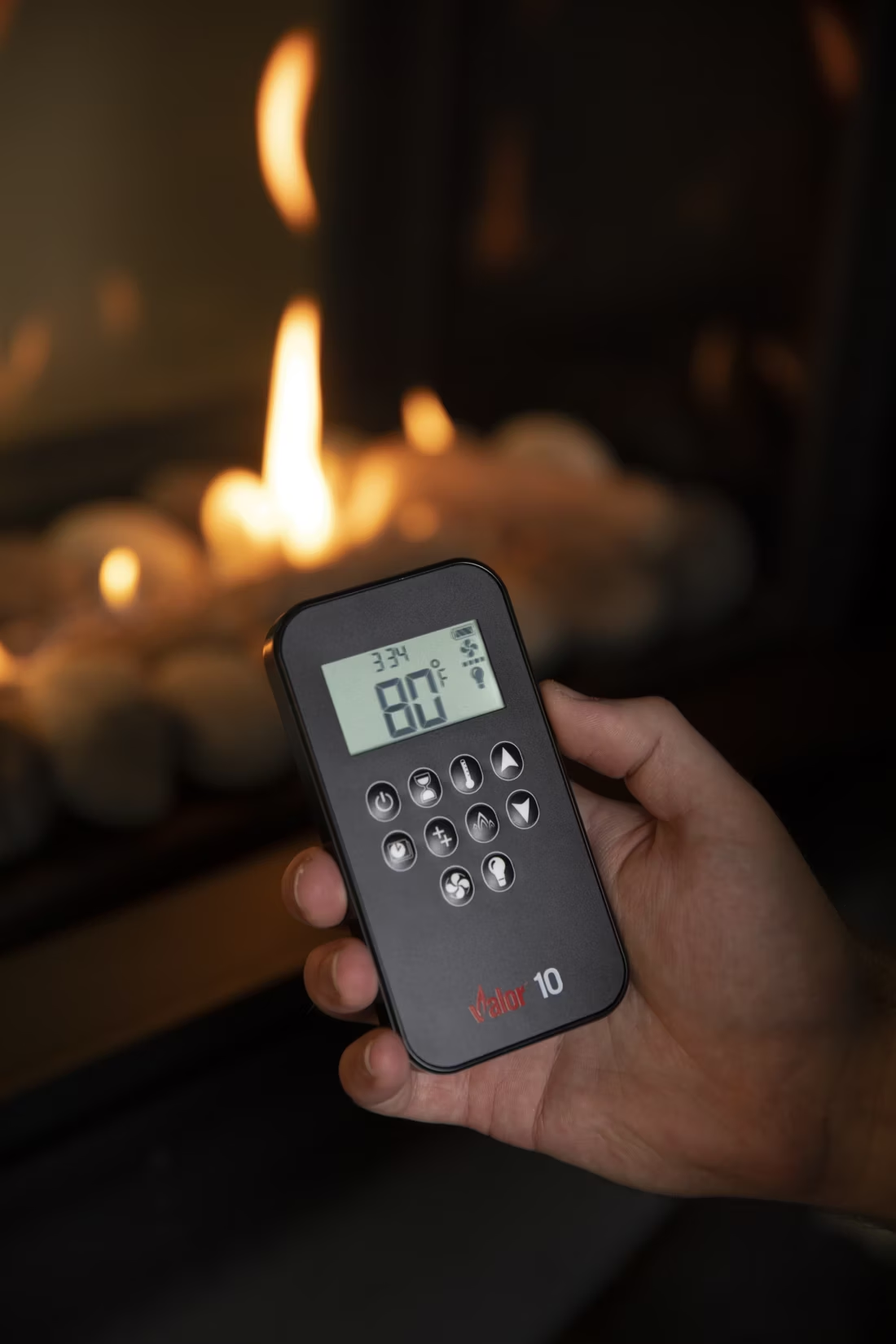
Most will, which matters in a county where winter storms can knock out rural power lines for hours. Units with intermittent pilot ignition (IPI) run on AA batteries as backup, so the fireplace still lights and heats even when the grid is down—as long as the batteries are fresh. Valor fireplaces take a different approach: the pilot's thermocouple generates its own electricity, so there are no batteries to remember at all. For a farmhouse or lake cabin that isn't checked on daily, that self-powering design is worth asking your dealer about.
What's the difference between a gas fireplace, insert, and stove?
A gas fireplace is a built-in unit framed into a wall, best for new construction or a remodel. A gas insert fits inside an existing masonry firebox and uses the existing chimney, which is the common route for Harlan County farmhouses with an old wood fireplace already in place. A gas stove is freestanding, sits on its own hearth pad, and can go almost anywhere with the right clearances—a good fit for a lake cabin or outbuilding that doesn't have a fireplace to work with at all.
Do I need a permit to install a gas fireplace in Harlan County?
Harlan County itself doesn't run a countywide building code for most rural installations, but if you're inside Alma's city limits, check with the village office before work starts—some in-town projects require a local permit. Propane tank installations follow NFPA 58 standards and are typically handled by the propane supplier's licensed installer as part of the delivery agreement, not a separate permit you pull yourself. A reputable local dealer will tell you upfront what, if anything, applies to your specific address.
What's the difference between vented and vent-free gas fireplaces?
Vented (direct-vent) gas fireplaces pull combustion air from outside and exhaust it back outside through a sealed pipe—they're the cleanest and most universally allowed option. Vent-free units burn fuel directly into the room without outside venting; they're legal in Nebraska but come with room-size minimums and ventilation requirements you need to follow closely. For a farmhouse or cabin in Harlan County, direct-vent units are the more common recommendation since they deliver real heat without any tradeoff on indoor air quality—worth asking your dealer to walk through both if you're deciding.
How often should a gas fireplace be serviced?
Plan on an annual inspection, ideally before the coldest stretch of winter sets in. A technician checks the burner, pilot assembly, venting, and any gas connections, and cleans the glass and interior. This is quick compared to a wood chimney sweep, but skipping it is how small issues—a dirty pilot, a failing thermocouple—turn into a fireplace that won't light on the night you actually need it, whether that's a farmhouse in a January cold snap or a lake cabin closed up since fall.
Gas vs. wood—which makes more sense in Harlan County?
Wood still has real advantages here—Harlan County has no air quality restrictions on burning, oak, hickory, and cottonwood are all available locally off farm woodlots and river bottoms, and a wood stove keeps working when the power and the propane truck both can't get down a snowed-in road. Gas wins on convenience: no splitting, no ash, and heat on demand, which matters most for a lake cabin at Harlan County Reservoir that sits empty for stretches or a household that just wants zone heat without the chores. Plenty of local homes run both—wood as the workhorse, gas for the room that needs to warm up in five minutes.
Is my gas fireplace wasting gas?
If it was installed more than 15 years ago, probably. Older gas fireplaces keep a standing pilot light burning all the time, and that little flame can cost a couple hundred dollars a year. Newer models use pilot-on-demand ignition—the pilot lights only when you use the fireplace and goes out when you turn it off.
What do I measure to size a fireplace insert?
Four numbers tell you what fits: the front width, the front height, the back width, and the overall depth of your existing fireplace opening. Grab a tape measure, jot those down, and snap a photo of the wall—those two things do more to move your project forward than anything else you can do today.
Does a fireplace add value to my home?
On average, a fireplace adds back to the home about the same amount you spent installing it. Add the monthly savings from heating the rooms you actually use instead of the whole house—often hundreds of dollars a year—and the value case is strong before you even count what a fire does for how your family uses the room.
What is an in-home preview and do I need one?
It's a visit where a hearth professional measures your space, confirms the model you picked actually works in your home, and walks the specs—framing, gas line, venting, finish work—before anything is ordered. Some details you just can't know until you see the house. Never make a down payment without one; it's the single most-skipped step that burns buyers.
Find your gas fireplace in Harlan County.
Tell us a bit about your home or cabin and we'll match you with the right gas fireplace, insert, or stove—plus a free Project Guide & Parts List and a trusted local dealer to install it.
Find Your Fireplace →