
Add real warmth to any room in Colfax County—no chimney required.
From Schuyler to Howells, Clarkson, and Leigh, an electric fireplace adds instant zone heat and ambiance to farmhouses, additions, and older homes without touching the roofline or running a gas line. Find the right unit and connect with a trusted local dealer.
Every Project Starts From One of These Five Situations
Zone heat that works anywhere power reaches—no venting, no gas line.
Colfax County sits along the Platte River in eastern Nebraska, home to about 8,451 people across Schuyler, Howells, Clarkson, and Leigh. Climate zone 5A and a winter comparable to Madison, WI mean winter lows averaging 14°F and stretches where the wind off the Platte Valley makes an old farmhouse bedroom feel colder than the thermostat suggests. Many homes here, especially the older farmhouses scattered outside Schuyler, were built without a masonry fireplace and without a gas main running to the property—propane tanks and rural electric service fill that gap instead.
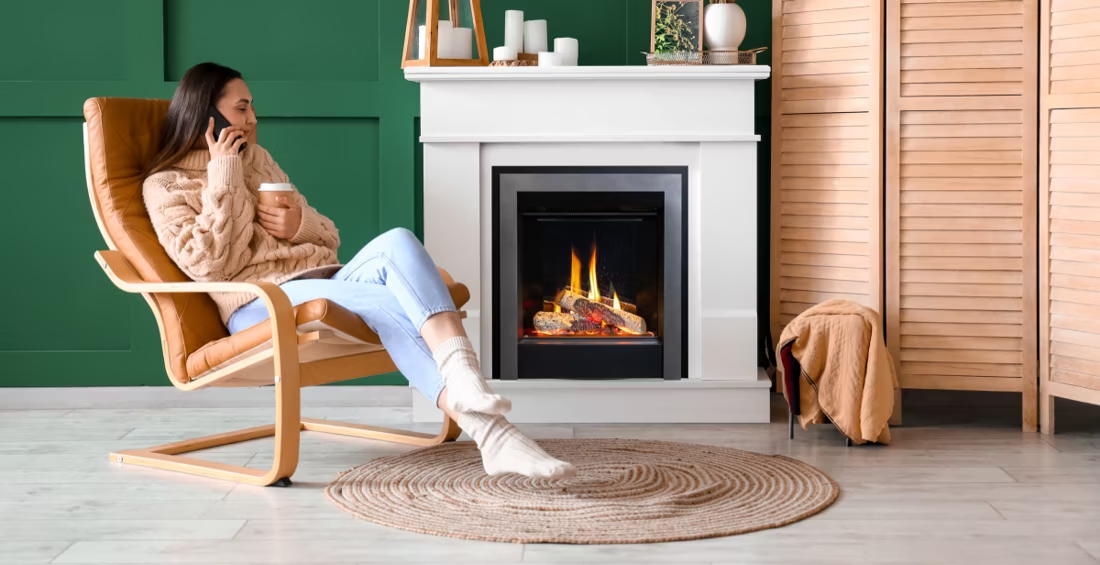
That's exactly where an electric fireplace earns its place. There's no chimney to build, no gas line to run, and no combustion byproducts to vent—just a dedicated circuit and a unit that plugs in or hardwires behind a mantel. For a home already heated by a propane furnace or forced air, an electric fireplace adds real zone heat to a bedroom, sunroom, or finished basement without touching the primary heating system. It won't replace a furnace on a sub-zero January night in Colfax County, but for supplemental warmth, ambiance, and rental units in Schuyler where a chimney simply isn't an option, it's a straightforward, low-risk upgrade—and Cornhusker Public Power District's rural service area covers the whole county, so power availability isn't the concern it can be elsewhere.
Three steps. No salesperson until you're ready.
Tell us about your project
Your zip code, your situation, and the fuel you're leaning toward—or let the answers point you to one.
See what's actually available
The brands dealers within 100 miles genuinely carry—real options, never a catalog mirage.
Get your dealer & Project Guide
A trusted local dealer, plus the free Project Guide & Parts List that names every component of the job.
Frequently Asked Questions
How much does an electric fireplace installation cost in Colfax County?
A plug-in electric insert or freestanding unit runs $150 to $600 and typically needs no electrician—just an outlet. A built-in electric fireplace with a custom mantel or surround, which is the more common choice for a living room upgrade in a Schuyler or Howells home, runs $1,200 to $3,500 installed. If the unit needs a dedicated 20-amp circuit—common for larger built-ins pulling 1,500 watts—budget an extra $300 to $800 for a licensed electrician, more if the fireplace is going into an addition or a farmhouse with older wiring that needs updating first.
What size electric fireplace do I need for my room?
Most electric fireplaces are rated to supplement heat for 400 to 1,000 square feet on their built-in heater setting, which covers a bedroom, living room, or finished basement in a typical Colfax County home. Given the county's winters comparable to Madison, WI, don't expect an electric unit to carry a whole room on the coldest nights the way a furnace does—it's zone heat, not a furnace replacement. For a larger open living space, look at wider units with higher wattage heaters or plan on it working alongside your existing propane or forced-air system rather than instead of it.
Where can I find installers for an electric fireplace near me?
Basic plug-in units require no installer at all. For a built-in unit with a dedicated circuit, hardwired connection, or custom surround, you'll want a licensed electrician—available through hearth retailers serving Schuyler and the surrounding county, or through general electrical contractors who work rural Colfax County routes regularly. Ask specifically whether the installer has done electric fireplace circuits before; the wiring is simple but clearance and mounting-height requirements vary by manufacturer, and a hearth retailer familiar with the unit will size the circuit correctly the first time.
What's the difference between an electric fireplace, insert, and wall-mounted unit?
A built-in electric fireplace is designed to be framed into a wall or cabinetry, often with a mantel and surround, and functions as the room's visual focal point. An electric insert is sized to slide into an existing masonry fireplace opening—a common retrofit for older Colfax County homes that have a fireplace but no interest in burning wood or running gas line to it. A wall-mounted electric fireplace hangs flush on the wall like a flat-screen TV, with a slim depth that suits smaller rooms or additions. All three use the same resistance-heat or infrared technology; the choice mostly comes down to whether you're building new, retrofitting an old fireplace, or working with limited wall space.
Do I need a permit to install an electric fireplace in Colfax County?
A simple plug-in unit generally doesn't require a permit. If the installation involves new electrical wiring—a dedicated circuit, a new outlet, or hardwiring a built-in unit—that work falls under the electrical permit process through Colfax County, and it needs to be pulled by a licensed electrician regardless of whether the fireplace itself needs a building permit. Framing a new built-in into an exterior or load-bearing wall may also trigger a building permit review. Most retailers or electricians handling the install will tell you upfront whether your specific project needs one.
What's the best electric fireplace for a cold Nebraska winter?
For Colfax County's climate zone 5A winters, look for a unit with a higher-wattage heater (1,500 watts is standard) and a thermostat with multiple heat settings, so it can genuinely take the edge off a cold bedroom or addition rather than serve as decoration only. Infrared electric fireplaces heat objects and people directly rather than just the air, which some homeowners find performs better in drafty older farmhouses around Howells and Clarkson. Whatever model you choose, treat it as zone heat that pairs with your propane furnace or forced-air system—not a replacement for it on the coldest nights when lows hit single digits.
How long do electric fireplaces last, and what maintenance do they need?
Most electric fireplaces run 8,000 to 10,000 hours before the heating element needs replacement, and the LED flame effect on quality units is rated for well over a decade of typical evening use. Maintenance is minimal compared to a wood stove or gas insert—no chimney sweep, no annual gas inspection. Periodically vacuum the vents to keep dust from clogging the fan, and check that the unit's electrical connections stay tight if it's hardwired. There's no combustion involved, so there's no carbon monoxide risk and no venting to inspect.
How much does it cost to run an electric fireplace in Colfax County?
On the heater setting, a typical 1,500-watt electric fireplace costs roughly 15 to 25 cents per hour to run at Cornhusker Public Power District's rural rates, depending on your rate schedule. Run several hours a night through a Nebraska winter and it adds up to a modest but real line on the power bill—still generally cheaper than running a whole-home furnace harder to heat one room. On the flame-only setting with the heater off, the cost drops to just a few cents an hour, since you're only powering the LED display.
Electric vs. wood or pellet—which makes sense for my Colfax County home?
Wood stoves burning local oak, hickory, or cottonwood provide real primary heat and keep working during a power outage—a genuine consideration in rural Colfax County when winter storms take down lines. Pellet stoves burning regional Lignetics or Indeck Energy pellets offer cleaner, more automated heat but still need electricity to run the auger and blower. Electric fireplaces need power too, and offer neither the BTU output nor the outage resilience of a wood stove—what they offer instead is zero installation hassle, no venting, and no fuel to store or haul. For a primary heat source in a county with winters comparable to Madison, WI, wood or propane still does the heavy lifting for most homes. Electric fits best as supplemental zone heat, ambiance, or a fireplace-look upgrade in a room where running gas line or a chimney isn't practical.
Can I put a TV above my fireplace?
Yes—with an asterisk. Fireplaces are hot and TVs don't like heat. Either put a mantel between them to deflect rising warmth, or choose a fireplace with heat-management technology that creates a cool zone on the wall above—the wall stays around 125 degrees, barely warm, while the room still gets full heat. If you like clean lines and don't want a mantel, heat management is the answer.
Do electric fireplaces actually produce heat?
Yes—most put out around 4,800–5,000 BTUs from a standard outlet, which comfortably warms a bedroom, office, or den as a comfort-zone heater. What they won't do is carry a whole house the way wood, gas, or pellet can. Think of electric as ambiance-first with honest supplemental heat: flames on with no heat in July, flames plus warmth in January.
Can a fireplace actually lower my heating bill?
Yes—by creating a comfort zone. A furnace heats every square foot of the house just to warm the one room you're in; a gas fireplace on low burns roughly a sixth of the gas a typical furnace does. Set the furnace around 55–60 degrees as a baseline, then heat the rooms your family actually uses. Families who heat this way commonly save $20–$60 a month.
What is an in-home preview and do I need one?
It's a visit where a hearth professional measures your space, confirms the model you picked actually works in your home, and walks the specs—framing, gas line, venting, finish work—before anything is ordered. Some details you just can't know until you see the house. Never make a down payment without one; it's the single most-skipped step that burns buyers.
Find your electric fireplace in Colfax County.
Tell us about your room and how you plan to use it, and we'll match you with a trusted local dealer and send over a free Project Guide & Parts List—a clear plan for your electric fireplace project in Colfax County, right down to the circuit and mounting hardware.
Find Your Fireplace →