
Electric heat that keeps up with Nebraska winters.
Zone heat and ambiance for Madison County homes, powered by some of the lowest electric rates in the region. Find the right unit and connect with a trusted local dealer.
Every Project Starts From One of These Five Situations
Real warmth, no chimney, no wood pile.
Battle Creek sits in Madison County on the Nebraska plains, where winter lows average around 10°F and the region sees a long, cold heating season that stretches well into spring—cold enough that heating bills matter, but without the extreme depths of places like Fargo or Bismarck. For a town of under 1,500 people, that means most homes lean on a mix of central heat and supplemental sources, and electric fireplaces have become a practical fit for bedrooms, additions, basements, and living rooms that need extra warmth without opening a wall for a gas line or chimney.
Electricity here is also relatively cheap. Depending on whether your home is served by Loup River Public Power District, Elkhorn Rural Public Power District, or the City of Battle Creek's own municipal utility, residential rates run between roughly 9.4 and 10.6 cents per kWh—well under the national average. That makes a 1,500-watt electric fireplace an inexpensive way to add zone heat to a single room, or simply to get the look and feel of a fire in a home where a wood-burning or gas unit isn't practical or wanted.
Three steps. No salesperson until you're ready.
Tell us about your project
Your zip code, your situation, and the fuel you're leaning toward—or let the answers point you to one.
See what's actually available
The brands dealers within 100 miles genuinely carry—real options, never a catalog mirage.
Get your dealer & Project Guide
A trusted local dealer, plus the free Project Guide & Parts List that names every component of the job.
Frequently Asked Questions
How much does it cost to install an electric fireplace in Battle Creek?
Plug-in electric fireplace inserts and freestanding stoves that use a standard household outlet typically run $250 to $1,200 installed, including the unit and any mantel or surround work. Wall-mounted or built-in electric fireplaces that need a dedicated 20-amp circuit run higher—usually $1,200 to $3,500—once you factor in an electrician to run new wiring, especially in older Battle Creek homes with older panels. Because there's no venting, chimney, or gas line involved, electric installs are almost always the least expensive hearth option available locally.
Will an electric fireplace actually lower my heating bill?
It can, if you use it the way it's designed to be used: as zone heat for the room you're actually in, rather than trying to heat the whole house. With Battle Creek residential electric rates running about 9.4 to 10.6 cents per kWh depending on whether you're served by Loup River Public Power District, Elkhorn Rural Public Power District, or the City of Battle Creek's municipal utility, a 1,500-watt unit running on high costs roughly 15 to 16 cents an hour to operate. Closing off a bedroom or family room and running the fireplace instead of heating that space with your furnace can meaningfully cut costs on the coldest stretches of a Nebraska winter.
Do I need a permit or an electrician to install an electric fireplace?
Plug-in units that run on a standard 120-volt outlet don't require a permit—you plug it in and you're done. Built-in or wall-mounted units that need a dedicated circuit do require an electrician, and that work typically needs a permit through Madison County or the City of Battle Creek's building department, depending on where you're located. Any local retailer selling built-in electric fireplaces should be able to point you to an electrician who's done this wiring before and knows the local permitting process.
How big of an electric fireplace do I need for my home?
Most electric fireplaces top out around 5,000 to 5,200 BTUs (roughly 1,500 watts), which comfortably heats a 400- to 600-square-foot room but isn't designed to replace a furnace in a Nebraska winter—not with a heating season this long and cold here. Think of electric as targeted heat for a specific space: a converted porch, a basement rec room, a bedroom that runs cold, or a living room where you want supplemental warmth on top of your central heat. If you're trying to heat more than one room, you likely need two units or a different fuel type entirely.
Electric vs. gas fireplace—which is right for my home?
Gas fireplaces produce real, substantial heat output and can serve as genuine supplemental heat for a Battle Creek home, but they require a gas line or propane tank and venting work, which adds cost and complexity. Electric fireplaces install in a fraction of the time, cost less upfront, and don't require any fuel line or chimney—but their heat output is modest and they depend entirely on the local grid. If you want strong, reliable heat for a room you use daily, gas is usually the better performer. If you want an easy, low-cost way to add ambiance and light supplemental warmth—especially in a room without existing gas service—electric is hard to beat.
Will my electric fireplace work if the power goes out?
No—electric fireplaces are entirely dependent on grid power, so they'll shut off along with everything else during an outage. Rural stretches served by Loup River Public Power District and Elkhorn Rural Public Power District can see extended outages during ice storms or high-wind events on the plains, so if backup heat during an outage matters to you, a wood stove or a battery-backed gas unit is a better fit as your primary emergency heat source. Many Battle Creek homeowners keep an electric fireplace for everyday convenience and a wood or gas appliance elsewhere in the house for storm backup.
What type of electric fireplace works best in an older Battle Creek home?
A lot of the housing stock in and around Battle Creek is older farmhouse-style construction without an existing fireplace or chimney, which actually makes electric a strong option—there's no masonry to work around. Wall-mounted, flush-to-the-wall units work well in tighter living rooms, while a freestanding electric stove can mimic the look of a wood stove in a mudroom or den without any of the clearance or venting requirements a real wood stove would need. For homes with an old, unused masonry fireplace, an electric insert can slide into the existing firebox and give you usable heat and light again without touching the chimney.
How much maintenance does an electric fireplace need?
Very little. There's no chimney to sweep, no ash to clean up, and no annual gas line inspection required. Basic upkeep is dusting the unit, occasionally cleaning the dust filter or vent on units that have one, and replacing the LED light strips down the road if they dim (most last well over 10 years of regular use). It's one of the reasons electric appeals to homeowners in a small town like Battle Creek where you'd rather not be scheduling annual service calls.
Which electric utility serves my home, and does it affect my rate?
Battle Creek is served by a mix of providers—Loup River Public Power District, Elkhorn Rural Public Power District, and the City of Battle Creek's own municipal electric utility—and the residential rate can differ depending on which one serves your address, running roughly 9.4 to 10.6 cents per kWh. It's worth checking a recent bill before buying an electric fireplace so you know your actual per-kWh cost; at these rates, running an electric fireplace as zone heat is inexpensive regardless of provider, but the exact savings math will vary a little depending on which utility serves your street.
Can I put a TV above my fireplace?
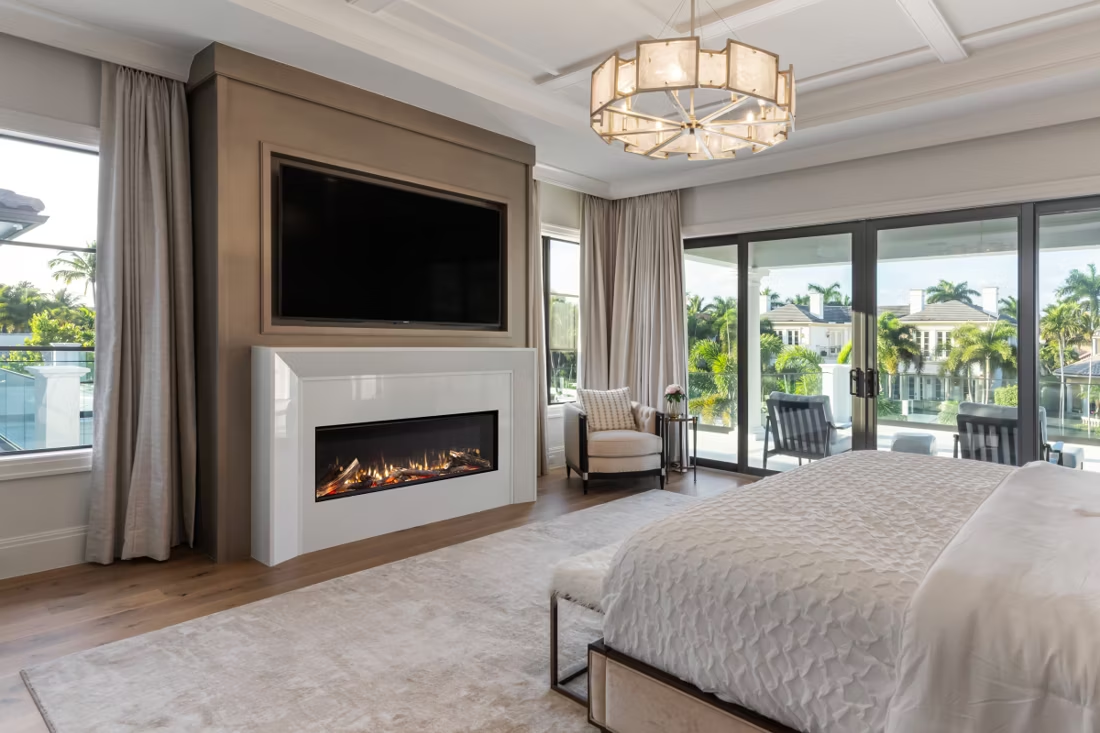
Yes—with an asterisk. Fireplaces are hot and TVs don't like heat. Either put a mantel between them to deflect rising warmth, or choose a fireplace with heat-management technology that creates a cool zone on the wall above—the wall stays around 125 degrees, barely warm, while the room still gets full heat. If you like clean lines and don't want a mantel, heat management is the answer.
Do electric fireplaces actually produce heat?
Yes—most put out around 4,800–5,000 BTUs from a standard outlet, which comfortably warms a bedroom, office, or den as a comfort-zone heater. What they won't do is carry a whole house the way wood, gas, or pellet can. Think of electric as ambiance-first with honest supplemental heat: flames on with no heat in July, flames plus warmth in January.
Can I install a fireplace myself?
If you're putting a fire in your house on purpose, it's best to work with an expert. Unless you're genuinely experienced in framing, gas line, vent pipe, and the national code on clearances to combustibles, have a professional do it—and ideally the same company that sells you the fireplace, so warranty, service, and liability all live under one roof.
How much should I budget for a fireplace?
For an average home—covering the fireplace, the vent pipe, and basic installation—a budget between $3,900 and $5,500 gives you a lot of options across wood, gas, and pellet. By the time you add finish work, gas line, and electrical, the average complete installation lands between $5,000 and $12,000 all-in. In a remodel or new build, a good rule is to put about 2.5% of the total project cost toward the fireplace.
Nearby Dealers
Hearth shops serving Battle Creek and the surrounding area. Every listing shows whether it is a WhyFire partner, a dealer we have verified as authorized for the brands we recommend, or a local business carrying hearth products. No manufacturer pays for placement. How we verify dealers →
Kaiser Heating & Cooling
Larry's Heating & Cooling
Pinnacle Heating & Cooling
Hearth & Home Decor
J & R Heating
Edward's Stone Inc
Electric Service in Battle Creek
An electric fireplace's heater draws about 1,500 watts—pennies per hour at local rates.
Loup River Public Power Dist
Elkhorn Rural Public Pwr Dist
City Of Battle Creek- (Ne)
Find your electric fireplace in Battle Creek.
Tell us a bit about your home and we'll match you with the right electric fireplace, insert, or stove—and hand you a free Project Guide & Parts List with the exact parts and your recommended local dealer.
Find Your Fireplace →