
Zone heat that plugs in, built for Wibaux County's plains winters.
No venting, no gas line, no chimney—just reliable supplemental warmth for ranch houses, manufactured homes, and additions across the wind-swept plains of Wibaux County. Find the right unit and connect with a trusted local dealer.
Every Project Starts From One of These Five Situations
Heat that works even without a chimney or gas hookup.
Wibaux County sits on the open high plains of far eastern Montana, just west of the North Dakota line along the Interstate 94 corridor, home to fewer than 700 residents spread between the town of Wibaux and the surrounding ranch country. Climate zone 6B here means long, wind-driven winters where subzero cold can settle in for days at a stretch—but unlike the forested mountains of western Montana, this stretch of prairie has little timber close to town. Lodgepole pine, ponderosa, Douglas fir, and aspen do grow in pockets along the breaks and river bottoms, but hauling and seasoning cordwood locally is real work, and that scarcity is part of why wood stoves and pellet appliances see little use here. Most households rely on propane, electric baseboard, or forced air for primary heat, with fireplaces added mainly for supplemental zone heat.
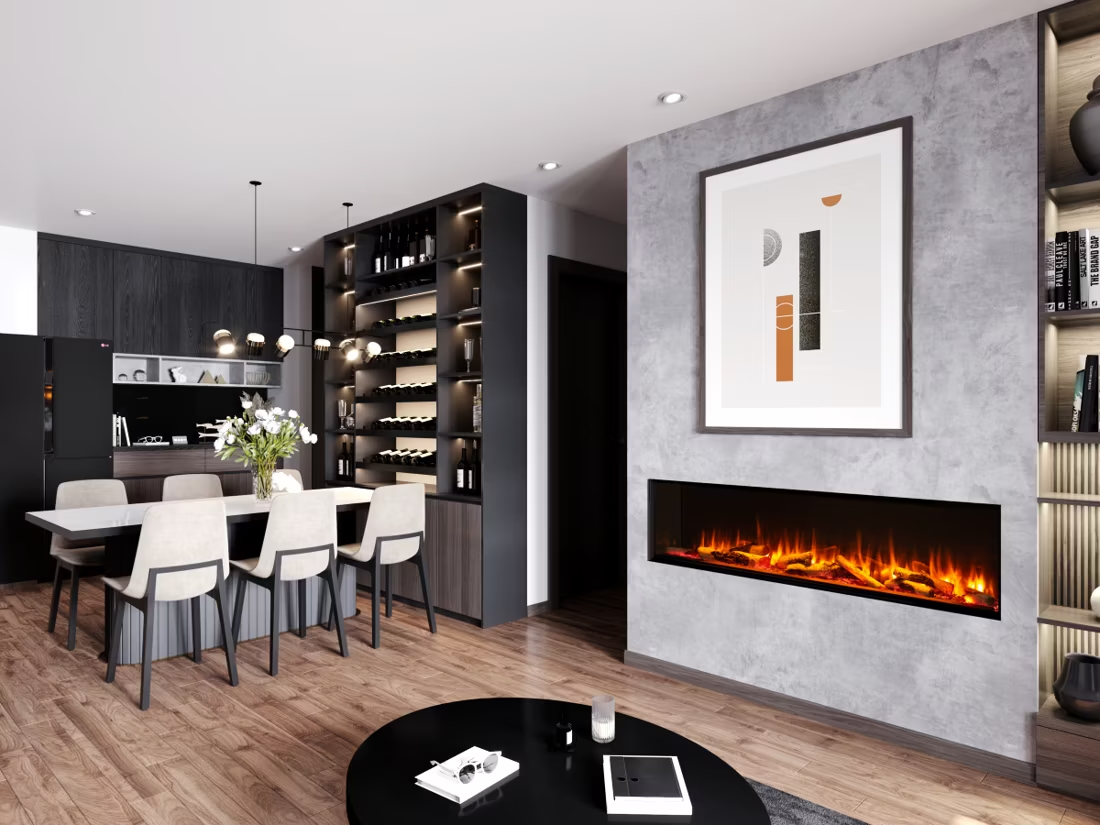
That's exactly where electric fireplaces and inserts fit in. A plug-in electric insert or a wall-mounted unit needs no chimney, no gas line, and no combustion air intake—which matters in a county where a meaningful share of homes are manufactured or modular units without an existing masonry hearth to build around. Most units run on a standard 120-volt household circuit, install in an afternoon, and put out enough heat, typically in the 4,000 to 5,000 BTU range, to take the edge off a bedroom, den, or drafty farmhouse addition during the coldest stretches, while still looking like a real fire without any of the mess. For Wibaux ranch families or in-town residents who want heat and ambiance in one room without opening walls for venting, electric is often the most practical answer.
Three steps. No salesperson until you're ready.
Tell us about your project
Your zip code, your situation, and the fuel you're leaning toward—or let the answers point you to one.
See what's actually available
The brands dealers within 100 miles genuinely carry—real options, never a catalog mirage.
Get your dealer & Project Guide
A trusted local dealer, plus the free Project Guide & Parts List that names every component of the job.
Frequently Asked Questions
How much does an electric fireplace installation cost in Wibaux County?
Plug-in electric inserts and freestanding units are the least expensive hearth option available—most run $300 to $1,500 for the unit itself, and if it's going into an existing fireplace opening or a standard wall outlet, there's often no installation labor beyond mounting the unit, so total cost may be little more than the sticker price. Built-in electric fireplaces that need a dedicated 120V or 240V circuit run higher, typically $1,500 to $4,000 installed, once an electrician runs a new line—a common need in older Wibaux County farmhouses with limited existing wiring. A local dealer can look at your specific electrical panel and framing before quoting a firm number.
Do I need a permit to install an electric fireplace in Wibaux County?
Usually not for a plug-in unit—because there's no venting, gas line, or chimney involved, most jurisdictions treat it like any other household appliance. If your project involves adding a new dedicated electrical circuit or breaker, which is common for larger built-in units, that portion of the work typically does require an electrical permit and should be pulled by a licensed electrician regardless of local rules. Since much of Wibaux County is unincorporated ranch and farm country, permitting requirements can vary depending on whether your address falls inside town limits or out in the county—a local installer will know which rule applies to your property.
Will an electric fireplace actually heat my home during a Wibaux County winter?
Not on its own, in most cases. Electric fireplaces are built for zone heating—warming a single room comfortably—rather than replacing a home's primary heat source. In a climate like eastern Montana's, where overnight lows routinely sit well below zero for stretches in January, an electric insert works best paired with your existing propane furnace, forced air, or baseboard system, taking the load off the room you use most so you can turn the thermostat down elsewhere. Think of it as supplemental warmth and ambiance, not a furnace replacement.
Why don't more homes in Wibaux County use wood or pellet stoves?
Wibaux County is prairie country, not timber country—the nearest reliable stands of lodgepole pine, ponderosa, Douglas fir, and aspen sit along river breaks and foothills well to the west and south, which makes sourcing and seasoning cordwood locally more effort than it's worth for most households. Pellet stoves face a similar gap: there's no regional pellet mill nearby, so bags of Bear Mountain, Lignetics, or Forest Energy pellets have to be trucked in from out of state, which adds cost. Add in occasional wildfire smoke drifting across the plains from fires burning elsewhere in the Northern Rockies, and many homeowners here would rather avoid another combustion source altogether—part of why electric heat has become the practical, low-maintenance choice for zone heating in this county.
What happens to my electric fireplace during a power outage?
It won't run—electric units depend entirely on grid power, which is worth being honest about in a county where winter storms and high-plains wind events occasionally knock out rural electric service for hours at a stretch. If backup heat during an outage matters to you, talk to your local dealer about pairing an electric fireplace with a propane space heater or a small generator rather than treating it as your sole heat plan. For day-to-day supplemental heat and ambiance when the power is on, though, electric is about as low-hassle as hearth heating gets.
What's the difference between an electric fireplace insert, a wall-mount, and a freestanding stove?
An insert is built to slide into an existing fireplace opening—a good fit if a Wibaux County farmhouse already has a masonry hearth that's no longer used for wood burning. A wall-mount unit hangs flat against the wall like a television, popular in newer builds or additions where floor space is tight. A freestanding electric stove looks like a traditional cast-iron wood stove but simply plugs into an outlet, which works well in manufactured homes or cabins with no existing hearth structure at all. All three are available from local retailers who can walk you through what fits your specific opening or wall.
Is an electric fireplace just for looks, or does it put out real heat?
Most models sold today do both. The flame effect runs independently of the heater, so you can run the LED or holographic flame display for ambiance in the mild months and switch on the heating element once temperatures drop. Standard units put out roughly 4,000 to 5,000 BTU on the heat setting—enough to warm a bedroom or living room in a well-insulated space, though not enough to replace a furnace during a hard eastern Montana cold snap. If you need more heat for a larger room, ask a local dealer about higher-wattage models before assuming you need a bigger unit.
Can I install an electric fireplace in a manufactured or modular home?
Yes—in fact, electric units are often the best hearth option for manufactured and modular housing, which makes up a meaningful share of the housing stock in a small rural county like Wibaux. Because there's no chimney, gas line, or combustion air intake required, there's no need to cut through walls or roof lines that may not be built to support venting. A wall-mount or freestanding electric unit can usually be added with minimal modification, provided the home's electrical panel has capacity for the added circuit.
Electric vs. propane fireplace—which makes more sense for my Wibaux County home?
Propane fireplaces put out considerably more heat, often 20,000 BTU or more, and can serve as genuine supplemental or even primary heat in a well-sized room, which matters given how cold this part of Montana gets—but they require a propane line or tank and venting in most cases, plus periodic servicing. Electric fireplaces trade heat output for simplicity: no fuel deliveries, no venting, and a lower upfront cost, but they won't keep up if your furnace or propane supply fails on the coldest night. Many Wibaux County homeowners choose electric for a room that already has adequate central heat and just want the ambiance and light supplemental warmth, reserving propane for spaces that need to carry real heating load.
Can I put a TV above my fireplace?
Yes—with an asterisk. Fireplaces are hot and TVs don't like heat. Either put a mantel between them to deflect rising warmth, or choose a fireplace with heat-management technology that creates a cool zone on the wall above—the wall stays around 125 degrees, barely warm, while the room still gets full heat. If you like clean lines and don't want a mantel, heat management is the answer.
Does an electric fireplace need a vent or chimney?
No—that's its superpower. An electric fireplace needs a wall and an outlet, period. No vent pipe, no gas line, no clearances to design around, which is why it works in bedrooms, offices, apartments, and walls where venting a gas or wood unit would be impractical or impossible. Installation is typically the simplest and least expensive of any fireplace type.
Can I install a fireplace myself?
If you're putting a fire in your house on purpose, it's best to work with an expert. Unless you're genuinely experienced in framing, gas line, vent pipe, and the national code on clearances to combustibles, have a professional do it—and ideally the same company that sells you the fireplace, so warranty, service, and liability all live under one roof.
How much should I budget for a fireplace?
For an average home—covering the fireplace, the vent pipe, and basic installation—a budget between $3,900 and $5,500 gives you a lot of options across wood, gas, and pellet. By the time you add finish work, gas line, and electrical, the average complete installation lands between $5,000 and $12,000 all-in. In a remodel or new build, a good rule is to put about 2.5% of the total project cost toward the fireplace.
Find your electric fireplace in Wibaux County.
Tell us about your home and we'll match you with the right electric fireplace, insert, or stove—plus a free Project Guide & Parts List with the exact parts and mounting hardware for your space, and our recommended local dealer to install it.
Find Your Fireplace →