
Reliable gas heat for Toole County's coldest nights.
With a long, harsh heating season and average winter lows around 6°F, Toole County homes need heat that doesn't depend on a woodpile. From Shelby to Sunburst, Kevin, and Oilmont, find the right gas fireplace, insert, or stove and get matched with a trusted local dealer.
Every Project Starts From One of These Five Situations
Consistent heat when it drops to 20 below.
Toole County sits on Montana's Hi-Line along the Canadian border, a stretch of open wheat and cattle country at roughly 3,300 feet elevation with almost nothing to block the wind. With a long, harsh heating season, the county runs colder than Fargo, North Dakota most winters, and the wind chill off the plains makes a 6°F average low feel considerably worse. Homes in Shelby, the county seat, and the smaller communities of Sunburst, Kevin, Oilmont, and Ethridge have historically leaned on oil or propane furnaces—a legacy of the county's Kevin-Sunburst oil field roots—but gas fireplaces and inserts have become a common way to add zone heat to a living room or add backup warmth when the furnace is working overtime.
Natural gas service through NorthWestern Energy reaches Shelby and its immediate surroundings, while most of rural Toole County—including Sunburst, Kevin, and Oilmont—runs on propane delivered by regional suppliers. Either fuel works well in a direct-vent gas fireplace or insert: no chimney maintenance, no wood to split or haul across frozen ground, and heat at the flip of a switch during the kind of Hi-Line ground blizzards that can keep roads closed for days. Late-summer wildfire smoke is an occasional concern here too, and gas units don't add anything to that problem the way an open wood fire can.
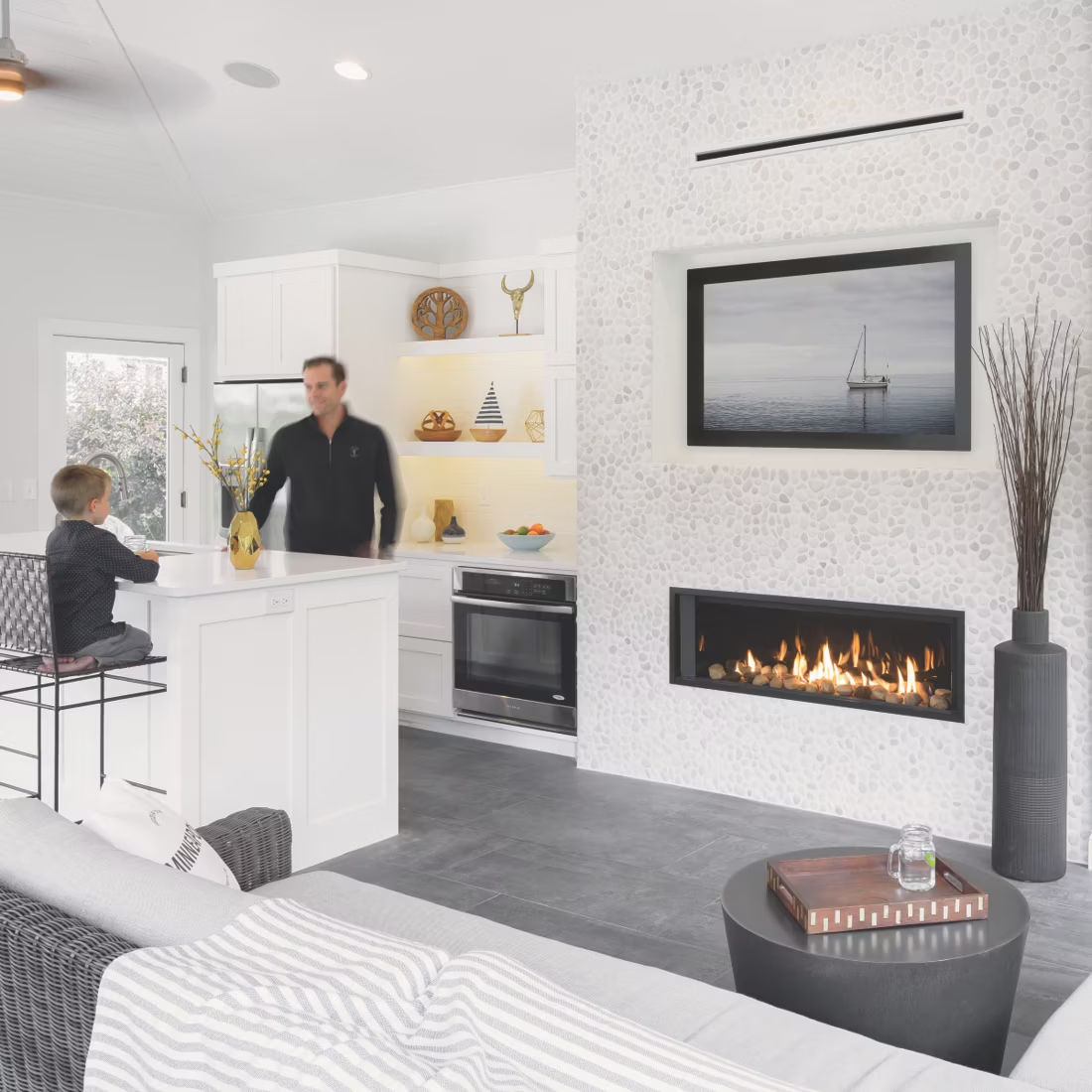
Three steps. No salesperson until you're ready.
Tell us about your project
Your zip code, your situation, and the fuel you're leaning toward—or let the answers point you to one.
See what's actually available
The brands dealers within 100 miles genuinely carry—real options, never a catalog mirage.
Get your dealer & Project Guide
A trusted local dealer, plus the free Project Guide & Parts List that names every component of the job.
Frequently Asked Questions
How much does a gas fireplace installation cost in Toole County?
Most gas fireplace and insert installations in Toole County run roughly $4,000 to $9,500, depending on the unit, the venting path, and whether you're on natural gas or propane. Homes in Shelby with existing NorthWestern Energy natural gas service and an existing masonry fireplace tend to land on the lower end—a direct-vent insert using the existing chimney as a liner path. Rural homes on propane, or any installation requiring a new tank, a long gas line run, or new venting through a wall or roof, run higher. Because Toole County is sparsely populated, expect installers to factor in some travel time if you're out toward Kevin, Sunburst, or Oilmont.
Can I convert my existing wood fireplace to gas?
Yes, and it's a common upgrade in Toole County's older Shelby-area homes that still have a masonry fireplace but no interest in hauling firewood through a Hi-Line winter. A gas insert slides into the existing firebox and uses a stainless liner run up the existing chimney, so you keep the look of the fireplace and gain real, controllable heat output. The conversion typically runs $4,500 to $8,500 depending on whether you're tying into natural gas in Shelby or setting up a propane line from an existing or new tank in the outlying areas of the county.
Do I need natural gas, or can I use propane?
Either works, and which one you use largely comes down to where you live. Shelby has natural gas service through NorthWestern Energy, so homes there with an existing gas water heater or furnace can usually add a fireplace with minimal new line work. Outside city limits—Sunburst, Kevin, Oilmont, Ethridge, and the ranch and farm properties in between—propane is the standard, delivered and stored in a tank on the property. Most gas fireplace models can be configured for either fuel; your installer sets the correct orifice and regulator for the one you have.
Will my gas fireplace work during a power outage?
Most direct-vent gas fireplaces with IPI (intermittent pilot ignition) run on a small battery backup that kicks in the moment the power drops, so the unit lights and operates normally off batteries until service is restored. This matters in Toole County, where an open-plains blizzard can take down power lines for a day or more at a time. Valor fireplaces take a different approach—their pilot generates its own electricity through the thermocouple, so there's no battery to check or replace, ever. If you're choosing a unit specifically as backup heat for winter outages, ask your local dealer about the ignition system before you decide.
What's the difference between a gas fireplace, gas insert, and gas stove?
A gas fireplace is a fully built-in unit, framed into a wall—the right choice for new construction or a full remodel. A gas insert is built to slide into an existing masonry firebox, converting an old open fireplace into a sealed, efficient heat source using the existing chimney as the vent path. A gas stove is a freestanding cabinet unit that sits on the floor, similar in footprint to a wood stove but running on gas or propane instead. For most of Toole County's older farmhouses with an existing fireplace, an insert is the straightforward answer; new rooms or additions without a chimney are better suited to a built-in fireplace or a freestanding stove.
Do I need a permit to install a gas fireplace in Toole County?
Yes—a building permit is required for a new gas fireplace or insert installation through the Toole County building office, and any new gas line or propane line work needs to be done by a licensed gas-fitter. Most local dealers handle the permitting and coordinate the gas-line and venting work as part of the install, so you're not left managing multiple trades on your own. This is especially useful for rural properties where you may already be coordinating with a propane supplier separately for tank placement.
What's the difference between vented and vent-free gas fireplaces?
Vented (direct-vent) units draw combustion air from outside and exhaust it back outside through sealed venting—they're the cleanest and most universally code-compliant option. Vent-free units burn fuel directly into the room without external venting, and while they're legal in Montana, they release water vapor and small amounts of combustion byproducts into the living space and come with strict room-sizing and ventilation requirements. In a climate zone as cold as Toole County's 6B, homes tend to be built tight for efficiency, which makes proper venting even more important—direct-vent units are the standard recommendation here, and what most local dealers will steer you toward.
How often should my gas fireplace be serviced?
Plan on an annual inspection, ideally before the coldest stretch of winter sets in. A technician checks the burner, pilot assembly, gas connections, and venting, and cleans the glass and interior components. It's a much smaller job than chimney sweeping for a wood-burning unit, but skipping it is how minor issues—a dirty burner, a failing thermocouple—turn into a fireplace that won't light on the night you actually need it, which in Toole County can mean a night well below zero.
Gas vs. wood—which is right for my home?
Wood offers real fire, no dependence on a utility or delivery truck, and lower fuel cost if you're set up to source it—though Toole County itself is open prairie, so firewood species like lodgepole pine, ponderosa pine, douglas fir, and aspen are typically hauled in from forested areas toward the Rocky Mountain Front or the Sweet Grass Hills rather than cut locally, which adds cost and effort. Gas gives you instant, thermostatically controlled heat with no hauling, splitting, or ash cleanup, and it holds up well through the county's long, wind-driven heating season. For most Shelby-area homes with natural gas already run to the house, or rural homes already keeping a propane tank filled for the furnace, adding a gas fireplace is usually the simpler and more consistent choice.
Why is my open fireplace making my house colder?
Open fireplaces suck—literally. As the fire burns, it consumes air your furnace already paid to heat and pulls it out through the chimney, so the house is actually colder after the fire goes out than before you lit it. An insert fixes this: it seals the chimney, puts fixed glass across the front, and turns that hole in your house into a real heat source.
Are new gas fireplaces really better than old ones?
Two ways, and they're both big. Looks: modern gas fireplaces are realistic enough that it's hard to believe they aren't burning wood. Cost: old units burn a standing pilot year-round (roughly $200 a year), while new ones use pilot-on-demand ignition and modern burners. Add remote controls and thermostat operation, and the day-to-day experience isn't close.
Does a fireplace add value to my home?
On average, a fireplace adds back to the home about the same amount you spent installing it. Add the monthly savings from heating the rooms you actually use instead of the whole house—often hundreds of dollars a year—and the value case is strong before you even count what a fire does for how your family uses the room.
Can I install a fireplace myself?
If you're putting a fire in your house on purpose, it's best to work with an expert. Unless you're genuinely experienced in framing, gas line, vent pipe, and the national code on clearances to combustibles, have a professional do it—and ideally the same company that sells you the fireplace, so warranty, service, and liability all live under one roof.
Get matched with a Toole County gas fireplace dealer.
Tell us about your home and heating goals, and we'll match you with a trusted local dealer and send you a free Project Guide & Parts List—a plan for your gas fireplace project in Toole County, including the exact parts, vent kit, and recommended installer.
Find Your Fireplace →