
Instant heat and real ambiance for Silver Bow County's high-elevation winters.
From uptown Butte's brick mining-era homes to Walkerville and Rocker, electric fireplaces add zone heat and real ambiance without venting, gas lines, or chimney work. Find the right unit and connect with a trusted local dealer.
Every Project Starts From One of These Five Situations
Clean, flexible heat for one of Montana's coldest counties.
Butte sits at roughly 5,538 feet, and Silver Bow County's winters run about as long and harsh as Fargo, ND's, and colder than most of the Mountain West. Winter lows average 8°F, and the valley's winter inversions can trap wood smoke and vehicle exhaust for days at a time. Many of the county's homes are older mining-era construction—brick two-stories uptown, modest frame houses in Walkerville and Rocker—often with masonry fireplaces that were never great heat sources and chimneys that are expensive to relines or aren't used at all anymore.
Electric fireplaces and inserts fill a specific role here: fast, low-cost zone heat and real fire ambiance in bedrooms, basements, and additions where running new gas line or venting isn't practical. NorthWestern Energy serves electric accounts throughout Butte-Silver Bow, and because electric units don't need combustion air, a chimney, or a permit for a simple plug-in model, they're often the quickest project on this list. What they're not is a whole-home heat source—with winters this long and cold, resistance heat can't compete with wood, pellet, or gas for primary heating load, and most local installs are supplemental rather than a furnace replacement.
Three steps. No salesperson until you're ready.
Tell us about your project
Your zip code, your situation, and the fuel you're leaning toward—or let the answers point you to one.
See what's actually available
The brands dealers within 100 miles genuinely carry—real options, never a catalog mirage.
Get your dealer & Project Guide
A trusted local dealer, plus the free Project Guide & Parts List that names every component of the job.
Frequently Asked Questions
How much does an electric fireplace installation cost in Silver Bow County?
Plug-in electric inserts and mantel packages typically run $300 to $1,500 installed, since there's no venting or gas line to run—most of the cost is the unit itself plus a standard 120V outlet if one isn't already nearby. Built-in wall units or recessed models that require a dedicated 240V circuit run higher, generally $1,500 to $3,500, once an electrician is brought in to run new wiring—common in Butte's older uptown homes where panel capacity and knob-and-tube wiring can complicate the job. Converting an existing masonry fireplace to an electric insert is usually the lower end of that range since the surround is already in place.
Can an electric fireplace actually heat my home in Butte's winters?
Not as a primary source. Most electric fireplaces top out around 5,000 to 9,000 BTU (roughly 1,500 watts), which is enough to warm a single bedroom or den but nowhere near what's needed against Silver Bow County's long, Fargo-level winters and 8°F average winter lows. Think of electric as zone heat for a specific room, or as ambiance for a living space that's already served by a furnace, wood stove, or pellet stove. For whole-home heat in this climate, wood (lodgepole pine, ponderosa pine, Douglas fir, and aspen are all common locally) or a pellet stove will carry the load far more effectively.
Do I need a permit to install an electric fireplace in Silver Bow County?
A simple plug-in electric fireplace or insert that uses an existing standard outlet generally doesn't require a permit. If your unit needs a new dedicated circuit—common with larger built-in or recessed models—that electrical work falls under the Butte-Silver Bow Building Division and should be pulled by a licensed local electrician. Because so many homes in the uptown historic district have older wiring and limited panel capacity, it's worth having an electrician confirm your panel can handle the added load before you buy a unit.
What's the difference between an electric fireplace, insert, and wall-mount unit?
An electric insert is built to slide into an existing masonry fireplace opening, which makes it a popular option for Butte's older brick homes with fireplaces that are drafty or unused. A freestanding electric fireplace or mantel package works anywhere near an outlet and doesn't require an existing firebox. A wall-mount or built-in recessed unit is framed into a wall like a large flat-screen TV and typically needs a dedicated circuit. All three produce the same electric heat and flame effect—the choice mostly comes down to whether you have an existing fireplace to use and how much electrical work you're willing to take on.
Will my electric fireplace work during a power outage?
No—electric fireplaces need grid power (or a generator) to run the heater, fan, and flame effect, so they go dark the moment the power does. That's an important distinction in Silver Bow County, where winter storms and high-elevation cold snaps can knock out power for hours or longer. If backup heat during an outage matters to you, a wood stove or a battery-backed gas unit is a better primary choice, with an electric fireplace reserved for everyday convenience and ambiance rather than emergency heat.
What's the best electric fireplace for an older Butte home?
For uptown Butte's brick homes with existing masonry fireplaces, an electric insert from a brand like Dimplex or Napoleon that fits standard firebox openings is usually the simplest retrofit—it slides into the space you already have and plugs into a nearby outlet or a new dedicated circuit. For homes without an existing fireplace, a linear wall-mount unit gives a modern look and can be sized to the room without any structural changes. Because panel capacity varies a lot in Silver Bow County's older housing stock, have a local dealer or electrician confirm circuit requirements before committing to a larger built-in model.
How much does it cost to run an electric fireplace in Silver Bow County?
A typical 1,500-watt electric fireplace run on high costs roughly 15 to 25 cents per hour at NorthWestern Energy's residential rates, or somewhere around $1.50 to $4 for a full evening of use. That's cheap for occasional ambiance or zone heat in one room, but running it as a stand-in for whole-home heating during a Silver Bow County cold snap adds up fast compared to wood or pellet fuel costs—another reason most local installs treat electric as supplemental rather than primary.
Can I convert my old masonry fireplace to electric?
Yes, and it's a common project in Silver Bow County's mining-era housing stock, where many brick fireplaces are structurally sound but rarely used because the chimney is deteriorated or was never great for heat. An electric insert slides into the existing firebox opening, usually with minimal masonry work, and gives you flame effect and supplemental heat without the cost of relining a chimney. It's typically the least expensive fireplace conversion available, since there's no venting, gas line, or hearth extension to install.
Electric vs. wood or pellet—which is right for my home?
Given Silver Bow County's long, Fargo-level winters and 8°F average lows, wood and pellet stoves remain the practical choice for primary heat—wood especially, given the local supply of lodgepole pine, ponderosa pine, Douglas fir, and aspen, and inexpensive Forest Service cutting permits ($5–$20 per cord) through the Beaverhead-Deerlodge and Helena-Lewis and Clark National Forests during the May-to-October season. Electric fireplaces don't compete on heat output or cost-per-BTU, but they win on convenience, zero emissions during winter inversion advisories, and installation simplicity—no venting, no chimney, no fuel storage. Many Silver Bow County homes end up with both: wood or pellet doing the real heavy lifting, and an electric unit in a bedroom or den for quiet, instant ambiance.
Can I put a TV above my fireplace?
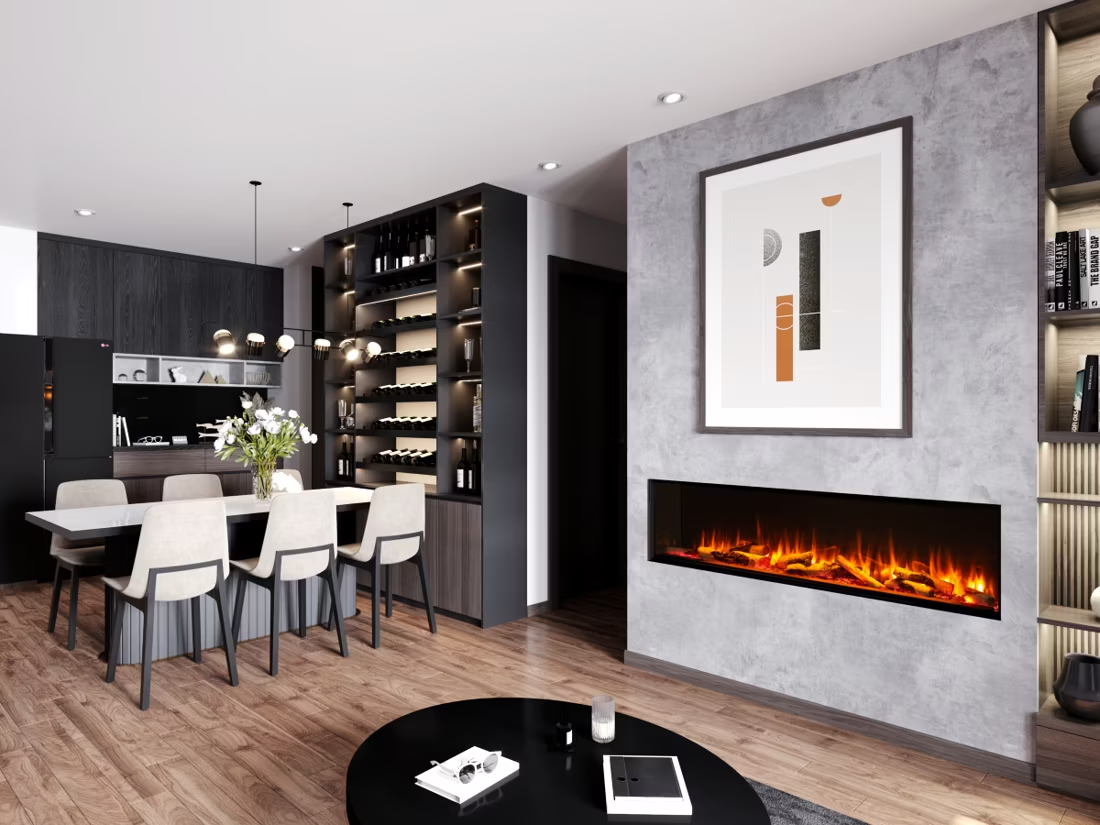
Yes—with an asterisk. Fireplaces are hot and TVs don't like heat. Either put a mantel between them to deflect rising warmth, or choose a fireplace with heat-management technology that creates a cool zone on the wall above—the wall stays around 125 degrees, barely warm, while the room still gets full heat. If you like clean lines and don't want a mantel, heat management is the answer.
Does an electric fireplace need a vent or chimney?
No—that's its superpower. An electric fireplace needs a wall and an outlet, period. No vent pipe, no gas line, no clearances to design around, which is why it works in bedrooms, offices, apartments, and walls where venting a gas or wood unit would be impractical or impossible. Installation is typically the simplest and least expensive of any fireplace type.
Does a fireplace add value to my home?
On average, a fireplace adds back to the home about the same amount you spent installing it. Add the monthly savings from heating the rooms you actually use instead of the whole house—often hundreds of dollars a year—and the value case is strong before you even count what a fire does for how your family uses the room.
Can a fireplace actually lower my heating bill?
Yes—by creating a comfort zone. A furnace heats every square foot of the house just to warm the one room you're in; a gas fireplace on low burns roughly a sixth of the gas a typical furnace does. Set the furnace around 55–60 degrees as a baseline, then heat the rooms your family actually uses. Families who heat this way commonly save $20–$60 a month.
Stove and Fireplace Dealers in Silver Bow County
Listings include WhyFire partner dealers, dealers we have verified as authorized for the brands we recommend, and established local businesses that carry hearth products. Every listing shows which one it is. The ones marked Preferred run on WhyFire's software, so they can show you real pricing and book your appointment right here. No manufacturer pays for placement. How we verify dealers →
Ridgeline Heating
S.j. Perry Co
The Stove Man
Find your electric fireplace in Silver Bow County.
Tell us a bit about your home and we'll put together a free Project Guide & Parts List for your electric fireplace project—the right unit, the exact parts, and a trusted local Silver Bow County dealer to install it.
Find Your Fireplace →