
Electric fireplace heat that keeps up with Sheridan County winters.
Zone heat and real ambiance for the wide-open wheat country around Plentywood, Medicine Lake, and Outlook—without a chimney, gas line, or venting run. Find the right unit and connect with a trusted local dealer.
Every Project Starts From One of These Five Situations
Supplemental heat and honest ambiance for a brutal climate.
Sheridan County sits in the far northeast corner of Montana against the Saskatchewan and North Dakota lines—flat, open wheat and cattle country with a population under 2,400 spread across Plentywood, Medicine Lake, Outlook, and Dagmar. Climate zone 6B and a winter heating load among the heaviest in the Lower 48 put this county in the same range as International Falls, Minnesota—one of the coldest reliably measured spots in the country. Winter lows average -2°F, and stretches of sub-zero weather with hard prairie wind are routine from November through March.
That climate is exactly why electric fireplaces here play a specific, honest role rather than a starring one. A 1,500-watt electric insert or wall unit puts out roughly 5,000 BTU—useful for a bedroom, a finished basement, or a den, but nowhere near enough to carry a whole house against a -2°F design temperature. Most Sheridan County homes we hear from lean on wood, propane, or pellet as primary heat and add an electric unit for zone warmth in a room the main system doesn't reach well, or for the look and feel of a fire in a rental or manufactured home where venting a wood or gas unit isn't practical. Power here runs through the local rural electric cooperative, and while service is generally solid, winter wind events do cause outages—worth knowing since an electric fireplace, unlike a wood stove, goes dark the moment the grid does.
Three steps. No salesperson until you're ready.
Tell us about your project
Your zip code, your situation, and the fuel you're leaning toward—or let the answers point you to one.
See what's actually available
The brands dealers within 100 miles genuinely carry—real options, never a catalog mirage.
Get your dealer & Project Guide
A trusted local dealer, plus the free Project Guide & Parts List that names every component of the job.
Frequently Asked Questions
How much does an electric fireplace installation cost in Sheridan County?
A plug-in freestanding or wall-mounted electric fireplace that runs on a standard 120-volt outlet typically costs $300 to $1,200 installed, since there's no venting or gas line involved—most of that cost is the unit itself plus a licensed electrician confirming the circuit can handle the load. A built-in electric fireplace or larger insert that needs a dedicated 240-volt circuit runs higher, often $1,200 to $3,000, once an electrician runs new wiring from the panel. Because Sheridan County is rural, expect a modest trip charge if your electrician is coming from Plentywood, Sidney, or across the line into Williston, North Dakota.
Can an electric fireplace actually heat my home through a Sheridan County winter?
Not as a primary heat source—and I want to be straight about that given the climate here. With one of the heaviest winter heating loads in the Lower 48 and winter lows averaging -2°F, a typical electric fireplace (1,500 watts, roughly 5,000 BTU) can comfortably warm a single room but can't compete with the heat loss of a whole farmhouse or ranch home on a sub-zero night with wind. Most Sheridan County customers use electric units for supplemental zone heat—a den, a bedroom, a converted porch—while wood, propane, or pellet handles the main load. If you're hoping to offset a furnace that's struggling, a properly sized wood or pellet stove will do more work per dollar than electric resistance heat in this climate.
Do I need a permit to install an electric fireplace in Sheridan County?
A basic plug-in electric fireplace on an existing outlet generally doesn't require a permit. If your unit needs a new dedicated circuit—common with larger built-ins and wall units—the electrical work itself typically needs to be pulled and inspected through the county building office, since that's new wiring off the panel rather than a simple appliance install. Any licensed electrician working in Sheridan County will know whether your specific installation crosses that line and can pull the permit as part of the job.
Will my electric fireplace still work if the power goes out?
No—and this matters more in Sheridan County than in milder climates. Prairie wind events here can knock out rural electric cooperative service for hours at a time in the dead of winter, and an electric fireplace, insert, or wall unit is completely dependent on grid power (or a generator). If you're choosing a heat source specifically for storm reliability, a wood stove or a battery-backup gas unit will carry you through an outage; an electric fireplace won't. Many Sheridan County homes pair an electric unit for everyday convenience with a wood stove or pellet stove as the real cold-weather and outage backup.
Are electric fireplaces a good fit for manufactured and mobile homes in the county?
Yes—this is one of the strongest use cases for electric heat out here, where manufactured and modular housing is common across the county's smaller communities. Electric fireplaces are zero-clearance, need no chimney or exterior venting, and don't touch the roof or wall penetrations the way a wood or gas unit does—which keeps installation simple and avoids complications with a manufactured home's structure. A wall-mounted or built-in electric unit can add real supplemental warmth to a mobile home living room or bedroom without the venting concerns of combustion appliances.
What's the difference between an electric insert, a freestanding unit, and a wall-mounted fireplace?
An electric insert is built to drop into an existing masonry or zero-clearance firebox, often replacing a wood-burning setup you no longer want to maintain. A freestanding electric stove or fireplace sits on the floor like a traditional stove and can go almost anywhere near an outlet. A wall-mounted or built-in unit is installed flush into a wall, usually as part of a remodel, and tends to need that dedicated 240-volt circuit for larger models. For a Sheridan County home converting an old wood fireplace that's fallen out of use, an insert is usually the simplest path; for a new room or an add-on, freestanding or wall-mounted works better.
How much does it cost to run an electric fireplace day to day?
A typical 1,500-watt electric fireplace run on high for several hours a day costs roughly $0.15 to $0.25 per hour at rural electric cooperative rates common in this part of Montana, or somewhere around $10 to $20 a month for regular evening use in one room. That's cheap compared to running a whole-house furnace harder, but it's worth comparing against your co-op's actual per-kWh rate if you're planning to lean on it heavily through a long Sheridan County winter.
What size electric fireplace do I need for my room?
Electric fireplaces are sized by room square footage more than by BTU alone, since most units in the 1,000 to 1,500-watt range are built for zone heating rather than whole-home output. A smaller unit comfortably supplements a bedroom or den up to about 400 square feet; larger wall units and inserts can add noticeable warmth to open living areas up to 1,000 square feet, though on the coldest nights they're working alongside your main heat source, not replacing it. Given how drafty many older farmhouses in the county can be, it's worth erring toward a larger unit if the room is your everyday living space.
Electric vs. wood or pellet—which should be my primary heat in Sheridan County?
For primary heat in a climate with one of the heaviest winter heating loads in the Lower 48 and regular sub-zero nights, wood or pellet will outperform electric resistance heat on both output and cost per BTU, and a wood stove keeps working through the power outages that come with prairie winter storms. Electric wins on convenience—no ash, no wood handling, no venting, and it's easy to add to a room your main system doesn't reach well. Most Sheridan County households we hear from land on a combination: wood or pellet doing the real work of carrying the house through winter, with an electric unit adding easy warmth and ambiance to a specific room.
Can I put a TV above my fireplace?
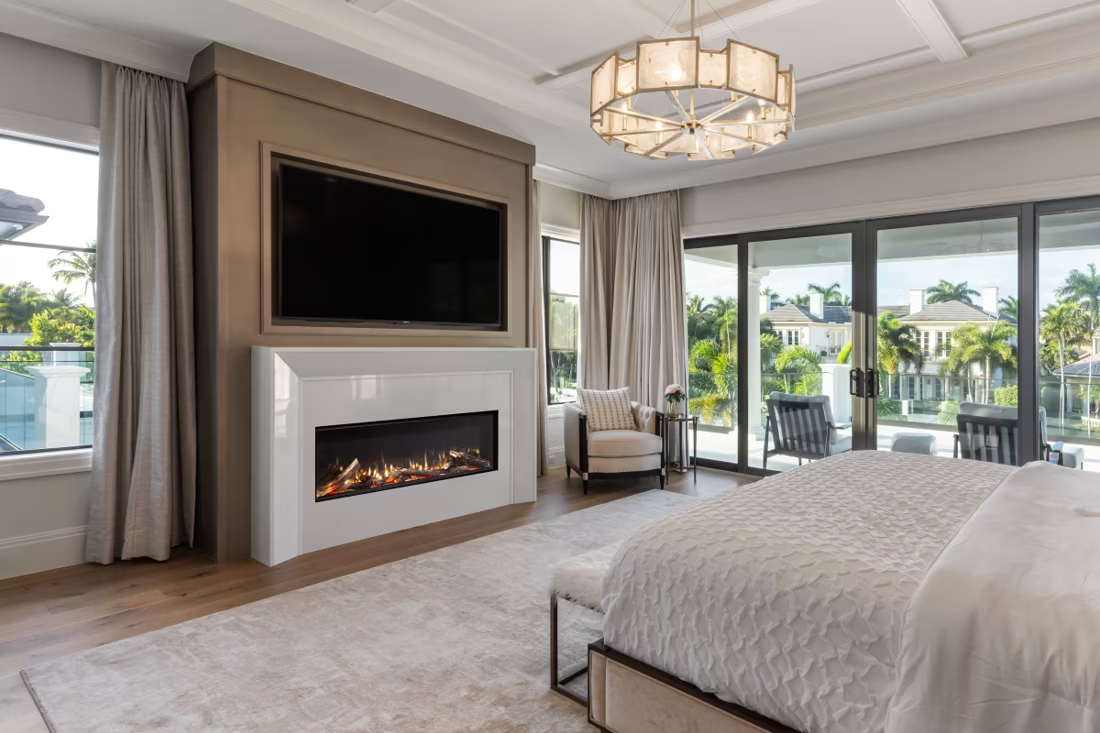
Yes—with an asterisk. Fireplaces are hot and TVs don't like heat. Either put a mantel between them to deflect rising warmth, or choose a fireplace with heat-management technology that creates a cool zone on the wall above—the wall stays around 125 degrees, barely warm, while the room still gets full heat. If you like clean lines and don't want a mantel, heat management is the answer.
How much does an electric fireplace cost to run?
With the heater on, a typical unit draws about 1,500 watts—at average electric rates that's roughly 20 cents an hour. Run the flame effect alone and it costs pennies; the flames are LED-driven and use about as much power as a light bulb. There's no pilot light, no fuel delivery, and essentially no maintenance.
What is an in-home preview and do I need one?
It's a visit where a hearth professional measures your space, confirms the model you picked actually works in your home, and walks the specs—framing, gas line, venting, finish work—before anything is ordered. Some details you just can't know until you see the house. Never make a down payment without one; it's the single most-skipped step that burns buyers.
Can a fireplace actually lower my heating bill?
Yes—by creating a comfort zone. A furnace heats every square foot of the house just to warm the one room you're in; a gas fireplace on low burns roughly a sixth of the gas a typical furnace does. Set the furnace around 55–60 degrees as a baseline, then heat the rooms your family actually uses. Families who heat this way commonly save $20–$60 a month.
Find your electric fireplace in Sheridan County.
Tell us about your home and your room, and we'll put together a free Project Guide & Parts List—the right electric fireplace or insert for your space, the exact parts and electrical needs, and a match with a trusted local dealer who installs in Sheridan County.
Find Your Fireplace →