
Warm up Richland County without a woodpile or a gas line.
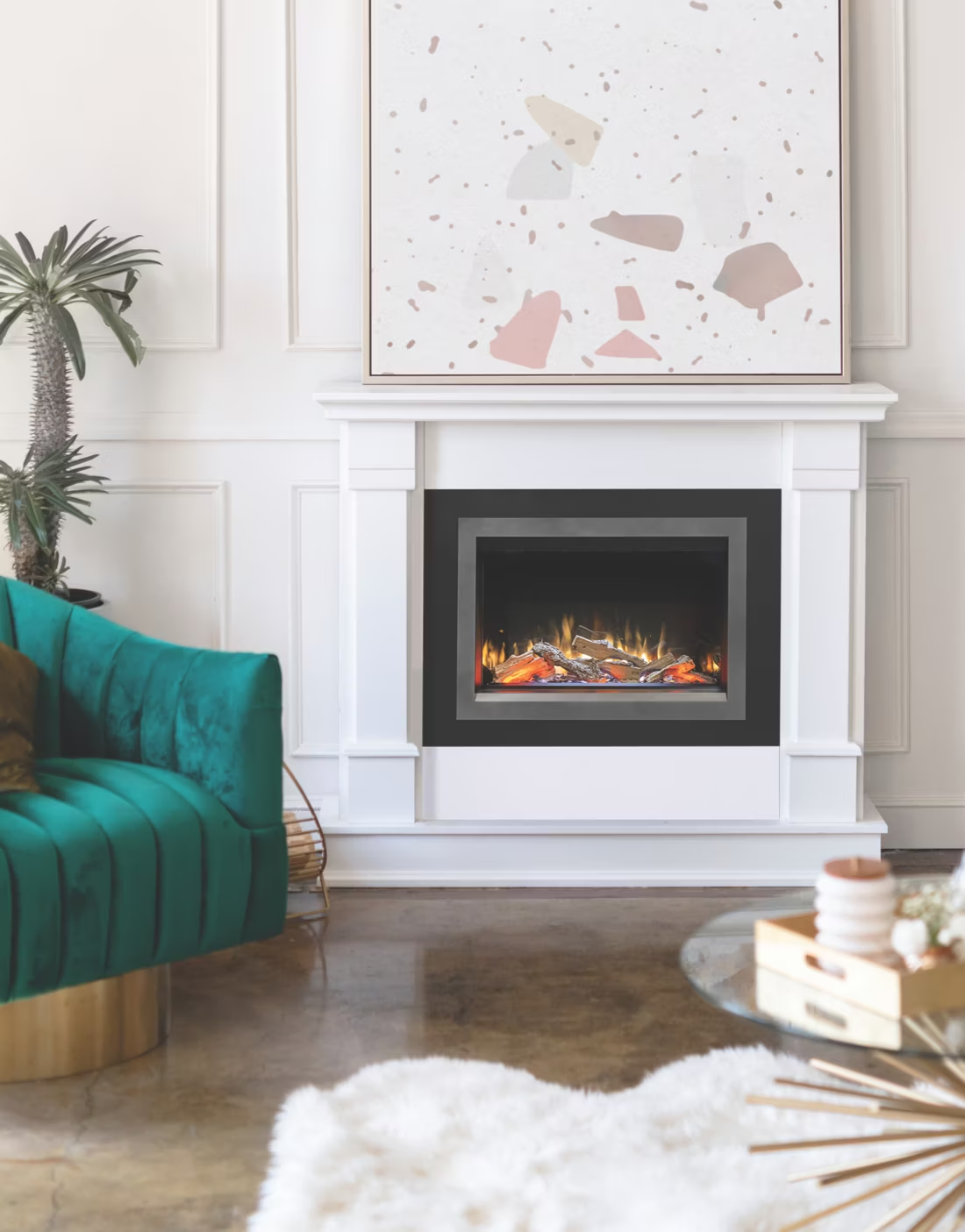
From Sidney to Fairview to Savage, Richland County winters run cold and long—average lows around 6°F and a heating season that stretches from October into April. An electric fireplace won't replace your furnace, but it adds real zone heat and ambiance with no flue, no gas line, and no wood to split. Find the right unit and connect with a trusted local dealer.
Every Project Starts From One of These Five Situations
Zone heat that plugs in and works, no flue required.
Richland County sits along the Yellowstone River in Montana's far northeast corner, home to about 7,895 people spread across Sidney, Fairview, Savage, and the ranch and farm country between them. Climate zone 6B puts winters here in the same league as Bismarck, North Dakota—long stretches below zero, short daylight, and a heating season that runs from October into April. Homes in this county need serious primary heat, and electric fireplaces here are almost always installed as a supplement to that, not a replacement for it.
A lot of Richland County's housing stock reflects the Bakken oil boom years—manufactured homes, rentals, and newer builds in and around Sidney and Fairview that were often wired for electric baseboard or forced-air electric rather than fitted with a masonry chimney. That's part of why wood-burning appliances barely register here and electric fireplaces do: no flue penetration, no combustion air requirements, and an install that an electrician can usually handle in an afternoon. For homeowners who want the look and the zone warmth of a fireplace without adding a vent through the roof, electric is the practical local answer—plugged into circuits served by Lower Yellowstone Rural Electric Cooperative.
Three steps. No salesperson until you're ready.
Tell us about your project
Your zip code, your situation, and the fuel you're leaning toward—or let the answers point you to one.
See what's actually available
The brands dealers within 100 miles genuinely carry—real options, never a catalog mirage.
Get your dealer & Project Guide
A trusted local dealer, plus the free Project Guide & Parts List that names every component of the job.
Frequently Asked Questions
How much does an electric fireplace installation cost in Richland County?
A plug-in electric fireplace insert or wall unit that uses an existing standard outlet typically runs $600 to $2,500 installed, including the unit and any minor carpentry to fit it into a wall or existing firebox. Larger linear electric fireplaces or built-ins that need a dedicated 240V circuit run higher—usually $1,500 to $4,000 once an electrician runs new wire from the panel, especially in older Sidney and Fairview homes where the existing panel may need a subpanel or added circuit capacity. Manufactured and modular homes common around Fairview sometimes need extra electrical assessment before installation to confirm the panel can handle the added load.
Will an electric fireplace actually heat my home in a Richland County winter?
Not as a primary heat source. Most electric fireplaces top out around 1,500 watts, roughly 5,000 BTU, which is enough to take the chill off a single room but not enough to carry a house through a Richland County winter with average lows near 6°F and a long, hard heating season. Homeowners here typically use electric fireplaces for zone heat—warming the living room or bedroom they're actually using while setting back the furnace or electric baseboard elsewhere in the house—plus the visual effect of a fire without the upkeep. If you're hoping for a whole-home heat source, a propane or natural gas system is a better fit for this climate.
What's the difference between an electric fireplace, insert, and stove?
An electric fireplace is typically a built-in or wall-mounted unit designed to look like a framed fireplace, often installed in new construction or a remodel. An electric insert is sized to slide into an existing fireplace opening—useful if a Sidney or Savage home has an old, unused wood-burning firebox that the owner wants converted to clean, low-maintenance heat. An electric stove is a freestanding cabinet-style unit that sits on the floor, mimicking the look of a wood or pellet stove without the venting. For Richland County homes without an existing masonry fireplace, a wall-mounted or freestanding unit is usually simpler than trying to build one in from scratch.
Do I need a permit for an electric fireplace in Richland County?
If the installation only uses an existing standard outlet, most jurisdictions don't require a permit. If the job involves running a new dedicated circuit or upgrading panel capacity—common for larger built-in units—an electrical permit through the Richland County Building & Planning Department is typically required, and the work should be done by a licensed electrician. Local dealers who handle electric fireplace installs generally know which units need a dedicated circuit and can advise on permitting before you buy.
What's the best electric fireplace for Richland County homes?
For manufactured and modular homes, which make up a meaningful share of housing stock around Fairview and Sidney, look for units specifically rated for mobile home installation—not all electric fireplaces are. For older homes with an existing but unused wood-burning firebox, an insert-style electric unit that fits the opening gives you a finished look without carpentry. For newer construction, a linear wall-mounted unit on a dedicated 240V circuit gives the most heat output and the most realistic flame effect. A local dealer can match the unit to your home type and existing wiring rather than guessing from a big-box store shelf.
How much does it cost to run an electric fireplace in Richland County?
Running costs depend on your rate through Lower Yellowstone Rural Electric Cooperative and how many hours a day you run the unit. A typical 1,500-watt electric fireplace on high costs roughly 15 to 25 cents an hour to operate at most rural Montana electric rates—noticeably cheaper than running a whole-house furnace longer than necessary, which is exactly why most owners use them for supplemental, not primary, heat. Most units also run a lower-wattage flame-only mode with no heat, useful for ambiance during shoulder-season evenings when the furnace isn't cycling much.
Will my electric fireplace work if the power goes out?
No—electric fireplaces require power to run and won't function during an outage, which matters in a county where winter storms can knock out rural electric service for hours at a time. If backup heat during outages is a priority, most Richland County homeowners pair an electric fireplace for everyday zone heat with a propane appliance or generator for emergencies, since propane and natural gas units are common and standard for this area. Wood-burning options are uncommon in the county's newer and manufactured housing stock, so propane is generally the more realistic backup here.
Can an electric fireplace replace a space heater in one room?
Yes, and this is one of the most common reasons Richland County homeowners install one. A bedroom or living room addition that runs cold relative to the rest of the house—a common complaint in older Sidney homes with uneven duct runs—is a good candidate for a 1,500-watt electric fireplace instead of a plug-in space heater. You get the same wattage and heat output as a standard space heater, but with a thermostat, a timer, and a fireplace look instead of a utility appliance sitting in the corner.
Electric vs. gas—which is right for my Richland County home?
Gas fireplaces, running on propane in most of the county outside Sidney's limited natural gas service, can put out real heat—often 20,000 to 40,000 BTU—and many models keep working during a power outage with battery-backup ignition, which matters given how often rural electric service in eastern Montana can be interrupted by winter storms. Electric fireplaces cost less upfront, install faster with no gas line or venting, and are simpler for renters or manufactured homes, but they max out around 5,000 BTU and go dark the moment the power does. For a primary heat source or storm backup, gas is the stronger choice here. For low-cost ambiance and zone warmth in a room you're actually sitting in, electric is hard to beat.
Can I put a TV above my fireplace?
Yes—with an asterisk. Fireplaces are hot and TVs don't like heat. Either put a mantel between them to deflect rising warmth, or choose a fireplace with heat-management technology that creates a cool zone on the wall above—the wall stays around 125 degrees, barely warm, while the room still gets full heat. If you like clean lines and don't want a mantel, heat management is the answer.
Do electric fireplaces actually produce heat?
Yes—most put out around 4,800–5,000 BTUs from a standard outlet, which comfortably warms a bedroom, office, or den as a comfort-zone heater. What they won't do is carry a whole house the way wood, gas, or pellet can. Think of electric as ambiance-first with honest supplemental heat: flames on with no heat in July, flames plus warmth in January.
How much should I budget for a fireplace?
For an average home—covering the fireplace, the vent pipe, and basic installation—a budget between $3,900 and $5,500 gives you a lot of options across wood, gas, and pellet. By the time you add finish work, gas line, and electrical, the average complete installation lands between $5,000 and $12,000 all-in. In a remodel or new build, a good rule is to put about 2.5% of the total project cost toward the fireplace.
What is an in-home preview and do I need one?
It's a visit where a hearth professional measures your space, confirms the model you picked actually works in your home, and walks the specs—framing, gas line, venting, finish work—before anything is ordered. Some details you just can't know until you see the house. Never make a down payment without one; it's the single most-skipped step that burns buyers.
Find your electric fireplace in Richland County.
Tell us about your home and how you plan to use it, and we'll match you with the right electric fireplace, insert, or stove—plus a free Project Guide & Parts List and a trusted local dealer to install it.
Find Your Fireplace →