
Instant heat for Madison County ranch country—no chimney, no propane tank, no smoke.
From the Madison River valley to the Tobacco Roots, electric fireplaces give Ennis, Twin Bridges, Sheridan, and Virginia City homes a clean, plug-in heat source that works alongside wood and propane. Find the right unit and connect with a trusted local dealer.
Every Project Starts From One of These Five Situations
Electric heat earns its place beside wood and propane out here.
Madison County spreads across roughly 3,600 square miles of southwest Montana—the Madison River valley, the Tobacco Root and Gravelly ranges, and small communities like Ennis, Twin Bridges, Sheridan, Virginia City, Cameron, and McAllister, holding a combined population of just over 2,700. Elevations run from about 4,700 feet in the valley bottoms to well over 6,000 feet at the ranch and cabin properties tucked into the foothills. Zone 6B winters here run long and cold, and late-summer wildfire smoke from surrounding forests is a real air-quality concern most homeowners plan around.
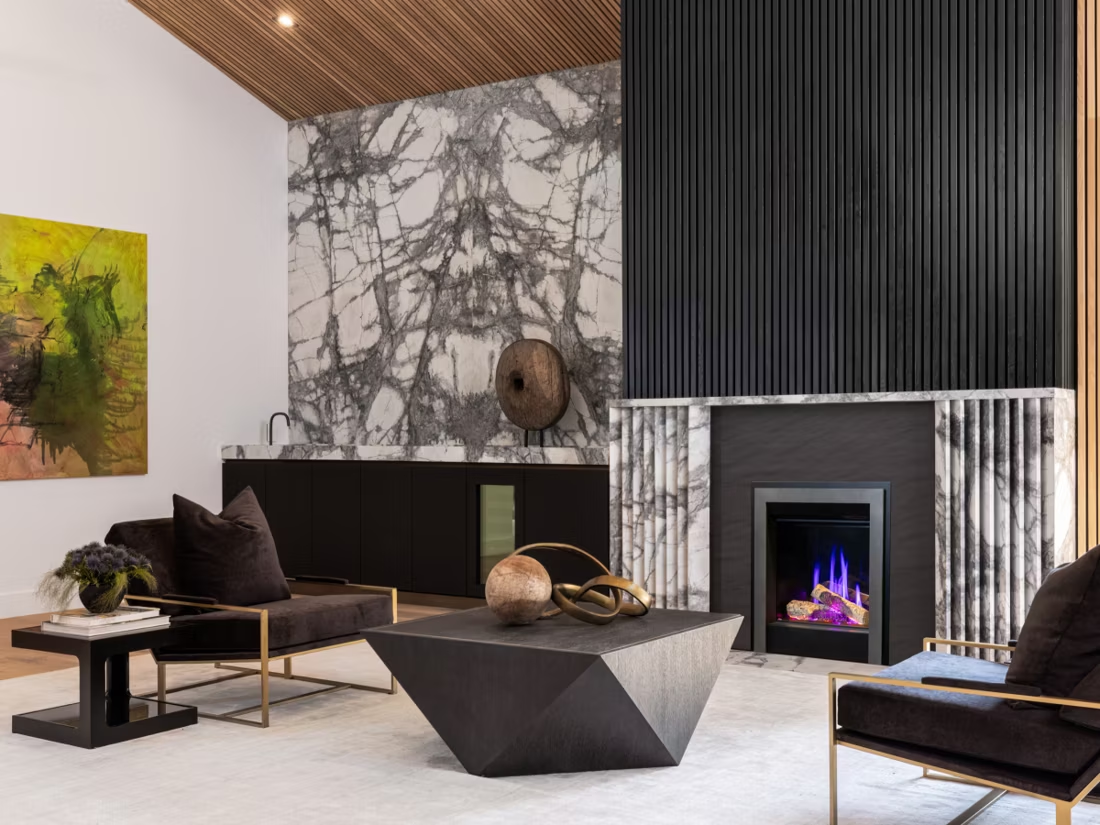
Wood and propane still do most of the heavy lifting for whole-home heat in this county—it's ranch country, and a lot of homes are miles from the nearest utility crew. But electric fireplaces have a clear role: a mantel or wall-mount unit in a living room, a den, or a guest cabin that adds real ambiance and useful zone heat without a chimney, a gas line, or a permit fight. NorthWestern Energy serves Ennis and the incorporated towns; many outlying ranches run on Vigilante Electric Cooperative service instead. Either way, plug-in electric heat is honest about what it is—it's not built to carry a home through a January whiteout with the power down, but it's an easy, clean way to add heat and glow to the rooms where you actually spend your evenings.
Three steps. No salesperson until you're ready.
Tell us about your project
Your zip code, your situation, and the fuel you're leaning toward—or let the answers point you to one.
See what's actually available
The brands dealers within 100 miles genuinely carry—real options, never a catalog mirage.
Get your dealer & Project Guide
A trusted local dealer, plus the free Project Guide & Parts List that names every component of the job.
Frequently Asked Questions
How much does an electric fireplace installation cost in Madison County?
Most electric fireplace projects in Madison County run $400 to $1,500. A freestanding or plug-in insert that drops into an existing firebox or media console is on the low end and often needs no electrician at all. A wall-mount or built-in linear unit that requires a dedicated 120V or 240V circuit—common in new construction around Ennis and Twin Bridges, or in remodels of older ranch homes—runs toward the higher end once an electrician is involved. There's no combustion appliance permit required for most units, which keeps this simpler and faster than a wood or propane install.
Is electric heat enough on its own for a Madison County home?
For most full-time homes here, no—electric fireplaces are best treated as zone heat or ambiance, not the primary heat source. Zone 6B winters push heating loads that a 1,500-watt electric unit can't carry across a whole ranch house or ski cabin. Where electric works well on its own is a guest cabin, a bunkhouse, a finished basement, or a room addition where running a chimney or gas line isn't practical. Pair it with a wood stove, propane furnace, or forced-air system for the bulk of your heating and let the electric unit handle the room you actually live in most evenings.
Will my electric fireplace work if the power goes out?
No—and this is worth being direct about. Electric fireplaces run entirely on grid power, so during a winter storm outage in Madison County—which does happen along rural NorthWestern Energy and Vigilante Electric Cooperative lines—the unit simply won't run. If backup heat during outages matters to you, a wood stove or a propane unit with a standing pilot is the better choice for that specific job. Plenty of local homes run both: wood or propane for storm resilience, electric for daily convenience in a secondary room.
Do I need a permit for an electric fireplace in Madison County?
Most plug-in electric fireplaces and inserts don't require a building permit since there's no venting, combustion, or gas line involved. If you're having a dedicated electrical circuit run for a wall-mount or built-in unit, that portion of the work should be pulled by a licensed electrician under standard electrical permitting—routine for new construction and remodels around Ennis, Sheridan, and Twin Bridges. Confirm specifics with your contractor, since requirements can vary slightly between the incorporated towns and unincorporated county.
Electric vs. wood—which makes sense for my Madison County property?
Wood remains the practical choice for full-time heat and storm backup in this county, especially with lodgepole pine, ponderosa pine, Douglas fir, and aspen all readily available locally as firewood. But wood means chimney clearances, an annual sweep, and hauling and splitting cordwood—real work on a ranch property that's already busy. Electric skips all of that: no venting, no ash, no creosote, and it runs clean through the wildfire-smoke stretches of late summer when adding more smoke to the air isn't appealing. For a guest room, a den, or a second living space, electric is often the lower-hassle answer; for the main heat source on an isolated property, wood usually still wins.
What's the difference between an electric insert, a wall-mount unit, and an electric log set?
An electric insert drops into an existing wood or gas firebox and is the most common retrofit for older Madison County homes with a masonry fireplace that's no longer used for wood burning. A wall-mount or linear electric fireplace is a built-in unit set into framing, popular in newer construction and remodels around Ennis and Twin Bridges. An electric log set is the simplest option—a self-contained unit that sits inside an existing firebox and plugs into a standard outlet, no electrician needed. Which one fits depends on whether you're retrofitting an old fireplace or building something new.
How much does an electric fireplace cost to run?
Most electric fireplaces draw around 1,500 watts on the heat setting, which works out to roughly 15 cents an hour on typical NorthWestern Energy or Vigilante Electric Cooperative residential rates—a few dollars for an evening's use. Run on flame-only mode with the heater off, the draw drops to just a few watts, which is common in warmer months when homeowners want the visual without the heat. It's a fraction of the cost of running a whole-home electric furnace, since you're only heating the one room you're in.
Are electric fireplaces a good option during wildfire smoke season?
Yes—this is one of the clearer advantages of electric in Madison County. Late-summer wildfire smoke settling into the Madison valley and surrounding drainages is a recurring concern, and a wood stove adds combustion byproducts to air that's already compromised on bad smoke days. An electric fireplace produces zero combustion emissions, so it's a reasonable way to get some evening ambiance or supplemental warmth on a smoky August night without adding to the problem.
What size electric fireplace do I need for my Madison County home?
For a room in the 200 to 400 square foot range—a typical living room or den—a standard 1,500-watt insert or wall-mount unit is usually enough for supplemental heat, though it won't overcome zone 6B's coldest stretches on its own. Larger open-concept spaces common in newer Ennis-area homes may need two zones or a larger linear unit paired with your primary heat source. Since electric units are sized by room and by watt output rather than whole-home BTU load the way wood and propane systems are, a local dealer can walk through your specific room dimensions and insulation level to land on the right fit.
Can I put a TV above my fireplace?
Yes—with an asterisk. Fireplaces are hot and TVs don't like heat. Either put a mantel between them to deflect rising warmth, or choose a fireplace with heat-management technology that creates a cool zone on the wall above—the wall stays around 125 degrees, barely warm, while the room still gets full heat. If you like clean lines and don't want a mantel, heat management is the answer.
Do electric fireplaces actually produce heat?
Yes—most put out around 4,800–5,000 BTUs from a standard outlet, which comfortably warms a bedroom, office, or den as a comfort-zone heater. What they won't do is carry a whole house the way wood, gas, or pellet can. Think of electric as ambiance-first with honest supplemental heat: flames on with no heat in July, flames plus warmth in January.
Does a fireplace add value to my home?
On average, a fireplace adds back to the home about the same amount you spent installing it. Add the monthly savings from heating the rooms you actually use instead of the whole house—often hundreds of dollars a year—and the value case is strong before you even count what a fire does for how your family uses the room.
How much should I budget for a fireplace?
For an average home—covering the fireplace, the vent pipe, and basic installation—a budget between $3,900 and $5,500 gives you a lot of options across wood, gas, and pellet. By the time you add finish work, gas line, and electrical, the average complete installation lands between $5,000 and $12,000 all-in. In a remodel or new build, a good rule is to put about 2.5% of the total project cost toward the fireplace.
Find your electric fireplace in Madison County.
Tell us about your home and we'll match you with the right electric fireplace or insert for your space, plus a free Project Guide & Parts List with the exact parts and your recommended local Madison County dealer.
Find Your Fireplace →