
Warmth You Can Flip On, Even on the Hi-Line's Coldest Nights.
No venting, no woodpile, no gas line—just clean zone heat for homes across Chester, Joplin, Rudyard, and the rest of Liberty County. Find the right unit and get matched with a trusted local dealer.
Every Project Starts From One of These Five Situations
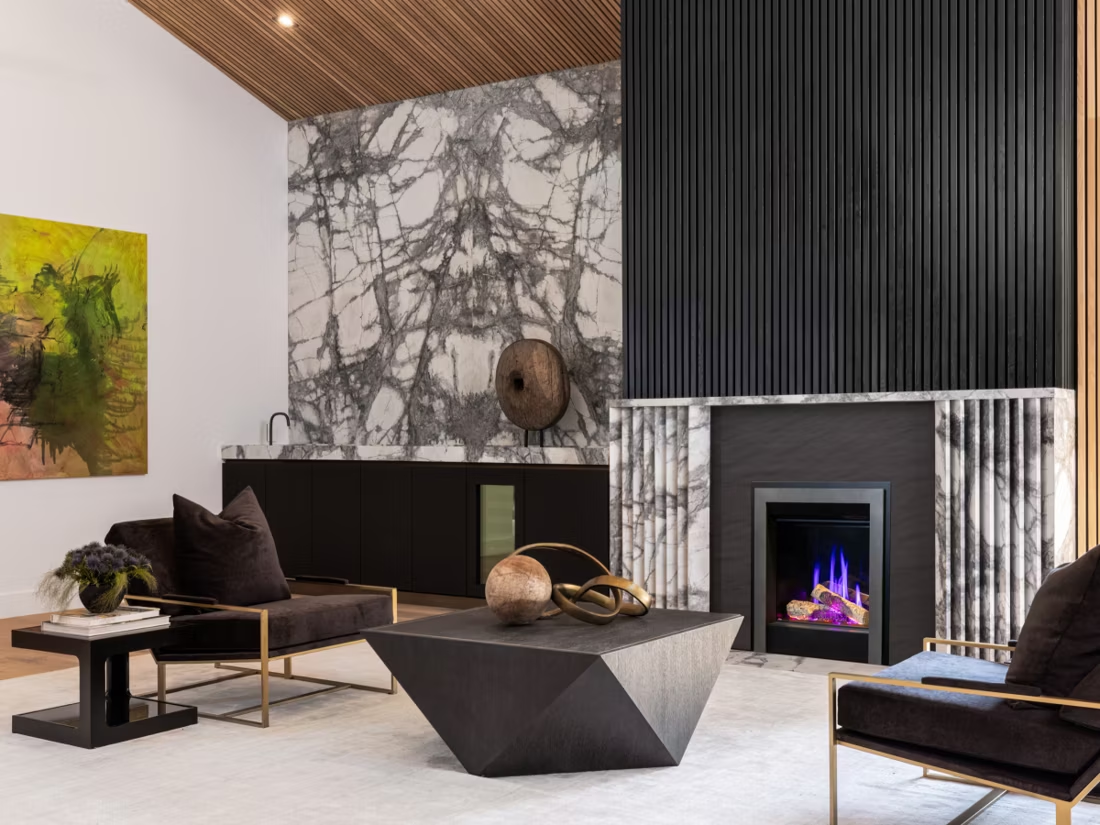
Ambiance and zone heat, without the chimney or the woodpile.
Liberty County is roughly 1,430 square miles of wheat and cattle country strung along the Hi-Line, home to about 1,381 people spread thin across Chester, Joplin, Rudyard, and Lothair. Climate zone 6B here means long, hard winters with wind-driven cold snaps that blow straight down from the Canadian border. Wood heat runs deep in this landscape—lodgepole pine, ponderosa, douglas fir, and aspen are all cut and burned locally—but a growing number of homeowners are adding electric fireplaces and inserts for the rooms where a wood stove or gas line doesn't make sense.
Marias River Electric Cooperative serves most of Liberty County, and with no natural gas distribution network out here, running a gas line to a bonus room or converted garage often isn't practical or affordable. An electric fireplace sidesteps that entirely—plug in a smaller unit or have an electrician add a dedicated circuit for a built-in, and you're done. There's no venting to size, no creosote to manage, and no combustion byproducts to worry about, which matters during wildfire smoke season when the Hi-Line's air quality can turn hazy for days at a time. The tradeoff worth understanding up front: electric fireplaces need grid power to run, so in a county where winter blizzards can knock out electric service for hours or longer, they work best as a second or third heat source alongside a wood stove or propane furnace, not as your only line of defense against a Hi-Line cold snap.
Three steps. No salesperson until you're ready.
Tell us about your project
Your zip code, your situation, and the fuel you're leaning toward—or let the answers point you to one.
See what's actually available
The brands dealers within 100 miles genuinely carry—real options, never a catalog mirage.
Get your dealer & Project Guide
A trusted local dealer, plus the free Project Guide & Parts List that names every component of the job.
Frequently Asked Questions
How much does it cost to install an electric fireplace in Liberty County?
Small plug-in electric inserts or freestanding units that run on a standard 120-volt outlet typically run $300 to $900 installed, since there's no wiring work involved beyond setting the unit and finishing the surround. Larger built-in electric fireplaces or wall units usually need a dedicated 20-amp circuit, which means bringing in a licensed electrician—that pushes total cost to roughly $1,500 to $3,500 depending on how far the unit is from the panel and whether any wall or mantel framing is needed. In a rural county like Liberty, expect a modest travel charge if your installer is coming from Shelby, Havre, or Great Falls, since there isn't a hearth retailer based in Chester itself.
Will an electric fireplace heat my whole house?
No—electric fireplaces are built as zone heaters, not whole-home furnaces. Most units put out around 5,000 to 9,000 BTUs, enough to comfortably warm a single room, a converted garage, or a bonus space, but not enough to carry a full farmhouse through a Liberty County winter on its own. Around Chester and Joplin, most homeowners installing electric units are supplementing a propane furnace or wood stove, using the electric fireplace to take the edge off a specific room without running the whole heating system, or to add heat and ambiance to a space—like a finished basement or sunroom—that the main furnace doesn't reach well.
Will my electric fireplace still work if the power goes out during a blizzard?
No—this is the tradeoff to plan around. Electric fireplaces draw power straight from Marias River Electric Cooperative's grid, so a downed line during a Hi-Line ground blizzard means the unit shuts off along with everything else in the house. For that reason, most Liberty County homes that rely on electric fireplaces for supplemental heat also keep a wood stove, wood fireplace insert, or propane heater on hand for the nights when the power doesn't come back quickly. If backup heat during outages is your top priority, a wood-burning appliance is worth pairing with an electric unit rather than relying on electric heat alone.
What's the difference between an electric insert, a built-in, and a freestanding electric fireplace?
An electric insert is sized to slide into an existing masonry fireplace opening, which works well if you have an old wood-burning fireplace you no longer want to feed but like the look of a firebox glow. A built-in electric fireplace is framed into a wall like a TV cutout—common in new construction or remodels around Chester and Rudyard—and usually needs a dedicated circuit run by an electrician. A freestanding electric stove or mantel unit needs no installation beyond plugging it in, which makes it the easiest option for a rental, a farmhouse addition, or a modular home where you don't want to open up walls.
Do I need a permit to install an electric fireplace in Liberty County?
A plug-in unit that runs off an existing outlet generally doesn't require a permit, since there's no gas line, venting, or new wiring involved. If your installation calls for a new dedicated circuit—typical for larger built-in units—the electrical work itself needs to be done by a licensed electrician and may require an electrical permit through the Liberty County Building Department. There's no combustion appliance inspection to worry about the way there is with a wood stove or gas insert, which is one of the reasons electric units are popular for quick upgrades in older Hi-Line farmhouses.
Are electric fireplaces a good fit for manufactured or modular homes?
Yes, and it's one of the more common installs across Liberty County's rural stretches, where manufactured and modular homes are common on farm and ranch properties. Electric units don't require the structural clearances, hearth pad, or roof penetration a wood stove needs, which sidesteps a lot of the complications that come with retrofitting a manufactured home for solid-fuel burning. A freestanding or wall-mounted electric fireplace can usually go in with minimal modification, provided the home's electrical panel has capacity for a new circuit if you're going with a larger built-in unit.
How much does it cost to run an electric fireplace day to day?
Running cost depends on your rate through Marias River Electric Cooperative and how many hours a day the unit's heater element is actually cycling, not just the flame effect. Most mid-size electric fireplaces draw around 1,500 watts on the heat setting, which typically works out to a modest addition to a monthly bill if it's used for a few hours a day in a single room—considerably less than heating that same room with a whole-house furnace running longer cycles. Running the flame visual alone, without the heater engaged, uses only a fraction of that and is a popular way to get the ambiance during shoulder-season months without adding real heating load.
Does an electric fireplace help during wildfire smoke season?
It can. Liberty County sees periods of wildfire smoke drift into the Hi-Line during summer and early fall, and unlike a wood stove, an electric fireplace produces no combustion byproducts and requires no outdoor air intake, so it doesn't add anything to indoor air quality concerns during smoke events. For households that want a fireplace's ambiance without opening a damper or worrying about particulate matter when regional air quality is already poor, electric is the cleanest option available.
Electric vs. wood—which makes more sense for a Liberty County home?
Wood remains the backbone of heating for a lot of Liberty County properties, especially given easy access to lodgepole pine, ponderosa, and douglas fir, and the reality that wood heat keeps working when a Hi-Line blizzard takes down power lines. Electric fireplaces don't compete with that as a primary or backup heat source—what they're good at is adding clean, no-maintenance zone heat and ambiance to a specific room without a chimney, a woodpile, or a gas line, and without any smoke output during wildfire season. Many homes here end up with both: a wood stove or insert for real heat and outage resilience, and an electric unit in a bedroom, den, or bonus room where convenience matters more than backup capability.
Can I put a TV above my fireplace?
Yes—with an asterisk. Fireplaces are hot and TVs don't like heat. Either put a mantel between them to deflect rising warmth, or choose a fireplace with heat-management technology that creates a cool zone on the wall above—the wall stays around 125 degrees, barely warm, while the room still gets full heat. If you like clean lines and don't want a mantel, heat management is the answer.
Do electric fireplaces actually produce heat?
Yes—most put out around 4,800–5,000 BTUs from a standard outlet, which comfortably warms a bedroom, office, or den as a comfort-zone heater. What they won't do is carry a whole house the way wood, gas, or pellet can. Think of electric as ambiance-first with honest supplemental heat: flames on with no heat in July, flames plus warmth in January.
What is an in-home preview and do I need one?
It's a visit where a hearth professional measures your space, confirms the model you picked actually works in your home, and walks the specs—framing, gas line, venting, finish work—before anything is ordered. Some details you just can't know until you see the house. Never make a down payment without one; it's the single most-skipped step that burns buyers.
Does a fireplace add value to my home?
On average, a fireplace adds back to the home about the same amount you spent installing it. Add the monthly savings from heating the rooms you actually use instead of the whole house—often hundreds of dollars a year—and the value case is strong before you even count what a fire does for how your family uses the room.
Find your electric fireplace in Liberty County.
Tell us a bit about your home and we'll match you with the right electric fireplace or insert, plus a free Project Guide & Parts List and a trusted local dealer to handle the install.
Find Your Fireplace →