
Instant heat for Lakeside's long, cold winters.
No venting, no wood, no gas line—just clean supplemental heat for homes and cabins around Flathead Lake. Find the right unit and get matched with a trusted local dealer.
Every Project Starts From One of These Five Situations
Clean, flexible heat for lake-country homes.
Lakeside sits at 2,923 feet on the western shore of Flathead Lake, where winter lows average 18°F and the area faces a long, intense heating season—cold enough to rival Duluth, MN for total heating demand. Most homes here still lean on wood, pellet, or propane as primary heat, since there's no natural gas utility serving Flathead County. That's exactly where electric fireplaces earn their place: as a clean, no-mess supplement for a living room, bedroom, or lakeside guest cabin that doesn't need a chimney, gas line, or cord of split lodgepole pine to run.
Flathead Electric Cooperative serves the area at a residential rate of about 9.67 cents per kWh—one of the more affordable rates in the Northwest—which makes electric heat a reasonable option for zone heating a den or converting a seasonal cabin into something usable on shoulder-season weekends. It won't replace a wood stove or pellet insert as whole-home heat through a Flathead Valley winter, but for supplemental warmth, ambiance, and homes where wildfire-season air quality makes wood burning less appealing, electric is a straightforward, low-maintenance answer.
Three steps. No salesperson until you're ready.
Tell us about your project
Your zip code, your situation, and the fuel you're leaning toward—or let the answers point you to one.
See what's actually available
The brands dealers within 100 miles genuinely carry—real options, never a catalog mirage.
Get your dealer & Project Guide
A trusted local dealer, plus the free Project Guide & Parts List that names every component of the job.
Frequently Asked Questions
How much does it cost to install an electric fireplace in Lakeside?
Most electric fireplace installs in Lakeside run $400 to $2,500. A plug-in wall-mount or freestanding unit on an existing outlet sits at the low end and can often be a same-day install. A built-in electric insert or a linear unit that requires a dedicated 20-amp circuit run by a licensed electrician pushes toward the higher end, especially in older Flathead Valley homes where panel capacity is limited. Local retailers and electricians typically quote the job together once they see your wall and panel setup.
Will an electric fireplace actually heat my Lakeside home?
Most electric fireplaces are rated for 400-1,500 square feet of supplemental heat—enough to comfortably warm a living room or bedroom, not a whole house. With Lakeside's winters running long and cold, comparable to Duluth, MN, and winter lows around 18°F, homeowners here almost always pair electric with a primary heat source: a wood stove burning local lodgepole pine or Douglas fir, a pellet stove using Bear Mountain or Lignetics fuel, or a propane furnace, since natural gas isn't available in the area. Think of electric as zone heat for the room you live in most, not a replacement for your furnace.
What happens to my electric fireplace during a power outage?
It stops working. Electric fireplaces run entirely on household current, so a Flathead Electric Cooperative outage—which does happen during winter storms and high-wind events around the lake—takes the unit offline along with everything else on the circuit. That's the main tradeoff against wood or pellet heat, and it's why most year-round Lakeside homes keep a wood stove or pellet insert as backup even if electric handles daily convenience heating in the main living space.
What's the difference between an electric insert, a wall-mount, and a freestanding electric stove?
An electric insert drops into an existing masonry fireplace opening, giving you flame effect and heat without touching your chimney or damper. A wall-mount unit hangs flush like a flat-screen TV and works well in newer construction or a remodel. A freestanding electric stove looks like a traditional wood stove but plugs into a standard outlet, which makes it a popular choice for Flathead Lake cabins and rentals where landlords want the look of a wood stove without the chimney, permits, or firewood storage.
Do I need a permit to install an electric fireplace in Lakeside?
Usually not for the fireplace itself—electric units don't involve combustion, venting, or gas lines, so Flathead County's building permit requirements that apply to wood and gas installs generally don't apply here. The one exception is if the install requires new electrical wiring or a dedicated circuit; that work should be pulled through a licensed electrician and may require an electrical permit through Flathead County. Simple plug-in units on existing circuits typically need no permit at all.
What does it cost to run an electric fireplace in Lakeside?
At Flathead Electric Cooperative's residential rate of roughly $0.0967 per kWh, a typical 1,500-watt electric fireplace costs about 15 cents per hour to run on heat mode. Left on for eight hours a day through a cold snap, that's roughly $1.20 a day, or about $35-$40 a month of supplemental use—considerably cheaper than propane delivery for the same square footage, though it won't touch the output of a wood stove burning free or cheap-permit firewood from the Flathead or Kootenai National Forest.
Are electric fireplaces a good fit for lake cabins and rental properties?
Yes—this is one of the more common installs we see around Flathead Lake. Seasonal cabins and vacation rentals in Lakeside often can't justify a full wood-burning setup with chimney maintenance and firewood storage, especially if they sit empty for stretches of the winter. A plug-in or simple wall-mount electric unit gives guests instant ambiance and warmth with zero fire risk when the property is unattended, which matters to insurance carriers and property managers alike.
Electric vs. wood or pellet—which should be my primary heat?
For a Lakeside home occupied through the winter, wood or pellet is almost always the better primary choice given the area's long, Duluth-level winter heating season and the reality of Flathead Electric Cooperative outages during storms. A wood stove burning local lodgepole pine, ponderosa, or Douglas fir—with cutting permits running $5-$20 per cord through the Flathead or Kootenai National Forest—delivers serious BTU output and keeps working when the grid doesn't. Electric wins on convenience, cleanliness, and cost for supplemental or occasional use, particularly given local wildfire-smoke concerns that make some homeowners want to burn less overall.
Should I choose electric or propane for a Flathead Lake vacation property?
It depends on how the property is used. Since natural gas isn't available in Lakeside, propane is the usual alternative to wood for whole-home heat, but it requires a tank, delivery contracts, and ongoing fuel costs even when the cabin sits empty. An electric fireplace has no standing fuel cost, no delivery scheduling, and no risk of a frozen or empty tank catching you off guard on opening weekend—which is why many part-time Lakeside homeowners use electric for the main living space and skip propane heat entirely if the cabin is only used a few months a year.
Can I put a TV above my fireplace?
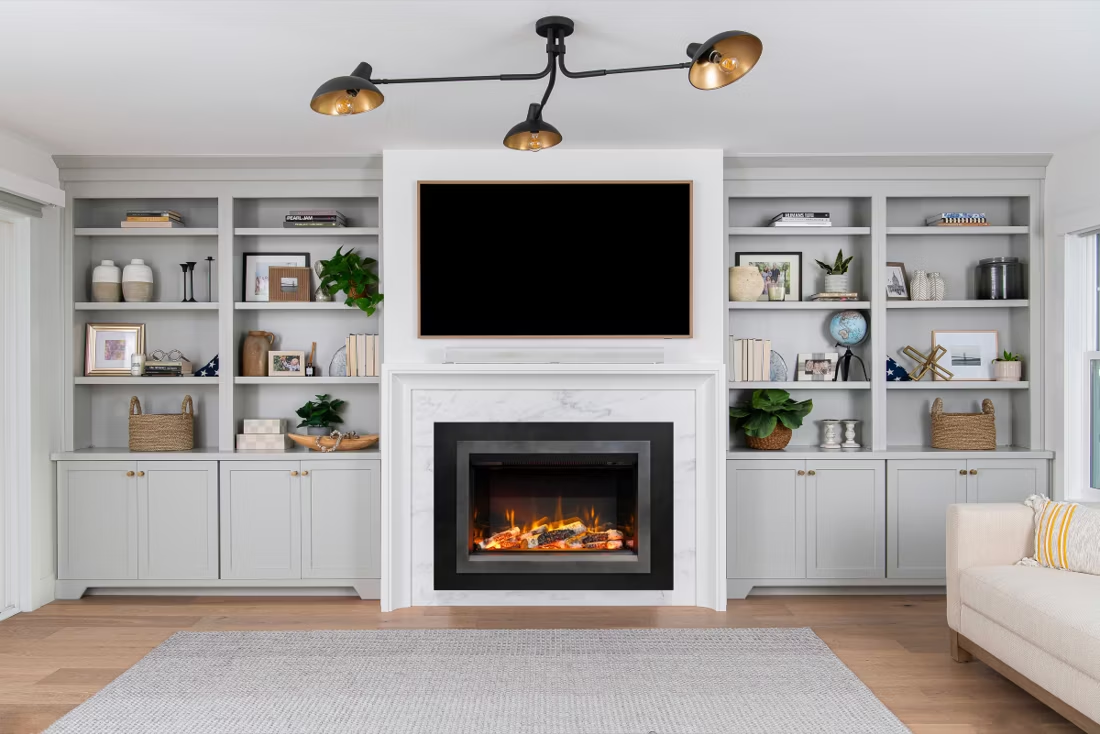
Yes—with an asterisk. Fireplaces are hot and TVs don't like heat. Either put a mantel between them to deflect rising warmth, or choose a fireplace with heat-management technology that creates a cool zone on the wall above—the wall stays around 125 degrees, barely warm, while the room still gets full heat. If you like clean lines and don't want a mantel, heat management is the answer.
What fireplace styles should I know before shopping?
Four cover most of the market: screen-front traditional (mesh front, open feel, fits craftsman homes), traditional door set (the classic look you grew up with), modern linear (wide, low, the statement piece for entertaining), and clean face contemporary (no trim—your tile or stone runs right to the fire's edge). Walk in knowing those four terms and you're ahead of most buyers.
How much should I budget for a fireplace?
For an average home—covering the fireplace, the vent pipe, and basic installation—a budget between $3,900 and $5,500 gives you a lot of options across wood, gas, and pellet. By the time you add finish work, gas line, and electrical, the average complete installation lands between $5,000 and $12,000 all-in. In a remodel or new build, a good rule is to put about 2.5% of the total project cost toward the fireplace.
Does a fireplace add value to my home?
On average, a fireplace adds back to the home about the same amount you spent installing it. Add the monthly savings from heating the rooms you actually use instead of the whole house—often hundreds of dollars a year—and the value case is strong before you even count what a fire does for how your family uses the room.
Nearby Dealers
Hearth shops serving Lakeside and the surrounding area. Every listing shows whether it is a WhyFire partner, a dealer we have verified as authorized for the brands we recommend, or a local business carrying hearth products. No manufacturer pays for placement. How we verify dealers →
Aire Serv/kalispell
Electric Service in Lakeside
An electric fireplace's heater draws about 1,500 watts—pennies per hour at local rates.
Flathead Electric Coop Inc
Find your electric fireplace in Lakeside.
Tell us a bit about your home and we'll match you with the right electric fireplace, insert, or stove—plus a free Project Guide & Parts List and a trusted local dealer to install it.
Find Your Fireplace →