
Instant heat for Beaverhead County's coldest nights.
No venting, no chimney, and heat you can flip on in a ranch house near Dillon or a cabin out past Wisdom. Find the right electric unit and connect with a trusted local dealer.
Every Project Starts From One of These Five Situations
Real warmth, wherever the wiring reaches.
Beaverhead County is Montana's largest by land area—roughly 5,500 square miles of ranch country stretching from Dillon down through the Big Hole Valley toward Wisdom and Jackson, with elevations from around 5,100 feet at the county seat up past 6,500 feet in the valley floors. Wisdom regularly posts some of the coldest overnight readings in the continental United States, and with a winter heating load on par with International Falls, Minnesota—this is genuinely severe-cold territory. Electric fireplaces are standard here, but they play a supporting role: most homes lean on wood stoves, propane furnaces, or fuel oil as primary heat, and electric units fill in as zone heat for a den, a primary bedroom, or a guest cabin that doesn't need full-time chimney maintenance.
Vigilante Electric Cooperative serves most of the county's rural service territory, and that co-op infrastructure matters for how electric fireplaces get used here. A plug-in or hardwired electric fireplace draws real current—typically 1,500 watts on high—which is worth checking against an older ranch home's panel before installation, especially on properties around Wise River or Polaris where electrical service may not have been updated in decades. Because electric units go dark the moment the grid does, and winter storms in the Big Hole Valley can knock out power for hours, most local dealers pair an electric fireplace with a wood stove or propane appliance for backup rather than relying on electric as the sole heat source.
Three steps. No salesperson until you're ready.
Tell us about your project
Your zip code, your situation, and the fuel you're leaning toward—or let the answers point you to one.
See what's actually available
The brands dealers within 100 miles genuinely carry—real options, never a catalog mirage.
Get your dealer & Project Guide
A trusted local dealer, plus the free Project Guide & Parts List that names every component of the job.
Frequently Asked Questions
How much does an electric fireplace installation cost in Beaverhead County?
Plug-in electric fireplaces and freestanding stoves need no real installation—just a standard outlet—and the unit itself typically runs $300 to $1,500. Built-in wall units or recessed inserts that require a dedicated circuit or minor electrical work run higher, generally $600 to $2,500 once an electrician is involved, especially in older ranch homes around Dillon or Lima where panel upgrades are sometimes needed to support a dedicated 20-amp circuit. There's no venting, chimney, or gas line to budget for, which is the main reason electric costs so much less than wood or gas installs in this county.
Will an electric fireplace actually heat my home in Beaverhead County's cold?
Not as a whole-house solution—most electric fireplaces are rated for 400 to 1,000 square feet of supplemental heat, which is fine for a bedroom, office, or den but won't carry a drafty ranch house through a Big Hole Valley winter on its own. With a winter heating load on par with International Falls, Minnesota and average winter lows around 14°F, most homeowners here use electric fireplaces as zone heat layered on top of a wood stove or propane furnace, not as the primary system. For a guest cabin or a well-insulated addition, an electric unit can carry the space entirely; for the main house, plan on it supplementing rather than replacing your existing heat.
Do I need a permit to install an electric fireplace in Beaverhead County?
A simple plug-in unit needs no permit at all—it's no different than plugging in a space heater. If you're having a built-in or recessed unit wired into a dedicated circuit, that electrical work typically requires a permit through the county building department, and most licensed electricians pull it as part of the job. This is a much lighter permitting lift than wood or gas installs in the county, which is one reason electric is often the easiest option for a rental property or outbuilding near Dillon or Wise River.
What happens to my electric fireplace during a power outage?
It shuts off completely—electric fireplaces have no battery backup and won't run without grid power. That matters here: Vigilante Electric Cooperative's rural lines can go down for hours during a Big Hole Valley blizzard, and homes in more remote stretches near Jackson or Polaris sometimes see longer outages before crews can reach the line. For this reason, most local dealers recommend pairing an electric fireplace with a wood stove or propane appliance that can carry the home if the power drops, rather than treating electric as your only heat source.
What's the best type of electric fireplace for a ranch home or modular house?
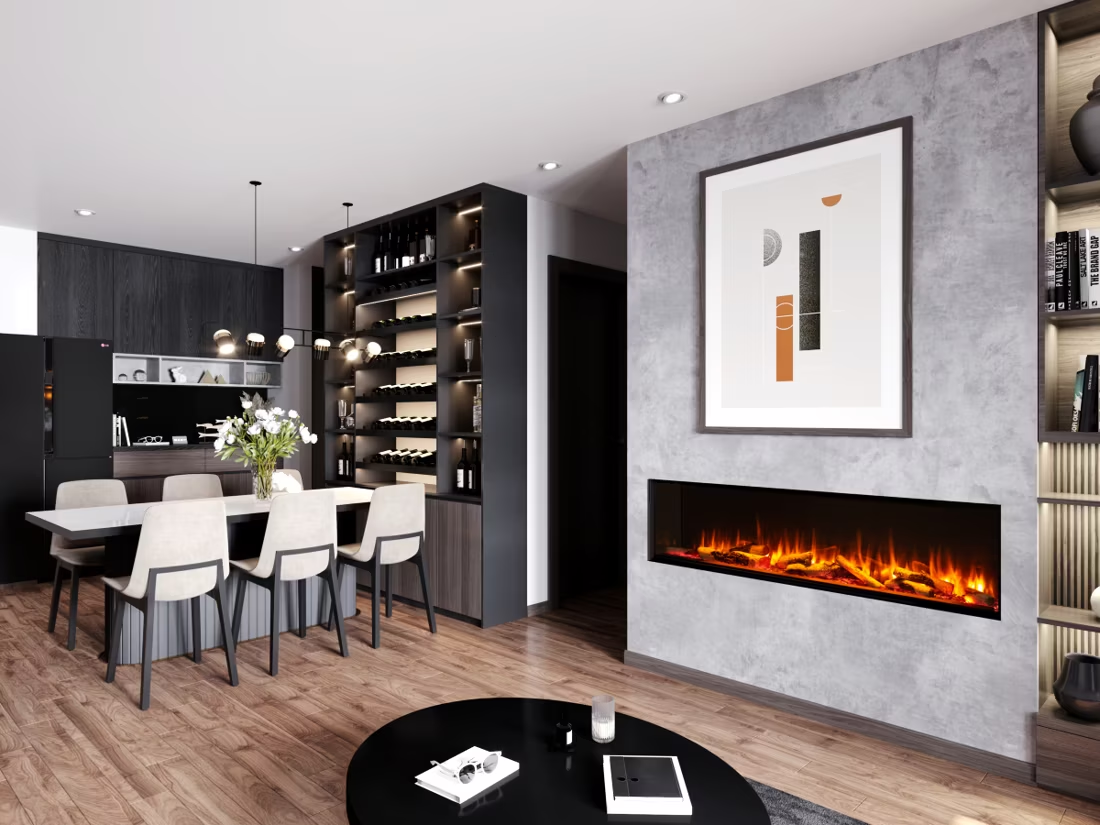
For older ranch homes around Dillon and Lima, a recessed wall unit or an insert into an existing fireplace opening tends to look the most intentional and heats a single room effectively. For modular or manufactured homes common throughout the Big Hole Valley, a freestanding electric stove is often the simplest option since it avoids cutting into walls and can be relocated if needed. Built-in linear units are popular in newer construction and remodels where a clean, low-profile look matters more than raw heat output. A local dealer can walk your specific floor plan and electrical panel before recommending a model.
How much does it cost to run an electric fireplace in Beaverhead County?
A typical electric fireplace on its 1,500-watt heat setting costs roughly 15 to 25 cents an hour to run at current Vigilante Electric Cooperative rates, or a few dollars for an evening of use. On the ambiance-only flame setting with the heater off, the draw is minimal—just a few watts. That's meaningfully cheaper per hour than running a whole-house propane furnace, which is part of why electric fireplaces are popular as supplemental heat in a den or bedroom rather than a full heating upgrade.
Electric vs. wood—which makes more sense for my Beaverhead County home?
Wood is the more practical primary heat source for most of the county—it works without power during storms, pairs with abundant cutting permits through the Beaverhead-Deerlodge National Forest ($5 to $20 per cord), and local species like lodgepole pine, Douglas fir, and aspen are plentiful. Electric can't run without grid power and won't carry a home through a Wisdom-area cold snap on its own, but it wins on convenience: no ash, no chimney sweep, no wood stacking, and instant on-off operation for a bedroom or office. Most homeowners here who add electric are supplementing an existing wood or propane setup rather than replacing it.
Electric vs. propane fireplace—which fits Beaverhead County better?
With no natural gas infrastructure in the county, propane is the gas alternative, and it genuinely outperforms electric for whole-room heat output and works during power outages if the unit has a standing pilot. Electric wins on installation simplicity—no tank, no gas line, no combustion venting—and on upfront cost, which is why it's the common choice for a secondary room, a rental, or a cabin where a propane tank and delivery contract don't make sense. For a primary living space in a full-time residence, many local dealers still steer homeowners toward propane given how cold and outage-prone winters can get here.
How much maintenance does an electric fireplace need?
Very little—there's no chimney to sweep, no ash to remove, and no annual gas inspection required. Maintenance is mostly dusting the unit, occasionally replacing an LED light strip or heating element after years of use, and checking the plug or wiring connection for wear. That low-maintenance profile is a real selling point for a guest cabin or seasonal property in the Big Hole Valley that doesn't get checked on every week during winter.
Can I put a TV above my fireplace?
Yes—with an asterisk. Fireplaces are hot and TVs don't like heat. Either put a mantel between them to deflect rising warmth, or choose a fireplace with heat-management technology that creates a cool zone on the wall above—the wall stays around 125 degrees, barely warm, while the room still gets full heat. If you like clean lines and don't want a mantel, heat management is the answer.
Do electric fireplaces actually produce heat?
Yes—most put out around 4,800–5,000 BTUs from a standard outlet, which comfortably warms a bedroom, office, or den as a comfort-zone heater. What they won't do is carry a whole house the way wood, gas, or pellet can. Think of electric as ambiance-first with honest supplemental heat: flames on with no heat in July, flames plus warmth in January.
What is an in-home preview and do I need one?
It's a visit where a hearth professional measures your space, confirms the model you picked actually works in your home, and walks the specs—framing, gas line, venting, finish work—before anything is ordered. Some details you just can't know until you see the house. Never make a down payment without one; it's the single most-skipped step that burns buyers.
How much should I budget for a fireplace?
For an average home—covering the fireplace, the vent pipe, and basic installation—a budget between $3,900 and $5,500 gives you a lot of options across wood, gas, and pellet. By the time you add finish work, gas line, and electrical, the average complete installation lands between $5,000 and $12,000 all-in. In a remodel or new build, a good rule is to put about 2.5% of the total project cost toward the fireplace.
Stove and Fireplace Dealers in Beaverhead County
Find your electric fireplace in Beaverhead County.
Tell us about your home—ranch house, modular, or cabin out past Wisdom—and we'll match you with a trusted local dealer and send over a free Project Guide & Parts List for your electric fireplace project.
Find Your Fireplace →