
Gas heat built for Anaconda's high-elevation winters.
Anaconda sits at nearly 7,000 feet with one of the longest, coldest heating seasons around. Find the right gas fireplace, insert, or stove for that climate, and get matched with a trusted local dealer.
Every Project Starts From One of These Five Situations
Reliable heat at 6,900 feet, without the wood pile.
Anaconda sits at 6,933 feet in Deer Lodge County, ringed by the Beaverhead-Deerlodge, Bitterroot, and Helena-Lewis and Clark national forests. With a long, hard winter heating season and average winter lows around 16°F, this is one of the colder inhabited stretches of Montana—closer in climate to Bismarck or International Falls than to most of the Mountain West. Wood heat runs deep here, a holdover from the smelter era when cutting your own fuel was practical necessity, but a growing number of Anaconda households are turning to gas for the parts of winter that wood can't solve: instant heat on a subzero morning, no ash to haul, no stack of lodgepole pine to split before the season starts.
NorthWestern Energy provides both electric and natural gas service to much of in-town Anaconda, so homes already piped for a furnace or water heater can usually add a fireplace without major new line work. Out in the rural stretches of Deer Lodge County, propane delivered by tank is the standard alternative, and most gas fireplace models run equally well on either fuel. Winter inversions are also a real factor here—cold air settles into the valley and traps wood smoke close to the ground on the stillest days, which is part of why a clean-burning gas option appeals to homeowners who still keep a wood stove for backup.
Three steps. No salesperson until you're ready.
Tell us about your project
Your zip code, your situation, and the fuel you're leaning toward—or let the answers point you to one.
See what's actually available
The brands dealers within 100 miles genuinely carry—real options, never a catalog mirage.
Get your dealer & Project Guide
A trusted local dealer, plus the free Project Guide & Parts List that names every component of the job.
Frequently Asked Questions
How much does a gas fireplace installation cost in Anaconda?
Gas fireplace installations in Anaconda typically run $4,500 to $10,500, with the spread driven mainly by venting and fuel-line work rather than the appliance itself. A direct-vent insert dropped into an existing masonry fireplace downtown—common in Anaconda's older mining-era homes—sits toward the lower end if a gas line is already nearby. New construction or homes in outlying Deer Lodge County subdivisions that need a propane tank set and a longer buried line can run toward the top of that range. At 6,933 feet, installers also need to confirm the unit's altitude derate—most manufacturers require adjusted orifice sizing above 4,500 feet, and a local dealer handles that as part of the install rather than leaving you with a fireplace that runs rich.
Can I convert my existing wood fireplace to gas?
Yes, and it's a common project in Anaconda's older homes near downtown, many built with masonry fireboxes during the smelter era. A gas insert typically runs a stainless liner up your existing chimney, sealing off the old wood flue and converting it to direct-vent gas. Expect $4,500 to $9,500 depending on the insert and whether the home is already piped for gas or needs a propane hookup instead. The conversion keeps the original mantel and masonry look while eliminating the need to split and haul lodgepole pine or aspen through an Anaconda winter.
Do I need natural gas, or is propane more common in Anaconda?
Both exist here. NorthWestern Energy serves natural gas to a good portion of in-town Anaconda, so homes already using gas for a furnace or water heater can usually add a fireplace without much extra line work. Outside city limits—the ranches and rural subdivisions scattered through Deer Lodge County—propane is the standard, delivered and stored in a tank on the property. Either fuel runs the same fireplace models; your installer just sets the regulator and orifice for whichever you have. If you're building new outside town, budget for a propane tank installation alongside the fireplace project.
Will my gas fireplace still work if the power goes out?
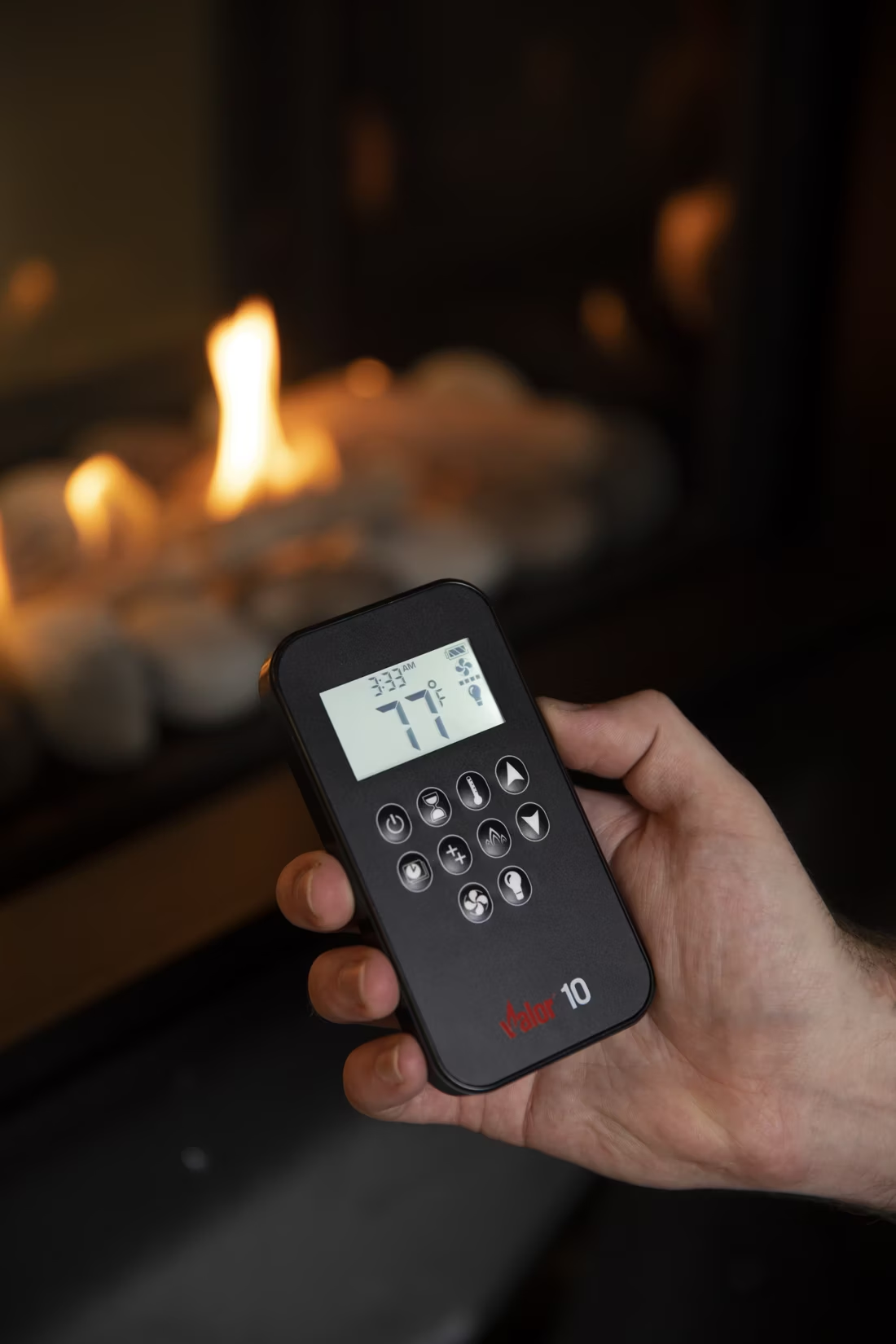
Most will. Anaconda sits at nearly 7,000 feet and gets its share of hard winter storms that can knock out NorthWestern Energy service for hours at a stretch—units with IPI (intermittent pilot ignition) handle this with a battery backup that kicks in automatically, so the fireplace lights the same way it always does. Valor fireplaces go a step further: the pilot's thermocouple generates its own electricity, so there's no battery to remember or replace at all. Given how much colder Anaconda runs than most of Montana—average lows around 16°F and regular subzero snaps—a fireplace that keeps working when the grid doesn't is worth asking about directly.
Gas fireplace vs. gas insert vs. gas stove—what's the difference?
A gas fireplace is a fully framed-in unit built for new construction or a remodel. A gas insert slides into an existing masonry firebox and uses your current chimney as the vent path—a natural fit for Anaconda's older housing stock with existing hearths. A gas stove is freestanding, sitting on the floor like a wood stove but running on gas, and works well in a home with no existing fireplace at all. For most homeowners in Anaconda's historic neighborhoods, an insert is the simplest upgrade; newer builds toward Opportunity or Warm Springs tend to go with a built-in unit instead.
Do I need a permit to install a gas fireplace in Anaconda?
Yes. Anaconda-Deer Lodge County's consolidated building department requires a permit for new gas fireplace installations, along with a separate gas line permit if new piping is involved. A licensed gas-fitter has to handle that portion of the work regardless of who sells you the unit. Most local hearth dealers coordinate the permitting, gas line, and inspection as one package, which is worth asking about up front—it saves you from managing plumbers, inspectors, and installers separately.
Should I get a vented or vent-free gas fireplace?
In Anaconda, vented is really the only practical choice. Vent-free units rely on an oxygen depletion sensor calibrated for sea-level combustion, and most manufacturers restrict or void the warranty on vent-free installations above roughly 4,500 to 5,000 feet. Anaconda sits at 6,933 feet, well past that line, so local dealers generally won't install vent-free units at all. Direct-vent gas fireplaces, which draw combustion air from outside and exhaust it back out through a sealed pipe, are built for altitude and are what you'll find in nearly every local installation.
How often does a gas fireplace need to be serviced?
Plan on an annual inspection, ideally before the coldest months set in. A technician checks the burner, pilot assembly, venting, and any electronic ignition components, and cleans the glass and interior—usually $150 to $250 for the visit. This matters more in Anaconda than it might elsewhere: winter temperature inversions settle cold, still air into the valley, and a gas appliance that isn't burning cleanly adds to the wintertime haze the area already deals with from wood smoke and inversions.
Should I go with gas or stick with wood heat in Anaconda?
Wood has deep roots here—Deer Lodge County borders the Beaverhead-Deerlodge, Bitterroot, and Helena-Lewis and Clark national forests, all of which sell personal-use cutting permits for around $5 to $20 a cord during the May-to-October season, and lodgepole pine, ponderosa, and Douglas fir all burn well once seasoned. Wood also keeps working without power, which matters through Anaconda's harder winter storms. Gas trades that self-sufficiency for convenience: instant heat with no splitting, hauling, or ash cleanup, and no contribution to the wood smoke that thickens the valley air during winter inversions. Many Anaconda homes end up with both—wood for backup and ambiance, gas for the fireplace they actually use every day.
What's the difference between an insert and a zero-clearance fireplace?
An insert is a fireplace that slides into a pre-existing wood-burning fireplace—if you don't have one, there's nothing to insert it into. A zero-clearance fireplace is built into a framed wall, which makes it the answer for remodels and new construction. Simple test: existing masonry fireplace means insert; blank or framed wall means zero-clearance.
Why is my open fireplace making my house colder?
Open fireplaces suck—literally. As the fire burns, it consumes air your furnace already paid to heat and pulls it out through the chimney, so the house is actually colder after the fire goes out than before you lit it. An insert fixes this: it seals the chimney, puts fixed glass across the front, and turns that hole in your house into a real heat source.
Does a fireplace add value to my home?
On average, a fireplace adds back to the home about the same amount you spent installing it. Add the monthly savings from heating the rooms you actually use instead of the whole house—often hundreds of dollars a year—and the value case is strong before you even count what a fire does for how your family uses the room.
What is an in-home preview and do I need one?
It's a visit where a hearth professional measures your space, confirms the model you picked actually works in your home, and walks the specs—framing, gas line, venting, finish work—before anything is ordered. Some details you just can't know until you see the house. Never make a down payment without one; it's the single most-skipped step that burns buyers.
Nearby Dealers
Hearth shops serving Anaconda and the surrounding area. Every listing shows whether it is a WhyFire partner, a dealer we have verified as authorized for the brands we recommend, or a local business carrying hearth products. No manufacturer pays for placement. How we verify dealers →
S.j. Perry Co
Ridgeline Heating
Find your gas fireplace in Anaconda.
Tell us about your home and we'll match you with a trusted local Anaconda dealer and send over your free Project Guide & Parts List—the exact parts, vent kit, and installer recommendation for your gas fireplace project.
Find Your Fireplace →