
Warmth without a chimney, from Dexter to Bloomfield.
With winter lows averaging 27°F and a moderate, short heating season, Stoddard County doesn't need a furnace-sized fireplace—it needs clean, flip-a-switch zone heat for a farmhouse den, a Dexter living room, or a mobile home where a chimney was never an option. I'll match you with a trusted local dealer who knows the wiring and the room.
Every Project Starts From One of These Five Situations
A practical fit for Bootheel farmhouses and mobile homes alike.
Stoddard County sits in the flat, fertile Bootheel of southeast Missouri, where rice, cotton, and soybean fields surround towns like Bloomfield (the county seat), Dexter, and Puxico near the Mingo National Wildlife Refuge. It's a county of just over 15,500 people spread across a lot of rural road, and the housing stock reflects that—older farmhouses without masonry chimneys, ranch homes on slab, and a good number of manufactured and mobile homes where a wood stove or gas line simply isn't practical. Climate zone 4A and a short, mild heating season put winters here on the mild side of the Midwest; most homes need real heat only a few months a year, and a lot of that heat load is handled by electric heat pumps and baseboard units already.
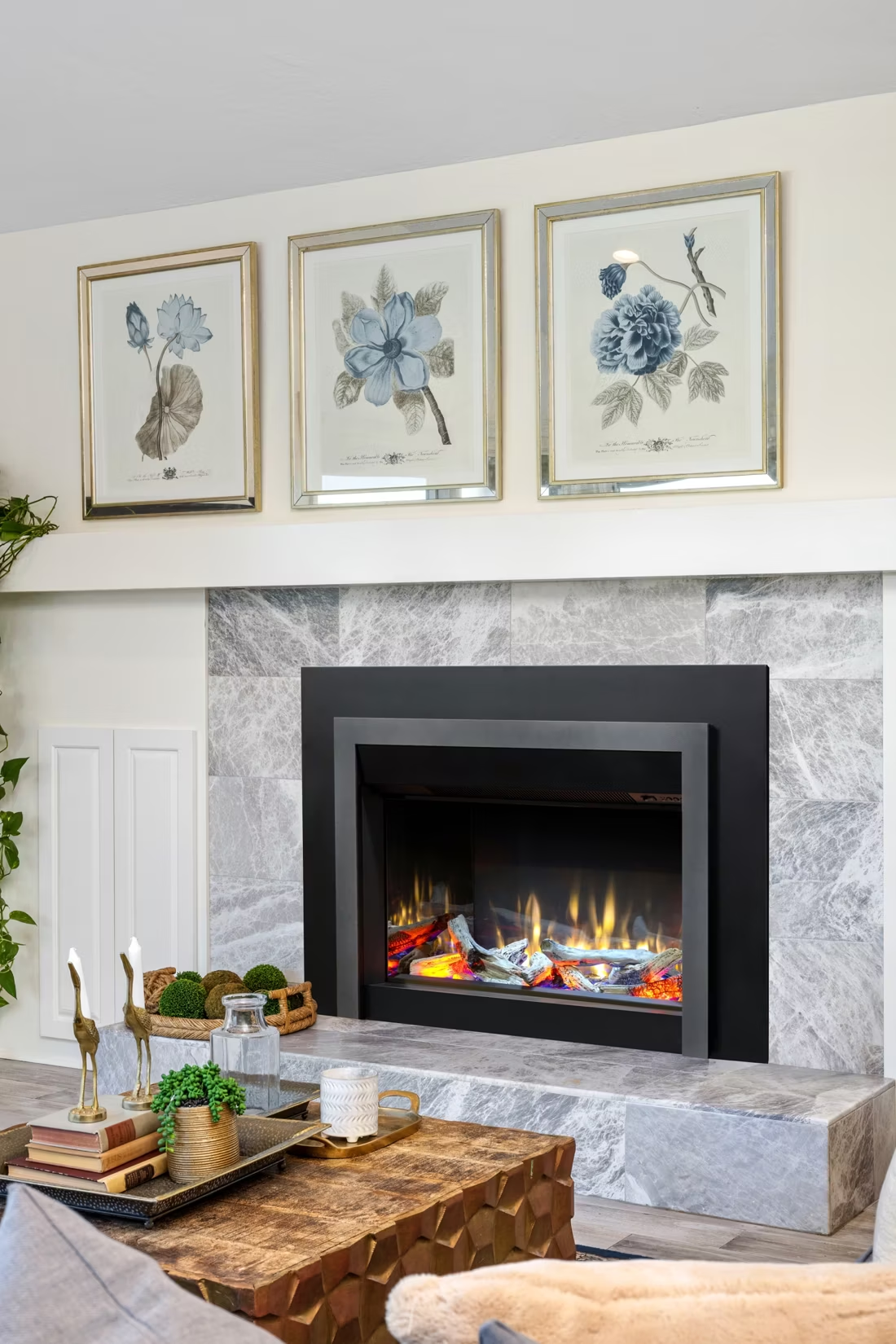
That's exactly the gap an electric fireplace fills. It doesn't replace a home's primary heat pump or furnace, but it adds real, focused warmth to a specific room—a converted porch, a bonus room over the garage, a bedroom that runs cold—without venting, gas lines, or a chimney sweep. Plenty of Stoddard County households still burn oak, hickory, walnut, or maple for a wood stove out in the shop or as backup heat when a storm knocks out power from SEMO Electric Cooperative or Ameren Missouri, but for daily ambiance and supplemental warmth in the main living space, electric has become the low-maintenance default, especially in newer construction and manufactured housing across the county.
Three steps. No salesperson until you're ready.
Tell us about your project
Your zip code, your situation, and the fuel you're leaning toward—or let the answers point you to one.
See what's actually available
The brands dealers within 100 miles genuinely carry—real options, never a catalog mirage.
Get your dealer & Project Guide
A trusted local dealer, plus the free Project Guide & Parts List that names every component of the job.
Frequently Asked Questions
How much does an electric fireplace installation cost in Stoddard County?
A basic plug-in wall-mounted or freestanding electric fireplace generally runs $300 to $1,200 including setup, since it just needs a standard 120V outlet. Built-in mantel packages or a recessed insert into an existing wall opening typically land between $1,500 and $3,500, depending on cabinetry work. If you want a larger 240V hardwired unit for stronger heat output—a common choice for a drafty Bootheel farmhouse addition—add the cost of running a dedicated circuit, which a local electrician usually handles as part of the install. Custom built-ins with surrounding millwork can push toward $4,500 to $5,000.
Do I need a permit to install an electric fireplace in Stoddard County?
It depends on where you are and what you're installing. Much of unincorporated Stoddard County doesn't enforce a county-wide building or electrical code, so a plug-in unit typically needs no permit at all. Inside city limits—Dexter, Bloomfield, or Puxico—a hardwired 240V unit that requires a new dedicated circuit usually needs an electrical permit through the local building department, and the work should be done by a licensed electrician to code regardless of jurisdiction. A local dealer can tell you exactly what your specific city or township requires before the job starts.
Will my electric fireplace still work during a power outage?
No—and this is worth planning around in a county that sees its share of Bootheel storm activity and occasional tornado watches. Unlike a wood stove burning local oak or hickory, an electric fireplace goes dark the moment SEMO Electric Cooperative or Ameren Missouri service drops. If reliable heat during a multi-day outage matters to your household, many Stoddard County homeowners pair an electric fireplace for daily convenience with a wood stove or fireplace insert as backup, rather than relying on electric alone.
What's the difference between a plug-in electric fireplace and a hardwired electric insert?
A plug-in unit runs on a standard 120V household outlet and is the simplest option—good for a bedroom, sunroom, or rental where you don't want electrical work done. A hardwired 240V insert or built-in draws more power and puts out meaningfully more heat, closer to what you'd want for a larger great room or an uninsulated farmhouse addition, but it requires a dedicated circuit run by a licensed electrician. A local dealer will look at your room size and existing panel capacity before recommending which type actually makes sense.
How much will an electric fireplace add to my electric bill?
Most electric fireplaces draw around 1,500 watts on the heater's high setting, which works out to roughly 15 cents an hour at typical Missouri co-op and utility rates—closer to $10 to $20 a month if you run it a few hours most evenings through the cooler months. Since Stoddard County's mild, short heating season means you're rarely running the heater setting around the clock, most homeowners find the cost manageable as a supplemental zone-heat expense rather than a primary heating bill.
Can I install an electric fireplace in a manufactured or mobile home?
Yes, and it's one of the more common installs across rural Stoddard County's manufactured housing stock. Electric units need no chimney, no venting, and no floor protection for combustible clearance the way a wood stove does, which sidesteps a lot of the insurance and code questions that come with adding solid-fuel heat to a manufactured home. A wall-mounted or recessed unit sized to the room is usually the simplest fit; just confirm your home's electrical panel has capacity if you're going with a hardwired 240V model.
How does an electric fireplace compare to a wood stove out here?
Wood remains a real option in Stoddard County—oak, hickory, walnut, and maple are all common locally, and a wood stove keeps producing heat even when the power's out during a storm. But wood means a chimney, clearance requirements, ash cleanup, and periodic sweeping. Electric skips all of that: no venting, no permit hassle in most of the unincorporated county, and instant on-off control, but it depends entirely on grid power and generally heats one room rather than a whole house. Plenty of local households run both—wood for backup and character, electric for the room they use every day.
What size electric fireplace do I need for my room?
Electric fireplaces are built for zone heating, not whole-home heating, so match the unit to the specific room rather than your square footage total. A standard 1,500-watt insert or mantel unit comfortably heats a room in the 400 to 1,000 square foot range—plenty for a Stoddard County living room or den. Larger open floor plans, like an updated farmhouse with a combined kitchen and living area, may need a bigger-output unit or a second fireplace in an adjoining space. Given the county's moderate winter lows around 27°F, most rooms don't need more than one well-placed unit.
Are there any utility rebates for electric fireplace or electric heat upgrades in Stoddard County?
Rebate programs shift from year to year, so it's worth calling SEMO Electric Cooperative or Ameren Missouri directly to ask what's currently offered for efficient electric heating equipment, since co-ops in particular sometimes run seasonal incentives for members upgrading heating appliances. A local dealer working in the county will typically know which programs are active and can help you document the installation if a rebate does apply.
Can I put a TV above my fireplace?
Yes—with an asterisk. Fireplaces are hot and TVs don't like heat. Either put a mantel between them to deflect rising warmth, or choose a fireplace with heat-management technology that creates a cool zone on the wall above—the wall stays around 125 degrees, barely warm, while the room still gets full heat. If you like clean lines and don't want a mantel, heat management is the answer.
Does an electric fireplace need a vent or chimney?
No—that's its superpower. An electric fireplace needs a wall and an outlet, period. No vent pipe, no gas line, no clearances to design around, which is why it works in bedrooms, offices, apartments, and walls where venting a gas or wood unit would be impractical or impossible. Installation is typically the simplest and least expensive of any fireplace type.
What is an in-home preview and do I need one?
It's a visit where a hearth professional measures your space, confirms the model you picked actually works in your home, and walks the specs—framing, gas line, venting, finish work—before anything is ordered. Some details you just can't know until you see the house. Never make a down payment without one; it's the single most-skipped step that burns buyers.
How much should I budget for a fireplace?
For an average home—covering the fireplace, the vent pipe, and basic installation—a budget between $3,900 and $5,500 gives you a lot of options across wood, gas, and pellet. By the time you add finish work, gas line, and electrical, the average complete installation lands between $5,000 and $12,000 all-in. In a remodel or new build, a good rule is to put about 2.5% of the total project cost toward the fireplace.
Get your free Project Guide & Parts List for an electric fireplace in Stoddard County.
Tell me about your room, your panel, and how you plan to use the fireplace, and I'll match you with a trusted local Stoddard County dealer and send a free Project Guide & Parts List—the exact unit, wiring needs, and recommended installer for your project.
Find Your Fireplace →