
See What's Actually Realistic for Pellet Heat in St. Louis.
Pellet stoves are a niche choice in St. Louis's mild Mississippi River climate, but for the right home—off the gas line, drawn to biomass heat, or wanting a hopper-fed alternative to hauling cordwood—they still make sense. We'll connect you with a local dealer who actually stocks and installs them correctly.
Every Project Starts From One of These Five Situations
Pellet stoves are the exception here, not the rule.
St. Louis sits at 468 feet along the Mississippi River in climate zone 4A, with winter lows averaging around 25°F and a moderate winter heating season overall—a fraction of what colder river towns like Duluth, MN or Bismarck, ND see in a season. That milder winter profile, combined with widespread natural gas service through Ameren Missouri (Union Electric) and municipal providers like the City of Kirkwood, means most St. Louis homeowners heat with a gas furnace and reach for a gas fireplace or insert when they want supplemental hearth heat. Pellet stoves simply never built the dealer network here that they have in colder, more wood-dependent regions.
That doesn't mean pellet heat is off the table—it means the market is thin. Regional pellet suppliers like Lignetics and Indeck Energy Services do serve the Midwest, and bagged hardwood pellets (often milled from oak, hickory, and other regional hardwoods) are available through farm-supply retailers and some hearth shops. But because St. Louis has no wood-smoke air quality restrictions pushing homeowners toward EPA-certified biomass appliances the way non-attainment areas out West do, pellet stoves here are chosen by a smaller, more deliberate group: rural county homeowners without gas service, cabin and outbuilding owners, and people specifically drawn to a carbon-neutral, hopper-fed alternative to cordwood. If that's you, the key is finding one of the handful of dealers in the metro who actually specialize in pellet appliances rather than treating them as an afterthought to a wood or gas lineup.
Three steps. No salesperson until you're ready.
Tell us about your project
Your zip code, your situation, and the fuel you're leaning toward—or let the answers point you to one.
See what's actually available
The brands dealers within 100 miles genuinely carry—real options, never a catalog mirage.
Get your dealer & Project Guide
A trusted local dealer, plus the free Project Guide & Parts List that names every component of the job.
Frequently Asked Questions
Are pellet stoves even sold and installed in St. Louis?
Yes, but the market is small compared to gas fireplaces or electric inserts. Most hearth retailers in the St. Louis metro focus primarily on gas because natural gas service is so widespread through Ameren Missouri, and pellet stoves make up a minor share of their business. A handful of shops carry pellet lines and can special-order units, but expect fewer showroom models to walk into compared to a colder, more wood-dependent market. We match homeowners with the dealers in the region who genuinely stock and service pellet equipment rather than sending you to a shop that treats it as an afterthought.
How much does a pellet stove installation cost in St. Louis?
Nationally, pellet stove and insert installations typically run $3,000 to $7,000, covering the unit, a hearth pad if needed, wall-thimble venting, and a dedicated electrical outlet for the auger and blower. In St. Louis specifically, because so few installers specialize in pellet appliances, you may see slightly higher labor quotes than for a comparable gas insert simply due to lower installer volume and less routine familiarity with pellet venting. Getting quotes from two or three dealers is worth the extra step here.
Where can I buy pellet fuel in the St. Louis area?
Bagged hardwood pellets from brands like Lignetics are available through farm-supply and home-improvement retailers around the metro, and regional producers such as Indeck Energy Services supply the Midwest market. Expect to pay in the range of $5 to $7 per 40-pound bag, or roughly $250 to $350 per ton if you buy by the pallet—on par with typical Midwest pellet pricing. Because pellet appliances are less common here, it's worth calling ahead to confirm a retailer keeps pellets in stock through the winter rather than assuming every hardware store carries them.
Do I need a permit to install a pellet stove in St. Louis?
Yes—both the City of St. Louis Building Division and the St. Louis County Department of Public Works require a building permit for any new solid-fuel or biomass appliance installation, including pellet stoves, since it involves wall penetration for venting and often new electrical work for the appliance. A licensed local installer will typically pull this permit as part of the job and schedule the required inspection. Unlike some wood-burning jurisdictions out West, St. Louis has no wood-smoke curtailment program, so once installed and inspected, there are no seasonal burn restrictions to worry about.
What size pellet stove do I need for a St. Louis home?
Because St. Louis winters are comparatively mild—nowhere near the long, harsh heating season you'd see in a place like Fargo, ND—most homeowners here are looking for supplemental or zone heat rather than a whole-house primary source. A small to mid-size pellet stove (rated for 1,000 to 1,800 square feet) is usually plenty for a family room, finished basement, or an older home with a drafty room that the furnace struggles to keep warm. A local dealer should still walk your specific floor plan and insulation before recommending a model rather than sizing off square footage alone.
Will my pellet stove work if the power goes out?
Not without a backup power source. Pellet stoves rely on an electric auger to feed fuel and a blower to circulate heat, so a power outage shuts the unit down even with a full hopper. Ameren Missouri's service territory generally sees reliable power, but ice storms do occasionally cause multi-day outages in the region. If backup heat during an outage matters to you, ask your dealer about a small battery backup or generator setup, or consider that a wood-burning or gas appliance may better suit that specific need.
Pellet stove vs. gas fireplace—which makes more sense in St. Louis?
For most St. Louis homes, gas wins on convenience and availability: natural gas service already reaches most of the city and inner suburbs, dealer selection is far broader, and a gas fireplace or insert can be lit instantly with no fuel storage required. Pellet stoves make more sense for homes without gas service, homeowners specifically interested in biomass heating, or those who want a real flame with the hands-off, thermostat-controlled operation gas can't quite replicate with wood pellets. If your home already has a gas line, it's worth comparing both options with a local dealer before committing to pellet.
How much maintenance does a pellet stove need?
Pellet stoves need more frequent attention than a gas appliance but less than a wood stove: the burn pot and ash pan typically need emptying every few days of regular use, the hopper needs refilling, and the glass and exhaust vent benefit from a monthly cleaning during the season. An annual professional inspection—checking the auger motor, blower, and venting—is recommended before each heating season, similar to servicing a furnace. Because certified pellet-stove technicians are less common in St. Louis than gas service techs, ask your dealer about their service plan before you buy.
Are there any tax credits for installing a pellet stove in St. Louis?
Yes—pellet stoves rated at 75% efficiency or higher qualify for the federal biomass stove tax credit (Section 25C), which currently covers 30% of the equipment and installation cost. Missouri does not add a state-level incentive on top of that, so the federal credit is the main financial benefit to factor in. A local dealer selling EPA-certified pellet units should be able to confirm which specific models qualify and provide the documentation you'll need for your tax filing.
Why is my open fireplace making my house colder?
Open fireplaces suck—literally. As the fire burns, it consumes air your furnace already paid to heat and pulls it out through the chimney, so the house is actually colder after the fire goes out than before you lit it. An insert fixes this: it seals the chimney, puts fixed glass across the front, and turns that hole in your house into a real heat source.
How often does a pellet stove need cleaning?
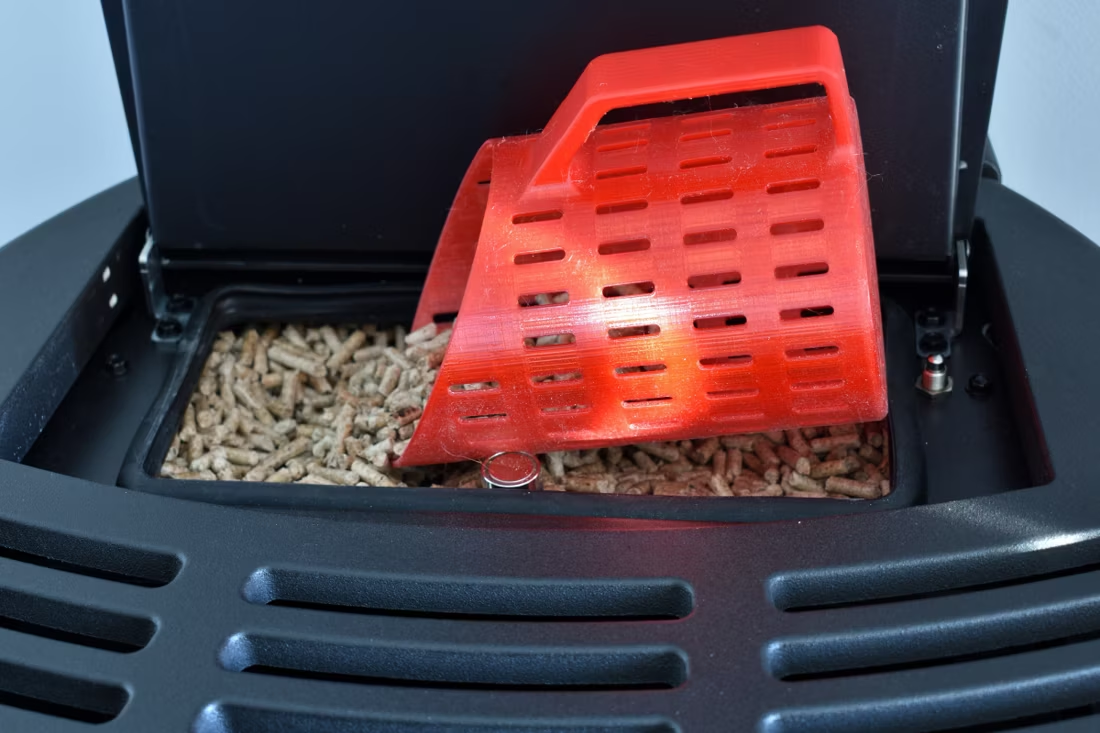
A clean pellet stove is a happy pellet stove. Plan on cleaning the burn pot about once a week when you're burning regularly—ash and clinkers gum up the air holes just like a pellet barbecue. Most pellet stove problems trace back to skipped cleaning that nobody explained up front. Some designs make it easy with a trapdoor burn pot: pull a lever and the gunk drops into the ash pan.
Can I install a fireplace myself?
If you're putting a fire in your house on purpose, it's best to work with an expert. Unless you're genuinely experienced in framing, gas line, vent pipe, and the national code on clearances to combustibles, have a professional do it—and ideally the same company that sells you the fireplace, so warranty, service, and liability all live under one roof.
How much should I budget for a fireplace?
For an average home—covering the fireplace, the vent pipe, and basic installation—a budget between $3,900 and $5,500 gives you a lot of options across wood, gas, and pellet. By the time you add finish work, gas line, and electrical, the average complete installation lands between $5,000 and $12,000 all-in. In a remodel or new build, a good rule is to put about 2.5% of the total project cost toward the fireplace.
Nearby Dealers
Hearth shops serving St. Louis and the surrounding area. Every listing shows whether it is a WhyFire partner, a dealer we have verified as authorized for the brands we recommend, or a local business carrying hearth products. No manufacturer pays for placement. How we verify dealers →
Villa Lighting Supply
Savvy Surroundings
Forshaws
Gas Appliance Service LLC
English Sweep
Fireplace And Grill Center
Fireside Hearth & Grill Center
Arnold Stove & Fireplace Center
Hearthside Grill & Fireplace
Bel-O Fireplaces & More
Summer Classics By Forshaw
Brighthouse Living
Pellet Brands Stocked Around St. Louis
Manufacturers will point you to the nearest stocking dealer.
Find your pellet stove option in St. Louis.
Tell us about your home and heating goals, and we'll match you with one of the few local dealers who genuinely stock and install pellet stoves—plus a free Project Guide & Parts List laying out the exact equipment, venting, and recommended installer for your project.
Find Your Fireplace →