
Electric heat, no chimney required, for Shelby County homes.
From Shelbyville to Shelbina, Clarence, and Bethel, electric fireplaces bring zone heat and real ambiance to farmhouses and newer builds alike—no venting, no gas line, no cutting permit. Find the right unit and connect with a trusted local dealer.
Every Project Starts From One of These Five Situations
The simplest heat option in a county full of wood and propane.
Shelby County sits in the rolling hardwood country of northeast Missouri, where oak, hickory, walnut, and maple timber line the Salt River watershed and winters bring an average low near 17°F with roughly 5,573 heating degree days—enough cold to run a heating system hard for four to five months. Wood heat has deep roots here, and propane fills in where natural gas lines don't reach the county's farms and small towns. Electric fireplaces fit into that mix differently: they don't replace a furnace or a wood stove, but they solve a problem those systems can't—quick, contained heat in a single room without touching the chimney, the propane tank, or the breaker panel in a major way.
Most homes in Shelby County—whether in Shelbyville, Shelbina, Clarence, or out on county roads—are served by a rural electric cooperative rather than a large investor-owned utility, which is typical for farm country in this part of the state. That matters for electric fireplace owners mainly at the margins: a plug-in insert draws on a standard 120-volt circuit like any other appliance, while a larger built-in unit may call for a dedicated 240-volt circuit that a licensed electrician runs from the panel. Either way, there's no flue to size, no combustion air to plan for, and no cutting permit to track down for firewood—which makes electric a practical add-on in an older farmhouse that already leans on wood or propane for its primary heat.
Three steps. No salesperson until you're ready.
Tell us about your project
Your zip code, your situation, and the fuel you're leaning toward—or let the answers point you to one.
See what's actually available
The brands dealers within 100 miles genuinely carry—real options, never a catalog mirage.
Get your dealer & Project Guide
A trusted local dealer, plus the free Project Guide & Parts List that names every component of the job.
Frequently Asked Questions
How much does an electric fireplace installation cost in Shelby County?
A plug-in electric insert that drops into an existing fireplace opening typically runs $300 to $1,500 installed, since it uses a standard outlet and needs little more than a trim kit to finish the opening. A built-in wall unit or a larger electric fireplace that needs a dedicated 240-volt circuit run from the panel costs more—usually $1,000 to $3,000 once electrician labor is included, especially in older Shelby County farmhouses where panel capacity or wiring runs need updating first. Because there's no venting or gas line work involved, electric installations are consistently the least expensive fireplace option in the county.
Do I need a permit to install an electric fireplace in Shelby County?
In most cases, no—a plug-in electric insert or a freestanding electric stove that uses an existing outlet doesn't trigger a building permit. If your project involves adding a new dedicated circuit, moving wiring, or a built-in installation tied into the home's electrical system, an electrical permit is typically required and should go through the county or the city where the home sits—Shelbyville, Shelbina, or Clarence each handle their own permitting inside city limits, with the Shelby County government covering unincorporated areas. A licensed electrician handling the circuit work will usually pull the permit as part of the job.
What's the difference between an electric fireplace, insert, and stove?
An electric fireplace is often a built-in unit designed to sit in a wall opening or custom mantel surround, an electric insert is a unit built specifically to slide into an existing masonry or wood-stove fireplace opening, and an electric stove is a freestanding cabinet-style unit that mimics a wood stove's look. For Shelby County homes with an old wood-burning fireplace that's no longer used or that the owner wants a lower-maintenance backup for, an insert is usually the simplest retrofit. Newer construction or rooms without an existing opening are better suited to a built-in unit or a freestanding stove.
Will an electric fireplace actually heat a room, or is it just for looks?
Most electric fireplaces include a real heating element—typically 4,000 to 5,000 BTU, similar to a space heater—that can comfortably warm a single room in the 300 to 400 square foot range. In a climate like Shelby County's, where winter lows average around 17°F, that's enough to take the edge off a chilly bedroom, den, or sunroom, but it's not a replacement for a furnace or a wood stove on the coldest nights. Many local homeowners use electric units as zone heat—running the furnace lower and warming the room they're actually in—which is where the unit pays for itself fastest.
Electric vs. wood—which makes more sense for my home?
Wood heat has a long history in Shelby County, where oak and hickory are plentiful along the Salt River bottoms, and a wood stove keeps working during a winter ice storm when the power lines are down—a real consideration in rural northeast Missouri. Electric fireplaces can't do that; if the co-op's lines are out, the unit is out too. What electric offers instead is zero maintenance, no chimney to sweep, no ash to haul, and instant on-off operation at the flip of a switch. For a primary heat source or emergency backup, wood remains the more resilient choice in this county. For supplemental warmth and ambiance in a room where you don't want the mess or the venting, electric is usually the easier call.
Electric vs. propane—which is cheaper to run?
Propane is the default fuel for most Shelby County homes without access to a natural gas line, and a propane fireplace or furnace generally produces more heat per dollar than electric resistance heat, especially when propane prices are moderate. But propane requires a tank, delivery, and periodic refills, while an electric fireplace runs on the cooperative's existing service with no tank to monitor. For a single supplemental room, the electric fireplace's lower upfront cost and simpler install often outweigh its higher per-BTU running cost. For whole-home heating, propane remains the more economical option in this climate.
How much does it cost to run an electric fireplace?
A typical electric fireplace on its heater setting draws about 1,500 watts, which works out to roughly 15 to 20 cents per hour depending on current rural electric cooperative rates in Shelby County. Run several hours a night through a cold stretch and that adds up to a modest addition to the monthly bill—noticeably less than heating the same room with the furnace alone, since you're not paying to heat the whole house to warm one space.
Who installs electric fireplaces near me in Shelby County?
Because electric fireplace installation is primarily electrical work rather than hearth or venting work, a licensed electrician can handle circuit and wiring needs, while a hearth retailer typically handles the unit selection, trim kit, and surround finishing. For homes in Shelbyville, Shelbina, Clarence, or Bethel, a local hearth dealer familiar with the county's building stock—older farmhouses with older wiring, newer homes with modern panels—is usually the fastest path to a clean install. That's exactly the kind of local match we make.
What size electric fireplace do I need for my room?
For a bedroom, den, or home office in the 150 to 300 square foot range, a smaller 26 to 36-inch electric insert or wall unit with a 4,000 to 5,000 BTU heater is usually enough. Larger living areas or open-concept spaces benefit from a 50-inch-plus unit, though at that point it's worth remembering the heater component is still sized for a single room—the extra width is mostly about visual impact, not additional heat output. A local dealer can size the unit to your specific room during a quick in-home or photo-based consultation.
Do electric fireplaces actually produce heat?
Yes—most put out around 4,800–5,000 BTUs from a standard outlet, which comfortably warms a bedroom, office, or den as a comfort-zone heater. What they won't do is carry a whole house the way wood, gas, or pellet can. Think of electric as ambiance-first with honest supplemental heat: flames on with no heat in July, flames plus warmth in January.
Can I put a TV above my fireplace?
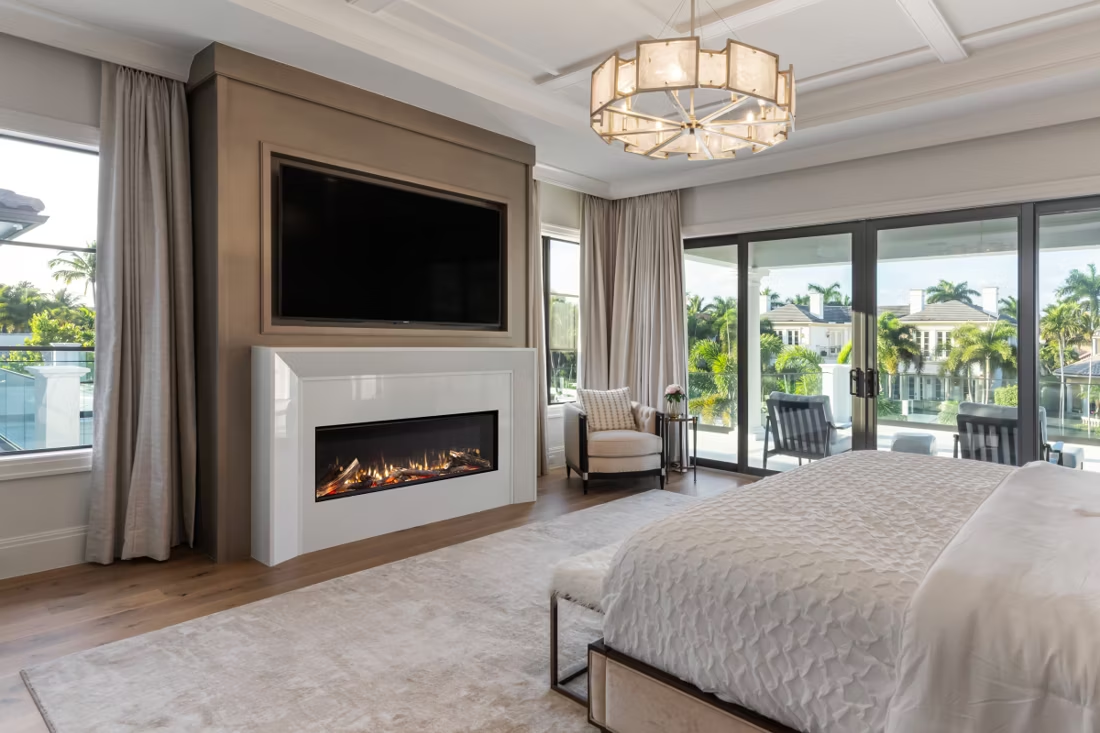
Yes—with an asterisk. Fireplaces are hot and TVs don't like heat. Either put a mantel between them to deflect rising warmth, or choose a fireplace with heat-management technology that creates a cool zone on the wall above—the wall stays around 125 degrees, barely warm, while the room still gets full heat. If you like clean lines and don't want a mantel, heat management is the answer.
What is an in-home preview and do I need one?
It's a visit where a hearth professional measures your space, confirms the model you picked actually works in your home, and walks the specs—framing, gas line, venting, finish work—before anything is ordered. Some details you just can't know until you see the house. Never make a down payment without one; it's the single most-skipped step that burns buyers.
Can I install a fireplace myself?
If you're putting a fire in your house on purpose, it's best to work with an expert. Unless you're genuinely experienced in framing, gas line, vent pipe, and the national code on clearances to combustibles, have a professional do it—and ideally the same company that sells you the fireplace, so warranty, service, and liability all live under one roof.
Find your electric fireplace in Shelby County.
Tell us about your home and we'll match you with the right electric fireplace, insert, or stove—and hand you a free Project Guide & Parts List with the exact parts and a recommended local dealer for your Shelby County install.
Find Your Fireplace →