
Add Real Warmth to Any Room in Scott County—No Chimney Required.
From Sikeston to Chaffee, Benton to Oran, electric fireplaces bring instant ambiance and zone heat to Scott County homes without venting, gas lines, or firewood. Find the right unit and get matched with a trusted local dealer.
Every Project Starts From One of These Five Situations
Electric heat fits the Bootheel's mild winters.
Scott County sits in Missouri's southeastern Bootheel, a flat expanse of Mississippi River bottomland running from Benton down through Sikeston, Chaffee, Oran, and Morley. The climate here is classified 4A—mixed-humid, with winter lows averaging 28°F and a real but modest heating season. That's a real but modest heating season, well short of what a place like Duluth, MN or Fargo, ND deals with. Most Scott County homes need heat for a handful of cold snaps and shoulder-season chill rather than five straight months of hard freeze, which is exactly the kind of climate where electric fireplaces earn their keep as supplemental heat and everyday ambaine rather than a whole-home furnace replacement.
Electric units skip the chimney, the gas line, and the firewood entirely—a 120V plug-in model can go into a den, bedroom, or finished basement the same afternoon it arrives, and a hardwired 240V built-in gives more heat output for larger rooms. That flexibility matters in a county with a lot of older farmhouses, manufactured homes, and additions where running new gas service or masonry venting isn't practical. Whether your power comes from Sikeston's municipal utility or a rural electric cooperative serving the outlying parts of the county, an electric fireplace's operating cost is predictable and easy to budget against a monthly bill you already know.
Three steps. No salesperson until you're ready.
Tell us about your project
Your zip code, your situation, and the fuel you're leaning toward—or let the answers point you to one.
See what's actually available
The brands dealers within 100 miles genuinely carry—real options, never a catalog mirage.
Get your dealer & Project Guide
A trusted local dealer, plus the free Project Guide & Parts List that names every component of the job.
Frequently Asked Questions
How much does an electric fireplace installation cost in Scott County?
Most electric fireplace and insert installations in Scott County run $400 to $1,200. A plug-in insert dropped into an existing masonry fireplace opening or a freestanding unit that just needs a standard outlet sits at the low end. A hardwired 240V built-in—the kind often chosen for a new great room addition or a finished basement in Sikeston or Chaffee—runs higher once an electrician is involved to run a dedicated circuit. Because there's no venting or gas line to size, electric is consistently the least expensive fireplace fuel to install in the county.
What size electric fireplace do I need for my room?
Electric fireplaces are sized by width and heater output rather than the wood-stove BTU math you'd use for a primary heat source. A 5,000 to 9,000 BTU heater element—standard on most mid-size units—comfortably takes the chill off a 300 to 400 square foot room, which covers most bedrooms, dens, and additions in Scott County's typical single-story homes. Given the county's moderate winter heating needs, most homeowners here are sizing for supplemental comfort and ambiance rather than trying to heat an entire farmhouse, so a mid-size insert or wall-mount unit is usually plenty.
Do I need a permit to install an electric fireplace in Scott County?
A simple plug-in electric fireplace or insert that uses an existing outlet typically doesn't require a permit. If you're adding a hardwired 240V built-in unit that needs a new dedicated circuit, that electrical work generally does require a permit—through the City of Sikeston, Chaffee, or Benton if you're inside city limits, or through the Scott County building office for unincorporated areas. A licensed electrician handling the wiring will usually pull that permit as part of the job, so it's worth confirming that's included in your quote.
Can an electric fireplace replace my furnace as primary heat?
No—electric fireplaces are built for supplemental zone heat and ambiance, not whole-home heating. With Scott County's 28°F average winter low and moderate heating season, that's usually fine: an electric unit can take the edge off a chilly bedroom or den and let you turn the thermostat down elsewhere, cutting your furnace's workload during shoulder seasons. But on the coldest nights of a Bootheel winter, you'll still want your central furnace or heat pump doing the heavy lifting.
Will an electric fireplace still work if the power goes out?
No, and this is worth being upfront about—an electric fireplace runs entirely on household current, so it goes dark the moment the power does. That matters in Scott County, where ice storms and spring severe weather occasionally knock out service for rural electric cooperative members outside Sikeston's municipal utility area for hours or longer. If backup heat during outages is a real concern for your household, pair an electric fireplace's everyday convenience with a wood stove or insert as a genuine off-grid backup rather than relying on electric alone.
Can I convert my existing wood-burning fireplace to electric?
Yes, and it's a common, low-cost project for older homes around Benton, Oran, and Sikeston with a masonry fireplace that's rarely used. An electric insert slides into the existing firebox opening, plugs into a nearby outlet (or gets hardwired for more heat output), and gives you flame effect and supplemental warmth without cleaning a chimney, buying firewood, or worrying about creosote. Since there's no combustion, you don't need to reline or inspect the chimney flue the way a gas or wood conversion would require—the existing masonry opening just needs to physically fit the insert.
How much does it cost to run an electric fireplace day to day?
A typical electric fireplace heater draws around 1,500 watts on its high setting, which costs a few cents per hour depending on your rate—whether you're billed through Sikeston's Board of Municipal Utilities or a rural electric cooperative serving the rest of the county. Run several hours a day through a cold snap, that adds up to a modest monthly increase, generally far less than heating the same square footage with your central system alone. Most units also run flame effect with the heater off, so you can get the ambiance for pennies a day even when extra heat isn't needed.
Are there rebates available for efficient electric fireplaces in Scott County?
Rebate programs vary by provider and change from year to year, so it's worth checking directly with your electric utility—Sikeston's municipal utility or your rural electric cooperative if you're outside city limits—for any current efficiency or demand-response incentives that might apply to electric heating equipment. Even without a rebate, electric fireplaces have low enough upfront and operating costs that most Scott County homeowners don't need an incentive to make the math work for supplemental heat.
Electric vs. wood—which is right for my Scott County home?
Wood—burned with local oak, hickory, walnut, or maple, all common species in Scott County—offers real BTU output and keeps working through a power outage, which matters when ice storms hit the rural cooperative lines. Electric offers instant on-off convenience, zero maintenance, no chimney or wood storage, and installs almost anywhere in an afternoon. For a primary den fireplace or an addition where you just want reliable ambiance and a little extra warmth, electric is usually the simpler, cheaper choice. For a household that wants a genuine backup heat source when the grid goes down, wood remains the more resilient option—and plenty of local homes end up with both.
Can I put a TV above my fireplace?
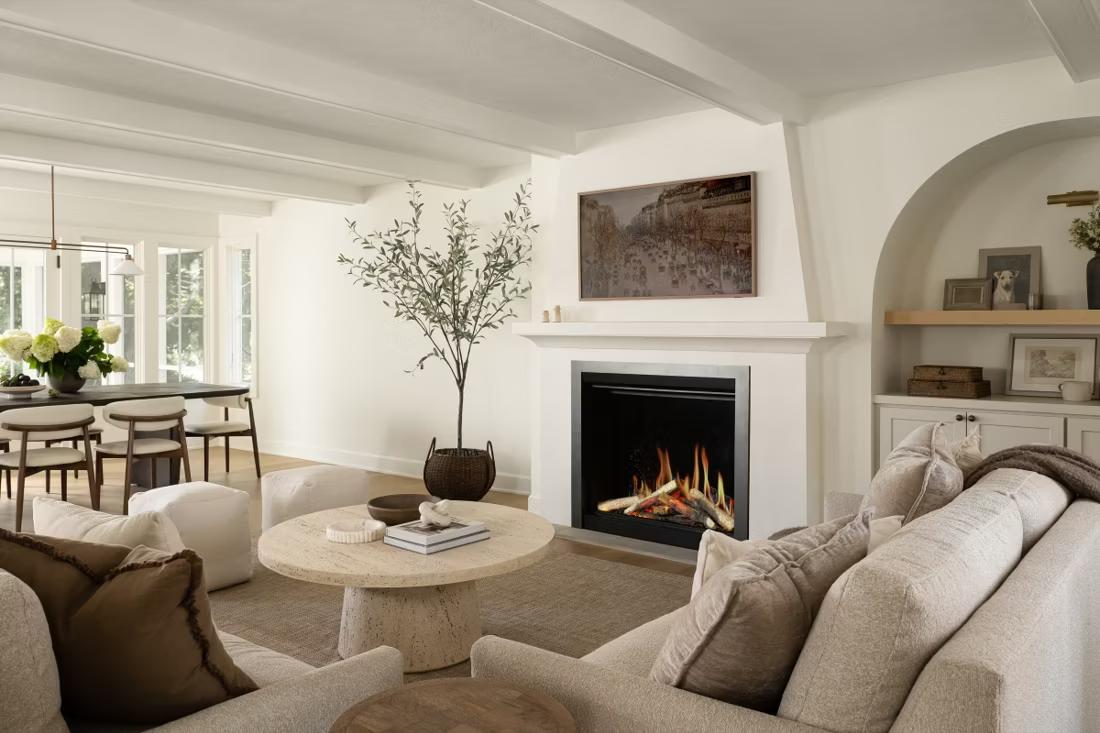
Yes—with an asterisk. Fireplaces are hot and TVs don't like heat. Either put a mantel between them to deflect rising warmth, or choose a fireplace with heat-management technology that creates a cool zone on the wall above—the wall stays around 125 degrees, barely warm, while the room still gets full heat. If you like clean lines and don't want a mantel, heat management is the answer.
How much does an electric fireplace cost to run?
With the heater on, a typical unit draws about 1,500 watts—at average electric rates that's roughly 20 cents an hour. Run the flame effect alone and it costs pennies; the flames are LED-driven and use about as much power as a light bulb. There's no pilot light, no fuel delivery, and essentially no maintenance.
How much should I budget for a fireplace?
For an average home—covering the fireplace, the vent pipe, and basic installation—a budget between $3,900 and $5,500 gives you a lot of options across wood, gas, and pellet. By the time you add finish work, gas line, and electrical, the average complete installation lands between $5,000 and $12,000 all-in. In a remodel or new build, a good rule is to put about 2.5% of the total project cost toward the fireplace.
Does a fireplace add value to my home?
On average, a fireplace adds back to the home about the same amount you spent installing it. Add the monthly savings from heating the rooms you actually use instead of the whole house—often hundreds of dollars a year—and the value case is strong before you even count what a fire does for how your family uses the room.
Find your electric fireplace in Scott County.
Tell us about your room and budget and we'll put together a free Project Guide & Parts List—the right electric fireplace or insert, the parts you need, and a trusted local dealer to install it.
Find Your Fireplace →