
Real Warmth, No Venting, Any Room You Choose.
Zone heat and ambiance for Raymore homes—from finished basements to bedroom accent walls. Find the right unit and connect with a trusted local dealer.
Every Project Starts From One of These Five Situations
Heat where you need it, without a chimney or gas line.
Raymore sits in Cass County on the southern edge of the Kansas City metro, one of the fastest-growing suburbs in the area. At about 1,100 feet elevation with a solid four- to five-month heating season and average winter lows near 17°F, the city needs real heat for four to five months a year—but not every room needs a wood stove or a gas line to get it. Electric fireplaces have become the go-to choice for homeowners finishing basements in Raymore's many ranch and split-level houses, updating a fireplace opening that already has power nearby, or adding ambiance to a bedroom or condo where running a chimney or gas line isn't practical.
Three different providers serve pockets of Raymore and Cass County—Evergy Missouri West, Osage Valley Electric Cooperative, and, for some addresses near the state line, City of Kansas City, KS power—with residential rates running roughly 12.5¢ to over 15¢ per kWh depending on who serves your meter. That spread matters if you're running an electric fireplace as daily supplemental heat in a finished basement or bonus room. For most Raymore homes, the right approach is zone heat: an electric unit warming a specific room, with the furnace or heat pump still carrying the load through Cass County's cold winters.
Three steps. No salesperson until you're ready.
Tell us about your project
Your zip code, your situation, and the fuel you're leaning toward—or let the answers point you to one.
See what's actually available
The brands dealers within 100 miles genuinely carry—real options, never a catalog mirage.
Get your dealer & Project Guide
A trusted local dealer, plus the free Project Guide & Parts List that names every component of the job.
Frequently Asked Questions
How much does an electric fireplace installation cost in Raymore?
Costs vary a lot because 'electric fireplace' covers everything from a $300 plug-in insert that slides into an existing firebox to a $2,500-$3,500 wall-mounted linear unit built into new framing on a dedicated 20-amp circuit. A basic insert that fits an existing masonry or wood-fireplace opening typically runs $600-$1,500 installed, since there's no venting or gas line involved—an electrician may just need to add an outlet or circuit. Built-in units for basement remodels or media-wall projects, which involve framing and trim, land at the higher end. A local dealer can give you a firm number after seeing the room and your panel capacity.
Can an electric fireplace heat my whole house?
No, and any dealer being straight with you will say the same. A typical electric fireplace heater puts out about 5,000-5,500 BTUs (roughly 1,500 watts)—enough to noticeably warm a single room of 400-500 square feet, not a whole home. Raymore sees a solid four- to five-month heating season and winter lows averaging 17°F, which means real heating load for months at a stretch. Most homeowners here use electric fireplaces as zone heat—warming a finished basement, home office, or primary bedroom—while a furnace or heat pump handles the rest of the house.
Can I convert an existing wood or gas fireplace to electric in my Raymore home?
Yes, and it's a common project in Raymore's older neighborhoods with masonry fireplaces that homeowners no longer use for wood burning. An electric insert slides into the existing firebox opening, plugs into a standard outlet or a new dedicated circuit, and delivers flame effect and supplemental heat without hauling firewood, sweeping a chimney, or running a gas line. It's typically the fastest and least expensive conversion of any fuel type—often a single afternoon versus the multi-day work a gas line or chimney liner installation requires.
Do I need a permit to install an electric fireplace in Raymore?
A plug-in electric fireplace using a standard 120-volt outlet doesn't require a permit. If you're installing a built-in unit that needs a new dedicated circuit or panel work, that electrical work should be pulled through the City of Raymore or Cass County, depending on your address, and done by a licensed electrician. Most local hearth dealers either employ a licensed electrician or coordinate with one directly, so this is usually handled as part of the installation rather than something you have to arrange yourself.
Which electric utility serves my home, and does it affect running costs?
Raymore is split between a few providers—Evergy Missouri West serves much of the city, Osage Valley Electric Cooperative covers pockets of rural Cass County, and some far-north addresses near the state line fall under City of Kansas City, KS power. Residential rates across these three run from about 12.5 cents to just over 15 cents per kWh, so the same fireplace running four hours a night costs somewhere between roughly $2.25 and $2.75 a month depending on which utility serves your meter. That's a small enough spread that fuel cost shouldn't drive your fireplace decision, but it's worth checking your actual bill rather than assuming a flat rate.
Electric vs. gas vs. wood—which fits my Raymore home?
All three are common in this part of Cass County, and the right pick depends on the room. Wood—oak, hickory, and walnut are all locally available—offers the highest heat output and keeps working during a power outage, but it needs a chimney and regular upkeep. Gas delivers strong, consistent heat at the flip of a switch and can carry real supplemental load through Raymore's cold months. Electric is the lowest-cost, lowest-maintenance option and installs almost anywhere, but it's realistically a zone-heat and ambiance choice rather than a serious heat source once temperatures drop into the teens, which happens regularly here in January. Many Raymore homeowners run gas or wood in the main living area and add electric units in bedrooms, basements, or bonus rooms.
Is electric the best option for finishing a basement in Raymore?
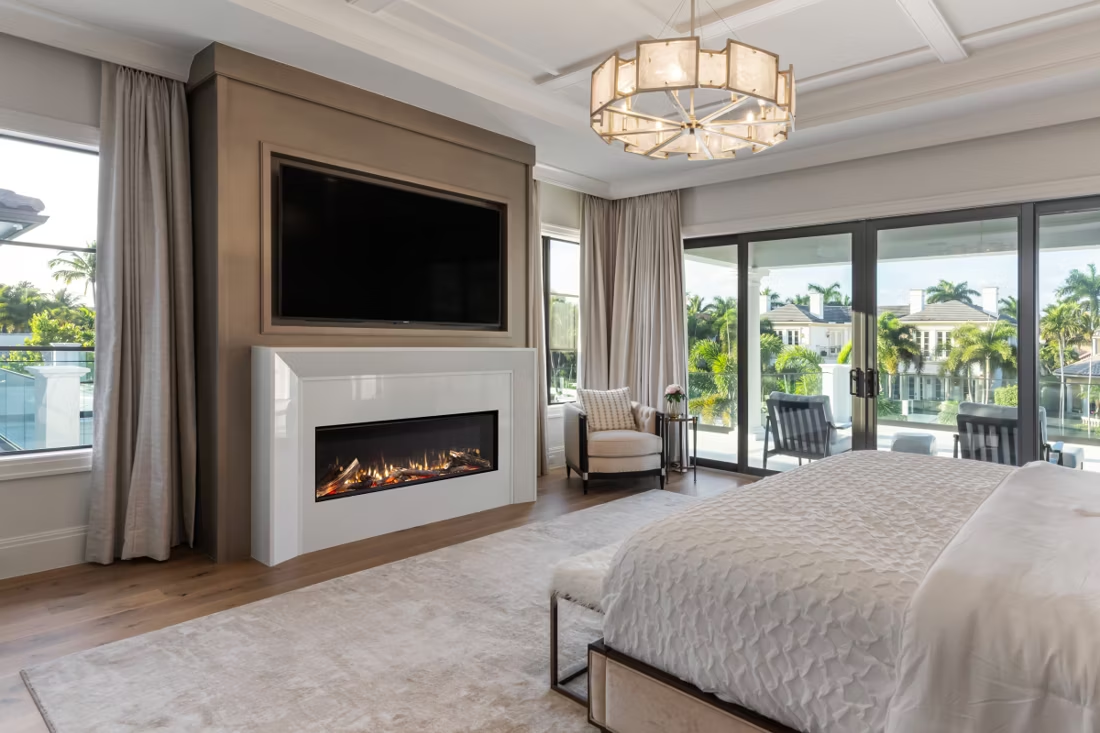
For most basement remodels, yes. Raymore has a lot of ranch and split-level homes with unfinished or partially finished basements, and electric fireplaces are popular there because there's no gas line to cut through the slab and no vent pipe to route through a finished ceiling above. A linear wall-mounted unit or a fireplace built into a media wall adds supplemental heat and a focal point without touching your HVAC ductwork. If the basement will serve as a primary winter living space, confirm your furnace's basement register output with an HVAC contractor—the fireplace alone won't carry the room on the coldest nights.
Are electric fireplaces a good fit for renters or apartments in Raymore?
Yes, and it's one of the fastest-growing uses as Raymore's apartment and townhome inventory has expanded along the Highway 58 corridor. A freestanding or wall-mounted plug-in electric fireplace requires no permanent installation, no venting, and no landlord sign-off for structural changes since it simply plugs into an existing outlet. Renters get flame ambiance and supplemental warmth in a bedroom or living room and can take the unit with them at move-out—something no wood or gas installation allows.
How much maintenance does an electric fireplace need?
Very little compared to wood or gas. There's no chimney to sweep, no gas line to inspect, and no combustion byproducts to vent. Upkeep is mostly dusting the unit, wiping the glass front, and eventually replacing the LED light strip after years of use—most manufacturers rate LED components for 20,000-plus hours. Cass County has no annual inspection requirement for plug-in units, though it's smart to have an electrician check a dedicated-circuit installation every few years if the fireplace runs several hours a day.
Do electric fireplaces actually produce heat?
Yes—most put out around 4,800–5,000 BTUs from a standard outlet, which comfortably warms a bedroom, office, or den as a comfort-zone heater. What they won't do is carry a whole house the way wood, gas, or pellet can. Think of electric as ambiance-first with honest supplemental heat: flames on with no heat in July, flames plus warmth in January.
Does an electric fireplace need a vent or chimney?
No—that's its superpower. An electric fireplace needs a wall and an outlet, period. No vent pipe, no gas line, no clearances to design around, which is why it works in bedrooms, offices, apartments, and walls where venting a gas or wood unit would be impractical or impossible. Installation is typically the simplest and least expensive of any fireplace type.
How much should I budget for a fireplace?
For an average home—covering the fireplace, the vent pipe, and basic installation—a budget between $3,900 and $5,500 gives you a lot of options across wood, gas, and pellet. By the time you add finish work, gas line, and electrical, the average complete installation lands between $5,000 and $12,000 all-in. In a remodel or new build, a good rule is to put about 2.5% of the total project cost toward the fireplace.
Does a fireplace add value to my home?
On average, a fireplace adds back to the home about the same amount you spent installing it. Add the monthly savings from heating the rooms you actually use instead of the whole house—often hundreds of dollars a year—and the value case is strong before you even count what a fire does for how your family uses the room.
Nearby Dealers
Hearth shops serving Raymore and the surrounding area. Every listing shows whether it is a WhyFire partner, a dealer we have verified as authorized for the brands we recommend, or a local business carrying hearth products. No manufacturer pays for placement. How we verify dealers →
Jay Henges Enterprises
Midwest Fireplace
The Hayes Co.
Electric Service in Raymore
An electric fireplace's heater draws about 1,500 watts—pennies per hour at local rates.
Evergy Missouri West
Osage Valley Elec Coop Assn
City Of Kansas City - (Ks)
Find your electric fireplace in Raymore.
Tell us about your room and how you plan to use it, and we'll match you with the right electric fireplace or insert, a trusted local dealer, and a free Project Guide & Parts List built for your space.
Find Your Fireplace →