
Instant Warmth for Pleasant Hill's Ice-Storm Winters.
Cass County winters bring average lows near 21°F and the occasional ice storm that knocks out power for days. Find the right gas fireplace or insert, and connect with a trusted local dealer near Pleasant Hill.
Every Project Starts From One of These Five Situations
Dependable heat when the power lines come down.
Pleasant Hill sits in Cass County, roughly 30 miles southeast of Kansas City, at just under 1,000 feet elevation. Winters here are real but not brutal—average lows hover around 21°F and the area has a winter heating load that's a fraction of what a place like Fargo, ND sees, but enough that a working heat source matters every winter. What Cass County is better known for is ice: freezing rain events that coat power lines and tree limbs and can leave Evergy Missouri West and Osage Valley Electric Cooperative customers without power for days at a stretch.
That combination—moderate but real cold, plus the genuine risk of an ice-storm outage—is where gas heat earns its keep. A lot of Pleasant Hill addresses, especially outside the city core and toward the 64034 side of the service area, sit beyond natural gas mains, so propane is the standard fuel for most gas fireplace installs out here. A properly equipped gas fireplace with battery-backup or self-powered ignition keeps producing real heat even when the grid goes down—something a space heater plugged into a dead outlet simply can't do.
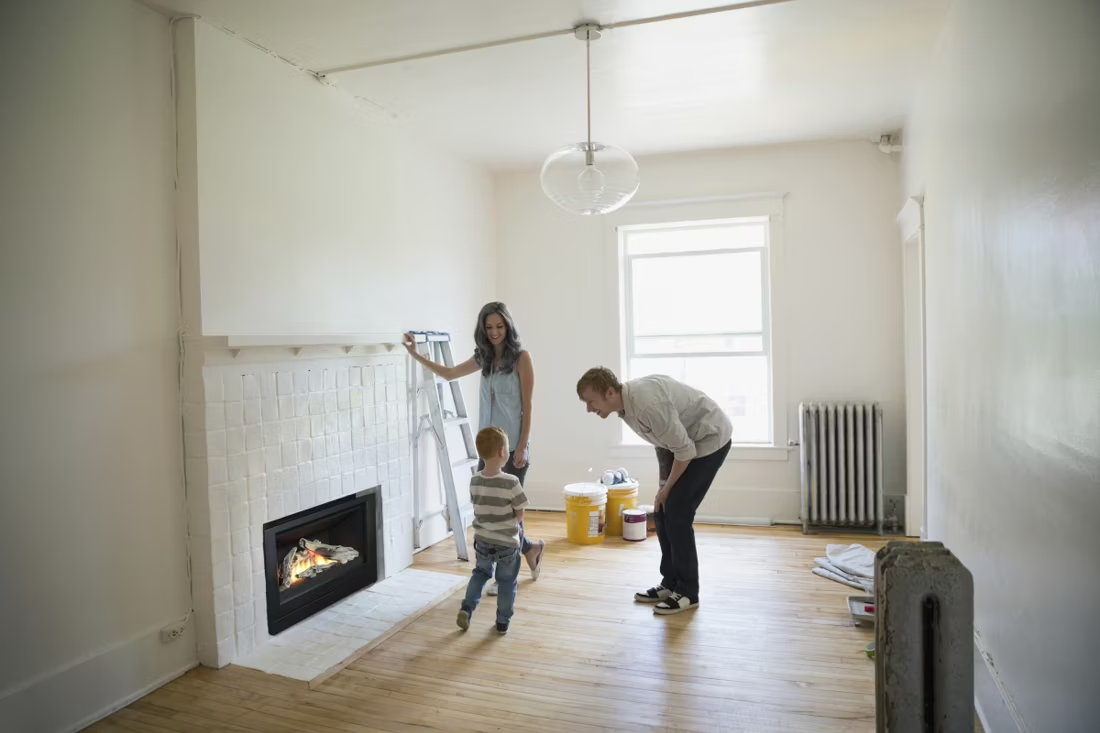
Three steps. No salesperson until you're ready.
Tell us about your project
Your zip code, your situation, and the fuel you're leaning toward—or let the answers point you to one.
See what's actually available
The brands dealers within 100 miles genuinely carry—real options, never a catalog mirage.
Get your dealer & Project Guide
A trusted local dealer, plus the free Project Guide & Parts List that names every component of the job.
Frequently Asked Questions
How much does a gas fireplace installation cost in Pleasant Hill?
Most gas fireplace and insert installations around Pleasant Hill run $3,500 to $9,000, with the spread driven mainly by whether you're on propane or natural gas and how much venting or line work the job requires. Because a lot of Cass County falls outside natural gas mains, propane installs are common—that adds the cost of a tank setup if you don't already have one, which a local propane supplier typically handles separately from the fireplace install itself. Homes with an existing masonry fireplace and a straightforward direct-vent insert land on the lower end; new construction requiring a fresh gas or propane line run and full venting sits toward the top. A local hearth dealer will give you a firm number after an in-home visit.
Can I convert my wood-burning fireplace to gas?
Yes, and it's a common upgrade in Pleasant Hill's older homes, many of which were built with a traditional masonry fireplace meant to burn local oak or hickory. A direct-vent gas insert slides into that existing firebox and uses a stainless liner run through your current chimney, so you keep the look of the fireplace without hauling wood or cleaning ash. If your home is on propane rather than natural gas—common outside the city center—your installer will size the insert's orifice for propane and coordinate with a propane supplier if you don't already have a tank on the property.
Is natural gas or propane more common for Pleasant Hill homes?
It depends on where you sit in Cass County. Homes closer to the center of Pleasant Hill are more likely to have natural gas service, while properties toward the outer edges of the 64080 and 64034 zip codes—and most of the surrounding rural county—rely on propane delivered to an above-ground tank. If you're not sure which you have, check your existing water heater or furnace. Most gas fireplace models can be configured for either fuel, so it's rarely a barrier to installation, just a variable in setup cost.
Will my gas fireplace still work if the power goes out?
It depends on the ignition system, and in a county where ice storms take down power lines most winters, this is worth getting right. Standing pilot units keep burning with zero electricity. Units with intermittent pilot ignition (IPI) rely on a battery backup—usually AA batteries inside the unit—that lights the fireplace on demand once the power drops. Valor's gas fireplaces take a different approach: the pilot's thermocouple generates its own electricity, so there are no batteries to check or replace, ever. For a Cass County home that's already lost power to an Evergy Missouri West or Osage Valley Electric Cooperative outage, that kind of reliability is worth asking your dealer about directly.
What's the difference between a gas fireplace, insert, and stove?
A gas fireplace is a fully built-in unit, framed into a wall—the right call for new construction or a remodel that doesn't already have a hearth. A gas insert drops into an existing masonry firebox, which fits a lot of the older housing stock around Pleasant Hill's downtown area. A gas stove is a freestanding cabinet unit, often chosen for a room addition or a space without an existing fireplace opening at all. A local dealer can walk your specific floor plan and tell you which one actually fits.
Do I need a permit for a gas fireplace installation in Pleasant Hill?
Most gas fireplace installations require both a building permit and gas-line sign-off, typically pulled through the City of Pleasant Hill or, for addresses outside city limits, the Cass County building office. Because propane and gas line work has to be done by a licensed installer, working with an established local hearth dealer means the permitting, the line work, and the final inspection are coordinated for you rather than you juggling separate trades on your own.
Should I get a vented or vent-free gas fireplace?
Vented, direct-vent units draw combustion air from outside and exhaust the byproducts back outside through sealed venting—they're the more common choice and work in nearly any room size. Vent-free units burn directly into the living space and are legal in Missouri, but they come with room-size minimums and oxygen-depletion sensors that limit where they can be installed, particularly in smaller bedrooms or tightly sealed newer construction. For most Pleasant Hill homes, a direct-vent unit is the simpler, more universally recommended option, though a local dealer can tell you if a vent-free model fits a specific room.
How often does a gas fireplace need to be serviced?
Plan on an annual inspection, ideally in early fall before the first cold snap. A technician checks the burner, pilot assembly, gas connections, and venting, and cleans the glass. That matters a bit more here given the dust that blows in from the farmland surrounding Cass County, which can affect burner performance over a season. Expect to pay somewhere in the $150 to $250 range for a standard annual visit from a local service provider.
Gas vs. electric fireplace—which makes more sense in Pleasant Hill?
Electric fireplaces plug into a standard outlet, need no venting or gas line, and cost far less to install—often under $1,000 for a simple unit. But they only produce real heat as long as the power stays on, which is exactly the moment a Cass County ice storm tends to take Evergy Missouri West or Osage Valley Electric Cooperative lines down. Residential electric rates here run about 12.5 to 14 cents per kWh depending on your provider, so operating cost is reasonable either way. Gas costs more upfront but keeps producing heat through an outage with the right ignition system—for a lot of Pleasant Hill homeowners, that backup capability is the deciding factor.
Why is a fireplace insert so efficient?
An insert does two things: it seals the chimney completely, so you stop losing air you already paid to heat, and it radiates warmth into the room through the firebox and glass. Most add a heat-exchange fan that pulls cool room air underneath, wraps it around the hot firebox, and pushes it back out warm. Your home is more efficient before you've even lit the first fire.
Are new gas fireplaces really better than old ones?
Two ways, and they're both big. Looks: modern gas fireplaces are realistic enough that it's hard to believe they aren't burning wood. Cost: old units burn a standing pilot year-round (roughly $200 a year), while new ones use pilot-on-demand ignition and modern burners. Add remote controls and thermostat operation, and the day-to-day experience isn't close.
How much should I budget for a fireplace?
For an average home—covering the fireplace, the vent pipe, and basic installation—a budget between $3,900 and $5,500 gives you a lot of options across wood, gas, and pellet. By the time you add finish work, gas line, and electrical, the average complete installation lands between $5,000 and $12,000 all-in. In a remodel or new build, a good rule is to put about 2.5% of the total project cost toward the fireplace.
Does a fireplace add value to my home?
On average, a fireplace adds back to the home about the same amount you spent installing it. Add the monthly savings from heating the rooms you actually use instead of the whole house—often hundreds of dollars a year—and the value case is strong before you even count what a fire does for how your family uses the room.
Nearby Dealers
Hearth shops serving Pleasant Hill and the surrounding area. Every listing shows whether it is a WhyFire partner, a dealer we have verified as authorized for the brands we recommend, or a local business carrying hearth products. No manufacturer pays for placement. How we verify dealers →
Dillon Heating & Cooling Solutions
Find your gas fireplace in Pleasant Hill.
Tell us about your home and we'll put together a free Project Guide & Parts List—the exact parts, including the vent kit, and a trusted local dealer matched to your Pleasant Hill address.
Find Your Fireplace →