
Real fire ambiance, zero venting, in Mississippi County.
From Charleston to East Prairie and the farm roads between them, electric fireplaces bring instant, no-mess heat to bootheel homes—no chimney, no gas line, no cutting permit required. Find the right unit and connect with a trusted local dealer.
Every Project Starts From One of These Five Situations
Mild winters, manufactured homes, and the case for plug-in heat.
Mississippi County sits in Missouri's bootheel, a flat expanse of Mississippi River floodplain given over almost entirely to cotton, soybean, and rice farming. At roughly 300 feet of elevation with no real topography to speak of, the county doesn't get the brutal cold snaps that hit the Ozarks or northern Missouri—Climate Zone 4A, a winter low average of 26°F, and a winter heating load noticeably milder than a place like Fargo, ND or Duluth, MN. Charleston, the county seat, along with East Prairie, Anniston, Wolf Island, and Wyatt, sees a heating season that's real but short—cool nights from November through February rather than months of sub-zero lock-in.
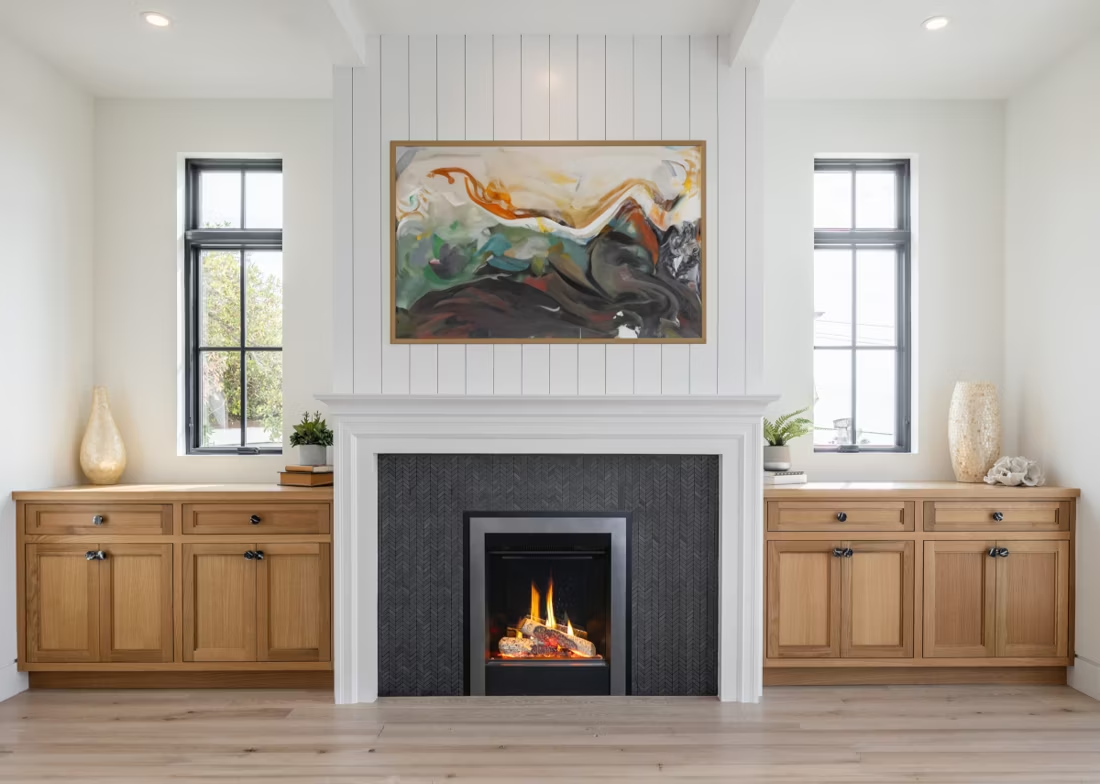
That milder profile is exactly why electric fireplaces make sense here. Wood heat isn't a big factor in this part of the bootheel—the county is farmland, not forest, with no national forest cutting permits or public timber access nearby, and pellet stoves see the same limited demand. Gas is the standard choice for homeowners wanting real heat output, but a large share of Mississippi County's housing stock is manufactured or older farmhouse construction, where running new gas line or masonry chimney work isn't always practical. An electric insert or wall-mount unit plugs into an existing outlet or a simple dedicated circuit, adds supplemental heat to a bedroom or living room, and requires none of the venting, gas permitting, or annual chimney sweep that wood or gas installs need.
Three steps. No salesperson until you're ready.
Tell us about your project
Your zip code, your situation, and the fuel you're leaning toward—or let the answers point you to one.
See what's actually available
The brands dealers within 100 miles genuinely carry—real options, never a catalog mirage.
Get your dealer & Project Guide
A trusted local dealer, plus the free Project Guide & Parts List that names every component of the job.
Frequently Asked Questions
How much does an electric fireplace installation cost in Mississippi County?
Electric fireplaces are the least expensive hearth option in Mississippi County by a wide margin. A basic plug-in insert or freestanding unit runs $300 to $700 installed—often just unboxing and plugging in, with no electrician needed. A built-in wall unit or a mantel package with custom surround, which usually calls for a dedicated 20-amp circuit run by a licensed electrician, typically lands between $1,200 and $3,000 depending on the cabinetry work involved. Compare that to the gas fireplace installs common in the county, which run well into the thousands once gas line and venting are factored in, and it's clear why electric is a popular choice for a second heat source or a rental property upgrade.
Do I need a permit to install an electric fireplace in Mississippi County?
In most cases, no. A plug-in electric fireplace or insert doesn't require a building permit anywhere in Mississippi County, since there's no venting, gas line, or structural chimney work involved. If you're adding a built-in unit that needs a new dedicated circuit, an electrical permit may apply—check with the building office in Charleston or East Prairie depending on where the home sits, or ask your installer to confirm. Either way, it's a far simpler process than the permitting required for a gas or wood-burning appliance.
Will an electric fireplace keep working during a power outage?
No—electric fireplaces need household power to run the heater and, on most models, the flame-effect display, so they go dark during an outage just like the rest of your home's electronics. For homeowners in Mississippi County who want heat that survives a downed line during a spring storm off the Mississippi River, a gas fireplace on natural gas or propane is the better backup option, since many gas models include battery-backed ignition. Electric fireplaces are best thought of as everyday supplemental heat and ambiance, not storm-outage insurance.
Electric vs. gas fireplace—which is right for my Mississippi County home?
Gas is the standard hearth fuel in the county for homeowners who want a fireplace that can genuinely heat a room on a 26-degree January night, and rural propane suppliers serve the bootheel well. Electric makes more sense as a lower-cost, lower-commitment option—supplemental warmth for a bedroom, den, or manufactured home where running gas line isn't practical, or for a landlord who wants fireplace ambiance without the maintenance and inspection requirements of a gas appliance. A number of local homeowners end up with both: gas in the main living space, electric in a secondary room.
What size electric fireplace do I need?
Electric fireplaces are rated by heater wattage rather than BTU the way gas or wood units are, and most models max out around 1,500 watts—enough to noticeably warm a 300 to 400 square foot room, which covers most bedrooms and dens in Mississippi County's older farmhouses and manufactured homes. For a larger open living area, look at wider units (50 inches or more) that pair a stronger heater with a bigger flame display, or plan on it as ambiance-plus-supplemental rather than the room's sole heat source. Since the county's heating season is comparatively mild—less than half the winter heating load of a place like International Falls, MN—electric units here are asked to do less heavy lifting than they would further north.
What's the difference between an electric insert, a wall-mount, and a mantel package?
An electric insert is sized to slide into an existing masonry or wood-fireplace opening, instantly upgrading an old, unused fireplace without touching the chimney. A wall-mount unit hangs flat against a wall like a TV, popular in newer or renovated living rooms. A mantel package pairs an electric firebox with a surrounding cabinet or mantel shelf, giving the look of a built-in fireplace in a room that never had one—a common choice for manufactured homes and additions across the county. All three plug into standard household power or a dedicated circuit, and a local dealer can tell you which fits your existing wall or fireplace opening.
How much does an electric fireplace add to my electric bill?
Running an electric fireplace at its typical 1,500-watt heater setting costs roughly 15 to 20 cents an hour at typical rural Missouri electric rates—most Mississippi County homes are served by a rural electric cooperative rather than an investor-owned utility, and co-op rates tend to run close to the state average. Used a few hours an evening as supplemental heat in one room, that's a modest addition to a winter bill, especially compared to running central heat harder to cover the whole house. Many owners run the flame effect without the heater for ambiance in the shoulder seasons, which uses only a few watts.
Why don't more Mississippi County homes use wood or pellet stoves?
It comes down to geography. Mississippi County is bootheel farmland—cotton, soybean, and rice fields on Mississippi River floodplain—with none of the national forest or public timber access that drives wood heat culture in the Ozarks or further west. There's no local cutting-permit program and limited firewood infrastructure, so wood stoves are uncommon here, and pellet stoves—despite regional brands like Lignetics and Indeck Energy Services being available through retailers—see similarly light demand. Gas and electric cover the vast majority of hearth installations in the county as a result.
How do I find a reputable electric fireplace dealer near me?
Find My Fireplace matches Mississippi County homeowners with a trusted local dealer who covers Charleston, East Prairie, Anniston, and the surrounding bootheel—someone who can walk through your home, confirm whether your existing outlet or panel supports the unit you want, and install a wall-mount, insert, or mantel package correctly. We're a neutral matching service, not a manufacturer or retailer ourselves, so the recommendation is based on what's actually installable in your home, not which brand pays for placement.
Can I put a TV above my fireplace?
Yes—with an asterisk. Fireplaces are hot and TVs don't like heat. Either put a mantel between them to deflect rising warmth, or choose a fireplace with heat-management technology that creates a cool zone on the wall above—the wall stays around 125 degrees, barely warm, while the room still gets full heat. If you like clean lines and don't want a mantel, heat management is the answer.
Do electric fireplaces actually produce heat?
Yes—most put out around 4,800–5,000 BTUs from a standard outlet, which comfortably warms a bedroom, office, or den as a comfort-zone heater. What they won't do is carry a whole house the way wood, gas, or pellet can. Think of electric as ambiance-first with honest supplemental heat: flames on with no heat in July, flames plus warmth in January.
Can I install a fireplace myself?
If you're putting a fire in your house on purpose, it's best to work with an expert. Unless you're genuinely experienced in framing, gas line, vent pipe, and the national code on clearances to combustibles, have a professional do it—and ideally the same company that sells you the fireplace, so warranty, service, and liability all live under one roof.
What is an in-home preview and do I need one?
It's a visit where a hearth professional measures your space, confirms the model you picked actually works in your home, and walks the specs—framing, gas line, venting, finish work—before anything is ordered. Some details you just can't know until you see the house. Never make a down payment without one; it's the single most-skipped step that burns buyers.
Find your electric fireplace in Mississippi County.
Tell us a bit about your home and we'll match you with a trusted local dealer serving Mississippi County, plus a free Project Guide & Parts List with the exact unit, circuit requirements, and installation plan for your space.
Find Your Fireplace →