
Find the right electric fireplace for your Marion County home.
From Hannibal's historic riverfront homes to Palmyra and the county's rural stretches, electric heat offers a no-mess way to add warmth and ambiance without a chimney or gas line. We'll match you with a trusted local dealer who knows what actually works here.
Every Project Starts From One of These Five Situations
Simple heat, no venting required.
Marion County sits along the Mississippi River in northeast Missouri, with winters that push average lows to around 18°F and roughly 5,515 heating degree days a year—comparable to what you'd see in parts of southern Wisconsin. That's cold enough to want supplemental heat in a bedroom, sunroom, or finished basement, but not so extreme that homeowners need a primary wood or gas system to get through the season. Electric fits that gap well.
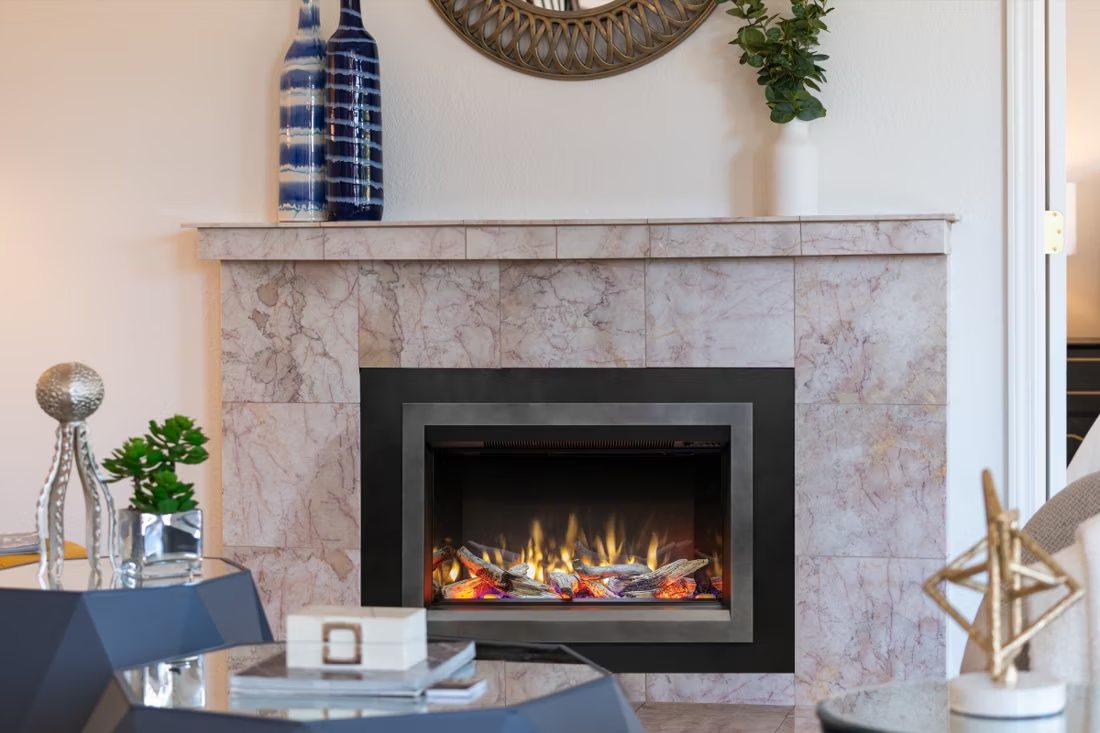
Many homes in Hannibal's older neighborhoods have brick chimneys that were built for coal or wood and aren't rated—or aren't worth the cost—to reline for gas or wood-burning inserts. An electric insert drops into that same opening with no venting, no gas line, and no permit hassle in most cases, delivering real supplemental heat and the look of a fire. Out in Palmyra and the county's rural areas, electric units are a common choice for additions, garages, and rooms added onto older farmhouses where running new gas line isn't practical.
Three steps. No salesperson until you're ready.
Tell us about your project
Your zip code, your situation, and the fuel you're leaning toward—or let the answers point you to one.
See what's actually available
The brands dealers within 100 miles genuinely carry—real options, never a catalog mirage.
Get your dealer & Project Guide
A trusted local dealer, plus the free Project Guide & Parts List that names every component of the job.
Frequently Asked Questions
How much does an electric fireplace installation cost in Marion County?
Electric fireplace installs in Marion County typically run $400 to $1,200, and that range covers most of what homeowners here choose: a plug-in insert dropped into an existing fireplace opening, a wall-mounted unit, or a built-in model framed into new construction. Because there's no venting or gas line to run, labor costs stay low compared to wood or gas—most of the cost is the unit itself. Built-in models that require an electrician to add a dedicated circuit run toward the higher end of that range.
Do I need a permit to install an electric fireplace in Marion County?
In most cases, no—a plug-in electric insert or freestanding unit doesn't require a permit since there's no venting, gas line, or structural chimney work involved. If you're having a built-in unit wired into a new dedicated electrical circuit, that portion of the work typically needs to be pulled by a licensed electrician and may require an electrical permit through the relevant city or county office, depending on whether you're inside Hannibal or Palmyra city limits or in unincorporated Marion County. Local dealers can tell you quickly which category your project falls into.
Will an electric fireplace actually heat a room in Marion County's winters?
Most electric fireplaces are built for supplemental heat, not whole-home heating—they typically output 4,000 to 5,000 BTUs, enough to noticeably warm a bedroom, sunroom, or den, but not a whole drafty farmhouse when temperatures drop toward the winter average low of 18°F. For a finished basement or an add-on room in Palmyra or rural Marion County without direct HVAC access, an electric insert can genuinely replace the need to run new ductwork. For primary heat in a larger, older Hannibal home, most homeowners pair electric with their existing furnace rather than relying on it alone.
What's the difference between an electric insert and a built-in electric fireplace?
An electric insert is designed to slide into an existing fireplace opening—including the older brick fireboxes common in Hannibal's historic homes—using the existing surround and mantel. A built-in electric fireplace is meant for new construction or a remodel where you're framing a new wall opening from scratch, often with a linear or wide-format flame display. For homeowners with an existing but unused masonry fireplace, an insert is nearly always the simpler and less expensive route since it reuses what's already there.
Can I run an electric fireplace on a normal household outlet?
Most plug-in electric inserts and freestanding units run on a standard 120-volt, 15-amp household outlet—no special wiring needed. Larger built-in models, especially wide linear units over 50 inches, sometimes need a dedicated 20-amp circuit to run safely, particularly if other appliances share that circuit. A local dealer can tell you which category a specific model falls into before you buy, which avoids the surprise of an electrician visit after installation.
Is electric a good fit compared to wood or gas in Marion County?
Marion County has real wood heat culture—oak, hickory, walnut, and maple are all common locally and split cordwood is easy to source—and gas is a standard, well-supported option too. Electric doesn't compete with either as a primary heat source; it's best understood as the no-hassle option for rooms where running a chimney or gas line isn't practical, or for homeowners who want fireplace ambiance without any of the maintenance. Many Marion County homes end up with a mixed approach: wood or gas in the main living space, electric in a bedroom, basement, or add-on room.
How long do electric fireplaces typically last?
A quality electric fireplace insert or built-in unit typically lasts 10 to 15 years with normal use, with most of the wear falling on the heating element and the LED flame mechanism rather than any structural part. Because there's no chimney, no creosote, and no combustion byproducts to worry about, maintenance is minimal—mostly dusting the unit and occasionally replacing an LED strip. That low-maintenance profile is one of the bigger draws for Marion County homeowners who don't want an annual inspection routine like a wood or gas appliance requires.
Do electric fireplaces work during a power outage?
No—electric fireplaces require power to run both the heating element and the flame effect, so they go dark during an outage just like any other electric appliance. For Marion County homeowners who want a heat source that keeps working when winter storms knock out power along the river, wood is the more reliable backup option. Electric is best thought of as a convenience and ambiance choice for normal day-to-day use rather than an emergency heat source.
Electric vs. gas—which is right for my Marion County home?
Gas delivers real, consistent heat output and can be sized to genuinely warm a room even on the coldest days near Marion County's 18°F average low, but it requires a gas line and venting work that adds cost and, in some older Hannibal homes, means reworking an existing but unusable chimney. Electric skips all of that—no gas line, no venting, low installation cost—but tops out at modest supplemental heat output. If you're heating a primary living space and want real warmth, gas is usually the better fit. If you're adding ambiance and light supplemental heat to a bedroom, basement, or add-on room, electric is the simpler and cheaper choice.
Can I put a TV above my fireplace?
Yes—with an asterisk. Fireplaces are hot and TVs don't like heat. Either put a mantel between them to deflect rising warmth, or choose a fireplace with heat-management technology that creates a cool zone on the wall above—the wall stays around 125 degrees, barely warm, while the room still gets full heat. If you like clean lines and don't want a mantel, heat management is the answer.
Does an electric fireplace need a vent or chimney?
No—that's its superpower. An electric fireplace needs a wall and an outlet, period. No vent pipe, no gas line, no clearances to design around, which is why it works in bedrooms, offices, apartments, and walls where venting a gas or wood unit would be impractical or impossible. Installation is typically the simplest and least expensive of any fireplace type.
How much should I budget for a fireplace?
For an average home—covering the fireplace, the vent pipe, and basic installation—a budget between $3,900 and $5,500 gives you a lot of options across wood, gas, and pellet. By the time you add finish work, gas line, and electrical, the average complete installation lands between $5,000 and $12,000 all-in. In a remodel or new build, a good rule is to put about 2.5% of the total project cost toward the fireplace.
Can I install a fireplace myself?
If you're putting a fire in your house on purpose, it's best to work with an expert. Unless you're genuinely experienced in framing, gas line, vent pipe, and the national code on clearances to combustibles, have a professional do it—and ideally the same company that sells you the fireplace, so warranty, service, and liability all live under one roof.
Stove and Fireplace Dealers in Marion County
Plumb Supply Co.
Get your Marion County electric fireplace project plan.
Tell us about your home and we'll match you with a trusted local Marion County dealer and send over a free Project Guide & Parts List—the exact parts and a clear plan for your electric fireplace installation.
Find Your Fireplace →