
Instant heat, real ambiance, no chimney required.
From Joplin apartments to century-old homes on the Carthage square, electric fireplaces bring flame effect and zone heat to Jasper County rooms that were never built for a chimney. Find the right unit and connect with a trusted local dealer.
Every Project Starts From One of These Five Situations
Electric fireplaces fit modern Ozark living.
Jasper County sits in the Ozark foothills of southwest Missouri, home to roughly 141,800 people across Joplin, Carthage, Webb City, Carl Junction, and the smaller towns along Route 66. The climate here is Zone 4A, mixed-humid, with about 4,120 heating degree days a year and winter lows averaging 25°F—a real but moderate heating season, nothing like the 8,000-plus HDD winters of Madison or Minneapolis. That matters for fuel choice: most Jasper County homes don't need a wood stove holding coals through a subzero night. They need efficient, flexible supplemental heat for a den, a finished basement, or a bedroom that never quite catches up with the rest of the house.
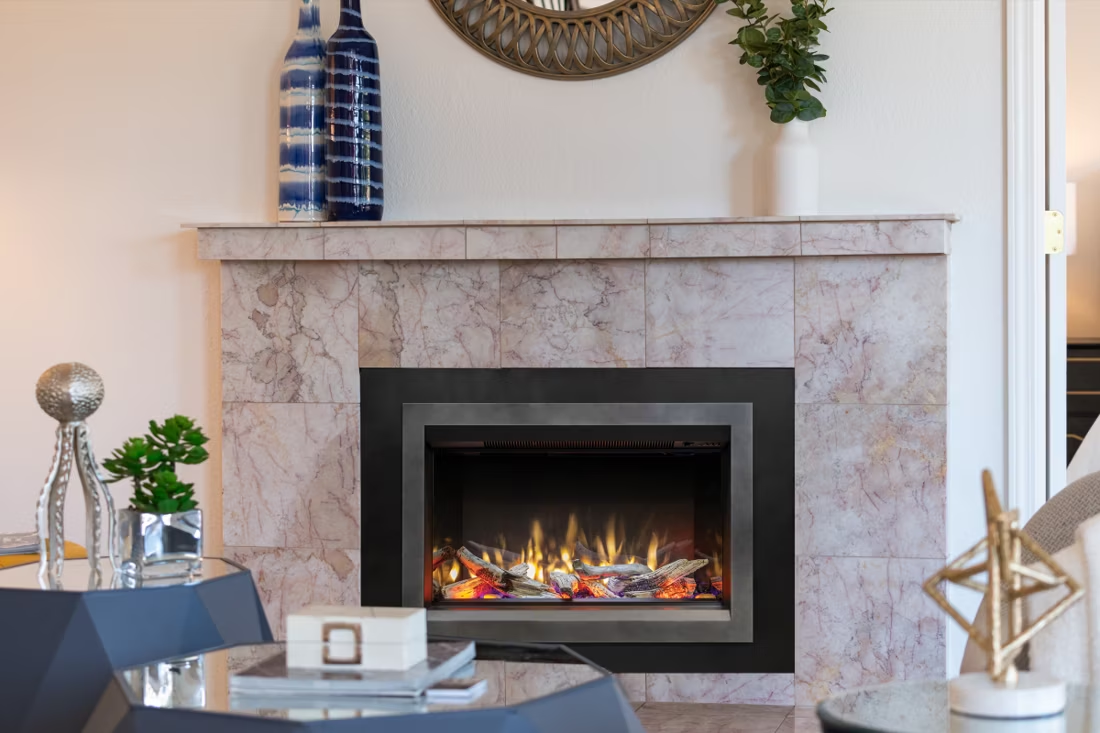
That's where electric fireplaces do their best work. There's no flue to build, no gas line to run, and no burn restrictions to track—Jasper County has no air quality non-attainment issues or curtailment periods to worry about either way. A plug-in insert can go into a Carthage Victorian's old masonry firebox in an afternoon. A built-in wall unit works in a Joplin apartment or a Webb City ranch home where a real chimney was never part of the plan. Liberty Utilities (formerly Empire District Electric) serves most of the county, and because these units don't need special gas or wood-burning permitting, getting one installed is usually the fastest hearth project a Jasper County homeowner can take on.
Three steps. No salesperson until you're ready.
Tell us about your project
Your zip code, your situation, and the fuel you're leaning toward—or let the answers point you to one.
See what's actually available
The brands dealers within 100 miles genuinely carry—real options, never a catalog mirage.
Get your dealer & Project Guide
A trusted local dealer, plus the free Project Guide & Parts List that names every component of the job.
Frequently Asked Questions
How much does an electric fireplace installation cost in Jasper County?
Plug-in electric inserts that slide into an existing firebox typically run $300 to $1,200 installed, since most just need an outlet within reach and a trim kit to finish the opening. Built-in wall units and mantel packages run higher, generally $1,500 to $4,500, especially if a dedicated 240V circuit needs to be run by a licensed electrician—common in older Carthage and Joplin homes with older panels. Because there's no venting or chimney work involved, electric installs are consistently the least expensive hearth option in Jasper County, and most local dealers can complete a straightforward install in a single visit.
Do I need a permit to install an electric fireplace in Jasper County?
In most cases, no. A plug-in electric insert or freestanding unit that uses a standard household outlet doesn't require a permit anywhere in Jasper County. If your installation requires new electrical wiring—a dedicated circuit for a larger built-in unit, for example—that electrical work typically does need a permit through the local jurisdiction, whether that's the City of Joplin, Carthage, Webb City, or Carl Junction. A licensed electrician working with your hearth dealer will usually handle that paperwork as part of the job.
What's the difference between an electric fireplace and a space heater?
A space heater is a standalone heating appliance with no design intent beyond warmth. An electric fireplace pairs a heating element (usually 1,500 watts, enough to warm 400 to 1,000 square feet depending on the model and room layout) with a realistic flame display—LED, mist-based, or ember-bed technology—and is built into cabinetry, a mantel surround, or a wall insert designed to look permanent. For a Jasper County living room or den, an electric fireplace gets you the ambiance of a real fire plus genuine supplemental heat, in a package that looks like a finished feature rather than an appliance you unplug and store each spring.
What size electric fireplace do I need for my Jasper County home?
For a single room used as supplemental heat—a den, bedroom, or finished basement in Joplin or Carthage—a standard 1,500-watt unit rated for 400 to 600 square feet is usually plenty given the county's moderate 4,120 heating-degree-day winters. Larger open-concept living areas or homes using electric as a secondary heat source alongside a furnace may want a 750–1,000 square foot rated unit, or two smaller units in different zones. Because Jasper County winters rarely demand round-the-clock heating the way a harsher climate like Duluth or Fargo would, most homeowners here are sizing for comfort and zone heating rather than survival heat, and a local dealer can help match wattage to your actual room.
Electric vs. wood—which makes more sense in Jasper County?
Jasper County sits in oak-hickory country, with walnut and maple also common, and plenty of homeowners still burn cordwood for primary or backup heat, especially in rural parts of the county. But wood requires a chimney, clearances, and annual sweeping—none of which work in a Joplin apartment, a Webb City rental, or a historic Carthage home with a bricked-up flue. Electric fills that gap: no venting, no ash, no wood to split or stack, and it can go virtually anywhere there's an outlet or a dedicated circuit. If you already have a working chimney and want real cold-weather heat output, wood still has advantages. If you want flame ambiance and simple zone heat without construction, electric is usually the more practical answer.
Electric vs. gas fireplace—which is the better fit?
Gas fireplaces deliver more raw heat output and can run during a power outage with the right ignition system, but they require a gas line, venting (or careful vent-free sizing), and a larger upfront installation. Electric fireplaces skip all of that—plug it in, mount it, done—but they only run on electricity and produce less heat per unit than a comparable gas insert. For Jasper County homeowners in older homes without existing gas lines, or in rental and multi-family properties around Joplin where running new gas service isn't practical, electric is often the simpler and less expensive route to real ambiance.
Electric vs. pellet stove—which should I choose?
Pellet stoves, fed by hopper-loaded fuel from regional suppliers like Lignetics or Indeck Energy Services, burn cleaner than cordwood and produce strong, consistent heat—but they still require venting, a dedicated hearth pad, and periodic hopper refilling and ash removal. Electric fireplaces need none of that: no venting, no fuel storage, no combustion byproducts. For a Jasper County homeowner mainly after supplemental warmth and flame visuals in a living room or bedroom, electric is the lower-maintenance option. For someone wanting a primary heat source with real BTU output and willing to manage fuel and venting, pellet remains the stronger performer.
Will my electric fireplace still work during a power outage?
No—electric fireplaces are entirely dependent on grid power, so an outage means no flame and no heat from the unit, including the electric heater element. Southwest Missouri does see occasional winter ice storms that knock out power across Jasper County, sometimes for extended periods, so if backup heat during outages is a priority, an electric fireplace shouldn't be your only heat source. Many Jasper County homeowners pair an electric fireplace for everyday ambiance and zone heat with a wood stove, insert, or portable generator setup as a true storm-outage backup.
What features matter most for an electric fireplace in Jasper County's climate?
Look for a unit with independently controllable flame and heat settings, so you can run the flame effect year-round without heat output during Jasper County's humid summers, and dial up the 1,500-watt heater on the 25°F mornings that show up most winters. A built-in thermostat with a remote or app control is worth having for a den or bedroom used for supplemental heat. If the fireplace will sit in a finished basement or a room with less insulation—common in older Carthage and Joplin housing stock—ask a local dealer about heater wattage relative to that specific room's square footage rather than relying on generic sizing charts.
Can I put a TV above my fireplace?
Yes—with an asterisk. Fireplaces are hot and TVs don't like heat. Either put a mantel between them to deflect rising warmth, or choose a fireplace with heat-management technology that creates a cool zone on the wall above—the wall stays around 125 degrees, barely warm, while the room still gets full heat. If you like clean lines and don't want a mantel, heat management is the answer.
Does an electric fireplace need a vent or chimney?
No—that's its superpower. An electric fireplace needs a wall and an outlet, period. No vent pipe, no gas line, no clearances to design around, which is why it works in bedrooms, offices, apartments, and walls where venting a gas or wood unit would be impractical or impossible. Installation is typically the simplest and least expensive of any fireplace type.
Does a fireplace add value to my home?
On average, a fireplace adds back to the home about the same amount you spent installing it. Add the monthly savings from heating the rooms you actually use instead of the whole house—often hundreds of dollars a year—and the value case is strong before you even count what a fire does for how your family uses the room.
What is an in-home preview and do I need one?
It's a visit where a hearth professional measures your space, confirms the model you picked actually works in your home, and walks the specs—framing, gas line, venting, finish work—before anything is ordered. Some details you just can't know until you see the house. Never make a down payment without one; it's the single most-skipped step that burns buyers.
Stove and Fireplace Dealers in Jasper County
Find your electric fireplace in Jasper County.
Tell us a bit about your home and we'll match you with a trusted local Jasper County dealer and send over a free Project Guide & Parts List—the exact components for your electric fireplace project, no chimney or gas line required.
Find Your Fireplace →