
Instant heat for Iron County's Ozark winters.
From Ironton to Pilot Knob, Arcadia, and Annapolis, Iron County homes see real cold five months a year. Find the right gas fireplace, insert, or stove—and get matched with a trusted local dealer who knows what actually works out here.
Every Project Starts From One of These Five Situations
Clean heat for the St. Francois Mountains.
Iron County sits in the rugged St. Francois Mountains of the Ozark Highlands, home to Taum Sauk Mountain—the highest point in Missouri—and the pink granite outcrops of Elephant Rocks State Park. With just over 4,200 residents spread across Ironton (the county seat), Pilot Knob, Arcadia, and Annapolis, this is one of the more sparsely populated counties in the state, and homes here are often older farmhouses or cabins tucked into the hills rather than tract construction. At climate zone 4A with a winter heating season on the moderate-to-heavy side and an average winter low of 21°F, Iron County's cold season is real but not extreme—nowhere near the brutal stretches you'd see in a place like Duluth or Bismarck, but enough sustained cold from November through March that a supplemental heat source matters.
Wood heat runs deep here—the county sits partly within the Mark Twain National Forest, and oak, hickory, and walnut are as common in the woodshed as they are on the dinner table. But gas has become the go-to choice for homeowners who want reliable, hands-off heat in a main living space without tending a fire every night. Iron County has no widespread natural gas main infrastructure the way a city like Cape Girardeau does, so most gas fireplace installations here run on propane, supplied by regional LP companies and stored in a tank on the property. There's no air quality non-attainment issue or winter inversion problem in this part of the Ozarks, so the appeal of gas isn't about smoke—it's about convenience, consistent heat, and a cleaner look in a remodel or new build.
Three steps. No salesperson until you're ready.
Tell us about your project
Your zip code, your situation, and the fuel you're leaning toward—or let the answers point you to one.
See what's actually available
The brands dealers within 100 miles genuinely carry—real options, never a catalog mirage.
Get your dealer & Project Guide
A trusted local dealer, plus the free Project Guide & Parts List that names every component of the job.
Frequently Asked Questions
How much does a gas fireplace installation cost in Iron County?
A typical direct-vent gas insert or fireplace installation in Iron County runs roughly $3,500 to $8,500, depending on the unit, the venting run, and whether propane tank work is involved. Homes that already have a propane tank and line in place—common on older Ironton and Arcadia properties—land on the lower end. New propane tank installation, a longer line run out to a detached room, or converting a large existing masonry fireplace pushes costs toward the higher end. Because Iron County is rural and spread out, expect a modest travel charge built into quotes for homes well outside Ironton or Pilot Knob, in areas like Des Arc, Vulcan, or Middlebrook.
Can I convert my existing wood fireplace to gas?
Yes, and it's a common project for the older masonry fireplaces found throughout Ironton, Arcadia, and Pilot Knob. A gas insert typically slides into the existing firebox and vents through a stainless liner run up your current chimney, so you keep the look of the fireplace while gaining push-button heat. Since most of Iron County runs on propane rather than piped natural gas, the conversion usually includes running a gas line from an existing or new propane tank to the fireplace. A local installer can tell you quickly whether your chimney and firebox dimensions are a good fit for a standard insert or need a custom liner.
Do I need natural gas, or can I use propane?
For nearly all of Iron County, propane is the practical answer. There's no natural gas utility main serving the county the way there is in larger Missouri cities, so homes in Ironton, Pilot Knob, Arcadia, and Annapolis rely on propane tanks—above-ground or buried—filled by regional LP delivery companies. Almost every gas fireplace, insert, and stove sold today can be configured to run on propane with the correct orifice and regulator, so fuel type isn't a limiting factor on which model you can choose. If you already have a propane tank for your water heater, range, or furnace, adding a fireplace to that same system is usually straightforward.
Will my gas fireplace work during a power outage?
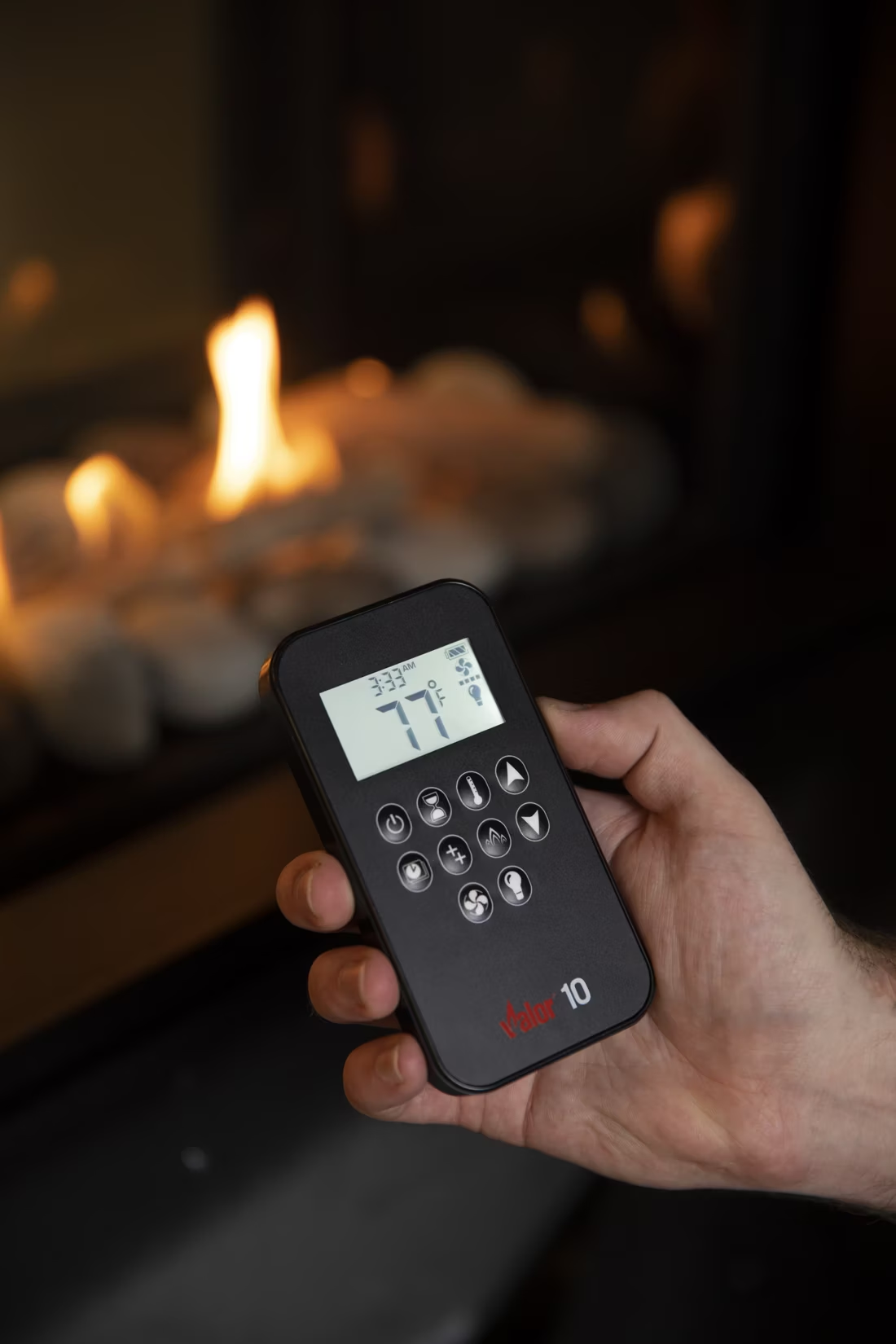
Most modern gas fireplaces will, which matters in a rural county like Iron where ice storms and downed lines can knock out power for a day or more. Units with intermittent pilot ignition (IPI) run off a small battery backup that automatically kicks in when the power drops, so the fireplace lights on demand just like normal. Valor fireplaces take a different route—their pilot assembly generates its own electricity through the thermocouple, so there's no battery to remember to replace. For a farmhouse outside Arcadia or Des Arc where the nearest lineman might be an hour out, that kind of reliability is worth asking your local dealer about directly.
What's the difference between a gas fireplace, gas insert, and gas stove?
A gas fireplace is a fully built-in unit framed into a wall—the usual choice for new construction or a remodel that doesn't already have a firebox. A gas insert drops into an existing masonry fireplace, which fits a lot of the older housing stock around Ironton and Arcadia, using the existing chimney as a chase for a new liner. A gas stove is a freestanding cabinet-style unit that sits on the floor, similar in footprint to a wood stove but running on propane. For most Iron County homeowners with an inherited farmhouse fireplace, an insert is the natural fit; newer or wood-heat-only homes are often better suited to a freestanding stove or a new built-in unit.
Do I need a permit to install a gas fireplace in Iron County?
It depends on where you are in the county. Inside city limits—Ironton, Pilot Knob, or Arcadia—you'll typically need to check with the local city hall on building permit and gas line requirements. Unincorporated areas of Iron County, which cover a large share of the county's rural footprint, often don't have the same formal permitting structure that you'd find in a bigger Missouri county, though a licensed propane technician is still required for any tank and line work regardless of permit status. A reputable local installer will know exactly what's required for your specific address and will pull whatever permits apply as part of the job.
What's the difference between vented and vent-free gas fireplaces?
Vented (direct-vent) gas fireplaces pull combustion air from outside and exhaust it back outside through a sealed pipe—they're the cleanest and safest option and the most common choice for Iron County's older, often drafty farmhouse construction. Vent-free units burn gas directly into the room without any outside venting; they're legal in Missouri but come with strict room-sizing rules and require an oxygen depletion sensor, since combustion byproducts stay indoors. For the leaky older homes common around Ironton and Arcadia, a direct-vent unit is usually the more sensible pick—it won't fight with the house's existing air infiltration, and it delivers real, consistent heat.
How often should my gas fireplace be serviced?
Plan on an annual inspection, ideally before the cold sets in each fall. A technician checks the burner, pilot assembly, venting, and gas connections, and cleans the glass and interior—a much quicker job than a wood chimney sweep but just as important for safe operation. Because Iron County is rural, service providers based near Ironton or Fredericktown may add a small travel fee for homes further out toward Des Arc, Vulcan, or Middlebrook—worth asking about when you book.
Gas vs. wood—which is right for my home?
Wood is deeply practical in Iron County—oak, hickory, walnut, and maple are all abundant locally, much of the county sits within reach of Mark Twain National Forest, and a wood stove keeps working even when the power and the propane truck can't get down the road. Gas offers instant on-off convenience, no splitting or hauling, and a cleaner look for a main living room—a real advantage for anyone not interested in tending a fire daily. Since Iron County has no air quality restrictions pushing homeowners toward or away from either fuel, the choice usually comes down to lifestyle: many local homes run gas in the primary living space and keep a wood stove in a shop, cabin, or secondary room for backup heat during outages.
Why is my open fireplace making my house colder?
Open fireplaces suck—literally. As the fire burns, it consumes air your furnace already paid to heat and pulls it out through the chimney, so the house is actually colder after the fire goes out than before you lit it. An insert fixes this: it seals the chimney, puts fixed glass across the front, and turns that hole in your house into a real heat source.
What do I measure to size a fireplace insert?
Four numbers tell you what fits: the front width, the front height, the back width, and the overall depth of your existing fireplace opening. Grab a tape measure, jot those down, and snap a photo of the wall—those two things do more to move your project forward than anything else you can do today.
Does a fireplace add value to my home?
On average, a fireplace adds back to the home about the same amount you spent installing it. Add the monthly savings from heating the rooms you actually use instead of the whole house—often hundreds of dollars a year—and the value case is strong before you even count what a fire does for how your family uses the room.
Can I install a fireplace myself?
If you're putting a fire in your house on purpose, it's best to work with an expert. Unless you're genuinely experienced in framing, gas line, vent pipe, and the national code on clearances to combustibles, have a professional do it—and ideally the same company that sells you the fireplace, so warranty, service, and liability all live under one roof.
Find your gas fireplace in Iron County.
Tell us about your home and we'll match you with a trusted local Iron County dealer and send over a free Project Guide & Parts List—the exact parts, vent kit, and recommended installer for your gas fireplace project.
Find Your Fireplace →