
The Simplest Heat Upgrade for Holt County Homes.
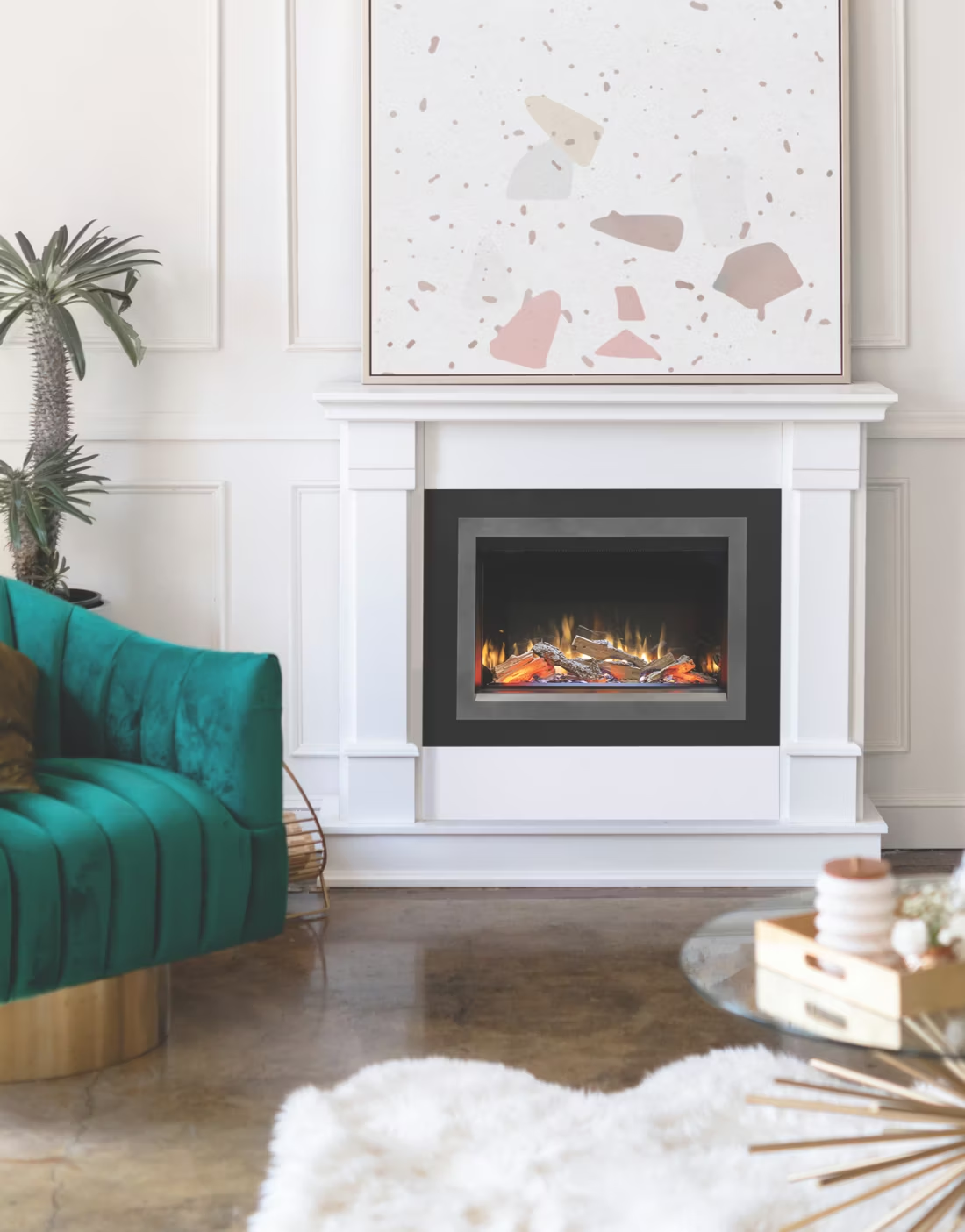
No chimney, no gas line, no propane tank—just plug in or hardwire and go. From farmhouses outside Oregon to additions in Mound City and Forest City, find the right electric fireplace or insert and connect with a trusted local dealer.
Every Project Starts From One of These Five Situations
No chimney, no gas line, no permit hassle.
Holt County sits in the far northwest corner of Missouri along the river bottoms near Squaw Creek National Wildlife Refuge, with a population of under 2,800 spread across farmland connecting Oregon, Mound City, Forest City, Craig, and Fortescue. Climate zone 5A means real winter here—not the deep cold of the Dakotas, but enough freezing nights that heating a drafty farmhouse or a room addition without existing ductwork is a genuine, recurring problem for a lot of households in the county.
United Electric Cooperative serves much of rural Holt County, and like most co-op territory in northwest Missouri, an ice storm can knock lines down for a stretch most winters. That's worth knowing going in—an electric fireplace runs on the same grid as everything else in the house, so it's best thought of as convenient zone heat and ambiance rather than a storm-proof backup like a wood stove. Where it wins is everywhere else: no masonry chimney to build, no propane tank to rent, no gas line to run. A 120-volt plug-in unit can go into a bonus room, a finished basement, or a manufactured home addition with essentially zero-clearance installation and none of the permitting that comes with a wood stove through the Holt County Courthouse in Oregon.
Three steps. No salesperson until you're ready.
Tell us about your project
Your zip code, your situation, and the fuel you're leaning toward—or let the answers point you to one.
See what's actually available
The brands dealers within 100 miles genuinely carry—real options, never a catalog mirage.
Get your dealer & Project Guide
A trusted local dealer, plus the free Project Guide & Parts List that names every component of the job.
Frequently Asked Questions
How much does an electric fireplace installation cost in Holt County?
Most plug-in electric fireplaces and inserts run $400 to $1,500 installed in Holt County, including the unit and any surround or mantel carpentry. A standard 120-volt unit needs nothing more than an existing outlet. Larger built-in units—the kind often chosen for a farmhouse living room remodel or a manufactured home great room—sometimes require a dedicated 240-volt circuit, which adds an electrician's time and typically pushes the total to $1,500-$2,500. Because there's no venting or gas line, electric installs are consistently the cheapest and fastest hearth project available to Holt County homeowners.
Do I need a permit to install an electric fireplace in Holt County?
In most cases, no. A plug-in unit that uses an existing outlet doesn't trigger a building or mechanical permit anywhere in Holt County. If your installer needs to run a new dedicated circuit or add a subpanel for a larger built-in unit, that electrical work should be pulled through the Holt County Courthouse in Oregon and performed by a licensed electrician. Compare that to a wood stove, which requires a full building permit and EPA-certified appliance documentation, or a propane fireplace, which needs both a gas line permit and tank setup—electric is by far the lowest-friction option for rural Holt County homes.
What size electric fireplace do I need for my home?
Electric fireplaces are rated more for ambiance and zone heat than whole-home BTU output, so sizing here is less about square footage and more about which room you're actually trying to warm. A 1,500-watt insert comfortably takes the chill off a bedroom, home office, or finished basement room in a Holt County farmhouse. Open-concept living rooms—common in newer builds around Mound City and Forest City—often do better with a larger built-in unit or two smaller units placed strategically. None of these are meant to replace your central propane or wood furnace on the coldest nights; they're meant to supplement it in the specific rooms where you actually spend your time.
Electric vs. wood—which makes more sense for a Holt County home?
Wood still runs deep in this county—plenty of Holt County properties have standing oak, hickory, walnut, and maple, and a lot of households cut and split their own firewood for a primary wood stove. Wood also keeps working when the United Electric Cooperative lines go down during an ice storm, which happens most winters. Electric can't compete there—it needs grid power to run, full stop. But electric wins on convenience: no cutting, stacking, hauling ash, or annual chimney sweep, and it can go in rooms a wood stove simply can't, like a finished basement or a manufactured home addition. A lot of Holt County homeowners run both—wood as primary or backup heat, electric for supplemental warmth and ambiance in a second living space.
Electric vs. propane—which is the better fit here?
Most of rural Holt County is outside any natural gas main, so propane is the standard fossil-fuel option for anyone not heating with wood. A propane fireplace or insert delivers real, higher-output heat and can be set up to run on battery backup during an outage, but it comes with tank rental or purchase, delivery scheduling, and gas line permitting. Electric skips all of that—no tank, no delivery truck, no combustion byproducts to vent—but it costs more per BTU to run for extended heating and, again, needs the power grid to be up. For a room that just needs supplemental warmth and a good-looking flame, electric is usually the simpler and cheaper install; for anyone trying to offset real furnace costs on propane, that math works differently.
Will my electric fireplace work during a power outage?
No—and this is worth being direct about. Every electric fireplace, insert, or wall-mount unit needs household power to run its heating element and flame effect, so when the United Electric Cooperative lines go down during an ice storm or straight-line wind event, the unit goes dark along with everything else. If backup heat during outages is a priority for your Holt County home, pair an electric fireplace in your main living space with a wood stove, propane heater, or generator setup elsewhere in the house rather than relying on electric as your only heat source.
Are electric fireplaces a good fit for a manufactured or mobile home in Holt County?
Yes, often the best fit available. A lot of housing stock in Holt County—particularly around Craig and Fortescue—is manufactured or mobile home construction, where wood stove and masonry fireplace installations run into clearance, structural, and insurance complications. Electric units sidestep nearly all of that: they're zero-clearance, don't require a chimney chase or roof penetration, and carry no open-flame fire risk, which insurers generally view favorably in manufactured housing. A qualified local dealer can confirm which built-in and freestanding models are rated for mobile home installation before you buy.
How much maintenance does an electric fireplace actually need?
Very little, which is a big part of the appeal. There's no creosote, no ash, and no annual chimney sweep required. Maintenance amounts to occasionally dusting the interior, vacuuming the blower vents so the unit doesn't overheat, and replacing LED bulbs on older units after several years of use—most current models use long-life LEDs that outlast the fireplace itself. Compare that to a wood stove, which needs a yearly inspection and sweep, and electric is the lowest-upkeep hearth option a Holt County homeowner can choose.
What brands and styles are available through local dealers?
Hearth dealers serving Holt County typically carry established electric fireplace lines like Dimplex and Napoleon alongside their wood and pellet stock—the same dealer who can tell you about pellet brands like Lignetics or Indeck Energy Services for a pellet stove can usually walk you through electric insert and built-in options in the same visit. Because electric units don't require the site-specific venting engineering that gas or wood installs do, dealers can often show you several style and size options—insert, wall-mount, freestanding mantel package—and have a plan finalized faster than any other fuel type.
Do electric fireplaces actually produce heat?
Yes—most put out around 4,800–5,000 BTUs from a standard outlet, which comfortably warms a bedroom, office, or den as a comfort-zone heater. What they won't do is carry a whole house the way wood, gas, or pellet can. Think of electric as ambiance-first with honest supplemental heat: flames on with no heat in July, flames plus warmth in January.
Can I put a TV above my fireplace?
Yes—with an asterisk. Fireplaces are hot and TVs don't like heat. Either put a mantel between them to deflect rising warmth, or choose a fireplace with heat-management technology that creates a cool zone on the wall above—the wall stays around 125 degrees, barely warm, while the room still gets full heat. If you like clean lines and don't want a mantel, heat management is the answer.
What is an in-home preview and do I need one?
It's a visit where a hearth professional measures your space, confirms the model you picked actually works in your home, and walks the specs—framing, gas line, venting, finish work—before anything is ordered. Some details you just can't know until you see the house. Never make a down payment without one; it's the single most-skipped step that burns buyers.
Should the dealer who sells my fireplace also install it?
Ideally, yes. A fireplace project involves vent pipe, gas line, electrical, and often tile or stone. Hire three or four separate trades and you own the liability and the game of telephone between them. One company selling and installing means one accountable party, start to finish—ask about factory training, on-time completion records, and what happens if an inspection fails.
Find your electric fireplace in Holt County.
Tell us a bit about your home and we'll put together a free Project Guide & Parts List for your electric fireplace project—the right unit, the exact parts, and a trusted local dealer in Holt County to install it.
Find Your Fireplace →