
Warmth without the wood pile, wired right the first time.
No chimney, no gas line, no venting—just a fireplace that plugs in and heats the room. We match Daviess County homeowners with a trusted local dealer who knows what actually works in an old Gallatin or Jamesport farmhouse.
Every Project Starts From One of These Five Situations
The easiest heat source to add to an old farmhouse.
Daviess County is small and rural—about 3,700 people spread across farmland and small towns like Gallatin, Jamesport, Pattonsburg, Winston, and Altamont. Winters here average a low of 16°F with a long, demanding heating season, putting the county's cold on par with Madison, Wisconsin in a typical year. Most of the housing stock is older farmhouses without existing masonry chimneys, plus a growing number of additions, finished basements, and rental units where running new gas line or Class A chimney pipe simply isn't practical or affordable.
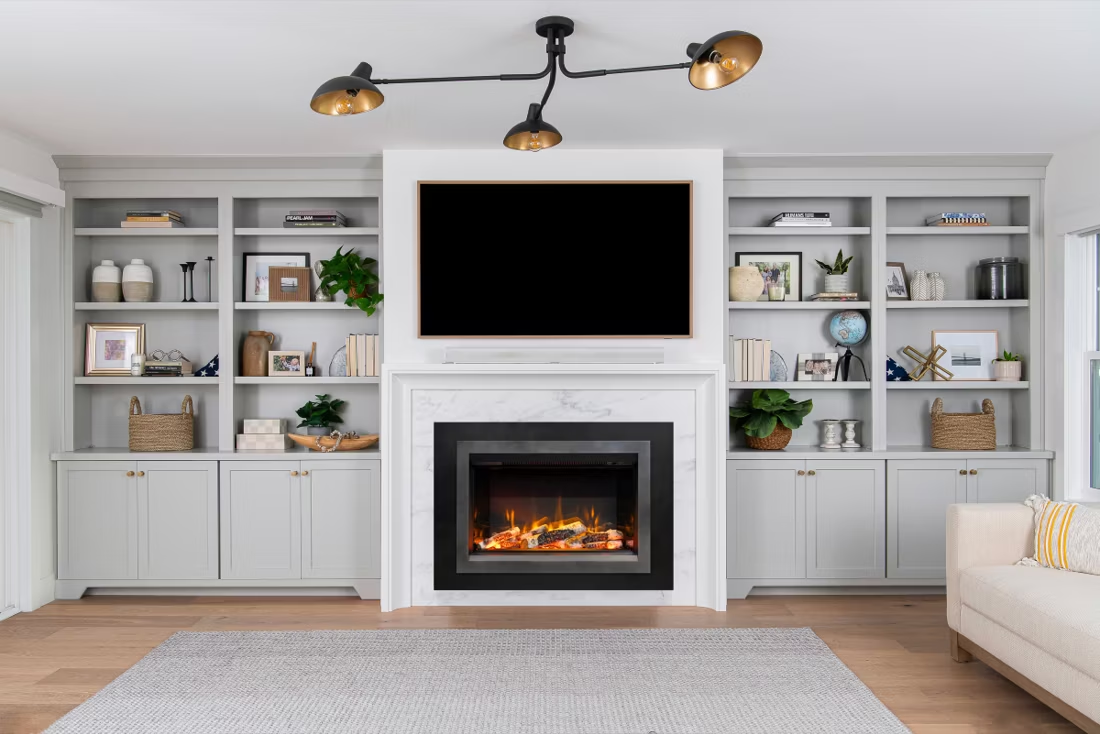
That's exactly where electric fireplaces earn their place. A plug-in insert or a built-in unit on a dedicated 240-volt circuit needs no venting, no gas hookup, and no annual chimney inspection—it just needs an outlet and a wall. For a bedroom over an unheated Daviess County mudroom, a sunroom addition on the back of a Jamesport farmhouse, or a rental property where the landlord doesn't want to touch the flue, electric is often the fastest and least disruptive way to add real, usable zone heat. It won't replace the propane furnace most county homes rely on for whole-house heat, but as supplemental warmth in the rooms that stay cold, it does the job well.
Three steps. No salesperson until you're ready.
Tell us about your project
Your zip code, your situation, and the fuel you're leaning toward—or let the answers point you to one.
See what's actually available
The brands dealers within 100 miles genuinely carry—real options, never a catalog mirage.
Get your dealer & Project Guide
A trusted local dealer, plus the free Project Guide & Parts List that names every component of the job.
Frequently Asked Questions
How much does an electric fireplace installation cost in Daviess County?
A plug-in electric insert or freestanding stove that runs on a standard 120-volt outlet typically costs $400 to $900 installed, since there's no venting or gas work involved—most of that cost is the unit itself plus a surround or mantel. A larger built-in electric fireplace that requires a dedicated 240-volt circuit run by an electrician usually lands between $900 and $1,500, depending on how far the new circuit has to travel from the panel—a real factor in older Daviess County farmhouses where the electrical panel may be in a detached garage or a far corner of the basement. Local dealers can quote a firm number once they've seen your wiring.
What size electric fireplace do I need for my room?
Most electric fireplaces put out around 1,500 watts, or roughly 4,600–5,100 BTUs—enough to noticeably warm a single room in the 200–400 square foot range, which covers most bedrooms, sunrooms, and living rooms in Daviess County's older, smaller-roomed farmhouses. Larger, open-concept additions may need a second unit or a supplemental space heater rather than relying on one fireplace to cover the whole footprint. Because electric units don't lose efficiency to elevation or duct runs the way a furnace can, sizing is mostly about matching wattage to square footage—a local dealer can walk through your specific room during a quick consultation.
Do I need a permit to install an electric fireplace in Daviess County?
A simple plug-in electric insert that uses an existing outlet typically doesn't require any permit—there's no gas line, no venting, and no structural change involved. If you're installing a built-in unit that needs a new dedicated circuit, the electrical work itself should be pulled and inspected under standard county electrical permitting, which most licensed electricians handle as part of the job. Because there's no combustion involved, you skip the building-permit and inspection process that wood or gas installs require in Daviess County—one of the real advantages of going electric.
What's the difference between an electric insert, an electric stove, and a built-in electric fireplace?
An electric insert is sized to slide into an existing fireplace opening—a good option if a Daviess County farmhouse has an old, unused masonry fireplace that's no longer safe or practical to burn wood in. A freestanding electric stove sits on the floor like a traditional wood stove and can go almost anywhere near an outlet. A built-in electric fireplace is installed into a wall or custom surround, often as part of a remodel or addition, and usually needs that dedicated 240-volt circuit for full heat output. For homes with an existing fireplace opening, the insert is typically the simplest retrofit; for new additions or rooms with no fireplace at all, freestanding or built-in units are more common.
Can an electric fireplace replace my furnace as primary heat?
No—at 16°F average winter lows and a long, demanding heating season, Daviess County winters are too cold for a 1,500-watt electric unit to serve as whole-house heat. Electric fireplaces are best used as zone heat: warming the specific room you're in so you can turn down the thermostat elsewhere, or adding comfort to a room the furnace doesn't reach well. Most county homes still rely on propane, wood, or a central furnace for primary heat, with the electric fireplace filling in for ambiance and targeted warmth in a bedroom, den, or addition.
Will my electric fireplace work during a power outage?
No, and this is worth planning around in Daviess County, where ice storms and high winds can knock out rural electric co-op lines for extended stretches. Green Hills Electric Cooperative, headquartered right in Jamesport and serving much of the county, does solid restoration work, but outages of several hours to a day or more aren't unusual after a bad ice event. If backup heat during outages matters to your household, pair an electric fireplace for everyday convenience with a wood stove or fireplace elsewhere in the house—wood is the one heat source in the county that keeps working when the grid doesn't.
What's the best electric fireplace for Daviess County's climate?
Since electric units heat by wattage rather than combustion, climate mostly affects how much you'll lean on the unit rather than which model performs best. Look for a unit with a true 1,500-watt heater (not just a decorative flame effect) if you want real supplemental heat for the cold months, and models from Dimplex or Napoleon are widely available through hearth dealers serving this part of Missouri. If ambiance matters more than heat output—for a room that's already served well by the furnace—a lower-wattage or flame-only model works fine and costs less to run.
Electric vs. wood—which is right for my Daviess County home?
Wood remains a strong option here—the county's oak, hickory, walnut, and maple stands supply excellent, high-BTU firewood, and a wood stove keeps producing heat straight through a winter power outage. Electric wins on convenience: no cutting, splitting, hauling, or ash cleanup, no chimney to inspect, and it's often the only realistic choice for an addition, rental unit, or room with no existing flue. Many Daviess County households end up with both—wood for backup heat and the traditional fire experience, electric for the rooms where running a chimney doesn't make sense.
Are there rebates for installing an efficient electric fireplace in Daviess County?
Green Hills Electric Cooperative, which serves most of Daviess County out of its Jamesport office, periodically offers energy-efficiency incentives for members, and it's worth a call to ask whether a specific electric heating appliance qualifies before you buy. Electric fireplaces themselves are inexpensive enough to run—most cost only a few cents per hour on the heat setting—that even without a rebate, the ongoing operating cost stays low compared to running a whole-house furnace to warm one room.
Can I put a TV above my fireplace?
Yes—with an asterisk. Fireplaces are hot and TVs don't like heat. Either put a mantel between them to deflect rising warmth, or choose a fireplace with heat-management technology that creates a cool zone on the wall above—the wall stays around 125 degrees, barely warm, while the room still gets full heat. If you like clean lines and don't want a mantel, heat management is the answer.
Does an electric fireplace need a vent or chimney?
No—that's its superpower. An electric fireplace needs a wall and an outlet, period. No vent pipe, no gas line, no clearances to design around, which is why it works in bedrooms, offices, apartments, and walls where venting a gas or wood unit would be impractical or impossible. Installation is typically the simplest and least expensive of any fireplace type.
How much should I budget for a fireplace?
For an average home—covering the fireplace, the vent pipe, and basic installation—a budget between $3,900 and $5,500 gives you a lot of options across wood, gas, and pellet. By the time you add finish work, gas line, and electrical, the average complete installation lands between $5,000 and $12,000 all-in. In a remodel or new build, a good rule is to put about 2.5% of the total project cost toward the fireplace.
Can a fireplace actually lower my heating bill?
Yes—by creating a comfort zone. A furnace heats every square foot of the house just to warm the one room you're in; a gas fireplace on low burns roughly a sixth of the gas a typical furnace does. Set the furnace around 55–60 degrees as a baseline, then heat the rooms your family actually uses. Families who heat this way commonly save $20–$60 a month.
Stove and Fireplace Dealers in Daviess County
Find your electric fireplace in Daviess County.
Tell us about your room and your home's wiring, and we'll match you with a trusted local dealer plus a free Project Guide & Parts List—the exact unit, circuit requirements, and installer recommended for your Daviess County home.
Find Your Fireplace →