
Find your electric fireplace in Dallas County.
No chimney, no gas line, no venting—just plug in or wire to a dedicated circuit and add real zone heat to a bedroom, addition, or farmhouse living room anywhere from Buffalo to Long Lane. Find the right unit and connect with a trusted local dealer.
Every Project Starts From One of These Five Situations
A practical answer for homes without a gas line.
Dallas County is a rural Ozark county of under 4,000 people, centered on Buffalo, with winters that push into the low 20s and a heating season on par with a typical Midwest winter most years—cold enough to matter, but not the kind of extreme cold that demands a whole-house solution from a single appliance. Plenty of homes here, from older farmhouses to manufactured housing out toward Louisburg and Windyville, don't have natural gas service and weren't built with a masonry chimney in the room where extra heat would actually help. That's exactly the gap an electric fireplace fills.
Electric units plug into a standard outlet or, for larger built-ins, tie into a dedicated circuit an electrician can add without touching a chimney or running a gas line—which matters in a county where many houses are on older wiring or sit outside natural gas territory served by cooperatives like Southwest Electric Cooperative. For a lot of Dallas County homeowners, the electric option isn't a downgrade from wood—it's the practical zone-heat solution for a back bedroom, sunroom, or mobile home addition, while a wood stove burning local oak or hickory still handles the main living area.
Three steps. No salesperson until you're ready.
Tell us about your project
Your zip code, your situation, and the fuel you're leaning toward—or let the answers point you to one.
See what's actually available
The brands dealers within 100 miles genuinely carry—real options, never a catalog mirage.
Get your dealer & Project Guide
A trusted local dealer, plus the free Project Guide & Parts List that names every component of the job.
Frequently Asked Questions
How much does an electric fireplace cost to install in Dallas County?
Plug-in electric fireplace inserts and freestanding units typically run $200 to $600 for the unit itself, with no installation cost beyond plugging it into an existing outlet. Built-in electric fireplaces or larger inserts that need a dedicated 20-amp or 240-volt circuit run higher—generally $800 to $2,000 once you factor in a licensed electrician's time to run new wiring, especially in older Dallas County farmhouses where the existing electrical panel may need a subpanel or added circuit to handle the load. Homes already wired for an electric range or dryer sometimes have easier runs available, which keeps costs on the lower end.
Do I need a permit to install an electric fireplace in Dallas County?
A plug-in unit that draws from an existing outlet doesn't require a permit—it's treated like any other appliance. A built-in unit that requires a new dedicated circuit does typically need an electrical permit, since that work falls under the Dallas County building department in Buffalo. Most licensed electricians who install these units pull the permit as part of the job, so it's worth confirming that's included in any quote before work starts.
What size electric fireplace do I need for my room?
Most electric fireplace heaters are rated to take the edge off a 400 to 1,000 square foot space, which fits well for a single room, bedroom, or addition rather than an entire Dallas County farmhouse. With winter lows averaging around 20 degrees and older homes here often having less insulation and more drafts than newer construction, treat the manufacturer's square footage rating as optimistic and size up a bit—or plan on the unit as a comfort boost for one room rather than the sole heat source for the coldest stretches of January and February.
What's the difference between an electric fireplace, insert, and stove?
An electric fireplace is typically a built-in or wall-mounted unit designed to look like a framed hearth, often with a mantel. An electric insert is sized to slide into an existing masonry fireplace opening—a common retrofit in older Dallas County homes that have a wood-burning fireplace they no longer use for heavy burning but want to keep functional and attractive. An electric stove is a freestanding cabinet-style unit that mimics a wood or pellet stove's look and can sit almost anywhere near an outlet. For a house with an existing unused fireplace opening near Buffalo's older neighborhoods, an insert is often the cleanest fit; for a room with no fireplace at all, a wall-mounted unit or stove is more practical.
Can an electric fireplace be my main source of heat?
Realistically, no—not through a full Dallas County winter. Most electric fireplace heaters top out around 5,000 BTU (roughly 1,500 watts), which is enough to noticeably warm a single room but won't keep pace with a whole house when temperatures drop into the teens or single digits. They're best treated as supplemental zone heat: warming the room you're actually in so you can turn down the central thermostat, or covering a bedroom or addition that your main heating system struggles to reach. For whole-home heat during the coldest stretches, a wood stove burning local oak or hickory, a propane furnace, or your existing central system will do more of the work.
How much does it cost to run an electric fireplace?
A typical 1,500-watt electric fireplace heater costs somewhere in the range of 15 to 25 cents per hour to run on the heat setting, depending on your electric rate through Southwest Electric Cooperative or whichever provider serves your part of Dallas County. Running one for four hours a night through a cold snap adds up to roughly $18 to $30 a month—noticeably cheaper than heating an entire drafty farmhouse with electric baseboard, and a reasonable trade-off for the convenience of instant, ash-free heat in one room.
Are electric fireplaces safe for older homes, mobile homes, and rentals?
Electric units are generally the safest fireplace option for these situations specifically because there's no real flame, no venting, and no combustion byproducts to manage—which matters in manufactured housing common around Long Lane and Louisburg, where adding a chimney or gas line isn't practical or cost-effective. Most units also run cool to the touch on the housing, which is worth asking about if you have kids or pets. For rental properties in and around Buffalo, a plug-in electric fireplace is often the only fireplace option a landlord will approve, since it requires no structural changes and can be removed without a trace.
Can I put an electric insert into my old fireplace instead of tearing it out?
Yes—this is one of the more common projects for older Dallas County homes that have a masonry wood-burning fireplace they've stopped using regularly, whether from age, chimney condition, or just convenience. An electric insert slides into the existing opening, often with little to no modification, and gives you a working flame-effect heater without any chimney sweep, wood hauling, or ash cleanup. It's a good option if the chimney itself is in questionable shape but you don't want to lose the fireplace as a focal point in the room.
Electric vs. wood—which makes more sense for my Dallas County home?
Wood remains the practical choice for whole-home or primary heat in this part of the Ozarks—oak, hickory, walnut, and maple are all common locally, firewood is often available cheap or free from your own land, and a wood stove keeps working during a power outage, which matters on a rural electric cooperative line during ice storms. Electric wins on convenience: no wood to split or haul, no chimney to maintain, and instant heat at the flip of a switch—but it depends entirely on the grid staying up and costs more per hour of heat than burning your own wood. Many Dallas County homes end up running both: wood for the main living space and cold-snap backup, electric for a bedroom, addition, or room where running a chimney isn't practical.
Can I put a TV above my fireplace?
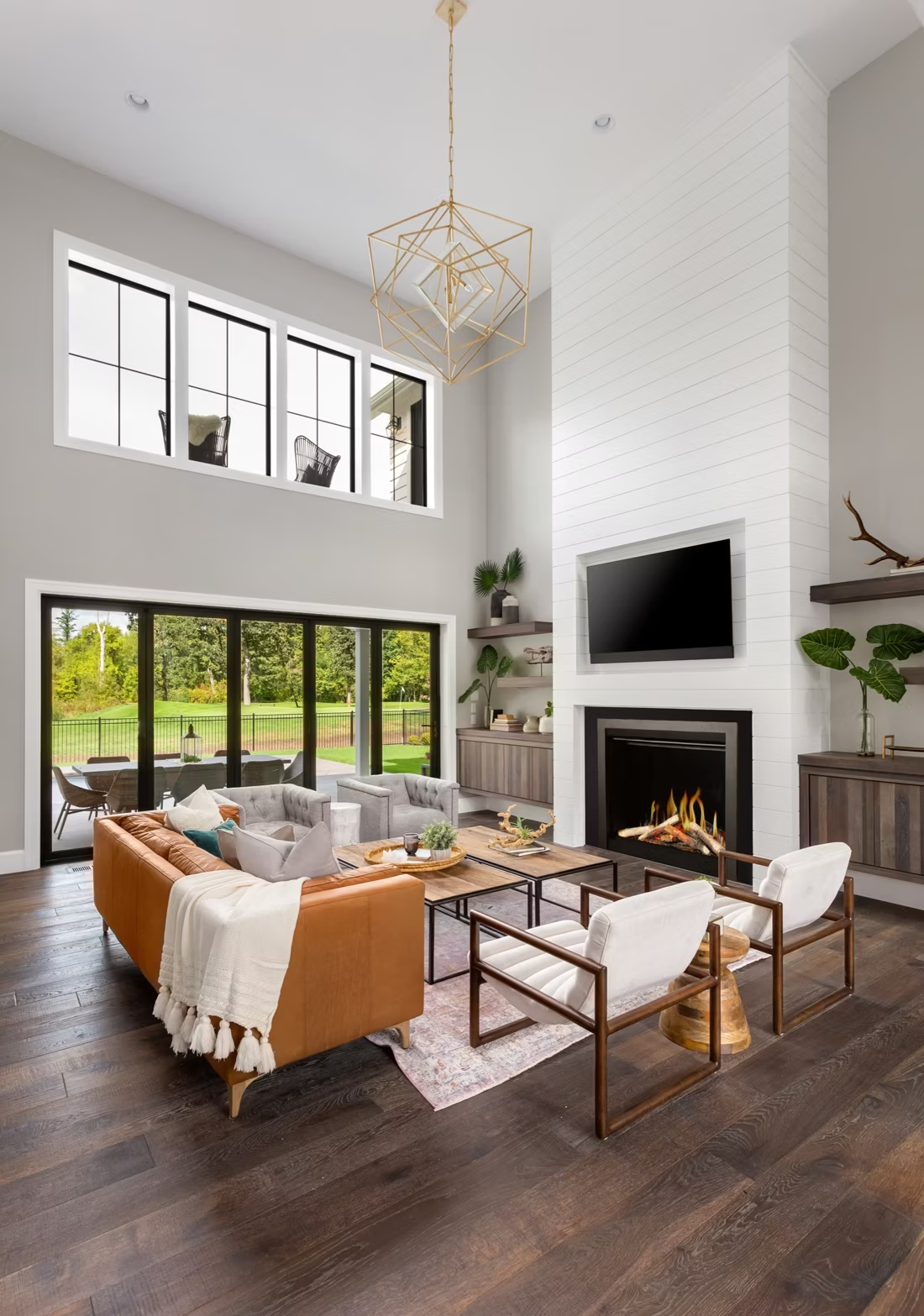
Yes—with an asterisk. Fireplaces are hot and TVs don't like heat. Either put a mantel between them to deflect rising warmth, or choose a fireplace with heat-management technology that creates a cool zone on the wall above—the wall stays around 125 degrees, barely warm, while the room still gets full heat. If you like clean lines and don't want a mantel, heat management is the answer.
Do electric fireplaces actually produce heat?
Yes—most put out around 4,800–5,000 BTUs from a standard outlet, which comfortably warms a bedroom, office, or den as a comfort-zone heater. What they won't do is carry a whole house the way wood, gas, or pellet can. Think of electric as ambiance-first with honest supplemental heat: flames on with no heat in July, flames plus warmth in January.
How much should I budget for a fireplace?
For an average home—covering the fireplace, the vent pipe, and basic installation—a budget between $3,900 and $5,500 gives you a lot of options across wood, gas, and pellet. By the time you add finish work, gas line, and electrical, the average complete installation lands between $5,000 and $12,000 all-in. In a remodel or new build, a good rule is to put about 2.5% of the total project cost toward the fireplace.
What is an in-home preview and do I need one?
It's a visit where a hearth professional measures your space, confirms the model you picked actually works in your home, and walks the specs—framing, gas line, venting, finish work—before anything is ordered. Some details you just can't know until you see the house. Never make a down payment without one; it's the single most-skipped step that burns buyers.
Get your Dallas County electric fireplace plan.
Tell us about your room and your home's wiring, and we'll put together a free Project Guide & Parts List—the right unit, the exact parts, and a trusted local dealer near Buffalo who can install it correctly.
Find Your Fireplace →