
Electric heat that fits any Cape Girardeau home.
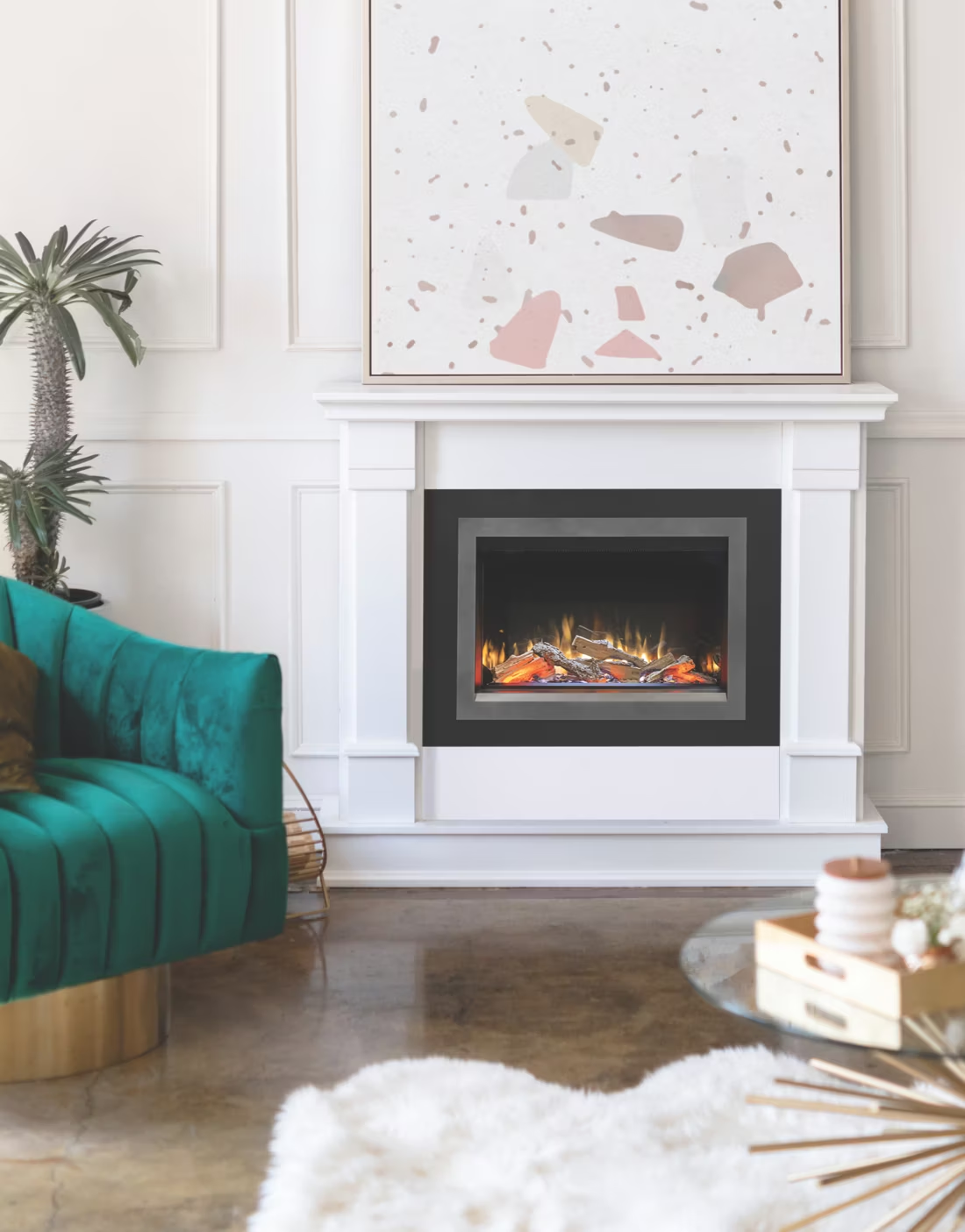
No chimney, no gas line, no permit headaches. Find the right electric fireplace or insert for your home along the Mississippi, and connect with a trusted local dealer.
Every Project Starts From One of These Five Situations
Mild winters, older homes, and an easy retrofit.
Cape Girardeau sits at 357 feet along the Mississippi River in climate zone 4A, with an average winter low around 26°F and a moderate winter heating season—a fraction of what a place like Minneapolis, MN sees most winters. That milder heating load is exactly the situation where electric fireplaces earn their keep: you don't need a furnace-replacing appliance, you need supplemental warmth for a specific room on the coldest evenings, plus the ambiance of a fire without smoke or soot.
A lot of Cape Girardeau's housing stock—the Victorians and craftsman-era homes near downtown and the floodwall district, plus the rental units and apartments that serve the Southeast Missouri State University population—either never had a working masonry fireplace or had one bricked up decades ago. Electric inserts and freestanding units solve that without any structural work. Union Electric Co (Ameren Missouri) serves the area at a residential rate around 12.56 cents per kWh, which keeps day-to-day operating cost for a zone heater genuinely low, especially compared to running central HVAC harder across an entire house.
Three steps. No salesperson until you're ready.
Tell us about your project
Your zip code, your situation, and the fuel you're leaning toward—or let the answers point you to one.
See what's actually available
The brands dealers within 100 miles genuinely carry—real options, never a catalog mirage.
Get your dealer & Project Guide
A trusted local dealer, plus the free Project Guide & Parts List that names every component of the job.
Frequently Asked Questions
How much does an electric fireplace or insert cost installed in Cape Girardeau?
Plug-in electric fireplaces and inserts—the kind that slide into an existing firebox or mount on a wall—typically run $300 to $1,500 for the unit itself, with no professional installation required beyond hanging it. Built-in electric fireplaces wired to a dedicated 120V or 240V circuit run higher, generally $1,000 to $3,000 including a licensed electrician's time, since Cape Girardeau homes with older wiring sometimes need a new circuit run from the panel. Either way, you're skipping the venting, gas line, and chimney costs that come with wood or gas installs—that's the main financial advantage of going electric here.
Do I need a permit to install an electric fireplace in Cape Girardeau?
Most plug-in electric fireplaces don't require any permit—they're treated like any other appliance you plug into an existing outlet. If you're having a built-in unit hardwired on its own circuit, that electrical work typically does require a permit through the City of Cape Girardeau's Building Codes and Zoning office or Cape Girardeau County if you're outside city limits. A licensed electrician pulling the permit as part of the job is standard practice and worth insisting on, especially in older homes near downtown where panel capacity can be limited.
Will an electric fireplace actually keep a room warm here?
Yes, within its intended role. A typical 1,500-watt electric fireplace or insert can comfortably heat a 400 to 1,000 square foot space, which covers most living rooms and bedrooms in Cape Girardeau's housing stock. Given the area's relatively mild winters—average lows around 26°F rather than the sustained sub-zero stretches you'd get in Duluth or Fargo—an electric unit as supplemental or zone heat is a realistic full-season solution for a lot of local homes, not just an ambiance piece. It won't replace a furnace in a poorly insulated whole house on the coldest nights, but for a den, sunroom, or converted garage it often can.
What's the difference between an electric fireplace insert and a regular space heater?
Both convert electricity to heat at essentially the same efficiency, but an electric insert or built-in unit adds a realistic flame display, a thermostat with room-temperature sensing, and a finished look designed to sit inside a mantel or wall opening rather than sit exposed on the floor. Higher-end units from brands like Dimplex and Napoleon use LED and mirror-reflection technology that reads as a real fire from across the room, with remote control and multiple flame-color settings. If ambiance matters as much as the heat itself, an insert is worth the premium over a basic space heater; if you just need heat in a corner, a space heater does the same physics for less money.
I have an old fireplace opening with no working chimney—can I still put in electric heat?
This is one of the most common situations local dealers see in Cape Girardeau's older neighborhoods, where a lot of prewar homes have a decorative firebox that hasn't drawn smoke properly in decades. An electric insert is built specifically for this: it slides into the existing opening, plugs into a nearby outlet or a new dedicated circuit, and gives you real heat and flame effect without touching the masonry or the chimney above it. No chimney sweep, no liner, no inspection for creosote—the old opening becomes purely cosmetic housing for the new unit.
I rent an apartment near SEMO—can I still get an electric fireplace?
Yes, and it's one of the easier fireplace projects to do as a renter. A freestanding or wall-mounted plug-in electric fireplace requires no permanent modification to the unit—no gas line, no venting, no permit—so most landlords have no objection since it's treated like any other furniture-grade appliance. Just confirm the outlet you're using is on its own circuit if you're running a full 1,500-watt unit alongside other electronics, since older apartment buildings near downtown and campus can have circuits that trip under heavier combined loads.
How much does it cost to run an electric fireplace in Cape Girardeau?
At Union Electric Co's (Ameren Missouri) residential rate of about 12.56 cents per kWh, a typical 1,500-watt electric fireplace costs roughly 19 cents per hour to run on high heat. Most owners run theirs 3 to 5 hours on cold evenings, which works out to $0.55 to $0.95 a day—noticeably cheaper than heating an entire house with central HVAC just to warm one room. Many models also let you run the flame effect alone, with the heater off, for essentially no operating cost beyond a few watts.
Electric vs. gas fireplace—which makes more sense for my Cape Girardeau home?
Natural gas service is available throughout much of Cape Girardeau, and a gas fireplace or insert delivers more total heat output and works during a power outage if it's a standing-pilot model—real advantages if you want a primary heat source for a room. Electric skips the gas line and venting entirely, costs far less upfront and to install, and is the only realistic option for apartments, rentals, or rooms without gas access. For most Cape Girardeau homeowners looking for supplemental warmth in a den, bedroom, or basement rec room, electric is the simpler and cheaper answer. For a great room that needs to function as real backup heat, gas is worth the extra investment.
What features should I look for in an electric fireplace or insert?
Look for a thermostat (not just a high/low heat switch), so the unit cycles on and off to hold a set temperature rather than running constantly. LED flame technology from brands like Dimplex, Napoleon, and Real Flame tends to look more convincing than older bulb-based designs, and multi-color flame settings are useful if you want ambiance without heat running in the warmer months. If you're retrofitting an existing firebox opening, measure carefully—insert sizing is exact, and a local dealer can confirm fit before you buy rather than guessing from a big-box store's generic listing.
Can I put a TV above my fireplace?
Yes—with an asterisk. Fireplaces are hot and TVs don't like heat. Either put a mantel between them to deflect rising warmth, or choose a fireplace with heat-management technology that creates a cool zone on the wall above—the wall stays around 125 degrees, barely warm, while the room still gets full heat. If you like clean lines and don't want a mantel, heat management is the answer.
Do electric fireplaces actually produce heat?
Yes—most put out around 4,800–5,000 BTUs from a standard outlet, which comfortably warms a bedroom, office, or den as a comfort-zone heater. What they won't do is carry a whole house the way wood, gas, or pellet can. Think of electric as ambiance-first with honest supplemental heat: flames on with no heat in July, flames plus warmth in January.
Does a fireplace add value to my home?
On average, a fireplace adds back to the home about the same amount you spent installing it. Add the monthly savings from heating the rooms you actually use instead of the whole house—often hundreds of dollars a year—and the value case is strong before you even count what a fire does for how your family uses the room.
Can I install a fireplace myself?
If you're putting a fire in your house on purpose, it's best to work with an expert. Unless you're genuinely experienced in framing, gas line, vent pipe, and the national code on clearances to combustibles, have a professional do it—and ideally the same company that sells you the fireplace, so warranty, service, and liability all live under one roof.
Nearby Dealers
Hearth shops serving Cape Girardeau and the surrounding area. Every listing shows whether it is a WhyFire partner, a dealer we have verified as authorized for the brands we recommend, or a local business carrying hearth products. No manufacturer pays for placement. How we verify dealers →
The Fireplace Center
Kasten Masonry Sales Inc.
Electric Service in Cape Girardeau
An electric fireplace's heater draws about 1,500 watts—pennies per hour at local rates.
Union Electric Co - (Mo)
Find your electric fireplace in Cape Girardeau.
Tell us a bit about your home and we'll put together a free Project Guide & Parts List—the right electric fireplace or insert for your space, plus a match with a trusted local dealer who can install it correctly.
Find Your Fireplace →