
Find the right electric fireplace for your Callaway County home.
No venting, no gas line, no chimney—just plug-in warmth for Fulton, Holts Summit, and every community across Callaway County. Get matched with a trusted local dealer.
Every Project Starts From One of These Five Situations
Zone heat that goes in almost anywhere.
Callaway County sits in a Zone 4A climate with roughly 5,281 heating degree days a year and winter lows averaging around 20 degrees—cold enough to matter, but nowhere near the wood-and-propane self-sufficiency culture you'd find in a place like Duluth or Bismarck. Plenty of Callaway County homes, from Fulton to Holts Summit to the smaller communities along Route 54, already burn wood (local oak, hickory, walnut, and maple are plentiful) or run gas logs for their main heat. Electric fireplaces fill a different role here: a low-cost, low-hassle way to add ambiance and supplemental warmth to a bedroom, basement, sunroom, or rental unit without touching the chimney or gas line.
Because electric units don't need venting or combustion air, they install in places wood and gas simply can't—an upstairs bedroom, an apartment above a Fulton storefront, a finished basement in a Holts Summit split-level. Most units plug into a standard 120-volt outlet, and higher-output models may call for a dedicated 20-amp circuit, which a local electrician or installer can confirm during an in-home look. For Callaway County homeowners weighing a full masonry rebuild against a straightforward electric insert, the electric route is almost always the faster and cheaper path to a warm-looking, functional fireplace.
Three steps. No salesperson until you're ready.
Tell us about your project
Your zip code, your situation, and the fuel you're leaning toward—or let the answers point you to one.
See what's actually available
The brands dealers within 100 miles genuinely carry—real options, never a catalog mirage.
Get your dealer & Project Guide
A trusted local dealer, plus the free Project Guide & Parts List that names every component of the job.
Frequently Asked Questions
How much does an electric fireplace installation cost in Callaway County?
Most electric fireplace and insert installations in Callaway County run $400 to $1,200, and that range covers nearly everything short of custom cabinetry work. A plug-in insert dropped into an existing fireplace opening sits at the low end. A built-in wall unit that requires a dedicated 20-amp circuit, some drywall or trim work, and possibly a licensed electrician sits toward the top. Because there's no venting, gas line, or chimney work involved, electric installs are consistently the least expensive fireplace option for homes in and around Fulton and Holts Summit.
Do I need an electrician to install an electric fireplace?
For a basic plug-in unit that uses a standard household outlet, no—most homeowners or a general handyman can handle it. For larger built-in models, especially ones drawing 1,500 watts continuously on the heat setting, a dedicated 20-amp circuit is often recommended to avoid tripping breakers or overloading an older circuit shared with other appliances. Homes in Callaway County's older housing stock, particularly in Fulton's historic districts, sometimes have panels that need evaluation before adding a new circuit. A local dealer or licensed electrician can tell you in a few minutes during an in-home consultation whether your existing wiring supports the unit you want.
Will an electric fireplace actually heat a room in Callaway County winters?
Most electric fireplace inserts put out around 4,000 to 5,000 BTU, similar to a space heater, which is enough to noticeably warm a bedroom, home office, or den in the 200-400 square foot range. It won't replace a furnace during a stretch of 20-degree Callaway County nights, and it's not designed to. Think of it as targeted, supplemental heat for the room you're actually sitting in—turn down the thermostat a couple degrees, run the electric unit where you spend your evening, and you'll often net out ahead on the utility bill without sacrificing comfort.
What's the difference between an electric insert and a built-in electric fireplace?
An electric insert is sized to slot into an existing fireplace opening—masonry or zero-clearance—and typically just needs a nearby outlet. A built-in electric fireplace is designed to be framed into a wall during a remodel or new construction, similar to how you'd frame in a gas unit, and usually looks more seamless once trim and surround are added. For Callaway County homes with an existing but unused fireplace, an insert is the quicker, cheaper path. For a new room addition or a full remodel in Fulton or Holts Summit, a built-in gives you more design flexibility since there's no existing opening to work around.
Do I need a permit for an electric fireplace in Callaway County?
In most cases, no—a plug-in electric insert or freestanding unit doesn't require a building permit since there's no venting, gas line, or structural chimney work involved. If your project involves adding a new dedicated electrical circuit, that electrical work itself may need a permit depending on whether you're inside Fulton city limits or in unincorporated Callaway County, so it's worth a quick call to confirm before work starts. Any local dealer handling a built-in installation with new wiring will typically know the applicable requirements for your specific address.
What's the best electric fireplace for a Callaway County home?
For most homes here, a mid-range insert with a realistic LED flame and adjustable heat output covers the bulk of use cases—supplemental warmth in a bedroom or den during the colder months, ambiance the rest of the year. Look for models with a thermostat and multiple heat settings so you're not stuck choosing between off and full-blast on a mild 40-degree Fulton evening. If the room already has a fireplace opening from a prior wood or gas setup, measure that opening first—a properly sized insert will look intentional rather than like an accessory dropped in. A local dealer can walk you through options once they know your room dimensions and whether you want insert or built-in.
Can an electric fireplace run during a power outage?
No—electric fireplaces require power to operate, both for the heating element and the flame effect, so they offer zero benefit during an outage. This matters more in Callaway County than it might elsewhere, since ice storms and severe winter weather occasionally take down power for rural stretches of the county for extended periods. If backup heat during an outage is a real priority for your household, a wood stove or a vented gas unit with battery-backed ignition is a better complementary choice than relying on electric alone.
How does an electric fireplace compare to a gas fireplace for Callaway County homes?
Gas fireplaces cost more upfront—typically several thousand dollars once you factor in venting and possibly a new gas line—but deliver real, substantial heat output and continue working with battery-backup ignition during a power outage. Electric fireplaces cost a fraction of that, install almost anywhere without venting, and are simple to operate, but they max out around 5,000 BTU and go dark the moment the power does. For a primary living space in a Fulton or Holts Summit home where daily heat matters, gas is usually the stronger long-term investment. For a bedroom, rental property, apartment, or secondary room where ambiance and light supplemental heat are the goal, electric is hard to beat on cost and simplicity.
Is an electric fireplace worth it if I already have a wood-burning fireplace?
It depends on what you're trying to solve. If your existing wood fireplace in a Fulton or New Bloomfield home sits mostly unused because of the hassle of hauling and stacking oak or hickory, an electric insert can turn that same opening into something you'll actually use on a random Tuesday night without any of the mess. It won't replace the wood stove as your cold-weather workhorse or backup heat during an outage, but as a second, low-effort heat source for rooms where you want quick ambiance—a converted den, a guest bedroom, a finished basement—it's a practical, inexpensive addition alongside wood heat rather than a replacement for it.
Can I put a TV above my fireplace?
Yes—with an asterisk. Fireplaces are hot and TVs don't like heat. Either put a mantel between them to deflect rising warmth, or choose a fireplace with heat-management technology that creates a cool zone on the wall above—the wall stays around 125 degrees, barely warm, while the room still gets full heat. If you like clean lines and don't want a mantel, heat management is the answer.
Does an electric fireplace need a vent or chimney?
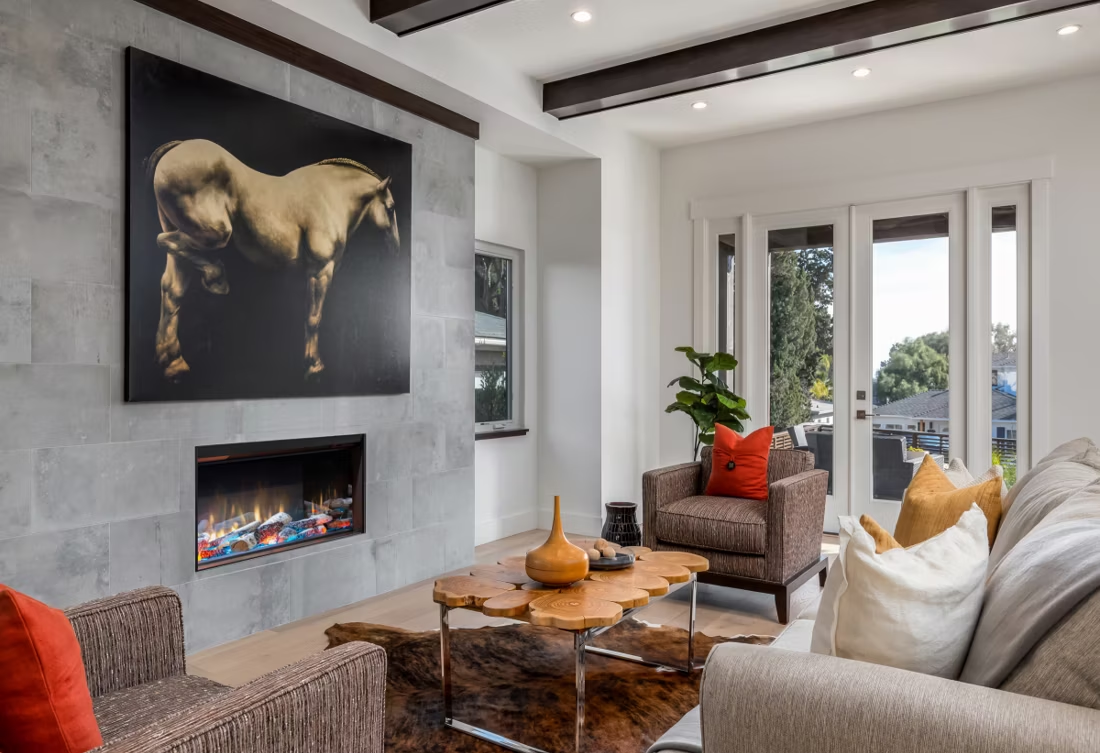
No—that's its superpower. An electric fireplace needs a wall and an outlet, period. No vent pipe, no gas line, no clearances to design around, which is why it works in bedrooms, offices, apartments, and walls where venting a gas or wood unit would be impractical or impossible. Installation is typically the simplest and least expensive of any fireplace type.
Does a fireplace add value to my home?
On average, a fireplace adds back to the home about the same amount you spent installing it. Add the monthly savings from heating the rooms you actually use instead of the whole house—often hundreds of dollars a year—and the value case is strong before you even count what a fire does for how your family uses the room.
Can I install a fireplace myself?
If you're putting a fire in your house on purpose, it's best to work with an expert. Unless you're genuinely experienced in framing, gas line, vent pipe, and the national code on clearances to combustibles, have a professional do it—and ideally the same company that sells you the fireplace, so warranty, service, and liability all live under one roof.
Find your electric fireplace in Callaway County.
Tell us a bit about your home and we'll put together a free Project Guide & Parts List for your electric fireplace project—matched with a trusted local dealer in Callaway County who can install it right.
Find Your Fireplace →