
Add heat and ambiance to any room in Andrew County—no chimney required.
From Savannah to Rosendale and the farm roads in between, electric fireplaces plug into a standard outlet and go anywhere—a finished basement, a bedroom, a rental you don't want to bore a flue into. Find the right unit and connect with a trusted local dealer.
Every Project Starts From One of These Five Situations
Zone heat that installs in an afternoon, not a season.
Andrew County sits in climate zone 5A with roughly 5,718 heating degree days and average winter lows around 16°F—cold enough that homeowners here take heat seriously, but not so severe that a full wood-burning or gas retrofit is the only sensible answer for every room. Plenty of county homes, especially older farmhouses around Savannah, Rosendale, and Cosby, have rooms that never got a chimney or a gas line and never will. An electric fireplace or insert solves that without touching the structure.
Electric units run off a standard 120V outlet in most cases, need no venting, no gas permit, and no annual chimney sweep. That makes them a practical fit for finished basements, additions, bedrooms, and rental properties throughout Andrew County—plus a smart supplemental option in homes that already burn oak, hickory, or walnut in a primary wood stove but want quiet, low-maintenance heat in a second room. It's not the same radiant experience as a live fire, but for the areas of a house that need reliable, easy zone heat without construction, electric is often the right call.
Three steps. No salesperson until you're ready.
Tell us about your project
Your zip code, your situation, and the fuel you're leaning toward—or let the answers point you to one.
See what's actually available
The brands dealers within 100 miles genuinely carry—real options, never a catalog mirage.
Get your dealer & Project Guide
A trusted local dealer, plus the free Project Guide & Parts List that names every component of the job.
Frequently Asked Questions
How much does an electric fireplace installation cost in Andrew County?
Most electric fireplace and insert installs in Andrew County run $400 to $1,200. A plug-in freestanding unit or an insert that drops into an existing masonry opening sits at the low end—often just the cost of the unit itself plus a few minutes of setup. Built-in wall units that require framing, a dedicated 120V or 240V circuit, or finish carpentry around the surround land at the higher end. Because there's no venting or gas line to run, electric is consistently the least expensive fireplace option for homeowners in Savannah, Rosendale, or the rural county roads outside town.
Do I need an electrician to install an electric fireplace?
For a plug-in unit that uses a standard household outlet, no—it's a homeowner-level install. For built-in models on a dedicated circuit, or larger units pulling more amperage than a shared household outlet should carry, a licensed electrician should handle the wiring. This is especially worth checking in older Andrew County farmhouses around Fillmore or Bolckow, where panel capacity and outlet wiring may not have been updated in decades. A local dealer can tell you which category your chosen unit falls into before you buy.
Do I need a permit for an electric fireplace in Andrew County?
Plug-in electric fireplaces generally don't require a permit since there's no gas line, venting, or structural change involved. If your project includes adding a new dedicated electrical circuit or built-in framing, check with the county building office, since that portion of the work may need a standard electrical permit even though the fireplace itself doesn't. Most local dealers can tell you upfront whether your specific installation crosses that line.
Can an electric fireplace actually heat a room, or is it just for looks?
Most electric fireplaces sold today include a real heating element—typically 4,600 to 5,000 BTU, enough to comfortably warm a 400 to 1,000 square foot space depending on insulation and ceiling height. That's a good match for a single bedroom, den, or finished basement room in an Andrew County home, but it's not going to replace a furnace or a wood stove as whole-house heat with 5,718 heating degree days on the books. Think of it as strong supplemental zone heat with the visual of a fire, rather than a primary heat source for the coldest stretches of winter.
What's the difference between an electric fireplace, insert, and stove?
An electric fireplace is typically a built-in or wall-mounted unit designed to look like a framed fireplace opening. An electric insert is sized to slide into an existing masonry fireplace opening, which is a common upgrade for older Andrew County homes that have an unused wood-burning fireplace they'd rather not maintain. An electric stove mimics a freestanding wood or pellet stove's shape and sits on the floor. All three plug into standard household power in most cases—the choice comes down to which shape fits your existing opening or room layout.
Will an electric fireplace work during a power outage?
No—unlike a wood stove or a gas unit with battery-backed ignition, an electric fireplace needs grid power to run the flame effect and the heater. For Andrew County homes that lose power during winter ice storms, this is worth factoring in if you're relying on the fireplace for actual heat rather than ambiance. Many local homeowners pair an electric unit in a secondary room with a wood stove or fireplace elsewhere in the house that can carry the load when the power's out.
Are electric fireplaces expensive to run?
Running costs are modest. A typical 1,500-watt electric fireplace heater costs roughly 15 to 25 cents an hour to run at full heat, depending on local electricity rates—meaningfully less than most homeowners expect given how much visual warmth the flame effect provides. Many units let you run the flame display without the heater engaged, which cuts the draw to just a few watts, useful for Andrew County homeowners who want the look year-round without the electric bill of a space heater every time they flip it on in July.
Can I put an electric fireplace in an existing wood-burning fireplace opening?
Yes—this is one of the most common projects for older Andrew County homes, particularly farmhouses around Rea and Cosby with an existing masonry fireplace that's no longer used for wood. An electric insert sized to your opening slides in, usually with a nearby outlet inside the firebox or a short cord run to a wall receptacle. It closes off the drafty flue (or the flue can be capped separately), eliminates the need for firewood or chimney sweeps, and gives you a working heat source and flame display in a fireplace that's otherwise just sitting empty.
Electric vs. wood—which is right for my home?
Wood offers real radiant heat, works during power outages, and taps into the oak, hickory, and walnut that's common firewood throughout Andrew County—a meaningful advantage given the county's 5,718 heating degree days and regular winter lows near 16°F. Electric offers zero maintenance, no venting or chimney needs, instant on-off convenience, and a far lower installed cost. For a primary heat source in a cold Missouri winter, wood or a hybrid approach usually wins. For a second room, a rental property, or a home where running a chimney isn't practical, electric is the more sensible fit. A number of county homeowners run both—wood for the main living space, electric for a bedroom or basement.
Can I put a TV above my fireplace?
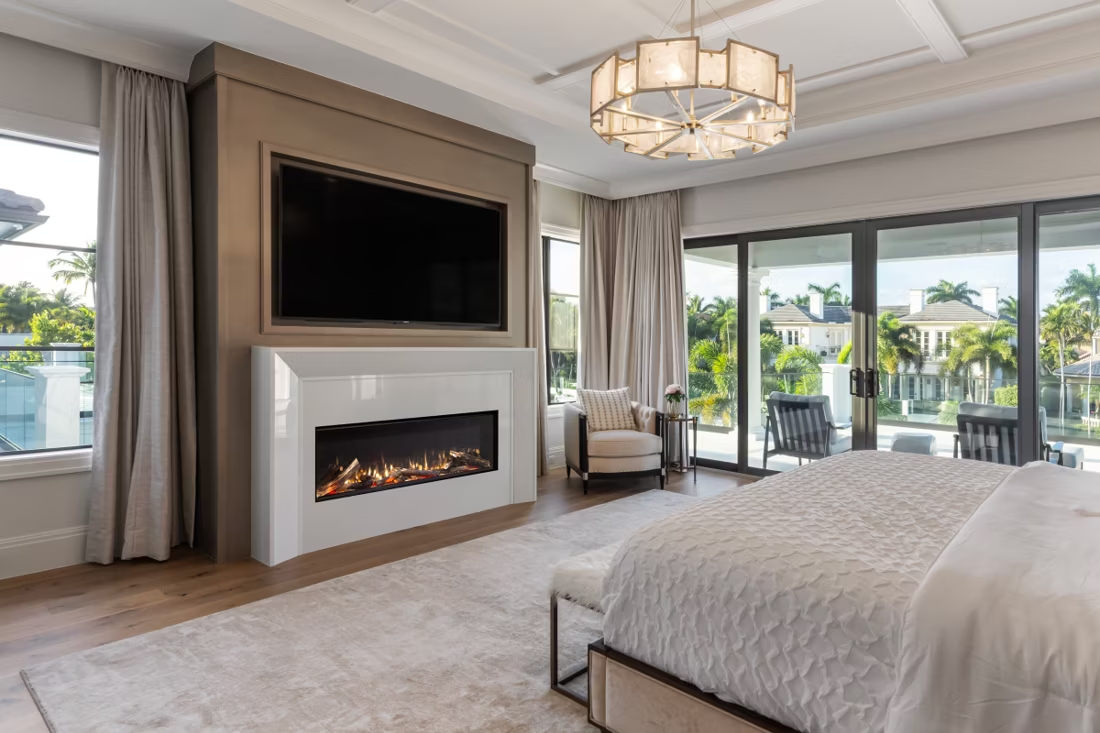
Yes—with an asterisk. Fireplaces are hot and TVs don't like heat. Either put a mantel between them to deflect rising warmth, or choose a fireplace with heat-management technology that creates a cool zone on the wall above—the wall stays around 125 degrees, barely warm, while the room still gets full heat. If you like clean lines and don't want a mantel, heat management is the answer.
Does an electric fireplace need a vent or chimney?
No—that's its superpower. An electric fireplace needs a wall and an outlet, period. No vent pipe, no gas line, no clearances to design around, which is why it works in bedrooms, offices, apartments, and walls where venting a gas or wood unit would be impractical or impossible. Installation is typically the simplest and least expensive of any fireplace type.
How much should I budget for a fireplace?
For an average home—covering the fireplace, the vent pipe, and basic installation—a budget between $3,900 and $5,500 gives you a lot of options across wood, gas, and pellet. By the time you add finish work, gas line, and electrical, the average complete installation lands between $5,000 and $12,000 all-in. In a remodel or new build, a good rule is to put about 2.5% of the total project cost toward the fireplace.
Can I install a fireplace myself?
If you're putting a fire in your house on purpose, it's best to work with an expert. Unless you're genuinely experienced in framing, gas line, vent pipe, and the national code on clearances to combustibles, have a professional do it—and ideally the same company that sells you the fireplace, so warranty, service, and liability all live under one roof.
Stove and Fireplace Dealers in Andrew County
Find your electric fireplace in Andrew County.
Tell us a bit about your home and we'll put together a free Project Guide & Parts List for your Andrew County electric fireplace project—the right unit, the exact parts, and a trusted local dealer to install it.
Find Your Fireplace →