
Bring clean, instant warmth to your Webster County home.
No venting, no wood to split, no gas line to run—just flip a switch. Find the right electric fireplace or insert for your Eupora, Mathiston, or Walthall area home, and connect with a trusted local dealer.
Every Project Starts From One of These Five Situations
Electric heat that fits a mild, humid winter.
Webster County sits in climate zone 3A, where winters are short and mild by national standards—average lows hover around 32°F and the county has a fairly light winter heating load, a fraction of what a place like Duluth, MN or Fargo, ND sees in a single hard winter. That means most Webster County homes don't need a primary heat source to run around the clock; they need something that adds warmth and atmosphere on the coldest nights and looks good the rest of the year. That's exactly the niche an electric fireplace fills.
Wood heat still runs deep in this part of Mississippi—oak, pine, and pecan are all common locally cut species—and propane fills in where wood doesn't. Electric fireplaces aren't trying to replace either one; they're a clean, low-maintenance option for a den, bedroom, sunroom, or living room where you want real flame-like ambiance and a modest heat boost without a chimney, gas line, or ash to clean up. Power comes through 4-County Electric Power Association's rural lines across most of the county, and with no smoke, soot, or venting involved, there's nothing to trip air-quality rules—Webster County has none on record for wood or gas burning, and electric units produce even less to worry about.
Three steps. No salesperson until you're ready.
Tell us about your project
Your zip code, your situation, and the fuel you're leaning toward—or let the answers point you to one.
See what's actually available
The brands dealers within 100 miles genuinely carry—real options, never a catalog mirage.
Get your dealer & Project Guide
A trusted local dealer, plus the free Project Guide & Parts List that names every component of the job.
Frequently Asked Questions
How much does an electric fireplace installation cost in Webster County?
Plug-in electric fireplace inserts that use a standard 120-volt outlet typically run $400 to $900 installed, including a mantel surround if you want one. Built-in wall units or larger inserts that need a dedicated circuit run higher—usually $900 to $1,500—because a licensed electrician has to run new wiring, and sometimes a 240-volt circuit, back to your panel. Homes in older parts of Eupora or Mathiston with dated wiring sometimes need panel work done at the same time, which adds to the cost. A local dealer will size the unit to your room and give you a firm number after seeing the space.
Do I need a permit to install an electric fireplace in Webster County?
For a plug-in unit that simply plugs into an existing outlet, there's generally no permit involved—it's treated like any other appliance. If you're adding a built-in unit that requires new wiring or a dedicated circuit, that electrical work should be pulled through a licensed electrician and typically requires an electrical permit and inspection, coordinated through Webster County. Most local dealers either employ a licensed electrician or work with one regularly, so the permit and inspection get handled as part of the install rather than left to you.
Will my electric fireplace still work during a power outage?
No—electric fireplaces require power to run the heater fan and flame display, so they go dark during an outage just like any other electric appliance. 4-County Electric Power Association's rural lines generally hold up well, but ice storms do occasionally roll through north Mississippi in January and February and can knock out power for a day or more in outlying parts of the county. For that reason, most Webster County homeowners treat electric fireplaces as a supplemental or ambiance unit rather than a backup heat source, and keep a wood stove, propane heater, or generator on hand for real outage coverage.
What size electric fireplace do I need for my room?
Because Webster County's winters are mild—average lows around 32°F and a fairly light winter heating load overall—most homeowners here are sizing for a comfortable ambiance boost in a single room, not whole-home heat. A standard 1,500-watt insert or built-in comfortably takes the chill off a 300 to 400 square foot room, which covers most living rooms, dens, and primary bedrooms in the area. Larger open-concept spaces sometimes call for two smaller units placed strategically rather than one oversized unit blasting heat at whoever's closest to it. A local dealer can walk your space and recommend wattage based on ceiling height and window exposure.
Electric vs. wood or propane—which is right for my Webster County home?
Wood and propane remain the backbone of home heating for a lot of Webster County households—oak and pine are both easy to source locally, and propane delivery is common in the more rural stretches around Walthall and outside Mathiston. Those fuels carry real heat output and work without grid power. Electric fireplaces don't compete on either front, but they win on convenience: no wood to split and stack, no propane tank to monitor, no chimney to sweep, and no combustion byproducts to vent. For a secondary living space, guest room, or a home where the primary heat is already handled by a central system, electric is usually the simpler and cheaper add.
What's the difference between an electric insert, built-in, and mantel package?
An electric insert is a self-contained unit designed to slide into an existing masonry or zero-clearance fireplace opening—a common upgrade for older Webster County homes with a fireplace that's gone unused for years. A built-in electric fireplace is designed to be framed into a wall from scratch, which is common in new construction or a remodel. A mantel package pairs an insert or built-in unit with a surround and mantel shelf, giving you the finished look without a fireplace opening already in place. For most existing homes in the county, an insert into an old wood fireplace opening is the fastest and least invasive option.
Does an electric fireplace need its own dedicated circuit?
It depends on the wattage. Most standard 120-volt electric fireplace inserts (roughly 1,500 watts) can run safely on a properly rated existing circuit, similar to a space heater, as long as nothing else major shares that circuit. Larger built-in units, especially ones rated for 240 volts, need a dedicated circuit run from your panel—that's electrician work, not a DIY plug-and-play job. If your Webster County home still has older wiring or a smaller panel, it's worth having an electrician check capacity before you commit to a larger unit.
How much maintenance does an electric fireplace need?
Very little compared to wood or gas. There's no chimney to sweep, no creosote to worry about, and no annual gas line inspection. Maintenance is mostly dusting the glass front, occasionally cleaning or replacing the LED ember bed light, and checking that the fan and heating element are free of dust buildup—a quick vacuum a couple times a year handles most of it. Because there's no combustion, there's also no soot, smoke smell, or air quality concern, which is one reason electric units are popular for bedrooms and finished basements in the county.
Are there any rebates or incentives for installing an electric fireplace in Webster County?
There's no dedicated state or federal rebate program specifically for electric fireplaces the way there sometimes is for high-efficiency wood or pellet stoves. That said, it's worth checking directly with 4-County Electric Power Association—rural electric cooperatives occasionally run efficiency-related incentive programs or rate adjustments for members adding electric appliances, and those programs change from year to year. A local dealer familiar with the co-op's current offerings can tell you if anything applies at the time of your install.
Can I put a TV above my fireplace?
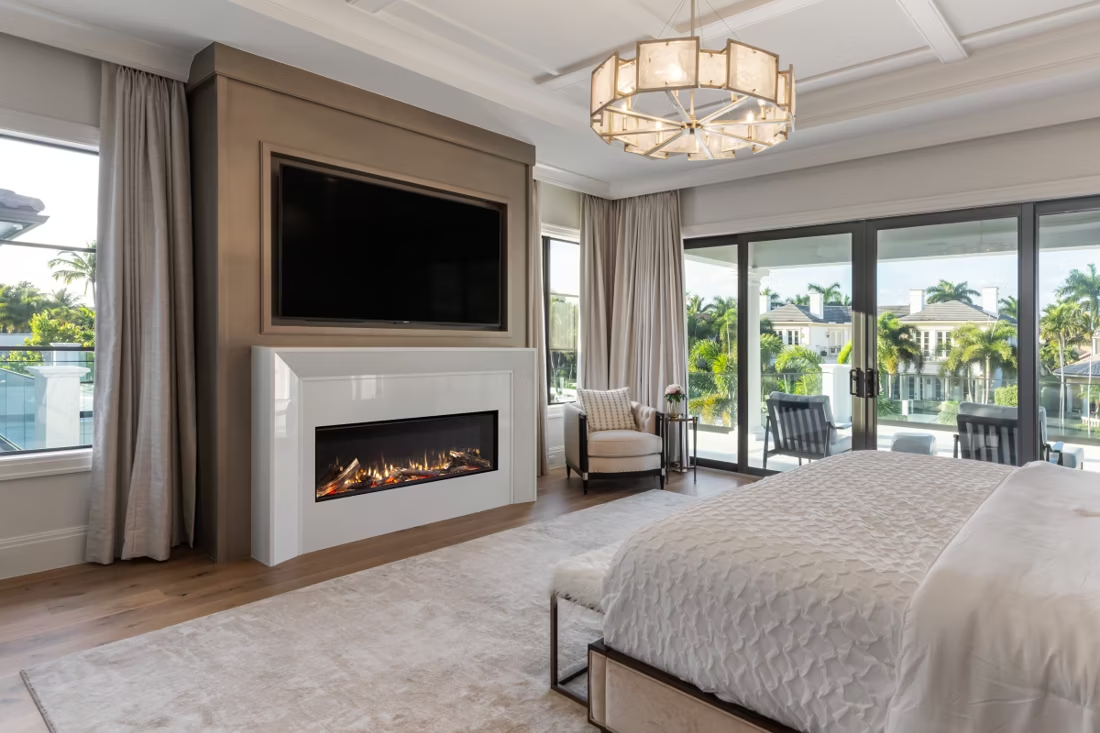
Yes—with an asterisk. Fireplaces are hot and TVs don't like heat. Either put a mantel between them to deflect rising warmth, or choose a fireplace with heat-management technology that creates a cool zone on the wall above—the wall stays around 125 degrees, barely warm, while the room still gets full heat. If you like clean lines and don't want a mantel, heat management is the answer.
Does an electric fireplace need a vent or chimney?
No—that's its superpower. An electric fireplace needs a wall and an outlet, period. No vent pipe, no gas line, no clearances to design around, which is why it works in bedrooms, offices, apartments, and walls where venting a gas or wood unit would be impractical or impossible. Installation is typically the simplest and least expensive of any fireplace type.
Can I install a fireplace myself?
If you're putting a fire in your house on purpose, it's best to work with an expert. Unless you're genuinely experienced in framing, gas line, vent pipe, and the national code on clearances to combustibles, have a professional do it—and ideally the same company that sells you the fireplace, so warranty, service, and liability all live under one roof.
How much should I budget for a fireplace?
For an average home—covering the fireplace, the vent pipe, and basic installation—a budget between $3,900 and $5,500 gives you a lot of options across wood, gas, and pellet. By the time you add finish work, gas line, and electrical, the average complete installation lands between $5,000 and $12,000 all-in. In a remodel or new build, a good rule is to put about 2.5% of the total project cost toward the fireplace.
Stove and Fireplace Dealers in Webster County
Find your electric fireplace in Webster County.
Tell us a bit about your home and we'll match you with the right electric fireplace or insert, plus a free Project Guide & Parts List with the exact parts and your recommended local Webster County dealer.
Find Your Fireplace →