
Electric heat built for Warren County's short, mild winters.
With only a short, mild heating season and winter lows averaging 38°F, Warren County doesn't need a wood-burning workhorse. From Vicksburg's antebellum homes to Bovina and Redwood, electric units deliver ambiance and supplemental warmth without a chimney, a gas line, or a permit fight. Find the right unit and connect with a trusted local dealer.
Every Project Starts From One of These Five Situations
Low heating demand, high design flexibility.
Warren County sits in climate zone 3A along the Mississippi River, and its winters simply don't ask much of a heating system. With a mild, short heating season and average lows around 38°F, this isn't Duluth, Minnesota territory—most homes here need heat for a handful of cold snaps rather than months of sustained cold. That reality changes the electric fireplace calculation: instead of asking a unit to carry the whole house through winter, homeowners in Vicksburg, Bovina, and Redwood are mostly buying ambiance, zone comfort in a den or bedroom, and a clean visual focal point that doesn't require cutting or hauling anything.
Vicksburg's historic downtown and the homes near the Vicksburg National Military Park present a real constraint that pushes people toward electric: many properties fall under local historic preservation guidelines that limit exterior venting changes or masonry alterations. An electric insert dropped into an existing firebox, or a built-in unit on an interior wall, sidesteps that entirely—no venting, no chimney work, no exterior modification to get past a preservation review. Outside city limits, in unincorporated parts of the county, the appeal is more practical: plug-in and low-voltage built-in units install in an afternoon on Entergy Mississippi's grid, with none of the seasonal wood handling that oak, pine, or pecan firewood requires elsewhere in the region.
Three steps. No salesperson until you're ready.
Tell us about your project
Your zip code, your situation, and the fuel you're leaning toward—or let the answers point you to one.
See what's actually available
The brands dealers within 100 miles genuinely carry—real options, never a catalog mirage.
Get your dealer & Project Guide
A trusted local dealer, plus the free Project Guide & Parts List that names every component of the job.
Frequently Asked Questions
How much does an electric fireplace installation cost in Warren County?
Electric is the least expensive fireplace fuel to install by a wide margin. A plug-in freestanding unit or a simple insert that uses a standard household outlet can run as little as $300 to $800 including the unit itself. Built-in wall units or larger inserts that need a dedicated 120V or 240V circuit run by a licensed electrician typically land between $800 and $2,500, depending on the model, whether new wiring has to be pulled, and whether any surround or mantel carpentry is involved. Because there's no chimney, no gas line, and no venting to size, Warren County installs are usually quicker and cheaper than the wood or gas equivalent—local dealers can generally quote a firm number after a short in-home look.
Do I need a big unit to heat my home, or is this mostly for looks?
For most Warren County homes, electric fireplaces are best thought of as zone heaters and design features rather than whole-house heat sources—and that's a good fit for a climate with only a short, mild heating season each year. A standard 1,500-watt insert or built-in will comfortably take the chill off a bedroom, den, or sitting room during the county's occasional cold snaps, without the oversizing concerns you'd worry about with a wood stove. If you want the unit to genuinely offset your central heating bill on the coldest nights, size up to a model rated for your specific room's square footage rather than assuming one unit heats the whole house—a local retailer can match wattage to your actual floor plan.
Who installs electric fireplaces in Warren County, and do I need an electrician?
Plug-in electric fireplaces and inserts that use an existing standard outlet don't require an electrician at all—most homeowners or the retailer's install team can set these up directly. Built-in units, larger inserts, or any model that calls for a dedicated circuit do need a licensed electrician to run the wiring safely and to code. The hearth dealers serving Vicksburg and the wider county typically coordinate this directly, either with an electrician on staff or a trusted subcontractor, so you're not left managing two separate trades. Avoid DIY wiring on anything beyond a standard outlet plug-in—improper circuits are the main safety issue with electric units.
What's the difference between an electric fireplace, insert, and stove?
An electric fireplace is typically a built-in unit set into a wall or framed surround, often paired with cabinetry or a mantel—common in new construction and remodels around Warren County. An electric insert is sized to slide into an existing masonry fireplace opening, which makes it the go-to choice for Vicksburg's older homes with fireplaces that were built for wood but are no longer used that way. An electric stove is a freestanding cabinet-style unit that mimics a wood or gas stove's footprint and can sit almost anywhere near an outlet. For most historic Vicksburg properties with an existing firebox, an insert is the simplest path; for a new room or addition, a built-in fireplace or freestanding stove gives more placement flexibility.
Do I need a permit to install an electric fireplace in Warren County?
A basic plug-in electric fireplace or insert generally doesn't require a permit since there's no venting, gas line, or structural change involved. If your installation requires new electrical wiring or a dedicated circuit, that electrical work typically does require a permit through the Warren County Building Department, or through the City of Vicksburg if the property is inside city limits. Homes within Vicksburg's historic district may also need to run any visible surround or mantel changes past the local historic preservation review process—this is one of the reasons electric inserts are popular there, since they usually don't touch the exterior masonry or chimney at all. Your installer can tell you quickly whether your specific project triggers a permit.
What's the best electric fireplace for Warren County's climate?
Because Warren County's winters are short and mild, most homeowners here are choosing based on flame realism, room fit, and secondary heat output rather than raw BTU capacity. Mid-range LED units with multi-color flame effects and remote or app control are popular for main living areas, while smaller insert units work well tucked into existing Vicksburg fireplace openings. If you do want the unit to pull real weight on the county's occasional 20s-and-30s nights, look for a model with a 1,500-watt heater rating rather than a decorative-only unit. A local dealer can walk you through options for your specific room size and whether you want supplemental heat or purely ambiance.
How much maintenance does an electric fireplace need?
Very little—this is one of the biggest advantages of electric over wood or gas in Warren County. There's no chimney to sweep, no gas lines to inspect, and no soot or ash to manage. Maintenance is mostly dusting the unit, occasionally cleaning the glass front, and replacing LED elements if they eventually dim (most are rated for tens of thousands of hours, so this is a rare event). If a unit stops heating or the flame effect fails, it's typically a straightforward component swap rather than a service call requiring a certified technician, though your dealer can handle warranty repairs if needed.
Will my electric fireplace work if the power goes out?
No—and this is worth being honest about for Warren County specifically. The county sits along the Mississippi River and is within reach of Gulf-originating storms, and Entergy Mississippi outages do happen during severe weather season. An electric fireplace, unlike a wood stove or a gas unit with battery-backup ignition, is entirely dependent on grid power and will not operate during an outage. If backup heat during storm-related outages is a real concern for your household, it's worth discussing a wood or gas option for at least one room alongside an electric unit elsewhere in the house for everyday convenience.
Electric vs. gas or wood—which makes sense for my Warren County home?
Given the county's mild climate—averaging 38°F winter lows and just a short, light heating season—electric is a strong fit for most homes here, especially for ambiance, zone comfort, and historic properties where venting changes are restricted. Gas and wood, burning local species like oak, pine, and pecan, deliver more raw heat output and remain useful for the county's occasional hard freezes or as a power-outage-proof backup. Many Vicksburg homeowners land on electric for a main living space where convenience and clean installation matter most, while keeping a wood-burning option in a den or secondary room for the rare cold week each winter. A local dealer can walk through both paths based on your specific home.
Can I put a TV above my fireplace?
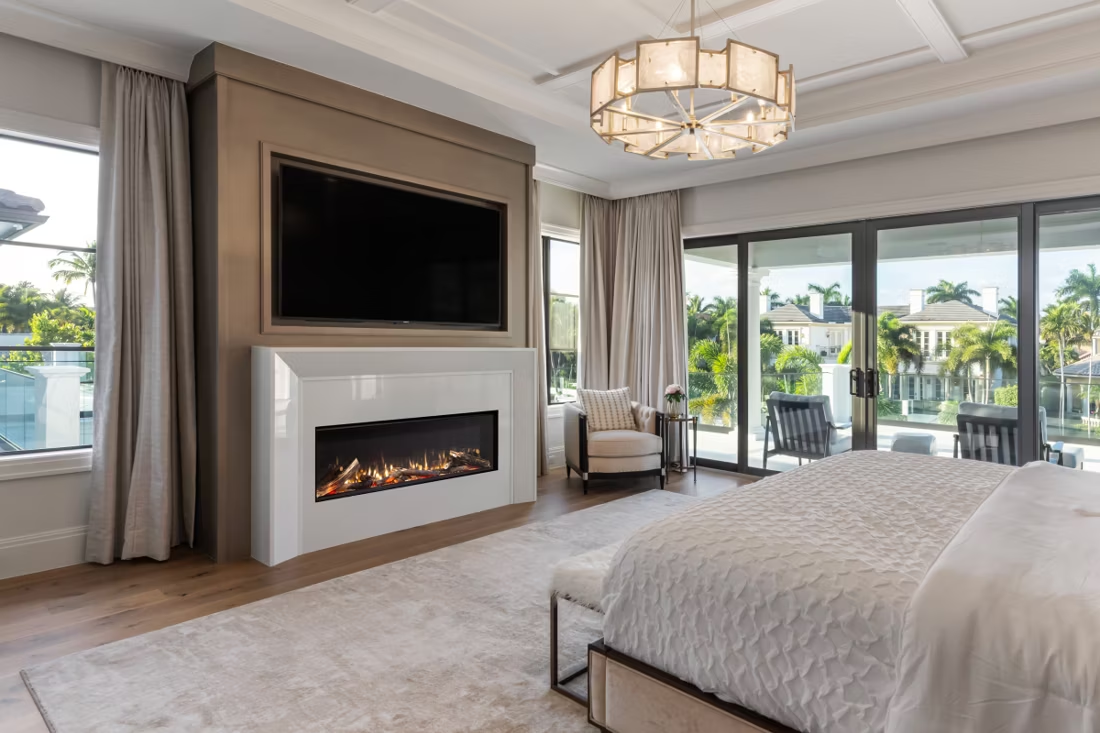
Yes—with an asterisk. Fireplaces are hot and TVs don't like heat. Either put a mantel between them to deflect rising warmth, or choose a fireplace with heat-management technology that creates a cool zone on the wall above—the wall stays around 125 degrees, barely warm, while the room still gets full heat. If you like clean lines and don't want a mantel, heat management is the answer.
Does an electric fireplace need a vent or chimney?
No—that's its superpower. An electric fireplace needs a wall and an outlet, period. No vent pipe, no gas line, no clearances to design around, which is why it works in bedrooms, offices, apartments, and walls where venting a gas or wood unit would be impractical or impossible. Installation is typically the simplest and least expensive of any fireplace type.
Can I install a fireplace myself?
If you're putting a fire in your house on purpose, it's best to work with an expert. Unless you're genuinely experienced in framing, gas line, vent pipe, and the national code on clearances to combustibles, have a professional do it—and ideally the same company that sells you the fireplace, so warranty, service, and liability all live under one roof.
How much should I budget for a fireplace?
For an average home—covering the fireplace, the vent pipe, and basic installation—a budget between $3,900 and $5,500 gives you a lot of options across wood, gas, and pellet. By the time you add finish work, gas line, and electrical, the average complete installation lands between $5,000 and $12,000 all-in. In a remodel or new build, a good rule is to put about 2.5% of the total project cost toward the fireplace.
Stove and Fireplace Dealers in Warren County
Find your electric fireplace in Warren County.
Tell us a bit about your home and we'll match you with the right electric fireplace, insert, or stove, and send over a free Project Guide & Parts List with your recommended local Warren County dealer.
Find Your Fireplace →