
Add real warmth to your Smith County home, no chimney required.
With winters this mild around Raleigh, Taylorsville, and Mize, an electric fireplace covers the occasional cold snap and looks good doing it. Find the right unit and get matched with a trusted local dealer.
Every Project Starts From One of These Five Situations
Mild winters, everyday comfort.
Smith County sits in climate zone 3A, and the numbers back up what most residents already know: winters here are short and mild. The average winter low hovers around 34°F, and the county sees a winter heating load that's just a fraction of what a place like Duluth, MN or Burlington, VT racks up in a single hard winter. Most days in Raleigh, Taylorsville, Mize, and out toward Sylvarena don't call for much heat at all. But cold fronts do roll through, temperatures dip into the 20s a handful of nights a year, and a lot of homes in this county—including the manufactured and mobile homes common throughout rural Smith County—don't have a fireplace or chimney to fall back on.
That's exactly the gap an electric fireplace fills. There's no flue, no gas line, no wood to split from the county's oak, pine, and pecan stands, and no building permit headaches—just a unit that plugs into a standard outlet or ties into a dedicated circuit and puts out real, adjustable heat the moment you turn it on. For renters, manufactured-home owners, and anyone who wants supplemental warmth and ambiance without touching the roofline, electric is the low-friction option. Power in most of the county runs through Southern Pine Electric Power Association, headquartered just up the road in Taylorsville, and their standard residential service handles an electric fireplace circuit without any special arrangement.
Three steps. No salesperson until you're ready.
Tell us about your project
Your zip code, your situation, and the fuel you're leaning toward—or let the answers point you to one.
See what's actually available
The brands dealers within 100 miles genuinely carry—real options, never a catalog mirage.
Get your dealer & Project Guide
A trusted local dealer, plus the free Project Guide & Parts List that names every component of the job.
Frequently Asked Questions
How much does an electric fireplace installation cost in Smith County?
Costs vary widely by unit type. A plug-in freestanding or wall-mount electric fireplace can run as little as $500 to $1,200 installed, since most just need a standard outlet and mounting hardware. A built-in electric fireplace or insert set into a wall cavity or existing masonry opening—with a dedicated 20-amp circuit run by a licensed electrician—typically lands between $1,500 and $3,000, depending on the unit and how much wiring work is involved. Because there's no venting or gas line to run, electric installs are consistently the least expensive fireplace option available to Smith County homeowners, and most jobs are finished in a day.
Do I need a permit to install an electric fireplace in Smith County?
In most cases, no separate building permit is required for the fireplace itself since there's no venting, gas line, or structural chimney work involved. If your installation requires a new dedicated electrical circuit, that wiring work should still be done by a licensed electrician and may require an electrical permit depending on the scope of the job. Smith County doesn't maintain the kind of dense building-code bureaucracy you'd find in a larger jurisdiction, but licensed electrical work is still the right call for safety and for keeping your homeowner's insurance intact—especially in manufactured homes, where wiring capacity needs to be checked before adding a new circuit.
Will an electric fireplace actually heat my home, or is it just for looks?
Most electric fireplaces are rated for zone heating—enough to comfortably warm a single room (typically 400 to 1,000 square feet) rather than an entire house. Given Smith County's mild profile—a 34°F average winter low and a winter heating season that's short and light overall—that's usually plenty. Many Smith County homeowners use an electric unit as their primary supplemental heat in a living room or den during the handful of genuinely cold nights each winter, while leaving central heat or a window unit to handle the rest of the house. If you're trying to heat a larger open floor plan, talk to a local dealer about BTU output and placement before buying—undersizing is the most common mistake.
What's the difference between an electric fireplace, insert, and mantel package?
A built-in electric fireplace is designed to be recessed into a wall cavity, often with a custom surround, and gives the cleanest, most integrated look. An electric insert is sized to slot into an existing masonry fireplace opening—a common retrofit for older homes around Raleigh and Taylorsville that have an unused wood-burning fireplace they'd rather not deal with anymore. A mantel package pairs a freestanding or wall-mount electric unit with a surrounding mantel shelf, giving you a fireplace look without any construction at all. For most Smith County homes with an existing fireplace opening, an insert is the fastest and least disruptive upgrade.
How much does it cost to run an electric fireplace in Smith County?
Most electric fireplaces draw around 1,500 watts on the heat setting (1.5 kWh per hour of use). At typical Southern Pine Electric Power Association residential rates, running a unit for a few hours each evening during a cold stretch generally adds somewhere in the range of $10 to $25 a month to your bill, depending on how often you run it and your specific rate. Compare that to running central electric heat pump backup strips to cover the same room, and a standalone electric fireplace is usually the cheaper way to take the chill off one space without heating the whole house.
What brands of electric fireplaces are available through local dealers?
Regional and national hearth dealers serving Smith County typically carry brands like Dimplex, Napoleon, Touchstone, and Real Flame, covering everything from budget-friendly wall-mount units to premium built-ins with realistic flame technology and multi-color ambiance settings. Availability and pricing vary by dealer, so it's worth getting matched with a local retailer who can show you what's actually in stock and installable in your specific space, rather than guessing from online listings.
Are electric fireplaces safe for manufactured and mobile homes?
Yes, and it's one of the more common installs in Smith County given how many manufactured and mobile homes are spread across the county outside Raleigh and Taylorsville. Electric units generate no combustion byproducts and don't require a chimney or roof penetration, which sidesteps the structural concerns that come with wood or gas installs in manufactured housing. The main thing to check is your home's electrical panel capacity before adding a dedicated circuit for a larger built-in unit—a licensed electrician can confirm this in a single visit, and it's a step worth taking before you commit to a specific model.
Electric vs. gas vs. wood—which is right for my Smith County home?
Wood offers real ambiance and works without electricity, which matters during the ice storms that occasionally knock out power in rural parts of the county—but it means sourcing and stacking cordwood from local oak, pine, or pecan, plus chimney upkeep. Gas (usually propane in this part of Smith County, since natural gas mains are limited) gives instant heat without wood handling, but requires a gas line or tank and professional venting. Electric skips both the fuel logistics and the venting entirely, trading off the ability to run during a power outage. For a mild-climate county like this one, where heating needs are modest most of the year, electric is often the simplest match—especially for supplemental heat in a den, bedroom, or converted garage space.
How long do electric fireplaces last, and what maintenance do they need?
A quality electric fireplace typically lasts 10 to 15 years with minimal upkeep—occasional dusting of the heating element and flame-effect components, and replacing the LED lighting or heating unit itself if it eventually wears out (many manufacturers sell replacement inserts that fit the same cabinet or surround). There's no chimney to sweep, no annual gas line inspection, and no creosote to worry about. It's the lowest-maintenance fireplace option available to Smith County homeowners, which is part of why it's a popular choice for rental properties and second homes in the area.
Can I put a TV above my fireplace?
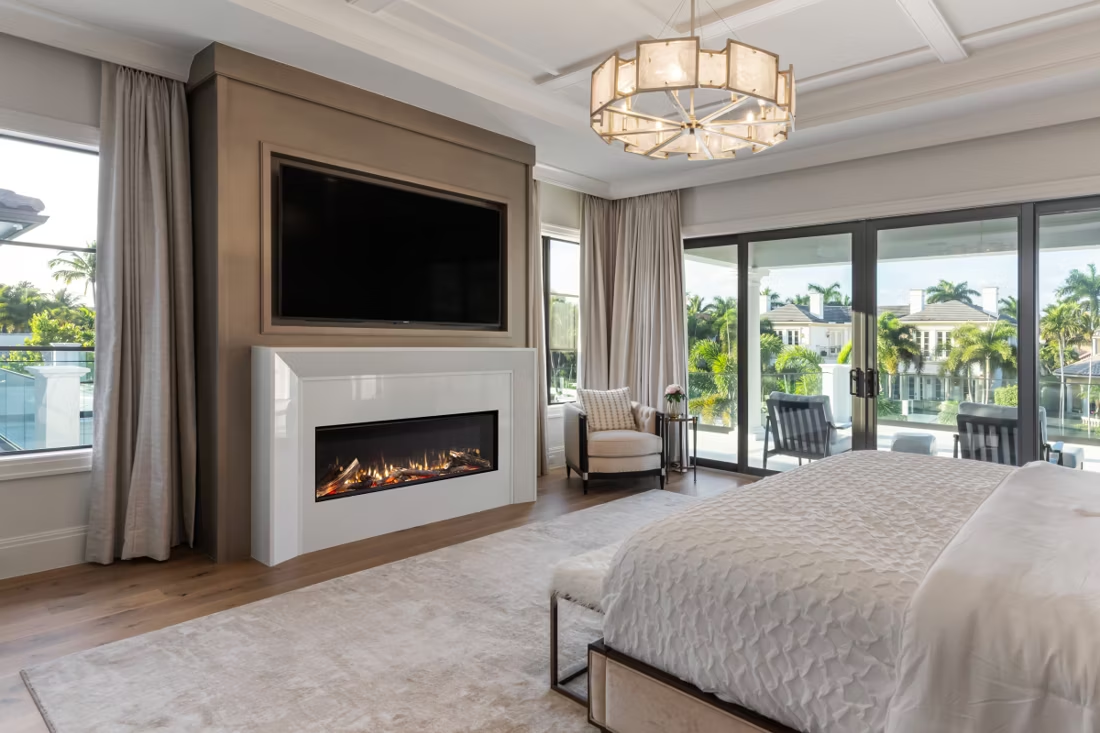
Yes—with an asterisk. Fireplaces are hot and TVs don't like heat. Either put a mantel between them to deflect rising warmth, or choose a fireplace with heat-management technology that creates a cool zone on the wall above—the wall stays around 125 degrees, barely warm, while the room still gets full heat. If you like clean lines and don't want a mantel, heat management is the answer.
Does an electric fireplace need a vent or chimney?
No—that's its superpower. An electric fireplace needs a wall and an outlet, period. No vent pipe, no gas line, no clearances to design around, which is why it works in bedrooms, offices, apartments, and walls where venting a gas or wood unit would be impractical or impossible. Installation is typically the simplest and least expensive of any fireplace type.
Can a fireplace actually lower my heating bill?
Yes—by creating a comfort zone. A furnace heats every square foot of the house just to warm the one room you're in; a gas fireplace on low burns roughly a sixth of the gas a typical furnace does. Set the furnace around 55–60 degrees as a baseline, then heat the rooms your family actually uses. Families who heat this way commonly save $20–$60 a month.
Can I install a fireplace myself?
If you're putting a fire in your house on purpose, it's best to work with an expert. Unless you're genuinely experienced in framing, gas line, vent pipe, and the national code on clearances to combustibles, have a professional do it—and ideally the same company that sells you the fireplace, so warranty, service, and liability all live under one roof.
Stove and Fireplace Dealers in Smith County
Find your electric fireplace in Smith County.
Tell us a bit about your home and we'll match you with the right electric fireplace or insert, plus a free Project Guide & Parts List with your recommended local dealer in Smith County.
Find Your Fireplace →