
Electric fireplaces that fit Marshall County's mild winters.
With winter lows averaging 29°F and about 3,406 heating degree days a year, Marshall County rarely needs a furnace running around the clock. An electric fireplace adds real ambiance and zone heat to a living room or bedroom in Holly Springs, Byhalia, or out in the county—no chimney, no gas line, no smoke. I'll match you with a local dealer who can size the right unit and handle any wiring.
Every Project Starts From One of These Five Situations
Zone heating for a climate that rarely demands more.
Marshall County sits in climate zone 3A—mixed-humid, with cold snaps but nothing like the deep-freeze winters of Duluth or Fargo. At 3,406 heating degree days and a winter low averaging 29°F, most homes here get by with a heat pump or central system and only need supplemental heat on the coldest nights. That's exactly the situation an electric fireplace is built for: a living room in Holly Springs or a den in Byhalia that could use focused warmth and a real flame look without committing to a wood-burning chimney or a gas line trenched across the yard.
Much of Marshall County sits within Tennessee Valley Authority-supplied territory, delivered locally through municipal utilities and rural electric cooperatives—reliable, familiar power that makes an electric unit an easy add to almost any wall or existing fireplace opening. Plenty of older farmhouses in the county already have a wood-burning fireplace that's not getting much use (oak, pine, and pecan are the traditional local firewood, but tending a fire isn't for everyone); an electric insert drops into that same opening and gives you heat and flame effect at the flip of a switch, with none of the ash, creosote, or chimney upkeep.
Three steps. No salesperson until you're ready.
Tell us about your project
Your zip code, your situation, and the fuel you're leaning toward—or let the answers point you to one.
See what's actually available
The brands dealers within 100 miles genuinely carry—real options, never a catalog mirage.
Get your dealer & Project Guide
A trusted local dealer, plus the free Project Guide & Parts List that names every component of the job.
Frequently Asked Questions
How much does an electric fireplace installation cost in Marshall County?
A plug-in freestanding electric fireplace or a media-console unit needs no installation beyond finding an outlet—expect to pay for the unit itself and little else. A built-in electric insert or linear wall unit that requires a dedicated 240-volt circuit typically runs $1,500 to $4,000 installed once you factor in the electrician's time to run a new circuit from the panel. Converting an existing masonry fireplace opening to hold an electric insert is usually on the lower end of that range since there's no framing involved. A local dealer will give you a firm number after seeing your wall or fireplace opening and your electrical panel.
Do I need a permit to install an electric fireplace in Marshall County?
A plug-in unit that runs off a standard outlet doesn't require a permit. If your electric fireplace or insert needs a new dedicated circuit—common for larger built-in or linear models—that electrical work requires a permit through the Marshall County Building Department, and it needs to be pulled by a licensed electrician. Most hearth dealers either employ a licensed electrician or coordinate directly with one, so you're not left managing that step yourself.
Will an electric fireplace keep working during a power outage?
No—and this is worth being upfront about. Unlike a gas fireplace with battery-backup ignition or a wood stove that needs no electricity at all, an electric fireplace stops working the moment the grid goes down. North Mississippi does see occasional ice storms that knock out power for a day or more, so if backup heat during an outage matters to you, an electric unit shouldn't be your only heat source in the room. For most Marshall County homes, though, that's a fair trade for a unit that needs no chimney, no venting, and no fuel deliveries the rest of the year.
What size electric fireplace do I need for my room?
Electric fireplaces are rated in BTUs, and most models top out around 5,000 to 5,500 BTU regardless of size—that's enough supplemental heat for a room in the 300 to 400 square foot range, which covers most living rooms and bedrooms in Marshall County's older farmhouses and newer builds alike. Larger linear or built-in models add width and flame presentation rather than more heat output, so sizing is more about the look you want and the wall or fireplace opening you're working with than raw BTUs. A local dealer can walk your room and recommend a width that fits the space without overwhelming it.
Can I put an electric insert into my existing wood fireplace?
Yes, and it's one of the most common projects in a county like this with plenty of older homes that came with a masonry wood fireplace already built in. The insert sits in the existing opening, plugs into a nearby outlet or a new dedicated circuit, and gives you flame effect and heat without maintaining the fireplace or chimney behind it. Most homeowners simply cap the flue afterward. It's a straightforward retrofit and usually cheaper than any other electric fireplace project because there's no new framing or venting to build.
What's the difference between an electric fireplace, insert, and stove?
An electric fireplace is typically a built-in or wall-mounted unit, often a linear style, designed for a modern look in a living room or bedroom. An electric insert is sized to slide into an existing masonry or zero-clearance fireplace opening, replacing wood-burning function with electric heat and flame. An electric stove is a freestanding cabinet-style unit that mimics a wood or gas stove's look and can sit anywhere near an outlet. For Marshall County homes with an existing fireplace opening, an insert is usually the simplest fit; for a room with no fireplace at all, a built-in or a stove-style unit gives you more placement flexibility.
Are electric fireplaces good in Marshall County's humidity?
Yes—electric units have no combustion, no ash, and no moisture byproduct, which actually makes them a clean fit for zone 3A's humid summers and mild, damp winters. There's no chimney to worry about drawing humid outside air into the house and no masonry to monitor for moisture damage. Brands like Dimplex and Napoleon build sealed electronic components rated for standard household humidity, so there's nothing special required for Marshall County beyond normal indoor placement away from direct high-moisture areas like an unconditioned porch.
How does an electric fireplace compare to a wood-burning one here?
Wood is still a meaningful heat source in Marshall County—oak, pine, and pecan are the common local species, and a fireplace or stove will keep running through a power outage, which an electric unit can't do. But wood means chimney upkeep, ash cleanup, and sourcing or splitting firewood every year. Electric skips all of that: flip a switch, get instant heat and flame, and there's no annual chimney sweep to schedule. For a county with mild winters like this one—3,406 heating degree days is a fraction of what places like Bozeman or Duluth see—most homeowners are looking for convenience and ambiance rather than a primary heat source, which tilts the choice toward electric for a lot of rooms.
How much does an electric fireplace cost to run compared to central heat?
A typical electric fireplace draws around 1,500 watts on the heat setting, which costs roughly 15 to 20 cents an hour to run depending on your local electric rate—cheap enough to use daily in a single room without much impact on your bill. Running one instead of raising the thermostat for the whole house is usually the more efficient choice for Marshall County homes that only need extra warmth in one or two rooms during cold snaps, since you're heating the space you're actually using rather than the whole house.
Can I put a TV above my fireplace?
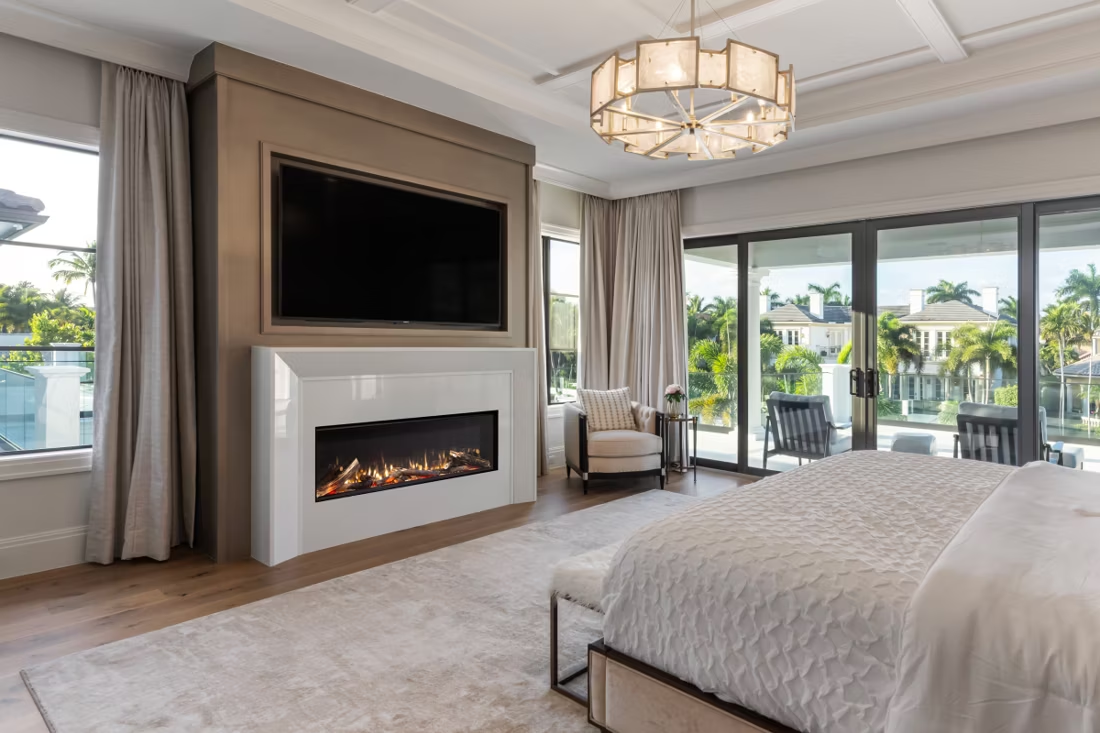
Yes—with an asterisk. Fireplaces are hot and TVs don't like heat. Either put a mantel between them to deflect rising warmth, or choose a fireplace with heat-management technology that creates a cool zone on the wall above—the wall stays around 125 degrees, barely warm, while the room still gets full heat. If you like clean lines and don't want a mantel, heat management is the answer.
Do electric fireplaces actually produce heat?
Yes—most put out around 4,800–5,000 BTUs from a standard outlet, which comfortably warms a bedroom, office, or den as a comfort-zone heater. What they won't do is carry a whole house the way wood, gas, or pellet can. Think of electric as ambiance-first with honest supplemental heat: flames on with no heat in July, flames plus warmth in January.
Can a fireplace actually lower my heating bill?
Yes—by creating a comfort zone. A furnace heats every square foot of the house just to warm the one room you're in; a gas fireplace on low burns roughly a sixth of the gas a typical furnace does. Set the furnace around 55–60 degrees as a baseline, then heat the rooms your family actually uses. Families who heat this way commonly save $20–$60 a month.
Does a fireplace add value to my home?
On average, a fireplace adds back to the home about the same amount you spent installing it. Add the monthly savings from heating the rooms you actually use instead of the whole house—often hundreds of dollars a year—and the value case is strong before you even count what a fire does for how your family uses the room.
Stove and Fireplace Dealers in Marshall County
Find your electric fireplace in Marshall County.
Tell me a bit about your room and your home's wiring, and I'll put together a free Project Guide & Parts List—the right unit, the electrical work it needs, and a trusted local Marshall County dealer to install it.
Find Your Fireplace →