
Find the right electric fireplace for your Marion County home.
Mild winters and no gas line to worry about—electric fireplaces give Marion County homes ambiance and supplemental warmth without venting, chimneys, or fuel deliveries. Get matched with a trusted local dealer.
Every Project Starts From One of These Five Situations
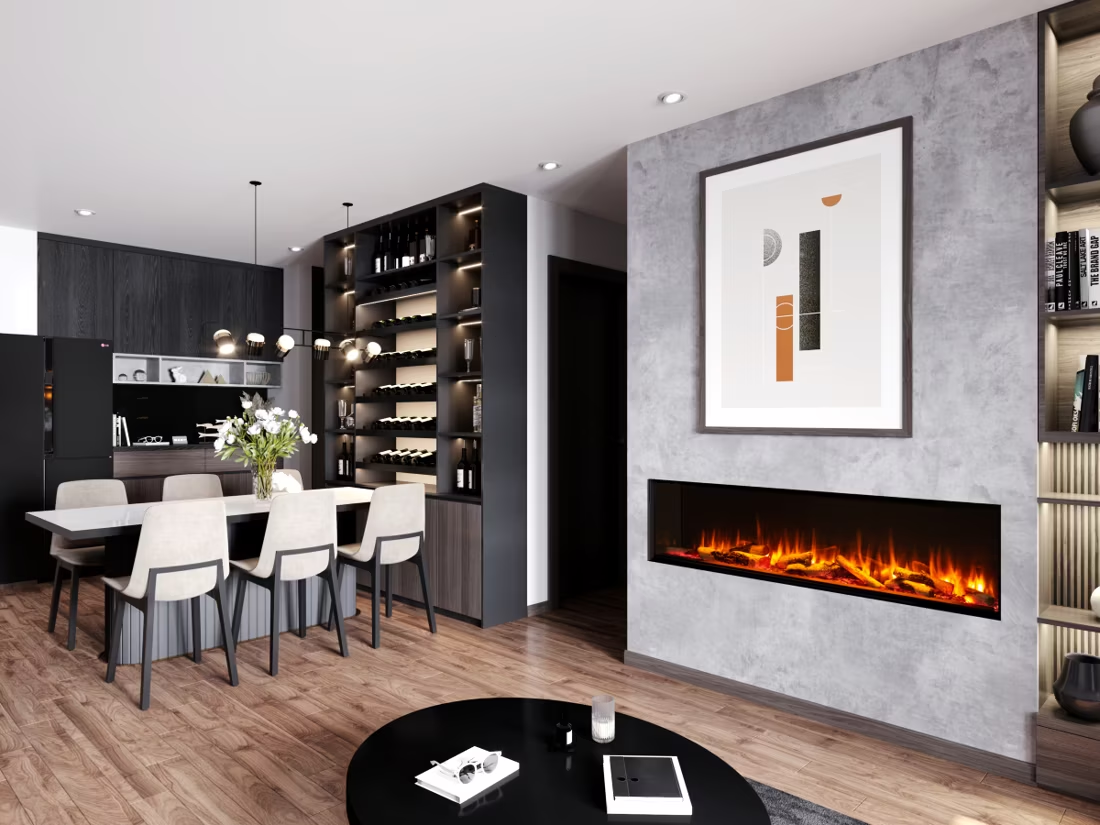
Warmth on demand, without the chimney.
Marion County sits in climate zone 3A in the Mississippi Pine Belt, with a winter low average around 38 degrees and a mild, short winter heating season—a fraction of what a place like Duluth or Fargo racks up in a single cold month. That's a real factor in how homes here get heated: most of Marion County's winter heating need is supplemental, not primary, and a lot of the county's older homes in Columbia, Foxworth, and Kokomo were built without a masonry chimney at all. Electric fireplaces fill that gap without any venting, gas line, or structural work.
Because Marion County's winters rarely demand sustained high heat output, an electric insert or freestanding unit is often plenty for the handful of genuinely cold nights each year, plus year-round ambiance the rest of the time. There's no cutting permit to worry about, no creosote buildup, and no wildfire smoke or air quality advisory to track—the county has no listed air quality concerns, and electric units don't add to that picture either way. For homeowners who want the look of a fire in a den, bedroom, or rental property without committing to wood storage or gas line work, electric is usually the simplest path to something that looks and feels finished.
Three steps. No salesperson until you're ready.
Tell us about your project
Your zip code, your situation, and the fuel you're leaning toward—or let the answers point you to one.
See what's actually available
The brands dealers within 100 miles genuinely carry—real options, never a catalog mirage.
Get your dealer & Project Guide
A trusted local dealer, plus the free Project Guide & Parts List that names every component of the job.
Frequently Asked Questions
How much does an electric fireplace installation cost in Marion County?
Electric fireplace and insert installations in Marion County typically run $400 to $1,200, which is far less than wood, gas, or pellet installs since there's no venting, chimney, or gas line involved in most cases. A plug-in freestanding unit or a simple insert into an existing opening sits at the lower end. Built-in wall units that require some framing, a dedicated circuit, or recessed installation land at the higher end. Local dealers can walk you through which category your project falls into during an in-home look.
Do I need a permit to install an electric fireplace in Marion County?
In most cases, no—a plug-in electric fireplace or insert that uses a standard household outlet doesn't require a building permit through the Marion County building department. If your installation requires a new dedicated electrical circuit or any structural framing (common for built-in wall units), an electrical permit may be needed, and a licensed electrician should handle that portion of the work. Most local dealers can tell you upfront whether your specific unit and location will trigger permit requirements.
Will an electric fireplace actually heat my Marion County home?
It depends on what you're asking it to do. Most electric fireplaces put out around 5,000 to 5,500 BTUs—enough to comfortably warm a single room, which lines up well with Marion County's mild climate and short, mild winter heating season. They're not designed to replace central heat for a whole house, and given how few genuinely cold nights the county sees each winter, most homeowners here are using electric units for zone heating in a den or bedroom, plus year-round visual ambiance, rather than as a primary heat source.
What's the difference between an electric insert and a freestanding electric fireplace?
An electric insert is built to slide into an existing fireplace opening—including an old masonry wood-burning fireplace that's no longer in use—and it plugs into an outlet inside or near the firebox. A freestanding electric fireplace, sometimes called an electric stove, sits anywhere in a room like a piece of furniture and just needs to be near an outlet. For Marion County homes with an old, unused masonry fireplace, an insert is usually the more finished-looking option since it fills the existing opening rather than sitting in front of it.
Are electric fireplaces safe for older homes without a chimney?
Yes—that's actually one of the main reasons electric fireplaces are a good fit for a lot of Marion County housing stock. Many homes in Columbia, Foxworth, and rural parts of the county were built without a masonry chimney, and retrofitting one for wood or gas venting can be expensive and invasive. Electric units produce no combustion byproducts, no smoke, and don't need any venting at all, so they can go into a room that has zero existing chimney infrastructure without any structural changes beyond electrical work.
Can I run an electric fireplace during a power outage?
No—electric fireplaces require power to run and won't function during an outage, which is worth factoring in if you're weighing electric against wood or gas. Marion County does see occasional outages tied to severe weather, and homeowners who want a heat source that works when the power is down often pair an electric fireplace for everyday ambiance with a small wood stove or gas unit for backup. If reliable off-grid heat is your top priority, electric shouldn't be your only option.
How does electric compare to gas or wood for a Marion County home?
Wood offers real backup heat during outages and pairs with the oak, pine, and pecan that's common in the area, but it requires a chimney, cutting or buying firewood, and regular cleaning. Gas gives instant, consistent heat and can run during outages with the right ignition system, but needs either a gas line or propane tank plus venting. Electric skips venting and fuel handling entirely, installs in almost any room for a fraction of the cost, and suits Marion County's mild winters well—but it won't function without power and won't replace a whole-home heat source. Many homeowners here choose electric for secondary rooms and reserve wood or gas for the main living space.
What maintenance does an electric fireplace need?
Very little compared to wood or gas. There's no chimney to sweep, no gas line to inspect, and no ash or creosote to clean out. Periodic dusting of the heater vents and an occasional check that the flame-effect bulbs or LEDs are working properly covers most of what's needed. Local dealers can also service the electric components if the heater fan or flame mechanism ever stops working correctly, though most units run for years without any attention.
Where can I find an electric fireplace dealer near me in Marion County?
A handful of hearth and appliance dealers serve Marion County, generally covering Columbia, Foxworth, and Kokomo along with the surrounding rural areas. Since electric installations are simpler than wood or gas, many dealers can install same-week rather than requiring the multi-week lead time common with vented appliances. Working with a local dealer rather than a big-box store still matters here—they can advise on unit sizing for your specific room and handle any electrical circuit questions correctly the first time.
Can I put a TV above my fireplace?
Yes—with an asterisk. Fireplaces are hot and TVs don't like heat. Either put a mantel between them to deflect rising warmth, or choose a fireplace with heat-management technology that creates a cool zone on the wall above—the wall stays around 125 degrees, barely warm, while the room still gets full heat. If you like clean lines and don't want a mantel, heat management is the answer.
Do electric fireplaces actually produce heat?
Yes—most put out around 4,800–5,000 BTUs from a standard outlet, which comfortably warms a bedroom, office, or den as a comfort-zone heater. What they won't do is carry a whole house the way wood, gas, or pellet can. Think of electric as ambiance-first with honest supplemental heat: flames on with no heat in July, flames plus warmth in January.
Can a fireplace actually lower my heating bill?
Yes—by creating a comfort zone. A furnace heats every square foot of the house just to warm the one room you're in; a gas fireplace on low burns roughly a sixth of the gas a typical furnace does. Set the furnace around 55–60 degrees as a baseline, then heat the rooms your family actually uses. Families who heat this way commonly save $20–$60 a month.
Can I install a fireplace myself?
If you're putting a fire in your house on purpose, it's best to work with an expert. Unless you're genuinely experienced in framing, gas line, vent pipe, and the national code on clearances to combustibles, have a professional do it—and ideally the same company that sells you the fireplace, so warranty, service, and liability all live under one roof.
Get matched with a Marion County electric fireplace dealer.
Tell us a bit about your home and we'll send your free Project Guide & Parts List—a plan for your electric fireplace project in Marion County with the exact parts and a recommended local dealer.
Find Your Fireplace →