
Real flame and instant heat, no chimney required.
Zone heat and ambiance for Itawamba County's mild northeast Mississippi winters—from Fulton to Mantachie to Tremont. Find the right electric fireplace or insert, and connect with a trusted local dealer.
Every Project Starts From One of These Five Situations
Mild winters, modern convenience.
Itawamba County sits in the hill country of northeast Mississippi, home to Fulton (the county seat), Mantachie, and Tremont, with just under 7,000 residents spread across small towns and rural acreage. Climate zone 3A means winters here are short and mild by national standards—average lows hover around 30°F, with a winter heating season that's a fraction of what a Duluth, MN household deals with. That's a very different heating equation. Most Itawamba County homes don't need six months of continuous wood-stove output to stay comfortable through winter—they need something for the occasional cold snap, ambiance for the rest of the season, and a fireplace that doesn't demand a chimney, a woodpile, or a gas line run.
That's the gap electric fireplaces fill well here. With power delivered by 4-County Electric Power Association's rural lines, a plug-in electric insert or built-in unit produces heat and flame instantly from a standard outlet, or a dedicated 240V circuit for larger units—no venting, no combustion byproducts, no chimney to maintain. For the county's mix of manufactured homes, older farmhouses, and newer site-built houses, that means a real fireplace upgrade without touching the roofline. It's a big reason electric shows up so often in additions, rental units, and homes around Fulton and Mantachie where running gas or building a masonry chimney isn't practical or worth the cost for the amount of heating demand the climate actually produces.
Three steps. No salesperson until you're ready.
Tell us about your project
Your zip code, your situation, and the fuel you're leaning toward—or let the answers point you to one.
See what's actually available
The brands dealers within 100 miles genuinely carry—real options, never a catalog mirage.
Get your dealer & Project Guide
A trusted local dealer, plus the free Project Guide & Parts List that names every component of the job.
Frequently Asked Questions
How much does an electric fireplace installation cost in Itawamba County?
A plug-in electric insert or freestanding unit typically runs $300 to $800 for the unit itself and can be installed in an afternoon since it just needs an existing outlet. Built-in electric fireplaces with surrounding trim, framing, or a mantel typically run $1,500 to $3,500 installed, depending on the size of the opening and finish work. Larger units that draw more than 15 amps need a dedicated 240V circuit, which usually adds $200 to $500 for a licensed electrician to run new wiring. Homes in more rural parts of the county—out toward Tremont or the county line—may see a small trip charge added for electrician visits.
Can an electric fireplace actually heat a room, or is it just for looks?
Most electric fireplaces produce real heat from a built-in resistance element or heat pump, typically rated to comfortably warm 400 to 1,000 square feet. Given Itawamba County's mild winters—average lows around 30°F and a winter heating season less than half as long as a colder climate's—that's plenty of output to take the edge off a cold snap in a living room or bonus room without leaning on the central system. What they won't do is replace whole-home heating in an older, leaky farmhouse during a hard freeze. Think of an electric fireplace as strong zone heat for the room you're actually in, with flame effects that look convincing even when the heater itself is switched off.
Do I need a permit to install an electric fireplace in Itawamba County?
A plug-in electric fireplace that uses an existing outlet generally doesn't require a permit, since there's no combustion, venting, or structural change involved. If your unit needs a new dedicated 240V circuit, that electrical work typically does require a permit through the county, and it should be pulled by the licensed electrician doing the wiring—not skipped. Built-in units set into a wall opening or new mantel surround may also trigger a permit if framing changes are involved. Check with the Itawamba County building department before starting any project that goes beyond plugging a unit into an existing outlet.
What's the difference between an electric insert, a built-in unit, and a freestanding electric stove?
An electric insert is sized to slot into an existing fireplace opening—masonry or prefab—and is a popular choice for homes around Fulton that already have a fireplace they want to modernize without the wood mess. A built-in electric fireplace is designed to be framed into a wall from scratch, which suits new construction or additions. A freestanding electric stove sits on the floor like a traditional wood stove but plugs in, which works well in mobile and manufactured homes common throughout the county where cutting into a wall isn't an option. All three deliver the same basic heat and flame technology—the choice comes down to what opening or space you're working with.
Will my electric fireplace work during a power outage?
No—unlike a wood stove, an electric fireplace has no function without power, since both the flame effect and the heater rely on electricity. Ice storms and severe thunderstorms do knock out 4-County Electric Power Association lines in rural parts of Itawamba County from time to time, and an electric fireplace will simply sit dark until power is restored. If backup heat during outages matters to you, either pair the electric fireplace with a small generator, or consider keeping a wood-burning option available given how common oak, pine, and pecan firewood already is in this part of Mississippi. Many local homes run electric for daily convenience and keep a wood stove or fireplace as the outage backup.
What's the best electric fireplace for Itawamba County's climate?
Because heating demand here is modest—mild lows around 30°F and less than half the winter heating season of a colder climate—the priority for most Itawamba County homeowners is flame realism and room-heating flexibility rather than maximum BTU output. Look for units with adjustable heat settings so you can run the flame effect alone on mild days and add heat only when a cold front comes through. A local dealer can walk you through options sized to the specific room and let you compare flame technology in person, which matters more for electric units than for wood or gas since the visual effect varies quite a bit between models.
Electric vs. gas fireplace—which is right for my home?
Gas fireplaces produce genuine heat from a real flame and can run during a power outage if equipped with a battery-backup ignition, but installation requires either a natural gas line or a propane tank, plus venting in most cases. Electric fireplaces install almost anywhere with just an outlet or a simple 240V circuit, cost less upfront, and need no venting or fuel deliveries—but they go dark in an outage and the flame is a visual effect rather than combustion. For Itawamba County's mild winters, where the fireplace is doing more ambiance and supplemental-heat work than serious primary heating, electric is often the simpler, lower-cost fit. Homes without gas service already reaching them tend to lean electric by default.
Where can I find a dealer or electrician for an electric fireplace install in Itawamba County?
For simple plug-in units, most hearth retailers serving the county can deliver and set up the unit directly. For built-in installations or any unit requiring a dedicated 240V circuit, you'll want a licensed electrician coordinating with whoever is installing the fireplace itself—ideally the same local dealer, so the wiring, framing, and finish work are handled as one project instead of you managing separate trades. That coordination is exactly what a trusted local dealer provides, and it's worth asking about upfront rather than assuming a general contractor can handle the electrical portion correctly.
Electric vs. wood—which is right for my home?
Wood is deeply practical in Itawamba County, where oak, pine, and pecan are all locally available and many homes already burn wood as backup heat during ice storms and outages. A wood stove or fireplace keeps working with zero power. Electric fireplaces trade that resilience for convenience: no hauling wood, no ash, no chimney maintenance, and instant on-off flame at the flip of a switch—a good match for the county's mild winters, with their short heating season, where you're rarely relying on the fireplace as your only heat source. Many homeowners here end up with both: wood for outages and serious cold, electric for daily ambiance in a room where running a chimney isn't practical.
Can I put a TV above my fireplace?
Yes—with an asterisk. Fireplaces are hot and TVs don't like heat. Either put a mantel between them to deflect rising warmth, or choose a fireplace with heat-management technology that creates a cool zone on the wall above—the wall stays around 125 degrees, barely warm, while the room still gets full heat. If you like clean lines and don't want a mantel, heat management is the answer.
Does an electric fireplace need a vent or chimney?
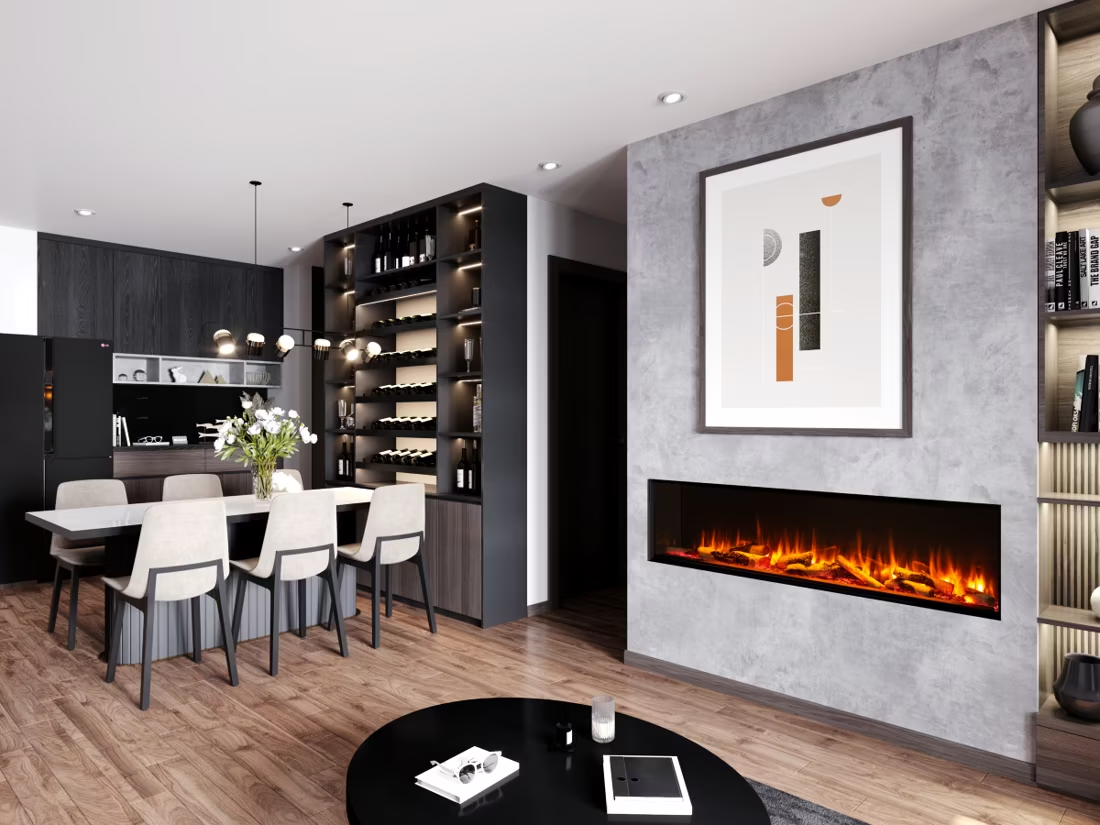
No—that's its superpower. An electric fireplace needs a wall and an outlet, period. No vent pipe, no gas line, no clearances to design around, which is why it works in bedrooms, offices, apartments, and walls where venting a gas or wood unit would be impractical or impossible. Installation is typically the simplest and least expensive of any fireplace type.
How much should I budget for a fireplace?
For an average home—covering the fireplace, the vent pipe, and basic installation—a budget between $3,900 and $5,500 gives you a lot of options across wood, gas, and pellet. By the time you add finish work, gas line, and electrical, the average complete installation lands between $5,000 and $12,000 all-in. In a remodel or new build, a good rule is to put about 2.5% of the total project cost toward the fireplace.
What is an in-home preview and do I need one?
It's a visit where a hearth professional measures your space, confirms the model you picked actually works in your home, and walks the specs—framing, gas line, venting, finish work—before anything is ordered. Some details you just can't know until you see the house. Never make a down payment without one; it's the single most-skipped step that burns buyers.
Find your electric fireplace in Itawamba County.
Tell us a bit about your home and we'll match you with the right electric fireplace, insert, or stove—plus a free Project Guide & Parts List and a trusted local dealer to install it.
Find Your Fireplace →