
Find the right electric fireplace for your Humphreys County home.
With winters this mild, most Delta homes just need a little extra warmth and ambiance—not a chimney project. Find the right electric unit and connect with a trusted local dealer serving Belzoni and the rest of the county.
Every Project Starts From One of These Five Situations
Real warmth, without the vent work.
Humphreys County sits deep in the Mississippi Delta—flat farmland surrounding Belzoni, the self-proclaimed Catfish Capital of the World. It's a Zone 3A climate: hot, humid summers and short, mild winters, with an average winter low around 36°F and only about 2,515 heating degree days a year. Compare that to a place like Duluth, Minnesota, where homes need a serious wood or gas system just to survive January—Humphreys County isn't that. Most homes here already have central heat that handles the handful of genuinely cold nights each winter just fine.
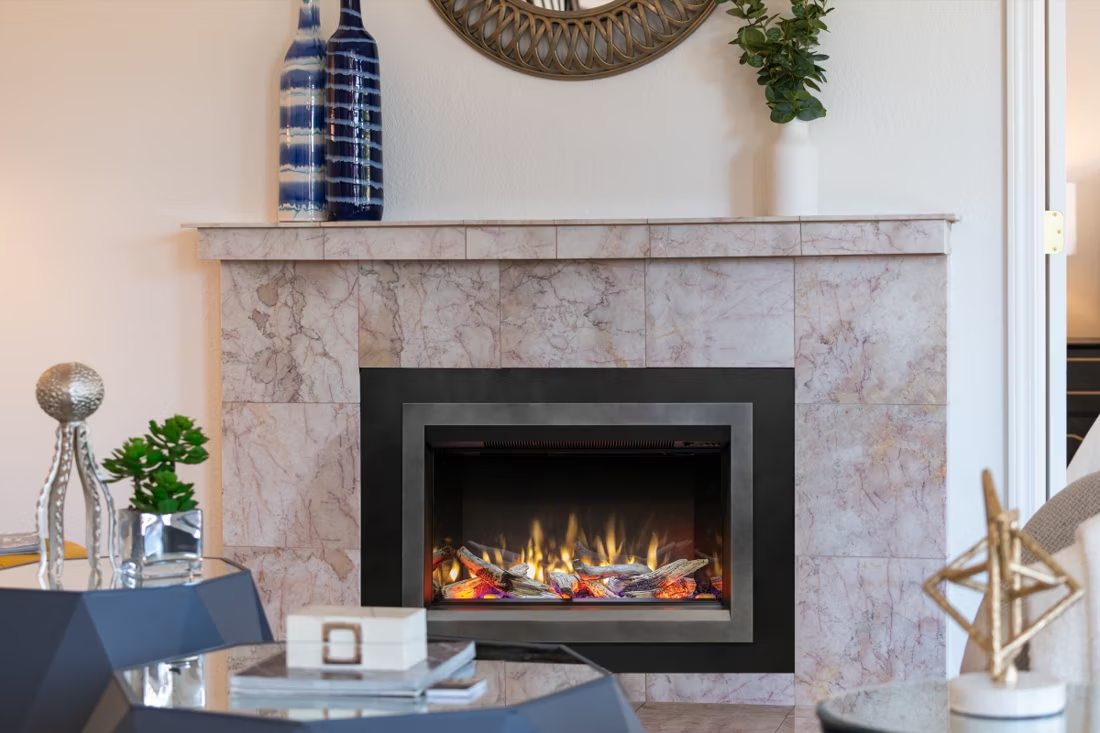
That's exactly why electric fireplaces make sense locally. There's no chimney to build, no combustion byproducts to vent, and no cutting a hole in the wall of a manufactured or mobile home—which make up a meaningful share of the housing stock in rural Humphreys County. A plug-in or built-in electric unit adds real supplemental warmth on the county's cooler nights and gives a room the look and feel of a fireplace year-round, including the months when nobody in the Delta wants an actual fire going. Local power comes through Delta Electric Power Association in most of the county, and most electric fireplace models run fine on a standard household circuit.
Three steps. No salesperson until you're ready.
Tell us about your project
Your zip code, your situation, and the fuel you're leaning toward—or let the answers point you to one.
See what's actually available
The brands dealers within 100 miles genuinely carry—real options, never a catalog mirage.
Get your dealer & Project Guide
A trusted local dealer, plus the free Project Guide & Parts List that names every component of the job.
Frequently Asked Questions
How much does an electric fireplace installation cost in Humphreys County?
Costs vary a lot by unit type. A plug-in freestanding or wall-mount electric fireplace typically runs $300 to $1,200 installed, since most just need a standard outlet and a bracket. A built-in electric insert set into an existing fireplace opening or a new wall cavity runs higher—often $1,500 to $3,500—once you factor in framing, trim work, and sometimes a dedicated 20-amp circuit run by an electrician. There's no chimney or venting cost to worry about either way, which keeps electric well below what a comparable gas installation runs locally.
What size electric fireplace do I need?
Given Humphreys County's mild winters—an average low around 36°F and a heating season that's short compared to most of the country—most homeowners here are shopping for supplemental warmth and ambiance rather than a primary heat source. A standard 1,500-watt unit comfortably heats a room in the 400 to 1,000 square foot range, which covers most living rooms and dens in the county. If you're outfitting a larger open-concept space, a local dealer can point you to a wider unit or a model with a higher-output heater rather than assuming bigger is automatically better.
Do I need an electrician or a permit to install an electric fireplace?
For a plug-in freestanding or wall-mount unit, no permit is needed—it works like any other appliance you plug into an outlet. For a built-in insert, especially one that requires a dedicated circuit or new wiring, a licensed electrician should handle the run, and larger structural work (cutting into a wall or existing fireplace opening) may require a permit through the local building department. Most hearth dealers who install built-in units coordinate this for you rather than leaving you to sort out the wiring and permitting separately.
Electric vs. gas fireplace—which makes more sense in Humphreys County?
Gas is a solid option locally and natural gas or propane service reaches much of the county, but it comes with real installation costs—venting, gas line work, and in some cases a propane tank. Electric skips all of that. For a county where the heating need is modest most winters, electric fireplaces deliver a comparable look and immediate on-off convenience for a fraction of the installed cost, with none of the venting or gas-line considerations. Gas still wins if you want higher heat output for the rare hard freeze or you already have gas service run to the room. For most ambiance-and-supplemental-heat use cases in Humphreys County, electric is the simpler, cheaper path.
Why isn't wood heat more common in Humphreys County?
Oak, pine, and pecan are all common trees around the county, and plenty of Delta households burn wood outdoors or in a fire pit, but dedicated wood stoves and fireplace inserts aren't a common indoor heating setup here—and for good reason. With only about 2,515 heating degree days a year and winter lows that rarely drop far below the mid-30s, there simply isn't the sustained cold that makes a wood-burning system worth the chimney, clearances, and upkeep. Electric fills that ambiance role without asking a homeowner to manage firewood, creosote, or a flue for a handful of cool nights a year.
Will my electric fireplace work during a power outage?
No—and this is worth being upfront about. Every electric fireplace, whether it's a plug-in unit or a hardwired built-in insert, needs household power to run the heater and the flame effect. If a Delta storm knocks out power through Delta Electric Power Association's lines, your electric fireplace goes dark along with everything else. If backup heat during outages matters to you specifically, a small propane heater or generator setup is a better companion than relying on the electric unit alone. For everyday ambiance and supplemental warmth when the power's on, though, electric is hard to beat on cost and simplicity.
What's the best option for a manufactured or mobile home in the county?
A wall-mount or recessed electric insert designed for zero-clearance installation is usually the best fit for manufactured and mobile homes, which make up a real share of the housing in rural Humphreys County. These units don't require any masonry, chimney, or structural fireplace opening—they mount into a framed cavity or sit flush against a wall, drawing on standard household wiring. A local dealer can confirm which models are rated for mobile home installation, since not every insert on the market carries that certification.
Can an electric fireplace replace my central heat?
For most Humphreys County homes, no—and it doesn't need to. Central heating systems here are already sized for a climate with a short, mild winter, so an electric fireplace is best thought of as zone heat: warming the room you're actually in on a cool evening, and letting you turn the thermostat down elsewhere in the house. It's a supplement to central heat, not a replacement for it, which is exactly the role most local homeowners want it to play.
How much maintenance does an electric fireplace need?
Very little. There's no chimney to sweep, no creosote to manage, and no annual gas-line inspection required. Maintenance is generally limited to occasionally dusting the unit, replacing an LED bulb years down the road, and keeping the vents on built-in models clear of dust. That low-maintenance profile is a big part of why electric fireplaces are an easy fit for Humphreys County homeowners who want the look and feel of a fire without adding another system to maintain.
Can I put a TV above my fireplace?
Yes—with an asterisk. Fireplaces are hot and TVs don't like heat. Either put a mantel between them to deflect rising warmth, or choose a fireplace with heat-management technology that creates a cool zone on the wall above—the wall stays around 125 degrees, barely warm, while the room still gets full heat. If you like clean lines and don't want a mantel, heat management is the answer.
Does an electric fireplace need a vent or chimney?
No—that's its superpower. An electric fireplace needs a wall and an outlet, period. No vent pipe, no gas line, no clearances to design around, which is why it works in bedrooms, offices, apartments, and walls where venting a gas or wood unit would be impractical or impossible. Installation is typically the simplest and least expensive of any fireplace type.
What is an in-home preview and do I need one?
It's a visit where a hearth professional measures your space, confirms the model you picked actually works in your home, and walks the specs—framing, gas line, venting, finish work—before anything is ordered. Some details you just can't know until you see the house. Never make a down payment without one; it's the single most-skipped step that burns buyers.
Can a fireplace actually lower my heating bill?
Yes—by creating a comfort zone. A furnace heats every square foot of the house just to warm the one room you're in; a gas fireplace on low burns roughly a sixth of the gas a typical furnace does. Set the furnace around 55–60 degrees as a baseline, then heat the rooms your family actually uses. Families who heat this way commonly save $20–$60 a month.
Find your electric fireplace in Humphreys County.
Tell us a bit about your home and we'll match you with the right electric fireplace or insert, plus a free Project Guide & Parts List with the exact parts and a recommended local dealer near Belzoni.'}
Find Your Fireplace →