
Comfort and ambiance built for Gulf Coast winters that barely arrive.
With such a mild winter heating need and winter lows averaging 42°F, Hancock County doesn't need a furnace-grade heat source most years—it needs something that looks good year-round and takes the chill off the handful of nights that do turn cold. I'll match you with a vetted local dealer who installs what actually fits a raised, coastal Mississippi home.
Every Project Starts From One of These Five Situations
Built for warmth on demand, not for a long heating season.
Hancock County sits at the southwestern tip of Mississippi along the Gulf of Mexico, home to Bay St. Louis, Waveland, Kiln, and Diamondhead. It's climate zone 2A—hot and humid—and with a winter heating load only a fraction of what a Midwest or mountain-state county sees, it logs comparable heating needs to Jacksonville, FL. Homes here are built around cooling and storm resilience—raised foundations, hurricane-rated windows, heat pumps sized for long, humid summers—with heating treated as an afterthought that only matters during the occasional hard freeze or a system like the February 2021 winter storm that caught much of the Gulf Coast off guard.
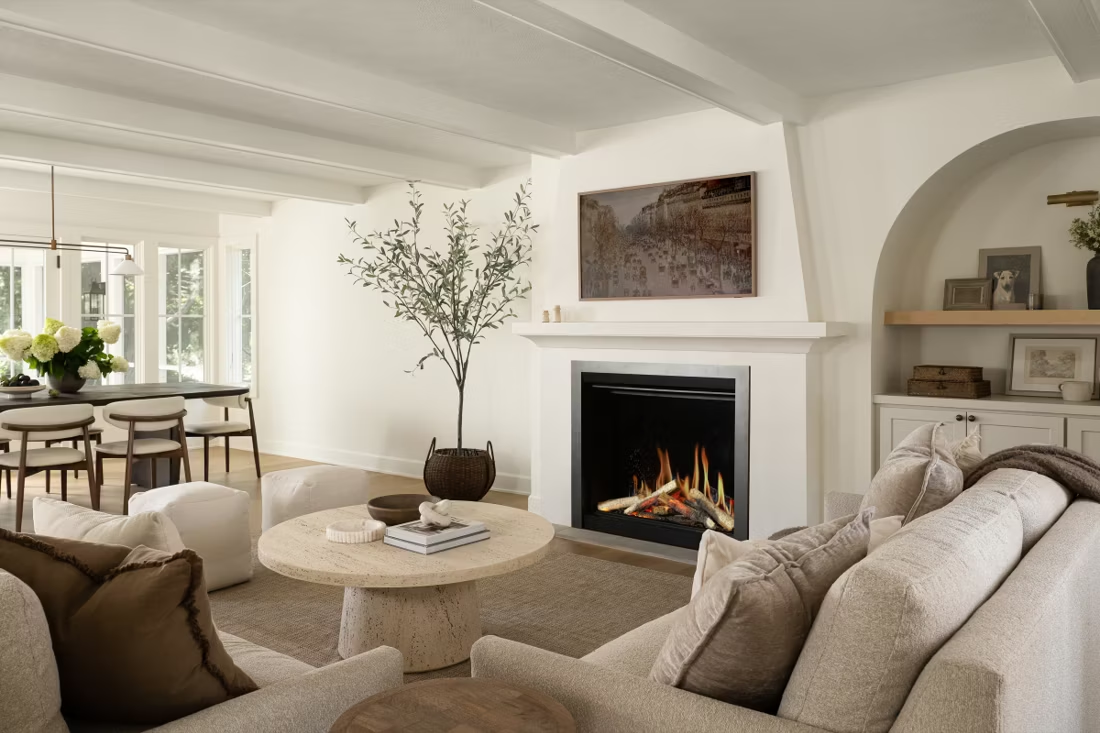
That mismatch between climate and appliance need is exactly where electric fireplaces fit. Oak, pine, and pecan grow throughout the county, but burning wood for heat has never made much sense here—the season's too short and too humid to justify stacking and drying cordwood for a few cold snaps a year, which is why wood and pellet stoves are essentially absent from local dealer inventory. Electric inserts, by contrast, drop into an existing fireplace opening or a bare wall with no chimney, no gas line, and no additional penetration through a hurricane-rated roof or wall assembly—a real advantage in a county still rebuilding and renovating housing stock in the decades since Katrina. Coast Electric Power Association, headquartered right in Bay St. Louis, serves most of the county's power needs, and a properly wired electric fireplace draws modestly enough that it rarely strains a standard residential panel.
Three steps. No salesperson until you're ready.
Tell us about your project
Your zip code, your situation, and the fuel you're leaning toward—or let the answers point you to one.
See what's actually available
The brands dealers within 100 miles genuinely carry—real options, never a catalog mirage.
Get your dealer & Project Guide
A trusted local dealer, plus the free Project Guide & Parts List that names every component of the job.
Frequently Asked Questions
How much does an electric fireplace installation cost in Hancock County?
A simple plug-in insert or wall-mounted unit that runs off an existing 120V outlet typically costs $300 to $900 installed, including mounting and trim work. A built-in unit that needs a dedicated 240V circuit run by a licensed electrician—common for larger great-room installations in newer Diamondhead or Kiln construction—runs closer to $1,200 to $2,500 once wiring and any wall framing are factored in. Homes converting an old, rarely-used masonry fireplace shell into an electric insert usually land in the middle of that range, since the shell itself needs minimal modification.
Do I need a permit for an electric fireplace in Hancock County?
It depends on the wiring involved. A plug-in model that uses an existing standard outlet generally doesn't trigger a permit. A built-in unit that requires a new dedicated circuit does need an electrical permit, pulled through the Hancock County Building Department for unincorporated areas or the applicable city building office in Bay St. Louis or Waveland. Most local electricians and hearth dealers handle that paperwork as part of the installation, so it's worth confirming upfront whether your chosen unit needs new wiring or just an outlet.
Is an electric fireplace enough heat for a Hancock County home?
For whole-home heating, no—and it's not meant to be. With such a mild, short winter heating season, most Hancock County homes rely on a heat pump for the handful of genuinely cold weeks each winter, and an electric fireplace is best treated as supplemental, zone-based heat: a sunroom, a guest suite over the garage, or a living area where you want quick warmth on a damp January morning without running the whole-house system. Sized that way, a 1,500-watt unit covers most single rooms comfortably.
Will my electric fireplace work during a hurricane power outage?
No—like any electric appliance, it goes dark the moment the grid does, and Hancock County residents know from Katrina and every storm season since that Coast Electric Power Association outages here can stretch for days. If backup heat or ambiance during an outage matters to your household, ask your dealer about wiring the fireplace onto a circuit covered by a portable or standby generator setup. Otherwise, plan on the electric fireplace as a fair-weather comfort appliance rather than a storm-season backup.
What type of electric fireplace holds up best in this coastal climate?
Look for units built with corrosion-resistant hardware and sealed electronics, especially if you're installing anywhere near a screened porch, sunroom, or other space exposed to salt air off the Gulf. Most Hancock County installations are fully interior, which sidesteps most of that concern, but coastal humidity still argues for a quality unit over a bargain big-box model. Many homeowners here run the flame effect on LED-only mode through mild, humid evenings and switch on the heat function only during the county's occasional cold snaps.
Why don't more homes in Hancock County use wood stoves?
There's plenty of oak, pine, and pecan around the county, but with winter lows averaging 42°F and a heating season that's short even by Mississippi standards, burning wood for heat has never really taken hold here. Humidity and termite pressure make storing cordwood a hassle, and the payoff—a handful of genuinely cold nights a year—doesn't offset the cost and upkeep of a wood-burning system. A few longtime residents keep an old masonry fireplace for the occasional atmospheric fire, but as a heating strategy, wood is essentially absent from what local dealers install.
Electric vs. propane fireplace—which makes more sense for my home?
Propane remains popular along the Hancock County coast, especially in Bay St. Louis vacation rentals and second homes where a real flame adds resale and rental appeal. But propane fireplaces need a tank, a gas line, and venting—more work and cost in a raised, hurricane-code home than most owners want to take on for a fireplace that runs a few weeks a year. Electric skips all of that: it's a wall-mount or insert job, sometimes just an outlet away, which is why it's the more common choice for renovations and secondary living spaces here.
How much maintenance does an electric fireplace need in a humid climate?
Very little. There's no chimney to sweep and no ash to manage—occasional dusting of the vent grille and glass front, and periodically checking that the unit's fan isn't drawing in lint or debris, covers most upkeep. The one thing to watch in Hancock County specifically is placement: avoid installing a unit in a screened porch or other space with direct salt-air exposure, since that's where corrosion risk to internal components goes up.
What size electric fireplace do I need for my Hancock County home?
Sizing here is less about BTU output for whole-home heat and more about matching the unit to the room and how you'll actually use it. A 750- to 1,500-watt insert or wall unit comfortably supplements a bedroom, den, or sunroom on the county's colder mornings, while larger great-room installations in newer Diamondhead or Kiln homes may call for a wider linear unit chosen mainly for visual impact rather than heat output. A local dealer walking the space will tell you quickly whether you're buying for ambiance, supplemental warmth, or both.
Can I put a TV above my fireplace?
Yes—with an asterisk. Fireplaces are hot and TVs don't like heat. Either put a mantel between them to deflect rising warmth, or choose a fireplace with heat-management technology that creates a cool zone on the wall above—the wall stays around 125 degrees, barely warm, while the room still gets full heat. If you like clean lines and don't want a mantel, heat management is the answer.
Do electric fireplaces actually produce heat?
Yes—most put out around 4,800–5,000 BTUs from a standard outlet, which comfortably warms a bedroom, office, or den as a comfort-zone heater. What they won't do is carry a whole house the way wood, gas, or pellet can. Think of electric as ambiance-first with honest supplemental heat: flames on with no heat in July, flames plus warmth in January.
Does a fireplace add value to my home?
On average, a fireplace adds back to the home about the same amount you spent installing it. Add the monthly savings from heating the rooms you actually use instead of the whole house—often hundreds of dollars a year—and the value case is strong before you even count what a fire does for how your family uses the room.
What is an in-home preview and do I need one?
It's a visit where a hearth professional measures your space, confirms the model you picked actually works in your home, and walks the specs—framing, gas line, venting, finish work—before anything is ordered. Some details you just can't know until you see the house. Never make a down payment without one; it's the single most-skipped step that burns buyers.
Get your free Project Guide & Parts List for an electric fireplace in Hancock County.
Tell me a little about your home and how you'll use the fireplace, and I'll match you with a trusted local Hancock County dealer and send a free Project Guide & Parts List—the exact unit, wiring needs, and recommended installer for your project, no big-box guesswork.
Find Your Fireplace →