
Real Fire Look, Zero Venting Hassle.
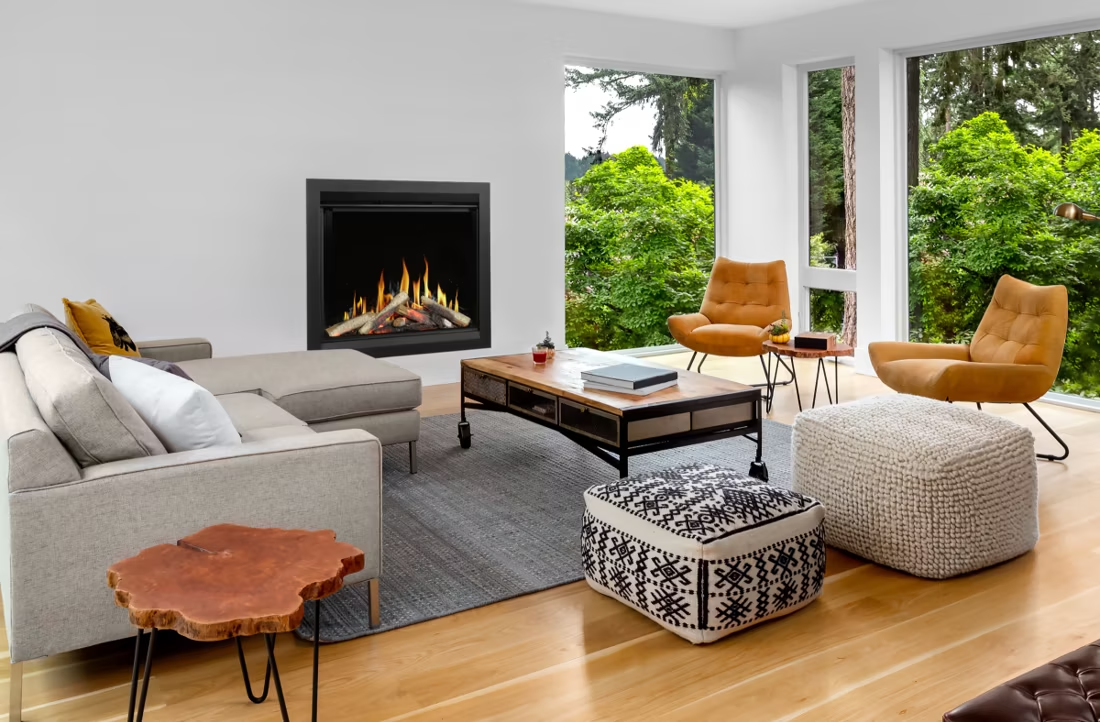
No chimney, no gas line, no permit headaches—just plug-in ambiance and supplemental warmth built for Columbus AFB's mild winters. Find the right unit and connect with a trusted local dealer.
Every Project Starts From One of These Five Situations
Ambiance and supplemental heat for a mild Mississippi climate.
Columbus AFB sits in Lowndes County's Black Prairie region at just under 200 feet elevation, with an average winter low of 36°F and a mild, short heating season—a fraction of what a place like Fargo, ND or Duluth, MN sees in a single hard winter. Wood-burning is rare here for good reason: with heating season this short and mild, cutting and storing cordwood rarely pencils out, and the same goes for pellet stoves. Electric fireplaces fill the gap that's actually needed—a few hours of radiant warmth on the occasional cold snap, plus year-round fireplace ambiance without a fire to tend.
A lot of Columbus AFB's roughly 1,400 residents live in base housing or short-term rentals tied to the 14th Flying Training Wing, where open-flame wood or gas installations are often restricted or simply impractical for a family that could PCS in two years. Electric units solve that: no venting, no gas line, no masonry work, and in most cases no building permit at all. Power comes from 4-County Electric Power Association, and at $0.1288 per kWh, running one is inexpensive enough to leave on for evening ambiance without worrying about the bill.
Three steps. No salesperson until you're ready.
Tell us about your project
Your zip code, your situation, and the fuel you're leaning toward—or let the answers point you to one.
See what's actually available
The brands dealers within 100 miles genuinely carry—real options, never a catalog mirage.
Get your dealer & Project Guide
A trusted local dealer, plus the free Project Guide & Parts List that names every component of the job.
Frequently Asked Questions
How much does an electric fireplace installation cost in Columbus AFB?
Most electric fireplace projects in Columbus AFB run $300 to $2,000. A plug-in insert or freestanding stove that drops into an existing fireplace opening sits at the low end and typically needs no electrician. A wall-mounted linear unit with a dedicated 120V or 240V circuit, or a full mantel package with custom surround, runs $1,200 to $2,500 once an electrician is involved. Built-in units with extensive trim carpentry can push higher. A local dealer will quote your exact setup after seeing the space.
Will an electric fireplace actually heat my room, or is it just for looks?
Most electric fireplaces put out 5,000 to 9,000 BTU from a 1,500-watt heater—enough to comfortably warm a single room or open living area, which lines up well with Columbus AFB's mild heating needs. With an average winter low around 36°F and a short heating season, you're rarely fighting single-digit temperatures the way homes in colder climates do, so a good electric insert or wall unit can realistically serve as your main source of supplemental warmth rather than pure ambiance. It won't replace central heat on the coldest nights of the year, but for most of the season it's genuinely functional heat.
Do I need a permit to install an electric fireplace in Columbus AFB?
A plug-in electric insert or freestanding unit that runs off an existing wall outlet doesn't require a permit—there's no venting, gas line, or structural work involved. If you're having a wall-mounted or built-in unit wired to a new dedicated circuit, that electrical work typically requires a permit through the Lowndes County Building Department, and it needs to be pulled by a licensed electrician. Most hearth dealers either handle this coordination directly or can refer you to an electrician who's done the work before.
I'm in Columbus AFB base housing or renting—can I still install a fireplace?
Electric is usually the only fireplace option that works cleanly for base housing and rental situations. Air Force family housing and most area leases prohibit or heavily restrict wood-burning and open-flame gas installations, but a plug-in electric insert or freestanding stove involves no permanent modification—no chimney, no gas line, nothing to patch when you move out or PCS. It's the reason electric fireplaces are popular with the transient population around the 14th Flying Training Wing: you get real fireplace ambiance and supplemental heat without touching the structure.
What type of electric fireplace makes sense for Columbus AFB's climate?
Because Columbus AFB only sees a mild, short heating season—comparable to a place like Bismarck, ND, which sees more than three times the winter heating load—you don't need a whole-home heating solution. A wall-mount linear unit or an insert sized to your main living space is typically enough to take the edge off cool mornings and handle the occasional 30s-and-below night, while central HVAC covers the rest. Homeowners who want a stronger visual centerpiece often go with a mantel package; renters or on-base residents usually do better with a self-contained insert or freestanding stove they can take with them.
How much does it cost to run an electric fireplace here?
At the 4-County Electric Power Association residential rate of $0.1288 per kWh, a typical 1,500-watt electric fireplace running on the heat setting costs about $0.19 to $0.20 per hour. Leaving it on for ambiance without the heater engaged (most units let you run the flame effect alone) draws far less—often under 50 watts, or a couple pennies an hour. For a room used a few hours a night through the mild Columbus AFB winter, most households see only a modest bump on their electric bill.
Electric vs. gas fireplace—which is right for my home?
Gas is also a solid option in Columbus AFB and puts out more sustained heat, but it requires either a natural gas line or a propane tank plus proper venting and a gas-fitter for installation—a real project for a homeowner, and typically not an option at all for renters or on-base housing. Electric skips all of that: plug it in (or have an electrician wire a dedicated circuit) and you're done, with no combustion byproducts and no venting to plan around. For a permanent home where you want strong, consistent heat output, gas is worth considering. For flexibility, lower upfront cost, and situations where permanent gas or wood installations aren't allowed, electric is the practical choice.
What's the difference between an electric insert, wall-mount, and mantel package?
An electric insert is built to slide into an existing fireplace opening, masonry or zero-clearance, and is the fastest option if you already have a firebox you want to convert. A wall-mount unit hangs flat against the wall like a large TV and works well in homes without an existing fireplace, including base housing where a slim profile matters. A mantel package pairs an electric firebox with a surrounding mantel and surround, giving you a traditional fireplace look as a furniture piece rather than a wall or built-in installation. All three run off standard or dedicated electrical circuits—the right choice mostly comes down to whether you have an existing opening and how much of a visual centerpiece you want.
Will my electric fireplace work if the power goes out?
No—electric fireplaces require power to run both the heater and the flame effect, so they won't provide heat during an outage. Lowndes County does see occasional ice storms and severe weather that can knock out power for a day or more, so if backup heat during outages is a priority, it's worth pairing an electric fireplace with a battery backup, generator, or a gas appliance rated for power-out operation. For everyday supplemental warmth and ambiance in Columbus AFB's generally mild winters, though, electric remains the simplest and most flexible option.
Can I put a TV above my fireplace?
Yes—with an asterisk. Fireplaces are hot and TVs don't like heat. Either put a mantel between them to deflect rising warmth, or choose a fireplace with heat-management technology that creates a cool zone on the wall above—the wall stays around 125 degrees, barely warm, while the room still gets full heat. If you like clean lines and don't want a mantel, heat management is the answer.
Do electric fireplaces actually produce heat?
Yes—most put out around 4,800–5,000 BTUs from a standard outlet, which comfortably warms a bedroom, office, or den as a comfort-zone heater. What they won't do is carry a whole house the way wood, gas, or pellet can. Think of electric as ambiance-first with honest supplemental heat: flames on with no heat in July, flames plus warmth in January.
Can a fireplace actually lower my heating bill?
Yes—by creating a comfort zone. A furnace heats every square foot of the house just to warm the one room you're in; a gas fireplace on low burns roughly a sixth of the gas a typical furnace does. Set the furnace around 55–60 degrees as a baseline, then heat the rooms your family actually uses. Families who heat this way commonly save $20–$60 a month.
Does a fireplace add value to my home?
On average, a fireplace adds back to the home about the same amount you spent installing it. Add the monthly savings from heating the rooms you actually use instead of the whole house—often hundreds of dollars a year—and the value case is strong before you even count what a fire does for how your family uses the room.
Nearby Dealers
Hearth shops serving Columbus AFB and the surrounding area. Every listing shows whether it is a WhyFire partner, a dealer we have verified as authorized for the brands we recommend, or a local business carrying hearth products. No manufacturer pays for placement. How we verify dealers →
Scott Petroleum Corporation- Starkville
Starkville Lp Gas, Inc.
Electric Service in Columbus AFB
An electric fireplace's heater draws about 1,500 watts—pennies per hour at local rates.
4-County Electric Power Assn
Find your electric fireplace in Columbus AFB.
Tell us a bit about your home and we'll put together a free Project Guide & Parts List—the right electric fireplace or insert, the exact parts you'll need, and a trusted local dealer to install it.
Find Your Fireplace →